

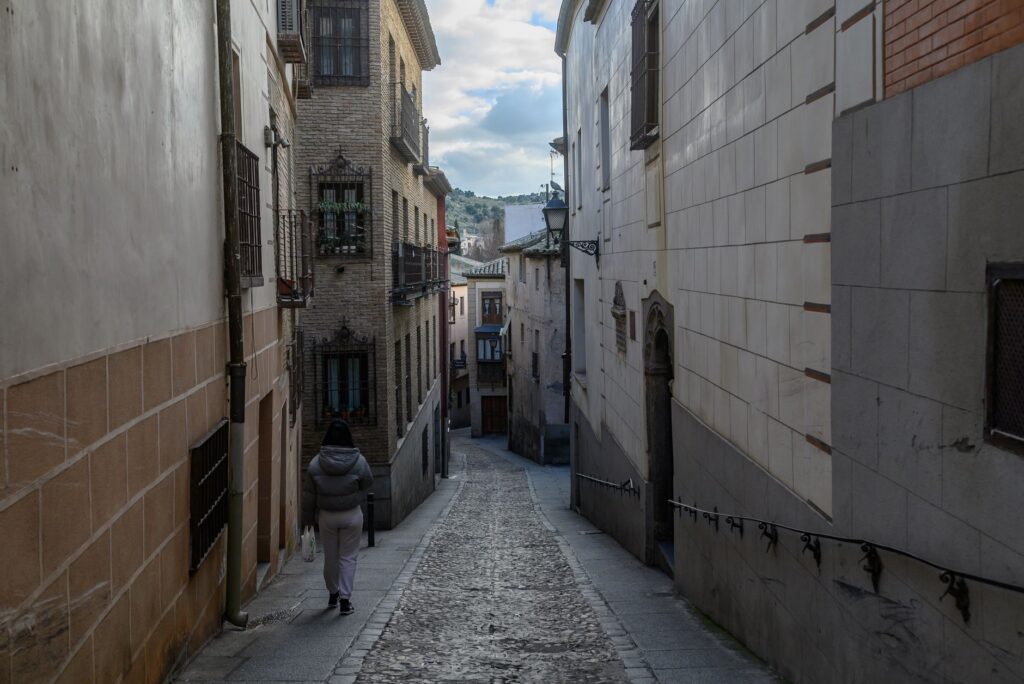
The steep, winding alleys of Toledo guard an ancient secret that defies the passage of time and the dizzying pace of modernity. Amidst ancient stone walls and monastic silences, the damascene workshops continue to beat to the slow, measured rhythm of the hammer and the burin. This is not a mere ornamental craft, but a complex technique of metallic inlay that requires decades of trade, infinite patience, and a steady hand that challenges the limits of human dexterity. In this corner of Castilla-La Mancha, the art of intertwining threads of gold and silver onto a base of blackened, blued steel keeps alive a tradition shared by ancestral cultures that found in fire and metal a universal language of beauty.
Throughout the centuries, the city of the Tajo River has guarded this legacy with an almost reverential zeal. Contemporary workshops, direct heirs of medieval guilds and Hispano-Arabic influence, are discreetly distributed throughout the historic quarter. Here, the raw material is not only the noble metal, but the accumulated time invested in every gesture. The visitor who ventures into these spaces discovers that damascenining is, essentially, an exercise in cultural resistance. Far from the overcrowded circuits of mass tourism, these workshops offer a unique window into a creative process where the human hand remains the only truly indispensable tool for transforming cold matter into a living work of art.
The Alchemy of Metal: From Raw Steel Block to Texturized Surface
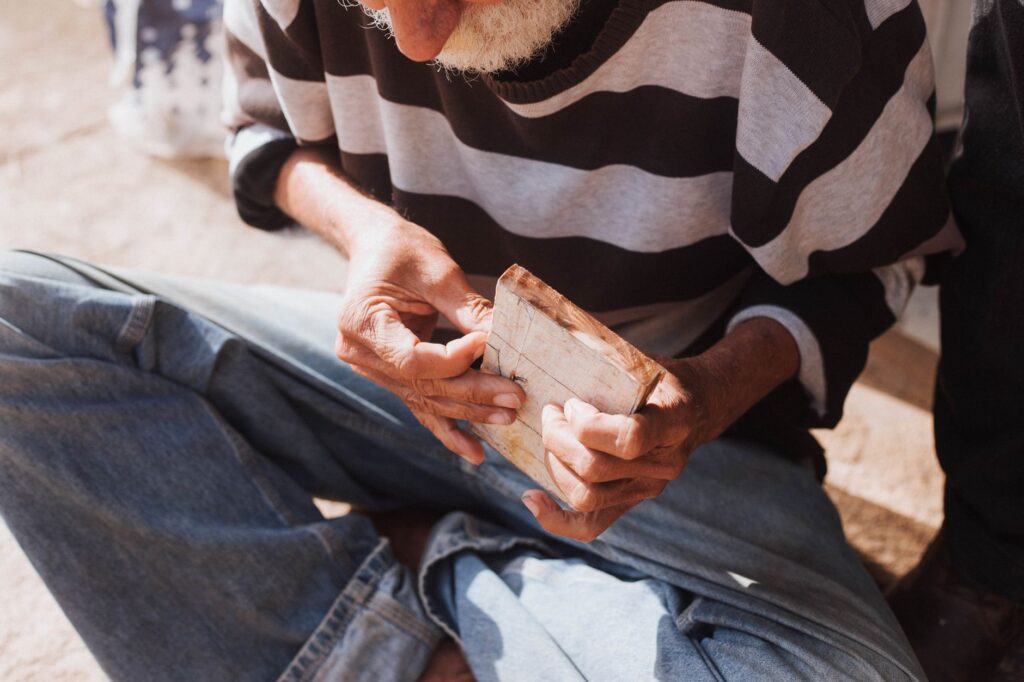
The process begins long before gold ever touches the surface. The foundation of the work is a piece of hardened steel or iron that must be prepared with rigorous precision. Master artisans use files and gravers to trace an extremely fine, cross-hatched pattern onto the metal. This microscopic network, invisible to the naked eye, acts as a web of tiny anchors. If the groove lacks the exact depth or inclination, the pure gold wire applied afterwards will detach with the first temperature change. It is a phase that demands absolute concentration; a millimeter error at this stage ruins hours of prior preparation and forces the artisan to restart the entire production cycle from scratch.
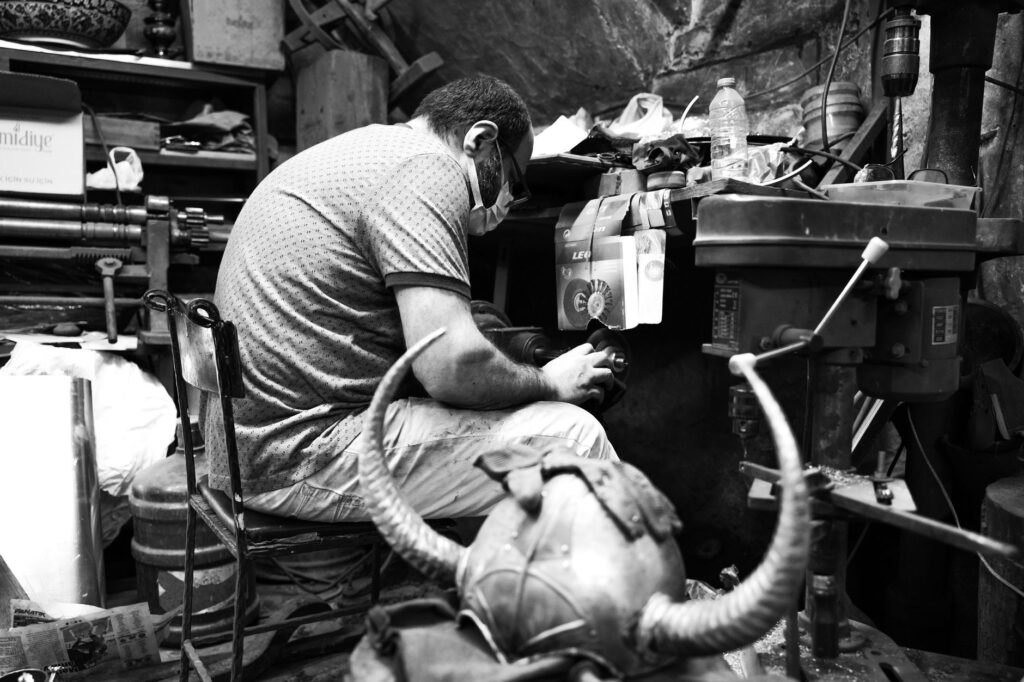
Inside the workshop, the sound of scraped steel blends with the murmur of history. The tools used—many of them custom-forged by the artisans themselves—have been passed down from generation to generation. Small anvils, polished-head hammers, and wooden vises form part of an almost sacred toolkit. In this initial phase, there is no room for improvisation; physics and geometry join hands to ensure that the support surface is perfectly primed to receive the precious metal that will grant it its definitive identity and characteristic visual contrast.
The Master’s Pulse: The Millimetric Dance of Gold and Silver Wire
Once the ferrous support is prepared, the most delicate and fascinating phase of the craft begins: the inlay. With the help of a small hammer and a specialized punch, the artisan guides ultra-fine threads of twenty-four-karat gold or pure silver over the previously traced grooves. The precious metal is extremely ductile, but it requires colossal dexterity to adhere uniformly, following complex geometric patterns or floral motifs inspired by Renaissance and Nasrid traditions. Every hammer blow must be measured with millimetric precision; excessive force would snap the wire, while a blow that is too weak would leave the inlay loose and unstable.
This work is usually carried out under the natural light streaming through large workshop windows or with the support of high-precision lamps illuminating the work tables. Masters explain that learning this technique can easily take a decade of daily practice. Eyesight grows fatigued, and hands bear the strain of constant tension, but the visual reward far outweighs the sacrifice. Watching the design gradually take shape, emerging as a golden flash against the dark background of the blued steel, is a hypnotic spectacle that transcends mere manual labor to become a true form of visual and material poetry.
Fire and the Secret of Black Bluing
Once the inlay design is complete, the piece undergoes a chemical and thermal process known as bluing. This step is crucial to achieving the chromatic contrast that defines Toledo damascene: the deep, matte black of the background that makes the warm luminosity of gold and silver stand out. In the past, this process relied on a combination of acids and direct heat over a charcoal fire, a method requiring extraordinary intuition to remove the piece at the exact moment before excessive temperature damaged the embedded precious metals.
Today, while traditional formulas passed down orally among masters are maintained, workshops combine accumulated experience with rigorous temperature control in specific furnaces. The piece is oxidized in a controlled manner and subsequently cleaned with special oils that seal the surface, protecting it against corrosion without altering its aesthetic finish. The result is a velvety, dark surface that frames the golden threads with sober elegance, giving each object exceptional durability that can remain intact for centuries if properly cared for by its owners.
Geometry and Arabesques: The Ornamental Repertories of Tradition
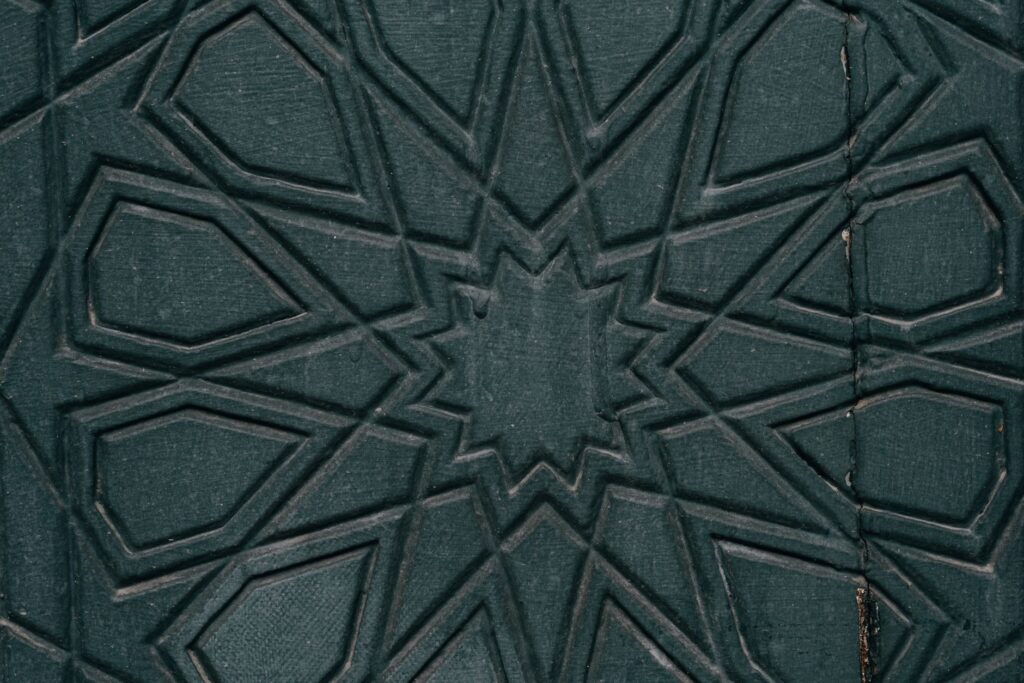
The decorative repertory of damascene is a visual map of the civilizations that have inhabited the Iberian Peninsula. Inside the workshops, two main styles coexist and are mastered with equal skill: the Renaissance style, characterized by grotesques, birds, fantastic animals, and symmetrical borders inspired by Italian and plateresque palaces; and the classic Arabic or Damascene style, dominated by intricate geometric arabesques and calligraphic cartouches reminiscent of Al-Andalus’s magnificence. Each motif responds to a strict visual grammar where nothing is left to chance and every line has a specific compositional function.
Contemporary designers and artisans do not merely replicate historical forms; they also experiment with minimalist lines and contemporary patterns to attract new audiences without losing the craft’s defining identity. This duality between fidelity to historical canon and openness to modern design is what keeps the sector alive. Pieces range from small everyday objects—such as bookmarks, cufflinks, and trays—to authentic pieces of high jewelry and collector’s sculptural panels, proving that the technique possesses infinite artistic versatility capable of engaging with any current aesthetic current.
Generational Relief: The Challenge of Survival in the 21st Century
The greatest challenge facing Toledo’s damascene today is not a lack of international demand, but a critical scarcity of new craft vocations. In a global market flooded with low-cost industrial imitations from Southeast Asia—manufactured through stamping or superficial chemical baths that have nothing to do with hand-inlaid metal—true craftsmanship fights to make its real value visible. Local institutions and artisan associations promote school workshops and training programs, but the path is arduous due to the massive investment of time required to master the discipline.
The few young people who decide to learn the trade do so driven by a deep artistic vocation and a strong sense of heritage responsibility. Working side by side with veteran masters in workshops where time seems to stand still is a transformative experience. These apprentices acquire not only manual dexterity, but also a work ethic based on patience, respect for materials, and the conviction that preserving a historic craft is a form of cultural resistance. Their labor ensures that Toledo’s name remains inextricably linked to the excellence of metalwork.
Practical Guide
How to Get There: Toledo is exceptionally well-connected with Madrid. High-speed trains (AVE and Avant) connect Madrid-Puerta de Atocha station to Toledo in just 33 minutes. By road, the A-42 highway allows travelers to arrive in approximately one hour. Once at the Toledo train station, the historic center can be accessed on foot via the Safont mechanical escalators or by using regular urban buses.
When to Go: Spring (April to June) and autumn (September to November) offer the best climatic conditions for exploring the historic center on foot without oppressive summer temperatures. During the autumn months, various cultural events and monographic exhibitions dedicated to the traditional crafts of Castilla-La Mancha take place.
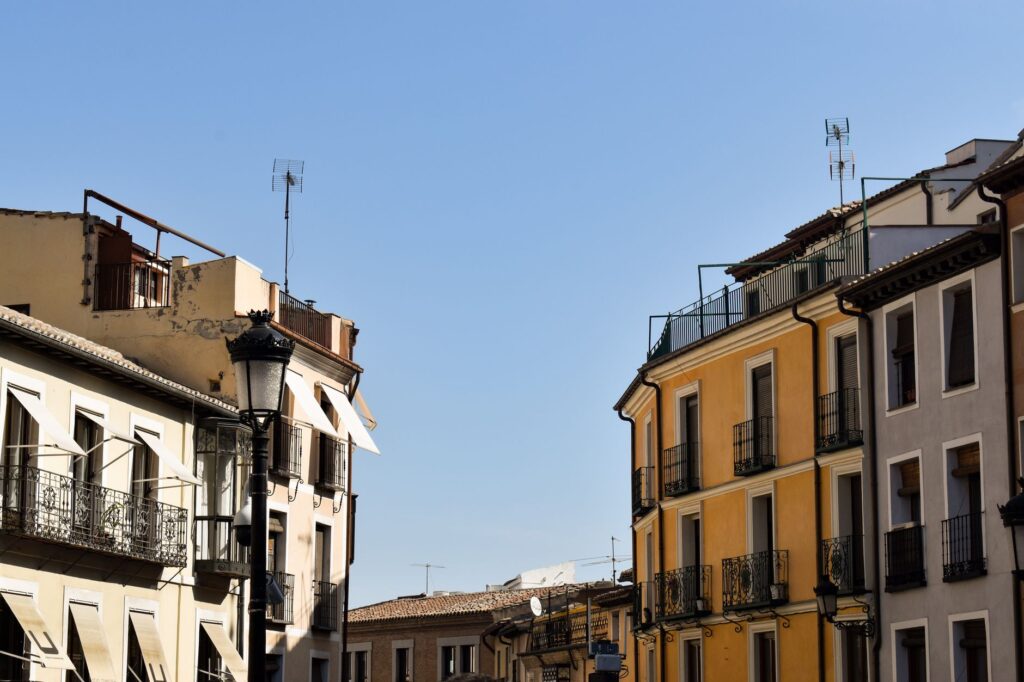
Where to Find Authentic Workshops: Traditional workshops are mainly concentrated in the Judería neighborhood, the area around the historic wooden overhangs (cobertizos), and the surroundings of the Cathedral and Plaza Seca. Visitors are advised to look for the official Castilla-La Mancha Craftsmanship seal to ensure that acquired pieces are entirely handmade using traditional inlay techniques.
Shopping and Authenticity Tips: To distinguish authentic artisanal damascene from an industrial print, observe the relief and shine of the metal. True gold wire features a subtle three-dimensional texture to the touch, and the steel background displays a uniform matte bluing with no traces of glue or artificial gloss at the junctions. Always request the certificate of authenticity signed by the master artisan or originating workshop.
The Secret Glow That Survives in the Workshop’s Twilight
As evening falls over the hills of Toledo and tourists leave the main streets, the damascene workshops slowly extinguish their precision lamps. On wooden benches, amidst worn-out files and steel shavings, unfinished pieces rest, waiting to see the light at dawn. In that complicit silence lies the true greatness of this ancient art: a tenacious resistance against oblivion fueled by fire, gold, and the unwavering patience of artisan hands. The brilliance of embedded metal is not merely an aesthetic reflection, but the tangible testimony that human memory, when worked with devotion and rigor, is capable of defying the relentless passage of centuries and continuing to shine with an undying light in the heart of Castile.