
The Iron Scar Waking on the Atlantic Coast
The Atlantic Ocean crashes fiercely against the breakwater of Lobito, a natural harbor where ships laden with copper and manganese ore initiate one of the most challenging railway routes on the African continent. The Benguela Railway, historically known as the CFB, is not merely a transport line; it is the backbone that sustains thousands of kilometers of biodiversity, arid plateaus, and river basins across Angola. On the docks, the metallic clang of cranes engages in a constant dialogue with the steady bustle of workers inspecting the bogies of freight cars before tackling the ascent toward the high plateaus. This century-old infrastructure, conceived at the dawn of the twentieth century to link Central Africa’s mining deposits with international maritime routes, stands today as a living testament to high-mountain engineering adapted to tropical complexities.
The departure from the coast immediately exposes the abrupt topographic shift of the territory. Within a few kilometers, the tracks abandon the sea breeze and climb the buttresses of the Great Angolan Escarpment. Here, the railway layout winds through a continuous exercise in geometric calculation, where the original engineers had to contend with steep gradients, erosion-prone clay soils, and the dense vegetation of the coastal savanna. Every kilometer conquered from the landscape demanded titanic solutions, ranging from the manual excavation of cuttings in solid rock to the erection of metal bridges spanning turbulent river gorges during the rainy season.
The Architecture of Ascent: Century-Old Bridges and Embankments
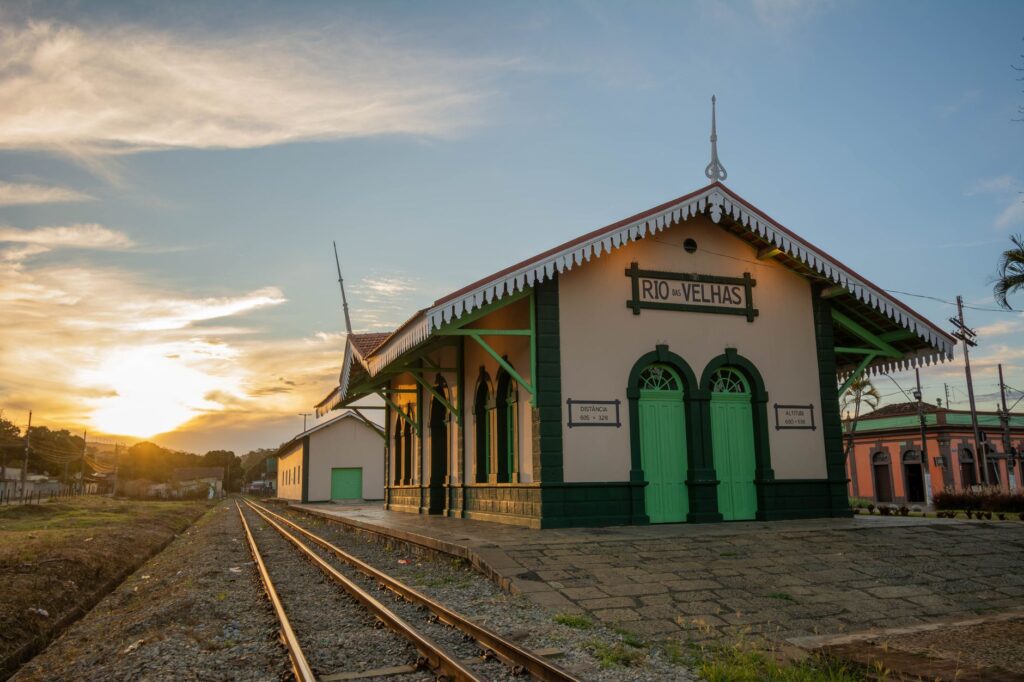
As the convoy gains altitude, the plant landscape mutates with almost mathematical precision. The thorny scrub and acacias of the coastal strip give way to wooded savanna formations and, finally, to the vast upland grasslands that characterize Huambo province. This intermediate stretch stands out for the preservation of its industrial heritage. Small stations in the Portuguese colonial style, built with local granite masonry and gabled roofs, follow one another at regular intervals like milestones in time. Although many of these facilities suffered the onslaught of decades of armed conflict, the comprehensive rehabilitation undertaken in the twenty-first century has restored structural functionality to dozens of halts that once again serve as communication hubs for adjacent rural villages.

Maintaining this network demands constant and complex logistics. The CFB track teams combat the ravages of tropical nature on a daily basis: invasive vegetation attempting to devour ballasts, torrential rains softening embankments, and material fatigue in metal lattice bridges installed over a century ago. Modern engineers combine traditional manual leveling techniques with ultrasonic testing technology to detect micro-fissures in the rails. This symbiosis between artisanal craft inherited from generations of railway workers and the modernization of signaling systems constitutes the true secret of the train’s operational resilience.
The Human Pulse at Transit Stations
Stopping at an intermediate station on the Angolan plateau is stepping into a social microcosm where the train acts as the sole umbilical cord to the outside world. When the diesel locomotive’s whistle announces its arrival, the platforms instantly transform into a vibrant hive of commerce and socialization. Women with colorful headscarves tied around their heads offer baskets brimming with roasted corn, cassava, fresh fruit, and dried fish to passengers leaning out of windows. This spontaneous commercial exchange sustains the local economy of dozens of rural communities that rely entirely on the railway’s cadence to market their agricultural surpluses in the urban centers of Benguela or Huambo.
For the inhabitants of these latitudes, the train is neither a touristic option nor a conventional means of transport; it is the guarantee of basic mobility. In regions where dirt roads become impassable during the monsoon months, the railway convoy represents the only safe link to access hospitals, secondary schools, or essential medical supplies. Conversations in passenger cars unfold among laughter, family stories, and the rhythmic clatter of wheels over rail joints, weaving a sense of community that transcends the ethnic and generational differences of Angola’s interior.
Copper Logistics and the International Corridor
Beyond its social and passenger dimension, the Benguela Railway plays a primary geostrategic role on the Southern African economic board. By linking at the Congolese border with the network of the Democratic Republic of the Congo, the rail corridor allows mineral extracted in the Katanga region to be evacuated directly to the deep-water port of Lobito, drastically cutting transit times compared to land routes ending at the Indian Ocean. This steady flow of container and mineral trains requires millimeter synchronization among logistics operators, customs authorities, and rail traffic teams.
blockquote>The railway does not merely transport goods and people; it carries the hope of autonomous economic development connecting the resources of the African interior with global trade routes without inefficient intermediaries.
Optimizing this corridor has required millionaire investments in renewing high-power locomotive fleets, centralized traffic control systems, and expanding track layouts in logistics terminals. Operational challenges are significant: from managing fuel supply in remote areas to cross-border coordination with railway administrations of neighboring countries, every link in the logistics chain must operate with Swiss precision to avoid bottlenecks paralyzing strategic mineral flows.
Energy Challenges and the Ecological Transition
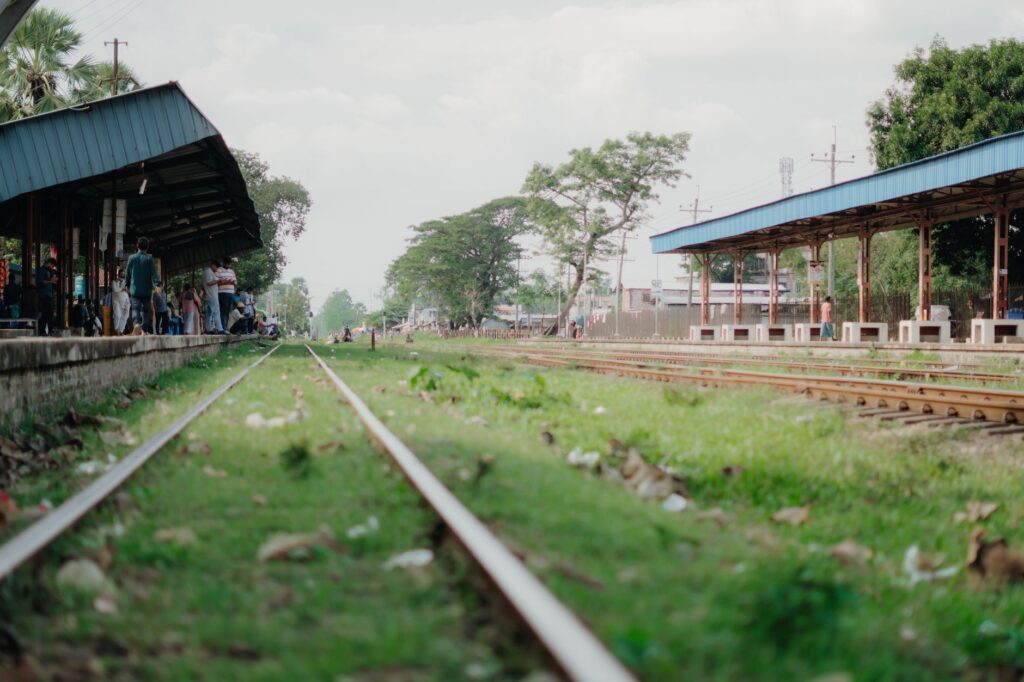
In the contemporary context, operating a transcontinental railway line in Africa raises inescapable questions about environmental sustainability and energy efficiency. Although diesel traction remains the mandatory norm due to the absence of electrification across most of the layout, railway administrations constantly seek formulas to optimize fuel consumption and minimize the carbon footprint of heavy formations. Reducing idling times, advanced training of drivers in efficient driving techniques, and rigorous maintenance of internal combustion engines are priority measures in the daily management of the rolling stock.
Likewise, preserving the natural environment through which the track runs is subject to strict environmental regulations. Forest reserves and biological corridors crossing interior provinces harbor diverse fauna often threatened by passing convoys. Joint programs between railway operators and forest conservation authorities monitor the installation of specific wildlife crossings and waste management along the railway right-of-way, demonstrating that heavy infrastructure development can coexist with local ecosystem protection.
The Territory of Silence: The Central Plateau of Huambo
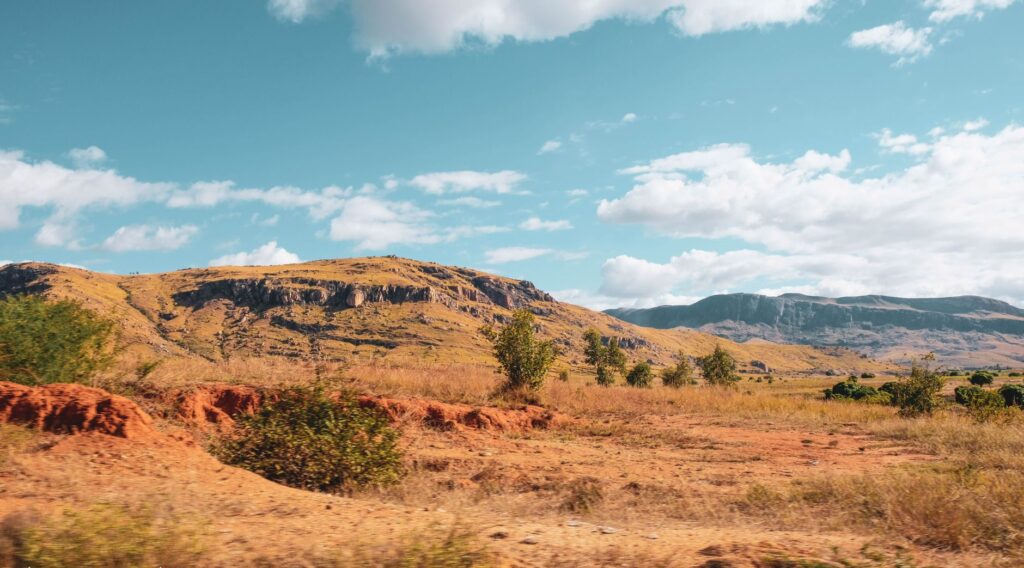
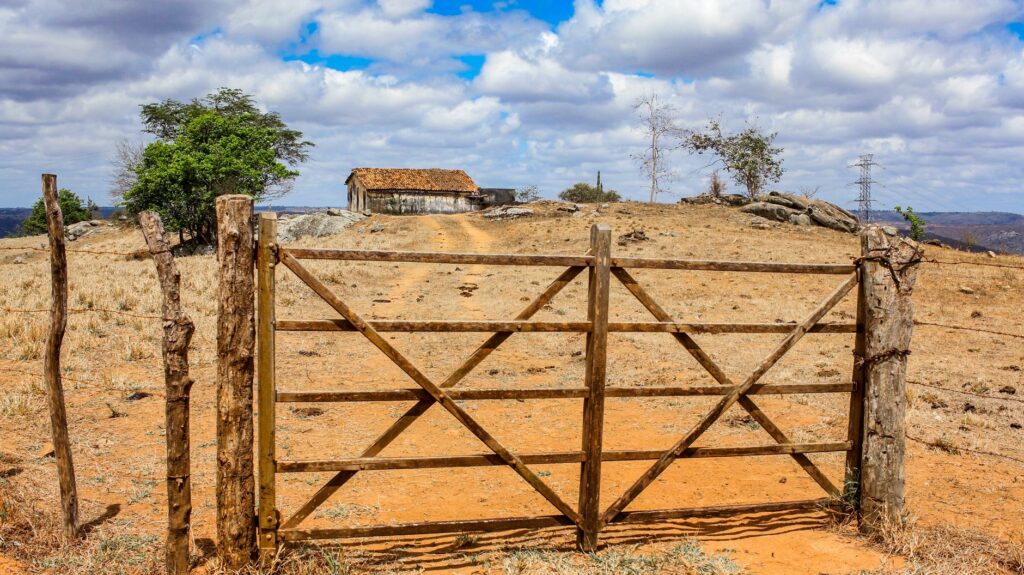
As the route penetrates the heart of the central plateau, the relief softens into an endless succession of rolling hills covered in golden grasslands and miombo forests. Here a profound silence prevails, interrupted only by the distant echo of waterfowl in seasonal lagoons and the rhythmic sound of the train cutting through the clean air of the highlands. This region, Angola’s agricultural epicenter, displays the traces of patient reconstruction. Ancient colonial estates now coexist with community farming cooperatives that leverage the proximity of railway halts to move harvests of potatoes, corn, and vegetables to mass-consumption markets.
For the observant traveler, this stretch of the journey offers an unparalleled anthropological perspective of deep Angola. Circular homesteads, built with red earth adobe and thatched roofs, unfold neatly in river valleys. Children briefly interrupt their games as the train passes to wave with contagious energy, shaking their arms as the engineer responds with a brief horn blast. In these everyday interactions, one feels the intact dignity of a people who have transformed the scars of recent history into an engine of community reconstruction and territorial pride.
Practical guide
Planning a journey or logistical study around the Benguela Railway requires understanding the operational and administrative particularities of the region. The fundamental keys to approaching this route are detailed below:
- Starting point and access: Lobito’s central station and adjacent port constitute operational kilometer zero. Access is primarily through Catumbela International Airport, located a few kilometers away.
- Stretches and frequencies: Passenger services operate with regular weekly frequencies connecting Lobito, Benguela, Huambo, and Luena. Consulting official station boards is essential, as schedules may be adjusted due to track maintenance work.
- Formalities and permits: For journalistic reports or technical studies in railway facilities, obtaining relevant authorizations in advance from the management of Caminho de Ferro de Benguela (CFB) and local transport authorities is necessary.
- Climatology and seasonality: The dry season (from May to September) offers the best logistical conditions for travel and territory observation, while the rainy season (from October to April) can cause temporary interruptions due to river surges.
- Accommodation and support logistics: Major cities like Lobito, Benguela, and Huambo feature adequate hotel infrastructure and reliable telecommunications services to establish secure operational bases.
Dusk on the Rails: Memory and Horizon in Luena
The end of the journey at the terminal station in Luena, in Moxico province, invariably coincides with dusk, when the African sun dyes the sky a deep ocre and intense red merging with the flat horizon of the eastern savanna. At this neuralgic point, where tracks seem to vanish into the vastness of eastern Angola, worker hustle subsides into solemn quietude. Locomotives uncouple to perform reverse-march maneuvers, while travelers disembark laden with bundles, completing a hundred-hour journey defying continental distances.
blockquote>At twilight, over the steel threads stretching toward the confines, the silhouette of the resting train symbolizes the victory of human perseverance over geographic immensity, a permanent bridge of life uniting the Atlantic coast with the deep heartbeat of the continent.
Sitting on the deserted platform as night falls allows reflection on the magnitude of this engineering work and its transformative impact on Angola’s social fabric. The Benguela Railway is not merely a monument to past industrial effort, but a tool for the future in constant reinvention. Under the starlight emerging forcefully over Moxico’s clean sky, the faint glow of station lanterns recalls that the railway journey remains, in essence, one of the most genuine and necessary human adventures to comprehend the true dimension of the African territory.