
The Awakening of Millennial Waters on the Anatolian Plateau
In the heart of southwestern Turkey, where the Denizli plain yields to the mountainous foothills of the Aegean region, nature has spent millennia sculpting one of the most extraordinary geothermal landscapes on the planet. Pamukkale, whose name translates literally as the cotton castle, is not merely a geological accident of dazzling white stepped pools, but a complex hydrothermal ecosystem where the Earth’s crust constantly releases mineralized fluids at temperatures ranging from thirty-five to one hundred degrees Celsius.
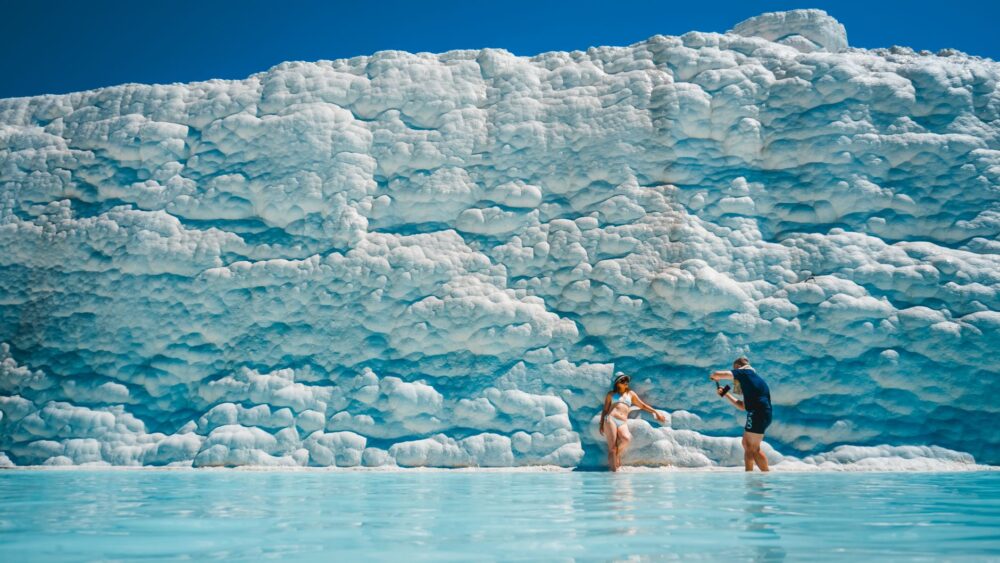
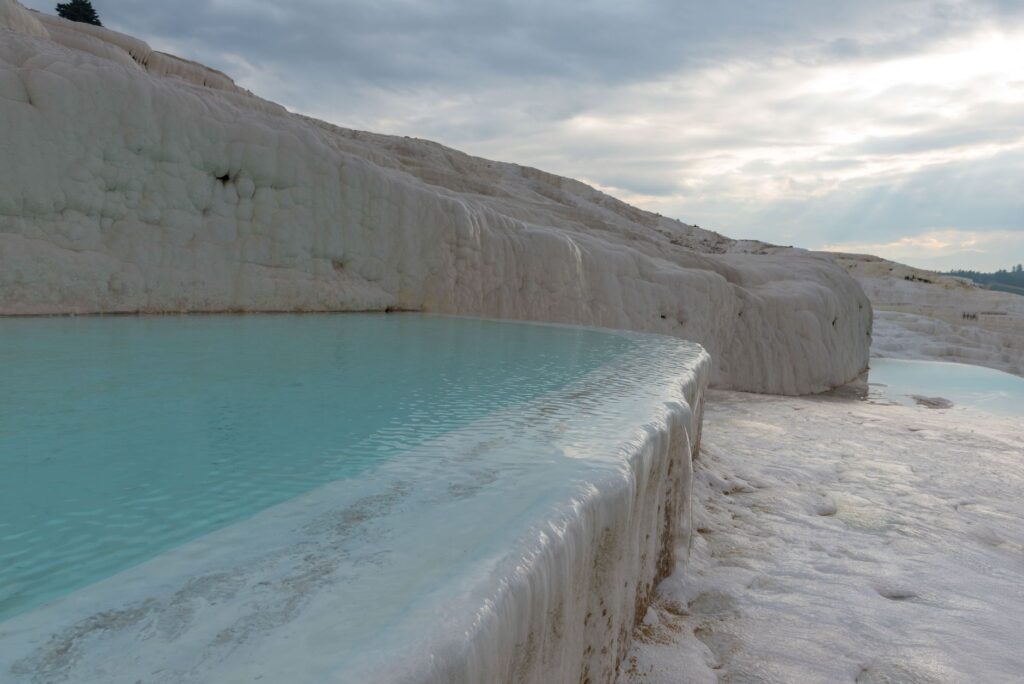
This phenomenon is the direct result of intense tectonic activity running along the Menderes River fault line. Meteoric waters filter deep into the bowels of the surrounding mountains, where they are heated by underground magma chambers before ascending rapidly through deep fissures. Along their journey, they dissolve large quantities of calcium carbonate. Upon emerging to the surface and contacting atmospheric air, carbon dioxide dissipates rapidly, prompting the immediate precipitation of calcium and transforming the liquid element into solid travertine terraces.
The water that sculpts these white cascades today is the same fluid that fueled the purification rituals of Phrygian and Roman priests more than two millennia ago.
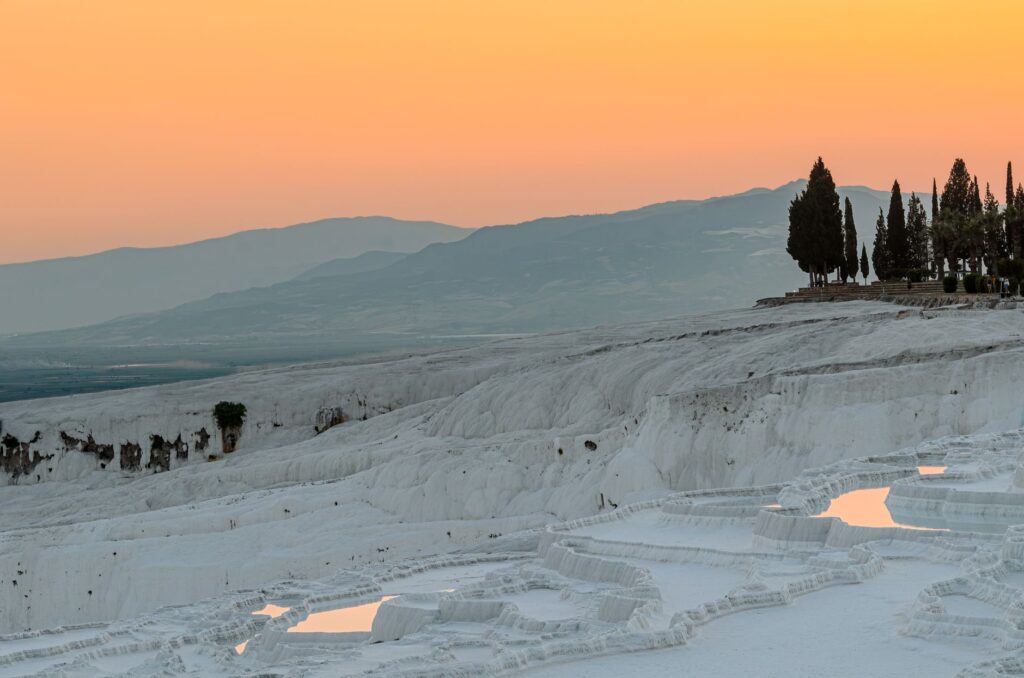
Far from the hustle and bustle of mass tourism frequenting the Turkish Mediterranean coast, dawn over the terraces reveals an atmosphere of geological reverence. Morning mist rises softly from the thermal pools, creating a deep chromatic contrast between the impeccable whiteness of the precipitated calcium carbonate and the deep blue of the Anatolian sky. Travelers arriving in the early hours can hear the steady murmur of water trickling from one tier to the next, a monodic sound that has remained unaltered since the first agricultural civilizations settled in this fertile valley.
Subterranean Alchemy and the Calcium Carbonate Cycle
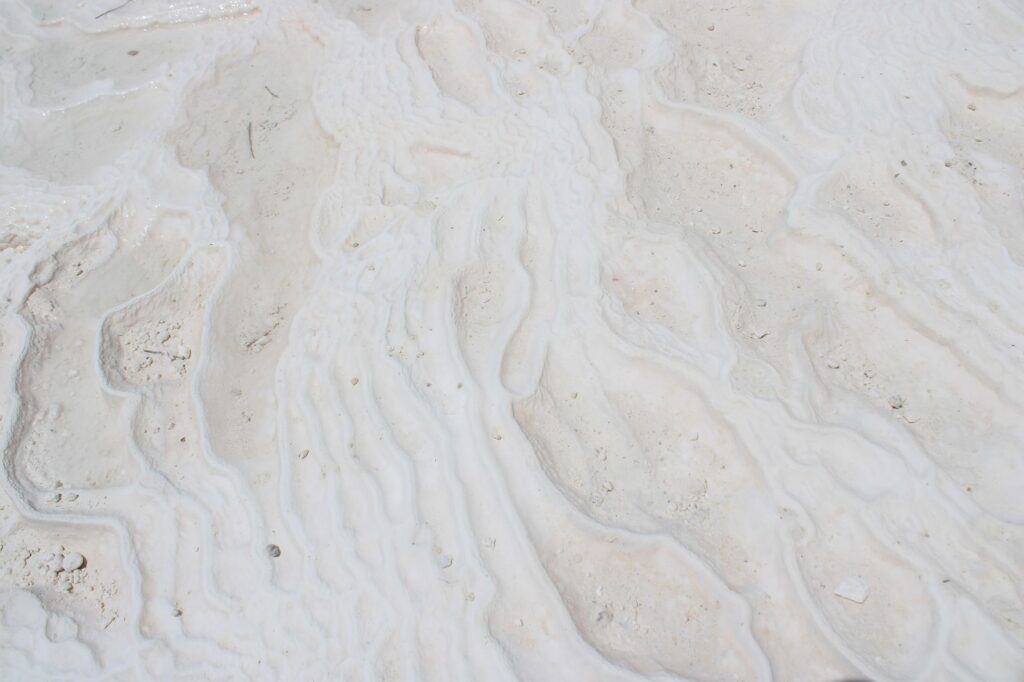
To understand the physical genesis of this natural monument, it is indispensable to analyze the chemistry of its springs. The five primary sources feeding the system release approximately two hundred and fifty liters of water per second. This continuous flow transports a massive mineral load that, cooling gradually as it descends toward the plain, molds delicate stony lacework known locally as terrace stalagmites.
The petrification process is far from static; it represents a slow and living metamorphosis. Thermophilic algae and bacteria inhabiting the mineral water endow certain areas with ochre, green, and reddish hues, breaking the chromatic monotony of optical white. Local authorities and archaeological site scientists strictly regulate the hydraulic flow directed to different sections of the terraces to prevent dehydration of the formations and ensure that mineral deposits maintain their natural cycle without the destructive intervention of massive human traffic.
Hierapolis: The Sacred City Built Upon the Fault Line
Right on the ridge crowning the travertine terraces extend the monumental ruins of Hierapolis, a city founded in the late second century BC by the kings of Pergamum and later integrated into the Roman Empire. The choice of this location was not driven by strategic commercial or defensive criteria, but strictly by religious and therapeutic ones. The ancients believed that toxic vapors emanating from certain underground cavities were the breath of Pluto, the god of the underworld.
The archaeological site stands out for its excellent state of preservation and an urban layout that takes advantage of the natural slope of the terrain. The main avenue, flanked by marble colonnades and monumental porticos, guides the visitor through the remains of ancient Byzantine basilicas, pagan temples, and public thermal complexes that in their golden age attracted nobles and invalids from across the eastern Mediterranean seeking cures for chronic ailments.
- The Lower Gate and the northern necropolis, one of the largest and best preserved in all of Anatolia, featuring over a thousand monumental tombs.
- The monumental nymphaeum, tasked with distributing spring water to the various residential quarters of the ancient city.
- Public latrines and ceramic piping systems demonstrating the advanced mastery of Roman hydraulic engineering.
The coexistence between classical architecture and the hydrothermal environment is total. The limestone blocks utilized in constructing public buildings derived from local quarries, visually integrating human craftsmanship with the territory’s geological substrate. Walking along these ancient stone paths allows visitors to gauge the ambition of a civilization that managed to tame such an extreme environment and turn it into an unprecedented medical pilgrimage center.
The Roman Theater and the Horizon of the Menderes Valley
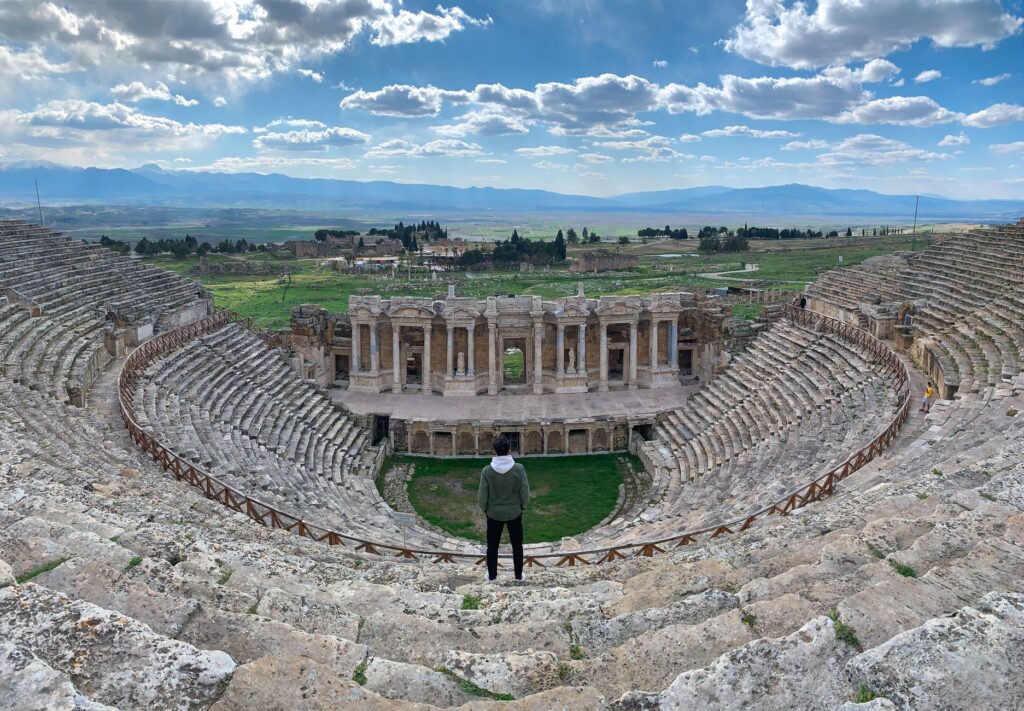
Dominating the Hierapolis hill stands the superb grand Roman theater, built during the reign of emperors Septimius Severus and Caracalla. With an estimated capacity exceeding twelve thousand spectators, this structure impresses not only due to its colossal dimensions, but through the extraordinary preservation degree of its scaenae frons and seats reserved for local authorities.
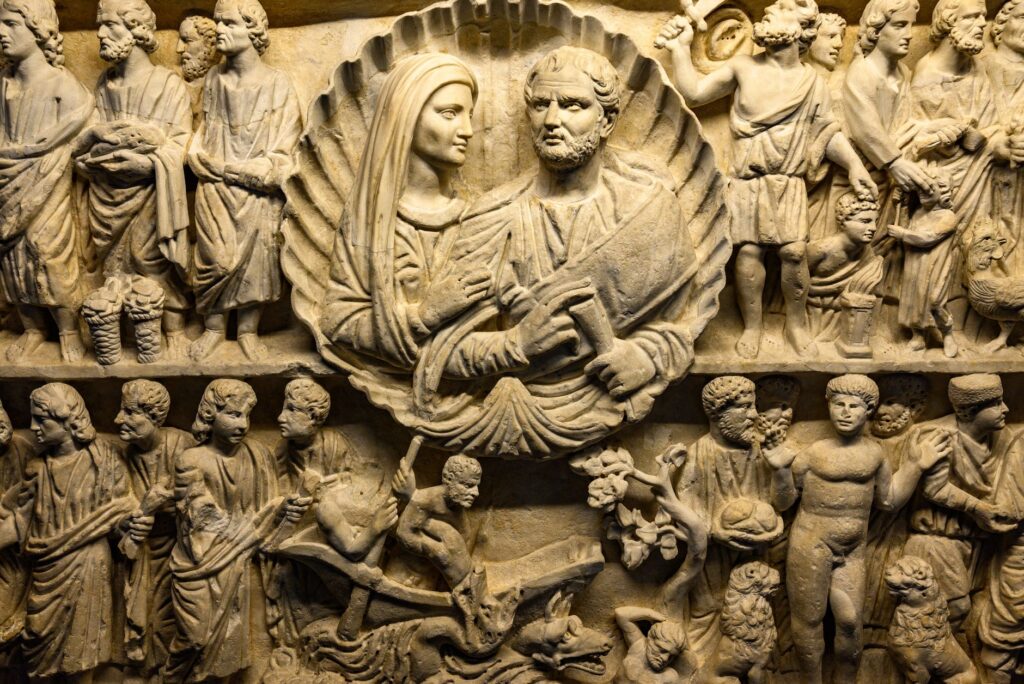
From the upper tier of the theater, the view encompasses the entirety of the Menderes River valley, a mosaic of cultivated fields, sentinel olive groves, and secondary roads winding toward the interior of the Anatolian peninsula. Reliefs carved into the proscenium wall narrate mythological scenes linked to Apollo and Artemis, reminding the visitor that classical culture in these borderlands was inseparable from devotion to nature’s elemental forces.
Thermal Engineering and the Art of Bathing in Antiquity
The therapeutic use of Pamukkale’s waters reached its zenith during the Roman period, when Hierapolis consolidated its status as one of the most prestigious hydrotherapy centers in the known world. Physicians of the empirical school prescribed prolonged baths in warm pools to treat rheumatic conditions, dermatological problems, and respiratory ailments. Thermal infrastructure was not an ephemeral luxury, but a public health institution financed both by the imperial treasury and private donations from wealthy citizens.
Archaeological excavations have brought to light multiple thermal bath complexes built with solid brick and mortar walls, originally revetted with polished marble slabs and decorative stucco. These spaces featured a sophisticated distribution system separating water according to its temperature and mineral content. Main pools were designed to allow collective immersion, fostering sociability and commercial exchange among travelers arriving at the sanctuary.
Bathing in Hierapolis transcended mere bodily hygiene; it constituted a civic and spiritual act of physical rebalance under the watchful gaze of protective divinities.
Today, visitors can experience a direct approach to this millennial tradition in the so-called Antique Pool, also known as Cleopatra’s Pool. Situated in the heart of the archaeological site, this thermal pond is dotted with fragments of marble columns and capitals that plunged into the water following violent earthquakes shaking the region in antiquity. Swimming in these waters at a constant temperature of thirty-six degrees, surrounded by submerged archaeological remains, offers a direct sensory connection with the past.
The Transition Toward Contemporary Thermalism
During the second half of the twentieth century, uncontrolled tourism development severely threatened the integrity of the travertine terraces. Hotel construction directly over the archaeological site caused excessive water consumption and wastewater discharge that irreversibly damaged the immaculate white color of calcareous formations, turning certain zones into grey and dry surfaces.
In the late nineteen-eighties, the Turkish government, in collaboration with UNESCO following the site’s declaration as a World Heritage property, implemented a radical restoration plan. Hotels were demolished, vehicle access was banned, and thermal water flow was diverted through a timed sluice-gate system enabling periodic washing and bleaching of natural terraces. This drastic intervention has successfully reversed deterioration, restoring the landscape to its original splendor and proving that rigorous heritage conservation is compatible with sustainable, respectful tourism.
Practical guide
How to get there
The closest airport to Pamukkale is Çardak (DNZ), located about seventy kilometers to the east, with regular daily connections from Istanbul. From the air terminal, shuttle bus services and private taxis link directly to the town of Pamukkale or the neighboring city of Denizli, which features a major railway station connected with Izmir and Ankara.
When to go
Ideal months for planning a visit are spring (from April to June) and autumn (from September to November), when daytime temperatures are moderate and allow exploring the archaeological site without the stifling heat of the Anatolian summer. The early hours of the morning, coinciding with site opening, offer the best photographic light and greater tranquility.
Access requirements and regulations
Access to the travertine terraces strictly requires removing footwear to prevent abrasion and contamination of calcareous formations with street shoes. The use of soaps, shampoos, or sunscreens in natural pools open to the public is strictly forbidden. Tickets to the Hierapolis archaeological enclosure and the Antique Pool are purchased independently at official ticket counters.
Accommodation and gastronomy
Although many travelers choose to undertake a day trip from Izmir or Selçuk, staying overnight at the base of the terraces allows enjoying sunset over the travertine. Local lodging offerings range from small family establishments to spa hotels with direct thermal water supply. Regional gastronomy stands out for Aegean cuisine specialties based on fresh vegetables, extra virgin olive oil, and traditional lamb dishes.
The Final Echo of White Stone
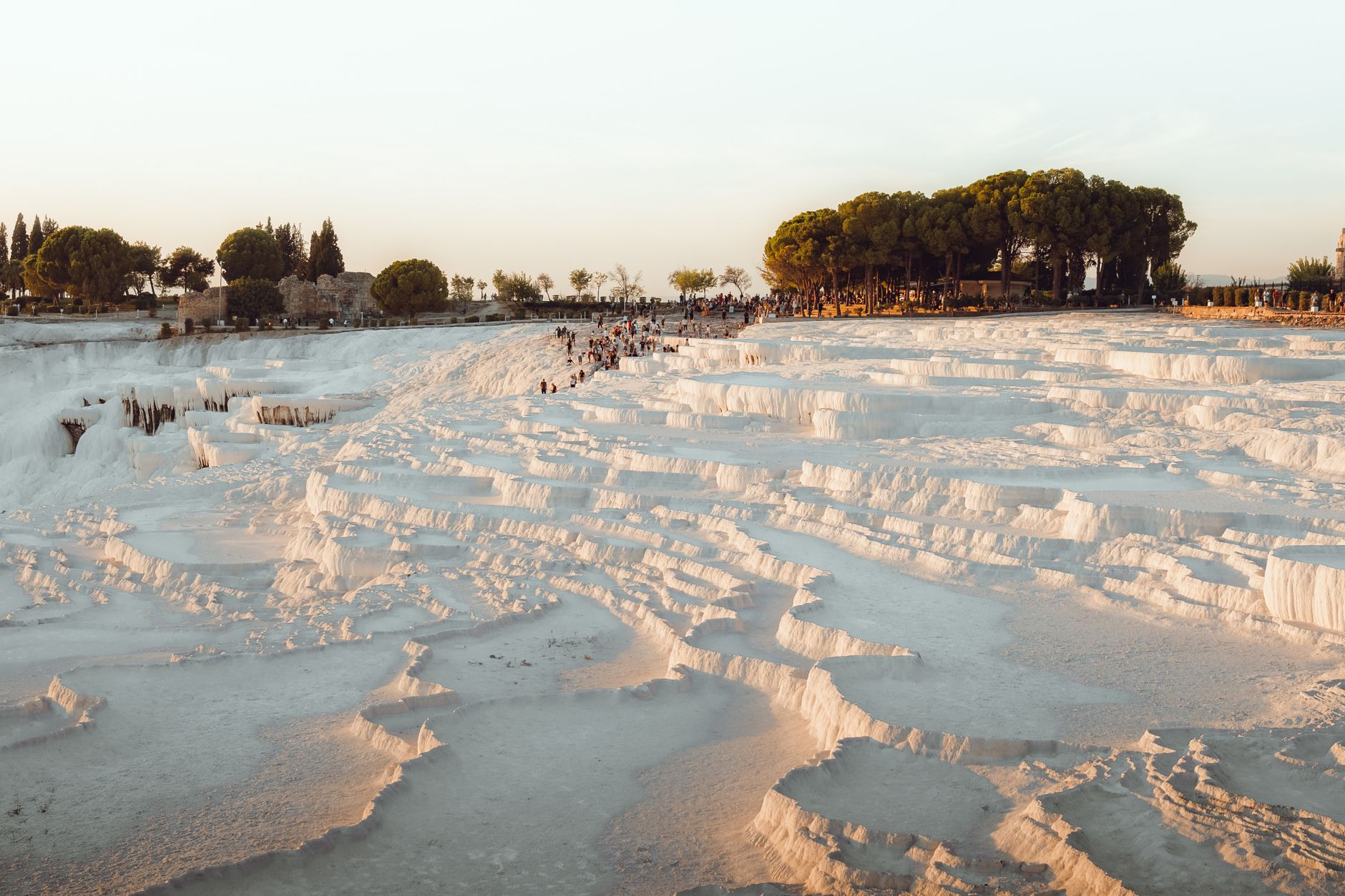
As the sun declines over the Anatolian horizon, golden and pink reflections take over the travertine terraces, transforming the landscape into a surface of unreal appearance. The silence slowly descending upon the ruins of Hierapolis invites leisurely contemplation of a territory where geology and human history have walked hand in hand for millennia. The traces of ancient pilgrims who sought health and solace in these waters remain alive in every corner of limestone, reminding contemporary travelers that the true value of these natural sanctuaries lies in their fragile and unalterable persistence across time.