
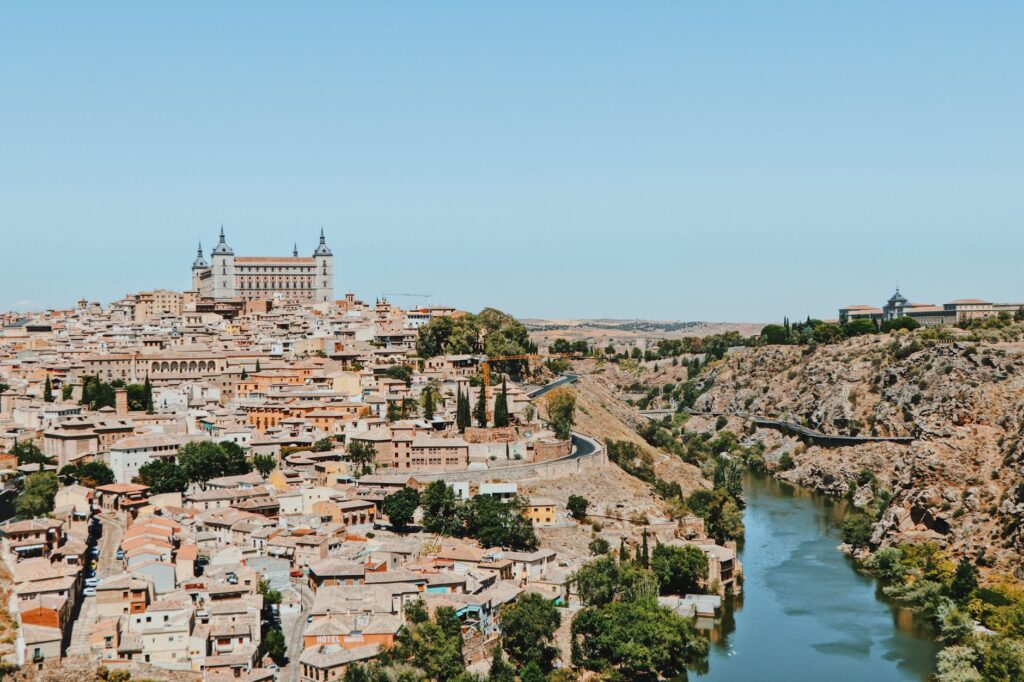
Just a short walk from the tourist hustle and bustle crowning the imperial city, Toledo’s Central Market operates as a living organism, indifferent to the chronicler’s rush and anchored in the deep memory of Castilla-La Mancha. Its stone and iron walls contain not merely food stalls, but an intangible archive where Sephardic, Mudejar, and Christian legacies intersect to shape the culinary identity of the region. Every dawn, before the sun warms the cobblestone alleys of the historic quarter, local producers lay out a symphony of colors and aromas on their counters that defies the passage of time.
This report ventures into the bowels of this mercantile temple and the wild landscapes that supply it to answer a fundamental question: how does the pantry of a borderland territory survive against the homogenization of global markets? Through the voices of veteran butchers, market gardeners working the Tagus river basin, and chefs committed to rescuing forgotten recipes, we examine the health of a gastronomic ecosystem that finds its greatest strength in absolute respect for seasonal produce and the natural cycle of the land.
The Architecture of Daily Pulse: Between Modernist Iron and Medieval Stone
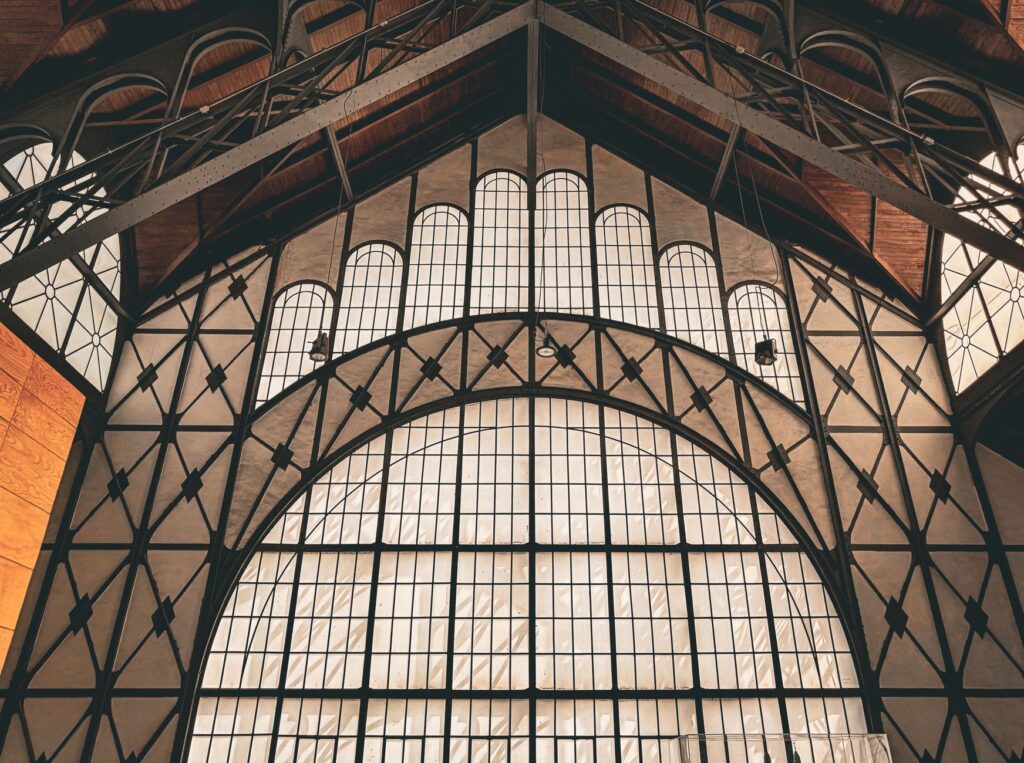
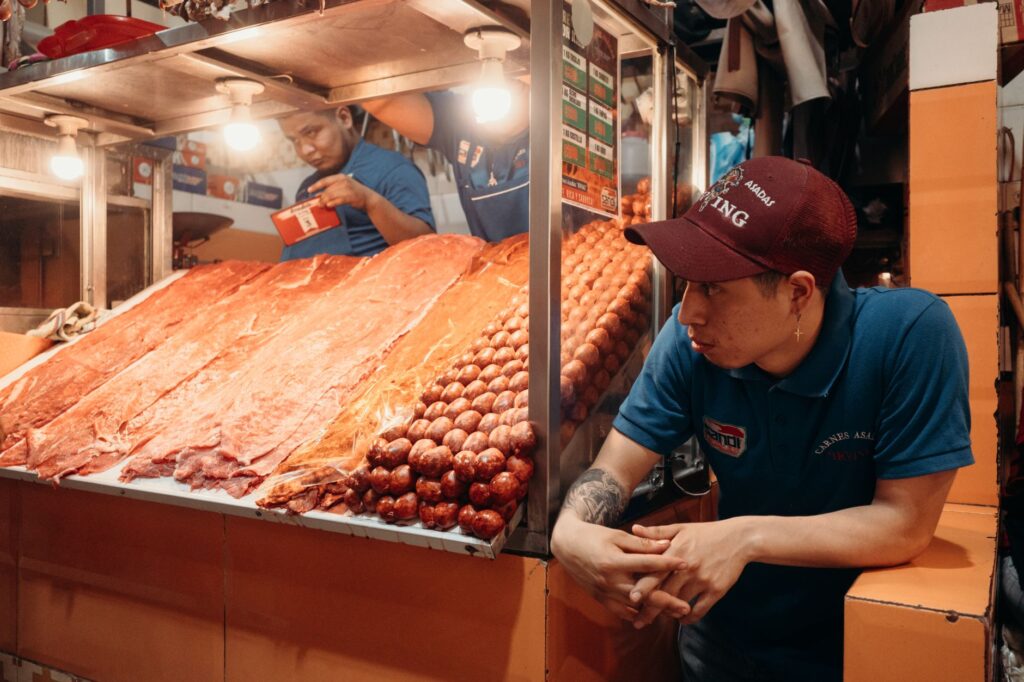
Formally inaugurated at the beginning of the 20th century to organize centuries-old street commerce, the Toledo market building fuses the industrial aesthetics of forged iron with Castilian sobriety. Crossing the threshold, visitors experience not the cold efficiency of a large commercial surface, but the warmth of a covered public square where human interaction remains the primary currency. The aisles are organized with an almost instinctive logic: the fishmongers, receiving fresh catch from the Levantine coast and interior rivers, maintain a permanent dialogue with the butchers and poultry vendors who safeguard the honor of local livestock.
At these stalls, time is measured in leisurely conversations and advice on cooking times. The market is not a mere point of sale, but the social thermometer of the city, the place where lifelong residents cross paths with the most demanding chefs in search of the perfect ingredient. The metallic structure, designed to maximize ventilation and natural light, bathes products in a theatrical chiaroscuro that highlights the textures of cured meats, Manchego sheep cheeses, and stone fruits from nearby irrigated fields.
The Game Pantry: The Wild Pulse of the Montes de Toledo
If there is one element that radically differentiates the offerings of this market from other peninsular enclaves, it is its absolute devotion to game meat. The Montes de Toledo, that sea of rockroses, holm oaks, and rocky ridges situated south of the province, supply exceptional raw material that finds its definitive showcase in the market’s butcher shops. During the autumn and winter months, traditional hunts feed the counters with venison, wild boar, roe deer, and red partridge that define the backbone of high Castilian cuisine.

Specialized butchers explain that the secret of this meat lies in the freedom with which the animals feed in the underbrush, browsing on mastic shoots, acorns, and aromatic herbs. Handling game meat requires patience, precise marinades, and a deep understanding of fire, virtues that local buyers cherish generation after generation. Far from being an inaccessible luxury product, small and large game continues to form part of everyday stews, memorable escabeches, and wild pâtés that concentrate the essence of the mountain range.
The Green Gold and the River Garden: The Tagus Riverbank
Embraced by the meanders of the Tagus River, the Toledo region encompasses a fascinating agrarian duality. On one hand, centennial olive groves climbing the slopes produce extra virgin olive oils of the Cornicabra variety, characterized by an intense fruity profile, balanced bitterness, and a characteristic throat tickle that reveals its high antioxidant content. These oils are not only sold in bulk or in signature bottles at specialized stalls, but act as the invisible conductive thread uniting all market preparations.
On the other hand, the river basin and proximity gardens guarantee rigorous vegetable rotation. Here, aesthetic uniformity is discarded in favor of genuine flavor: tomatoes tasting of earth and sun, sweet red onions, and leafy greens arriving at the stall mere hours after harvesting. Toledo’s food sovereignty rests upon these small green belts, where farmers resist the push of agribusiness by betting on indigenous seeds and cultivation methods respectful of the river’s flow and soil fertility.
The market is the mirror where the city gazes upon itself every morning; within its stones lie the history of what we were and the flavor of what we can still preserve.
Convent Recipes and the Secret of Artisan Marzipan
The influence of religious orders on Toledan gastronomy is vast. Within the city’s cloistered convents, a pastry-making heritage has been preserved for centuries, finding in the market a fundamental channel for promotion and sale. Marcona almonds and sugar form the foundations of a confectionery where time stands still. Toledo marzipan, protected by a strict Protected Geographical Indication, is not merely a Christmas treat, but a piece of culinary craftsmanship made with exact proportions of raw ground almond and sugar.
Traditional market stalls offer these small monastic jewels year-round, alongside marquesitas, empiñonadas, and pestiños. Toledan convent pastry represents the resistance of slowness against accelerated consumption. Each piece is hand-kneaded, baked with care, and wrapped in parchment paper, keeping alive a legacy directly linked to Andalusi and Sephardic pastry techniques, where almond and honey formed the core of gastronomic creation.
The Guild of Taste: Generational Handover Among Stalls
One of the greatest risks historic markets face in the 21st century is generational disconnection. However, within Toledo’s Central Market, a hopeful phenomenon is observed: a silent generational handover. Sons and daughters of former vendors are taking over, introducing management improvements, digital ordering for local hospitality, and closer nutritional advice, without ever losing the personal touch and rustic aesthetics that define the space.
This renewal not only attracts new profiles of young buyers and residents from newer neighborhoods, but consolidates a strategic alliance with local catering. Chefs from the city’s most prestigious restaurants arrive every morning to converse with these young market vendors, designing their menus based on what the market offers that exact day. True Toledan culinary avant-garde is not born in laboratories, but in the daily complicity between producer and cook.
Practical guide
Planning a visit to Toledo’s Central Market requires understanding its rhythms and layout to make the most of the anthropological and gastronomic experience.
- Location and Access: The market is situated in Plaza de Cuba and surrounding streets of the historic expansion zone, a ten-minute walk from Plaza de Zocodover. It is accessible via urban escalators and public bus lines.
- Recommended Hours: Stalls are open Monday through Saturday from 08:00 to 14:30. The moment of greatest activity and visual richness is concentrated between 09:00 and 11:30 in the morning, when fresh goods arrive.
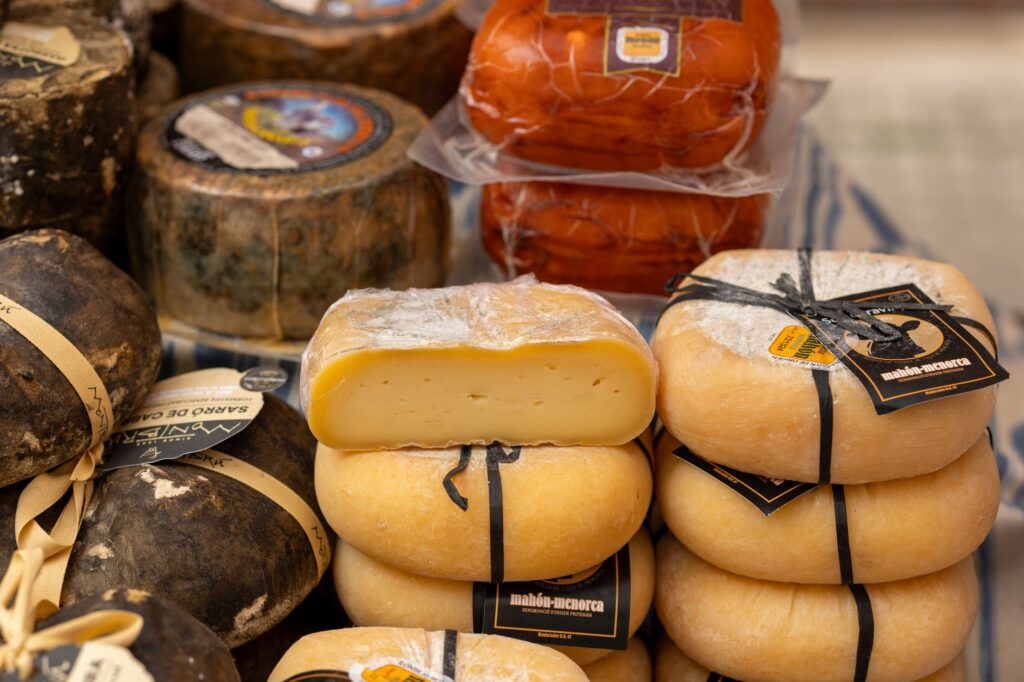
- Essential Products: Do not miss acquiring seasonal game meat, Protected Designation of Origin Montes de Toledo extra virgin olive oil, artisanal raw milk Manchego cheeses, and traditional convent marzipan.
- Commercial Etiquette: It is customary to greet the vendor upon arriving at the stall, verbally ask for your turn if there is a crowd, and allow yourself to be advised on the cut or piece of the day according to your culinary purpose.
- Sustainability and Transport: Visitors are encouraged to bring reusable cloth bags or traditional shopping carts to avoid plastic use and support zero-kilometer commerce.
Shopping in the traditional market is an act of civic sovereignty that nourishes the local economy and protects the rural landscape of our province.
At dusk, when the final stalls close their doors and metal shutters descend with a dull echo across the aisle floors, Toledo’s Central Market recovers its stony silence. Outside, the lights of the imperial city illuminate the ancient walls, reminding us that beneath this rocky promontory life continues to revolve around the table. Game pieces rest in refrigerated chambers, sacks of legumes hold the warmth of the earth, and oils repose in their clay jars, waiting for dawn to once again open the doors of this sanctuary where time, fortunately, refuses to march in a hurry.