
Origins of Living Stone in Southern Galicia
In the heart of the O Porriño region, geography is not a mere accident of the landscape, but a compact mass of pink granite that has dictated the economic, architectural, and cultural pulse of its people for centuries. From early manual quarrying to the technical modernization of large open-cast quarries, this Pontevedra territory has functioned as an immense open-air laboratory where stony matter is tamed through the rhythmic impact of mallet and chisel. The unique mineralogical composition of Porriño granite, characterized by its warm hue and remarkable resistance to erosion, made it a coveted material since the 19th century for both monumental civil engineering and traditional Galician domestic architecture.
The relationship between the inhabitant and the stone transcends the purely industrial; it constitutes an identity bond deeply rooted in collective memory. The old cart tracks that descended from the slopes of Louriña laden with colossal ashlar blocks have given way to a network of logistical infrastructures distributing this geological resource across the continent. However, in the less-traveled corners of industrial estates and within traditional workshops, artisanal stonemasons continue to operate under the exact same principles of micrometric precision and absolute respect for the natural grain learned from their ancestors.
The Anatomy of the Workshop: Between Tradition and Modern Machinery
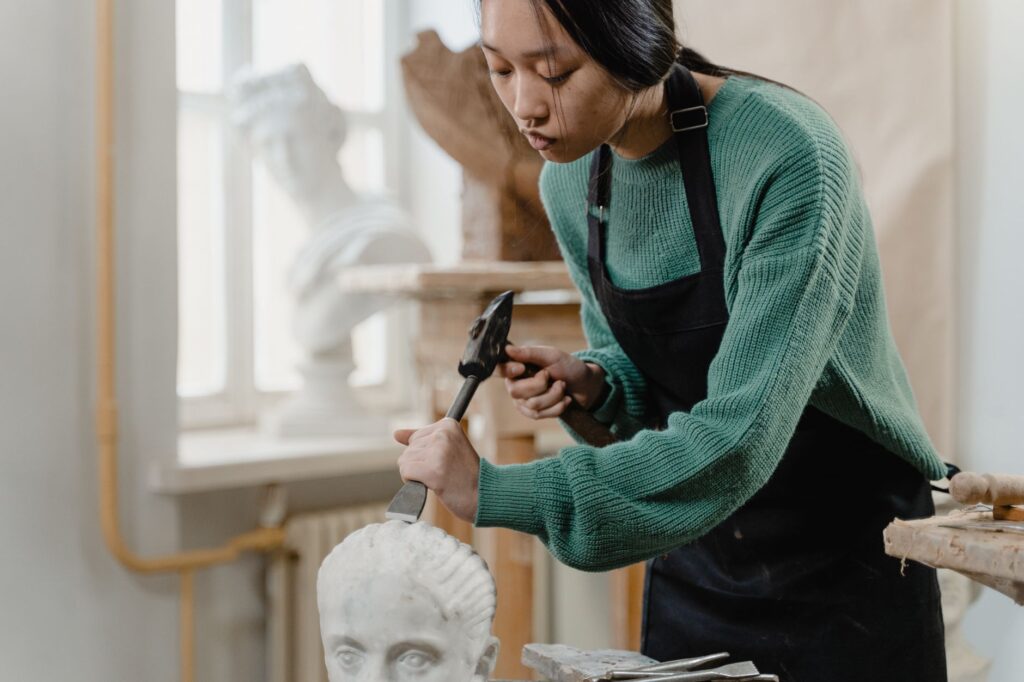
Entering a contemporary stonemasonry workshop in O Porriño is stepping into a space where the deafening roar of large diamond saws coexists with the focused silence of manual labor. Master artisans, direct heirs to the crews of stonemasons who erected historic Galician manor houses and bridges, inspect every block with a clinical eye. They know how to read the hidden tensions within the stone, anticipating how it will respond to the impact of the bush hammer or the firm tracing of the point. This duality defines the present sector: the capability of undertaking large international architectural projects without losing mastery of the manual techniques that guarantee the authenticity of every sculptural or ornamental piece.
Tools have evolved, but fundamental gestures remain unaltered. The pneumatic hammer has eased the physical hardship of primary rough-hewing, but the final finish —the artisan’s true hallmark— still demands the tactile sensitivity of the human hand. It is at this point that training becomes a critical challenge. With generational turnover threatened by a scarcity of new apprentices willing to take on the physical demands and technical rigor of the trade, local workshops are promoting direct mentorship programs, seeking to transfer implicit knowledge before it vanishes into the archives of oral history.
The Bush Hammer and the Compass: Mastering Textures
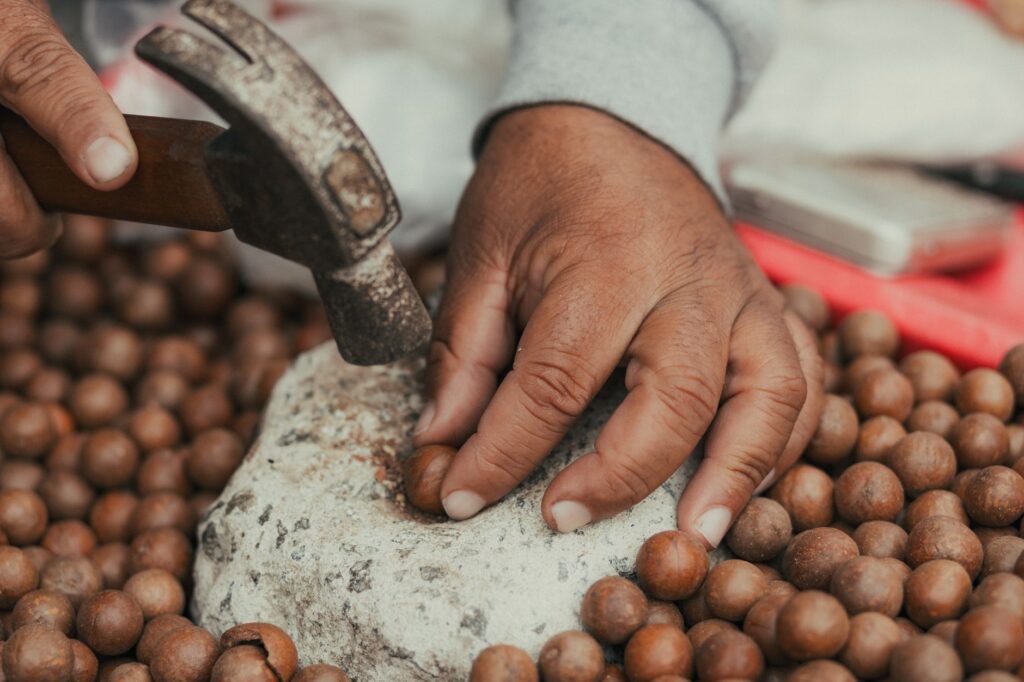
The surface treatment of granite is a language in itself, allowing experts to date eras, identify schools of masters, and understand the aesthetic function of a wall. In the workshops of O Porriño, using the bush hammer —the multi-toothed mallet that leaves a uniformly pitted trace across the stony surface— remains one of the most delicate operations. By striking the stone with varying intensities and spacing between teeth, the artisan softens the natural shine of the granite, granting it a matte, rough texture that absorbs light uniquely and withstands the test of time and Atlantic humidity with elegance.
Alongside the bush hammer, working with the scabbler and gradine allows for the creation of characteristic rusticated walls or classic moldings decorating the bases of institutional buildings. Each blow responds to a precise mental geometry calculated to the millimeter over the block’s surface. Masters remind us that stone forgives no errors: excess force in the final second can fracture a piece requiring days of labor. This constant tension between restraint and kinetic energy is what elevates stonemasonry to an applied fine art in construction.
Monumental Architecture and Global Projection
O Porriño granite is not confined to the local sphere; its presence is recognizable on the facades of major European, American, and Asian metropolises. The large extraction and transformation companies of the region have successfully positioned the material in demanding international markets, participating in large-scale urban projects where durability and sober elegance are indispensable requirements. This global projection has forced workshops to upgrade their quality control standards, subjecting the stone to rigorous testing for flexural strength, water absorption, and behavior against urban pollutants.
Nevertheless, contemporary architects visiting the area are not solely seeking the industrial standardization of large polished slabs. There is a renewed interest in recovering rustic textures, solid ashlar blocks, and traditional constructive solutions that dialogue with the natural environment. This current has allowed small workshops specializing in unique structural work and heritage restoration to find a highly dynamic market niche, where personalization and deep material knowledge are valued far above mass production.
Stone is not an inert material; it is a geological archive that the stonemason awakens through the steady rhythm of their hands and their understanding of time.
Historical Heritage Sculpted Across the Region
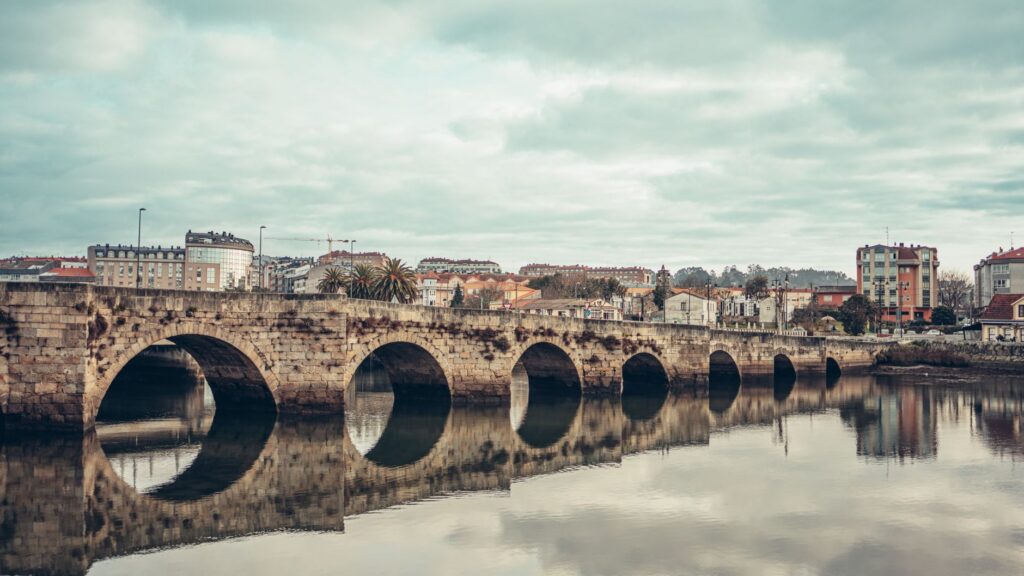
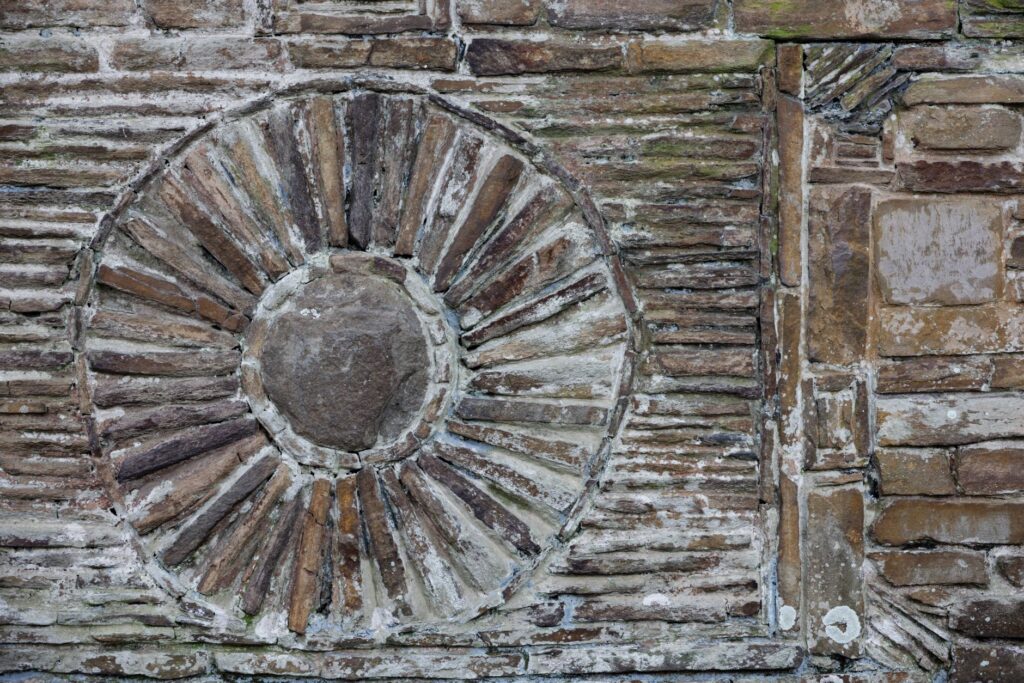
Exploring the municipalities surrounding O Porriño reveals the tangible legacy of generations of stonemasons. Romanesque churches such as Santa María de Porriño, stately manor houses featuring characteristic noble coats of arms carved in high relief, and medieval bridges defying local river floods form an open-air museum. In each of these monuments, mason’s marks —geometric symbols discreetly engraved on ashlar blocks to certify each craftsman’s labor and calculate wages— act as anonymous signatures connecting the present with the collective effort of the past.
Conserving this architectural heritage demands highly specialized interventions. When a historic ashlar degrades due to pollution or weather, it cannot simply be replaced by any modern block. Restorers turn to traditional local workshops to commission identical pieces in mineralogical composition and surface texture, thereby ensuring the aesthetic and structural coherence of the monuments. This artisanal replacement work is one of the most delicate tasks undertaken by current masters, combining constructive archaeology with the most refined manual skill.
Sustainability and Circular Economy in Extraction
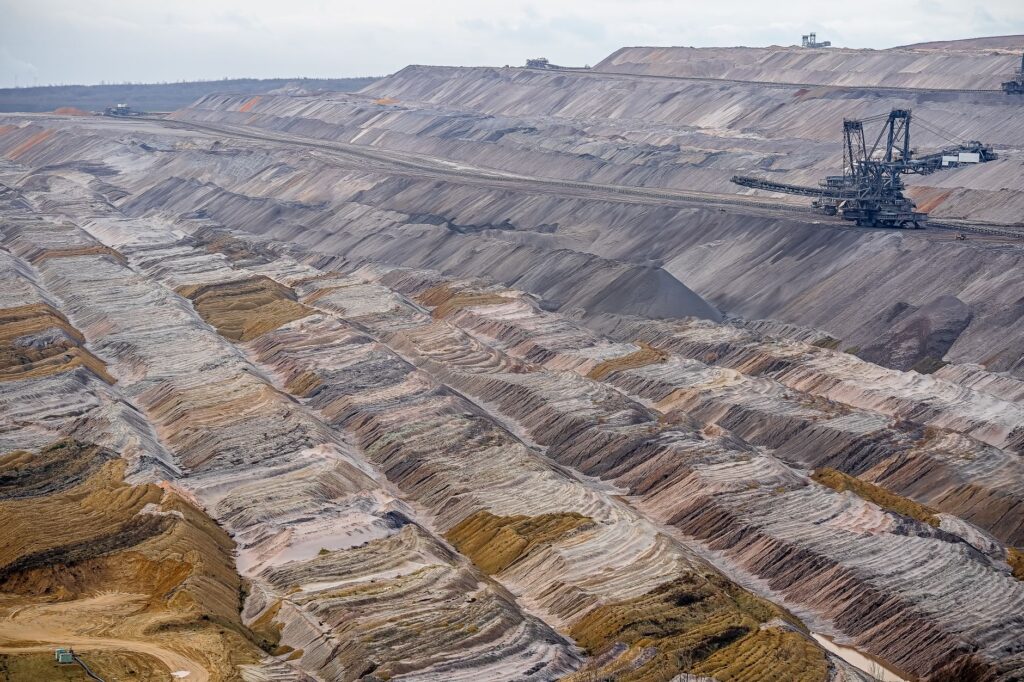
The granite sector in O Porriño currently faces a profound transformation process oriented toward environmental sustainability and circular economy. Quarrying, traditionally associated with strong landscape impact, is adopting strict progressive ecological restoration regulations, whereby dumping sites and excavation voids are reintegrated into the natural ecosystem with native vegetation. Furthermore, the sludge generated during diamond-wire cutting and water sawing is treated in settling plants to separate solids and reuse water resources in a closed circuit.
Within workshops, granite scraps previously discarded now find a second life in urban landscaping applications, ecological paving cobblestones, or as decorative aggregates for sustainable construction. This comprehensive revaluation of by-products demonstrates that local industry understands its long-term viability depends inexorably on protecting the geographic environment that gives it meaning. Technological modernization, far from disconnecting the sector from its ecological roots, has reinforced its commitment to the territory.
Practical guide
- How to get there: O Porriño is exceptionally well connected by road via the A-55 highway and AP-9 motorway, directly linking with Vigo and Tui. Vigo Airport (Peinador) is barely 15 kilometers away.
- Best time to visit: Spring and autumn offer mild temperatures ideal for exploring outdoor routes and visiting workshops without summer crowds.
- Workshop visits: Some historic workshops and interpretation centers allow scheduled visits to observe master stonemasons at work. Booking in advance through local tourism offices is essential.
- Recommended route: The trail of ancient stonemasonry paths and viewpoints overlooking the large quarries of Louriña provides an understanding of the industrial monumental scale.
- Local gastronomy: The visit is complemented by the rich culinary tradition of the region, highlighting Rías Baixas D.O. wines and traditional Atlantic cuisine.
The Eternal Echo of the Mallet Upon the Rock
At dusk, when the commotion of heavy mechanical cutters subsides and silence reclaims its space over the valleys of O Porriño, the rhythmic and measured tapping of a chisel still echoes in certain corners of the workshops. It is the sound of a tradition refusing to become a museum piece, kept alive through the tenacious effort of men and women who view their craft as a form of permanence. In each granite block roughed out with patience, Earth’s geological memory transforms into habitable culture, proving that the true wealth of this Galician corner lies not solely in the abundance of its stone, but in the incorruptible talent of those who make it speak.