Introduction to Japan’s High-Speed Rail System
The development of modern land transport finds one of its most solid and admired global benchmarks in Japan. Far from being a mere means of rapid displacement, the Japanese high-speed rail network stands as a masterpiece of civil engineering, precision logistics, and territorial planning. Since the inauguration of the Tokaido Shinkansen line in 1964, coinciding with the Tokyo Olympic Games, this system has radically transformed the perception of geographical distances within a mountainous and densely populated archipelago. The country’s major metropolises were connected by metallic arteries capable of defying local topography through an unprecedented deployment of tunnels, viaducts, and cutting-edge technology.
The integration of these rail corridors into daily life and tourist travel reflects a long-term vision where reliability, safety, and energy efficiency occupy a central place. Unlike other Western models, the Shinkansen was not conceived as an isolated service, but rather as the backbone of a multimodal transport system perfectly meshed with commuter networks, subways, and maritime transport. For the contemporary traveler, understanding the operation of this network not only facilitates the exploration of the territory but also allows a glimpse into the cultural values of a society that prioritizes millimetric punctuality and collective respect.
Technical Evolution: From the 1964 Vision to Modern Vanguard
The birth of the first Shinkansen marked a turning point in the history of world railway transport. For the first time, a commercial train regularly exceeded two hundred kilometers per hour on an exclusive standard-gauge track, completely separated from conventional narrow-gauge railway traffic. This physical and electrical isolation guaranteed from the outset safety standards that, with over six decades of commercial operations and billions of passengers transported, maintain a record free of fatal accidents due to derailment or collision attributable to the system.

Over the decades, successive generations of bullet trains—from initial iconic series to modern N700S models or future magnetic levitation trains—have incorporated advanced aerodynamic innovations and composite materials. Noise reduction when entering tunnels, improved seismic impact absorption, and optimization of energy consumption per passenger are the result of constant investment in research and development. Each new design undergoes rigorous closed-circuit testing before being integrated into a network where every second counts and mechanical synchronization resembles that of a Swiss watch.
The Geography of Displacement: Main Corridors and Territorial Connectivity
The backbone of the system is composed of several main routes connecting Tokyo with major economic and cultural hubs across Honshu and Kyushu. The Tokaido Shinkansen line, linking Tokyo, Nagoya, Kyoto, and Osaka, remains the busiest and most profitable corridor in the world, carrying hundreds of thousands of professionals and travelers daily. Concurrently, the Sanyo line and its extension through Kyushu stretch high-speed service to the country’s southwestern tip, enabling seamless transit between the Kanto plain and the southern islands.
Toward the north and northwest, the Tohoku, Joetsu, and Hokuriku Shinkansen lines challenge mountainous regions characterized by heavy winter snowfalls. To ensure operability during the coldest months, tracks incorporate integrated heating systems and hot-water sprinklers that prevent ice accumulation on bogies. This capability to maintain schedule regularity under extreme weather conditions is one of the greatest achievements of Japanese railway engineering, consolidating a network that effectively vertebraes both megalopolises and less populated rural regions.

The Human Factor and the Culture of Punctuality
The operational success of the Shinkansen cannot be explained solely through its technical infrastructure; it rests fundamentally on the human factor and a corporate culture dedicated to service excellence. Train drivers, station supervisors, and maintenance teams operate under strict protocols where safety and temporal precision are unshakeable mandates. The annual average delay across the entire high-speed network is measured in seconds, a milestone that surprises international visitors accustomed to the volatility of transport elsewhere.
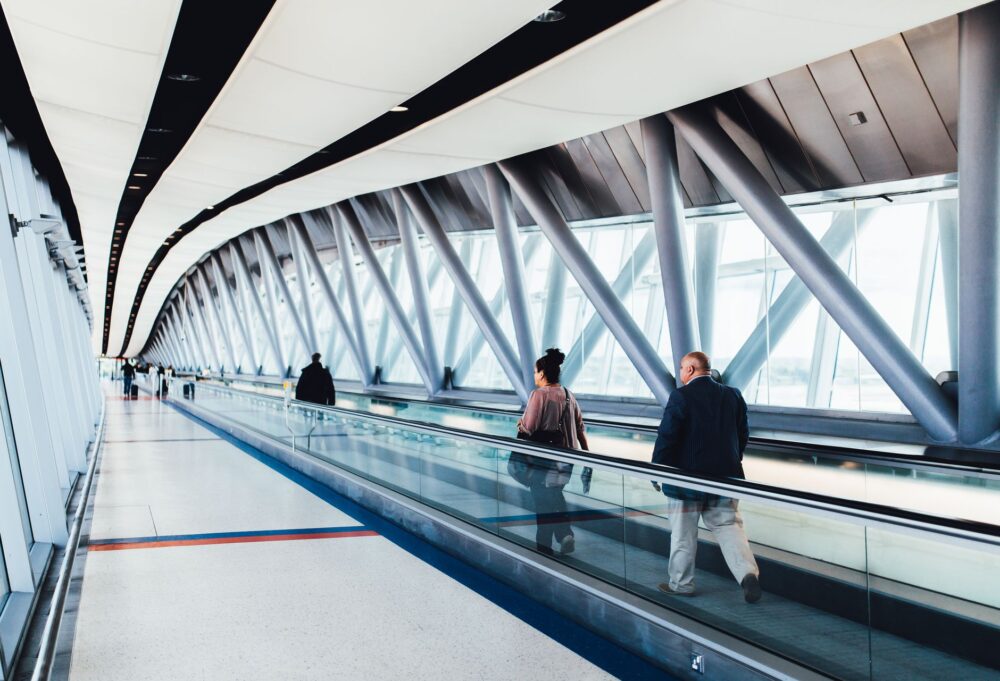
This rigor is also reflected in the onboard experience. Cabin staff bow upon entering and leaving passenger cars as a sign of respect toward travelers, and cleaning crews perform rapid, coordinated operations at terminals to leave trains spotless within minutes. Terminal stations function as high-precision logistics centers where information is updated in real time and clear signage efficiently guides millions of daily passersby.
Punctuality in Japan is not merely a matter of logistical efficiency; it is a profound manifestation of respect for other people’s time and a fundamental pillar of public trust in the national infrastructure.
Infrastructure Against Natural Disasters: Seismology and Safety Engineering
Living in one of the seismically most active territories on the planet has compelled Japan to develop cutting-edge technology to mitigate the impact of earthquakes, typhoons, and volcanic eruptions on high-speed rail lines. The early earthquake detection system, known as UrEDAS (Urgent Earthquake Detection and Alarm System), is capable of detecting primary seismic waves—faster but less destructive—and automatically interrupting the power supply to circulating trains before secondary waves arrive, which are the cause of major damage.

Viaducts, bridges, and tunnels are designed with flexible structures capable of dissipating the energy of tectonic movements without collapsing. Furthermore, optimized train aerodynamic profiles and emergency braking systems enable formations traveling at over two hundred and fifty kilometers per hour to stop safely over relatively short distances. This integration of applied seismology into railway architecture constitutes an international benchmark in risk management for critical transport infrastructure.
Tourism Planning and Accessibility for the International Traveler
For the foreign visitor, the high-speed rail network represents the most efficient tool to structure a travel itinerary without depending on domestic air transport. The ability to travel between Tokyo and Kyoto in just over two and a half hours opens up a wide range of options to combine urban stays with natural or heritage excursions. Major stations have evolved into first-class commercial and culinary complexes, known as *ekinaka*, where high-quality regional products can be purchased before boarding.
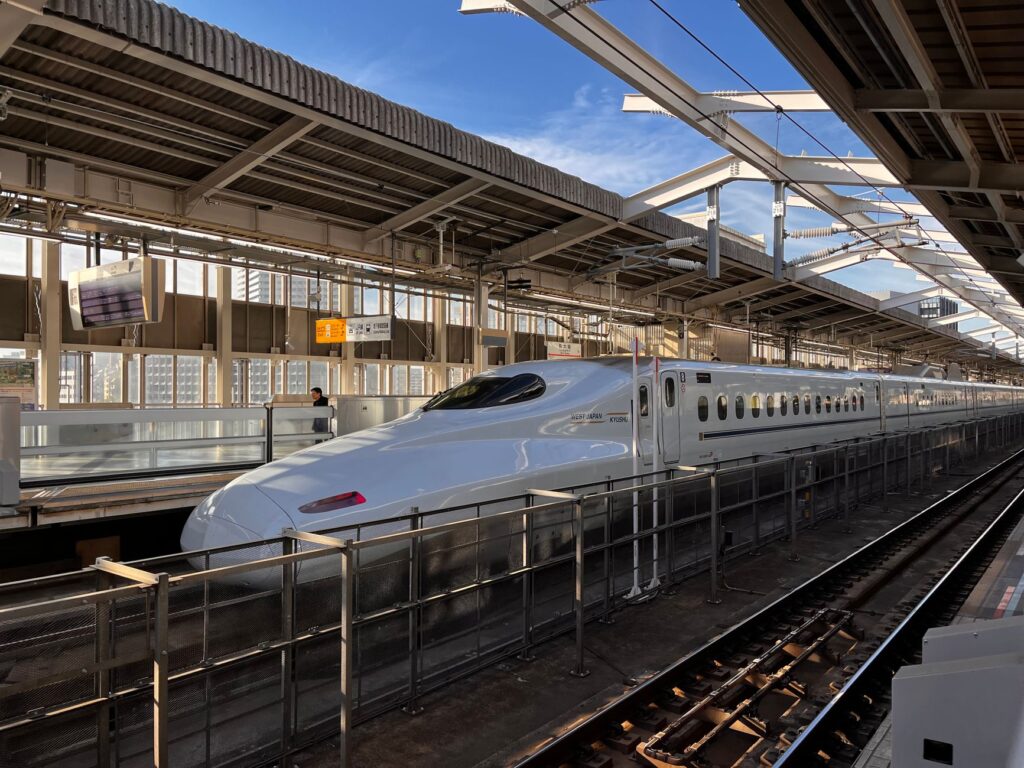
The issuance of specific transport passes for foreign tourists, the digitalization of seat reservations through multilingual platforms, and clear signage in English and other languages greatly facilitate independent mobility. However, proper planning requires understanding differences among train categories—such as Nozomi, Hikari, and Kodama services on the Tokaido line—since not all make the same number of intermediate stops, directly influencing total journey duration.
Environmental Sustainability and Railway Energy Efficiency
In a global context marked by climate urgency, electric railway transport stands out as one of the most sustainable alternatives for medium- and long-distance travel. Compared to road transport and commercial aviation, the Shinkansen boasts a low carbon footprint per passenger-kilometer. The continuous modernization of permanent magnet synchronous motors and the introduction of regenerative braking systems, which return electricity to the grid during decelerations, drastically reduce net electricity consumption.
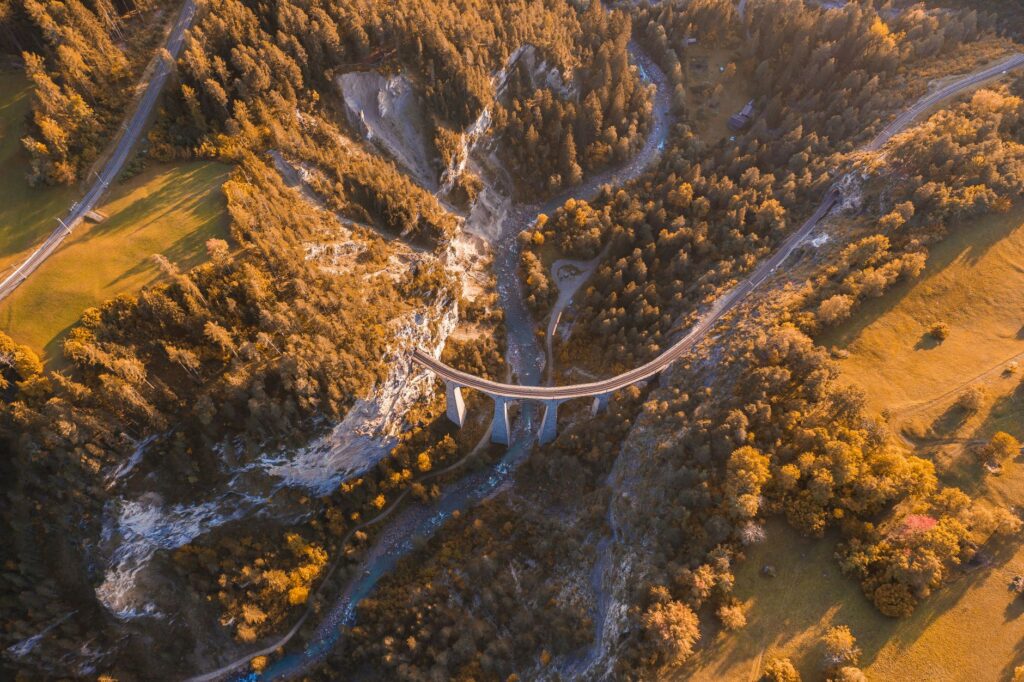
Likewise, concentrating passenger flows in high-capacity rail corridors helps decongest national highways and reduce environmental pressure on fragile interior mountain ecosystems. Public transport policies in Japan demonstrate that high-speed rail can harmoniously coexist with landscape preservation, visually integrating into valleys through deep tunnels that minimize impact on local communities and native wildlife.
Practical Information for the Traveler: Usage Guide and Operational Recommendations
Optimal use of the high-speed rail system requires keeping in mind several practical guidelines that ensure a smooth experience. Key aspects to consider before starting the journey include:
- Advance reservation: Although many routes have high frequency, booking seats ahead is advisable, especially during key holiday periods such as cherry blossom season (*sakura*) or the summer Obon festival.
- Bulky luggage: Regulations regarding large suitcases have evolved; bags whose total dimensions exceed one hundred and sixty centimeters require mandatory prior reservation of specific seats with oversized baggage space.
- Service classes: It is important to distinguish between standard class cars and the *Green Car*, equivalent to first class, which offers more legroom, footrests, and a calmer service environment.
- Strict punctuality: Trains stop at platforms for very brief intervals, often under a minute at intermediate stations. Being in the assigned platform zone before convoy arrival is essential.
- Onboard etiquette: Talking on mobile phones in passenger cars is socially discouraged; calls should be made in designated areas between cars. Additionally, mobile devices must be set to silent mode.
The efficiency of Japanese railway transport relies not exclusively on cutting-edge technology, but on strict adherence to shared civic rules that guarantee the well-being of all travelers onboard.
Visual Close: The Future of Rail Mobility
The horizon of railway transport in Japan continues to expand with ambitious projects such as the Chuo Shinkansen line, based on magnetic levitation technology (*Maglev*), designed to connect Tokyo and Nagoya at speeds exceeding five hundred kilometers per hour via a predominantly subterranean route. This continuous drive to push the limits of applied physics confirms that rail is not a technology of the past, but the cornerstone upon which the future of sustainable mobility is built.
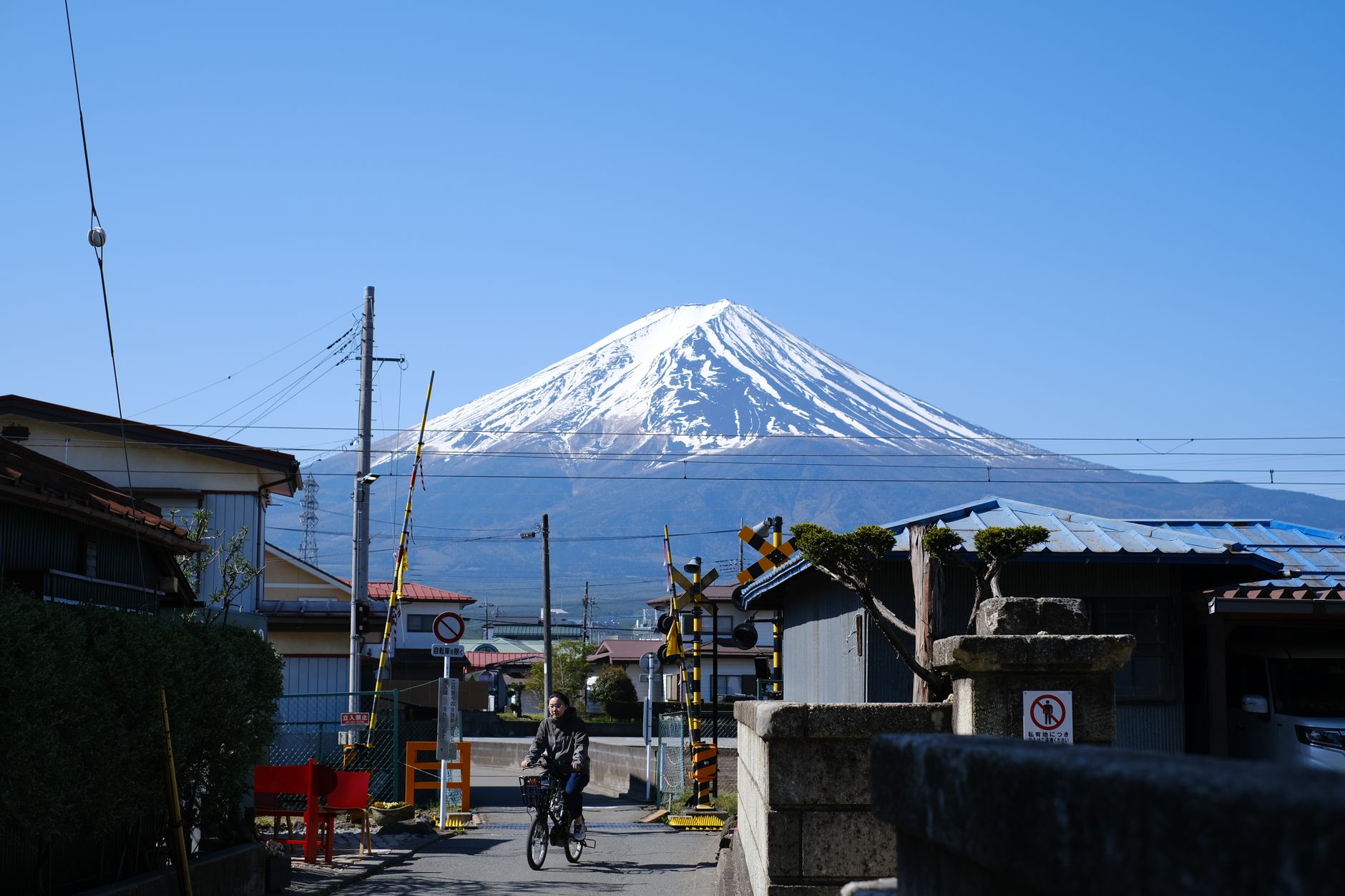
For the traveler, stepping into this universe of metallic precision means realizing that the journey forms a substantial part of the discovery experience. Crossing interior valleys while contemplating the snow-capped silhouette of Mount Fuji from the window of a train flying over rails at three hundred kilometers per hour summarizes the essence of a country where ancestral tradition and advanced technology walk hand in hand with absolute naturalness.