Introduction to a Legacy of Fire and Clay
The history of Iberian and Ibero-American design cannot be understood without the profound trace left by Talavera ceramics. This millenary art, recognized by UNESCO as Intangible Cultural Heritage of Humanity, is currently experiencing a moment of deep transformation. Far from being relegated to museums or strict folkloric conservation, the craft of glazed earthenware is undergoing a renaissance driven by the dialogue between centuries-old tradition and the aesthetic currents of contemporary design.
In the historic workshops of Talavera de la Reina in Toledo and the sister cities of Puebla and Tlaxcala in Mexico, a new generation of potters, architects, and industrial designers are taking ownership of inherited knowledge. The goal is no longer merely to replicate traditional Renaissance motifs or colonial cobalts, but to explore the infinite material, thermal, and formal possibilities of clay. This movement responds to a growing global demand for authenticity, traceability, and local materials in a market saturated with mass production.
The Historical Roots of a Transatlantic Craft
To understand the magnitude of this creative present, it is necessary to look back at the past. Talavera ceramics flourished during the 16th century as a meeting point between Hispano-Moorish influences, Italian ceramics from the Faenza workshops, and oriental contributions arriving through global trade. Talavera potters perfected the tin-glaze technique, achieving opaque white glazes upon which complex pictorial and iconographic compositions unfolded.

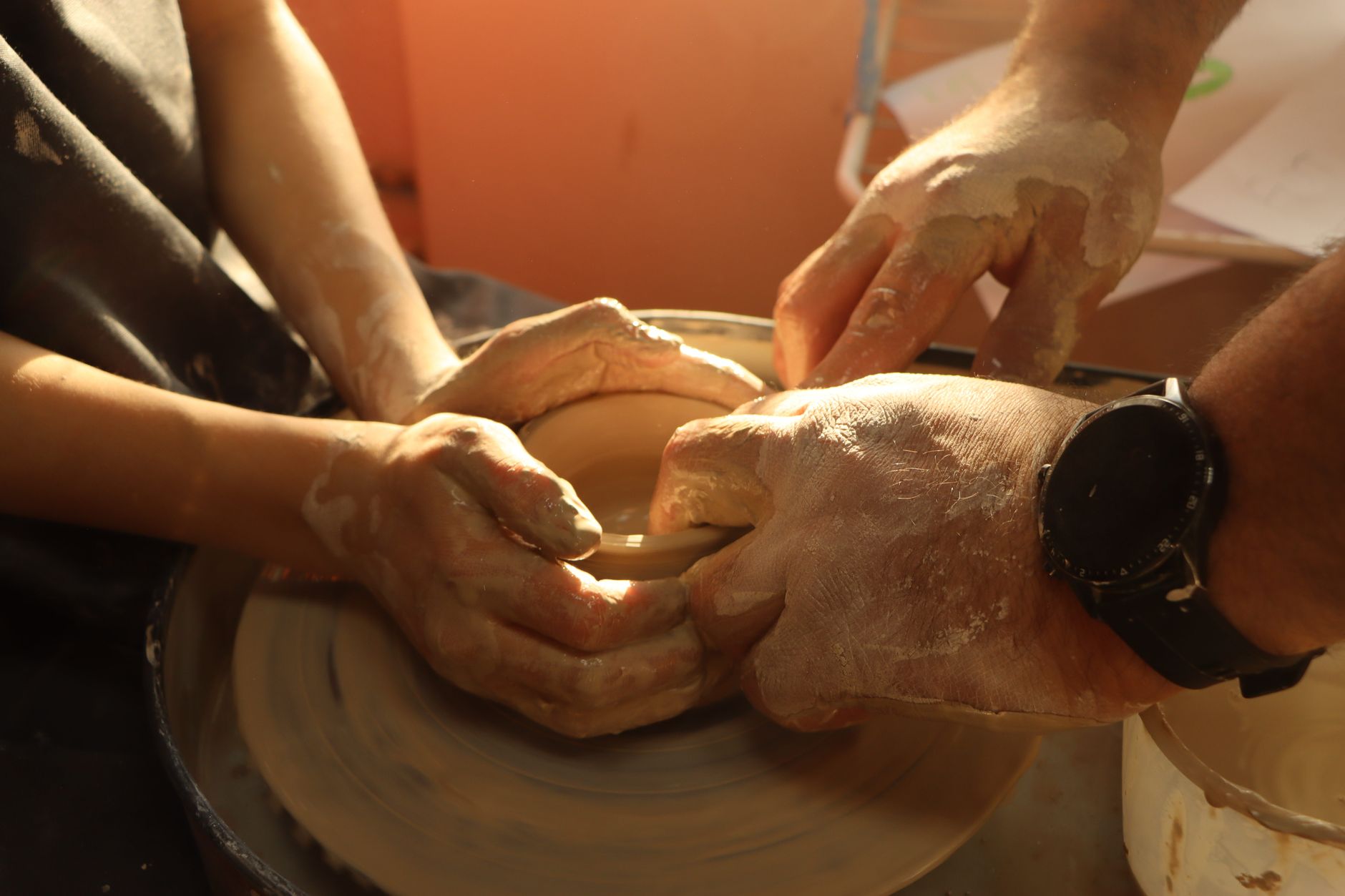
With the arrival of the viceroyalties, this knowledge crossed the Atlantic. In Puebla de los Ángeles, master artisans found exceptional raw materials and fused them with the hands and sensitivity of local communities. The result was a unique syncretism that gave a proper name to Poblana talavera. For centuries, this exchange fostered a network of workshops where technical knowledge was transmitted from parents to children, preserving chemical formulas for mineral pigments, firing times, and manual wheel techniques that constitute a living heritage treasure today.
The Contemporary Laboratory: Fusion of Clays and Pigments
In the 21st century, the artisanal workshop has transformed into a true design laboratory. Current studios no longer depend exclusively on traditional oxides of cobalt, antimony, iron, and copper. While these remain the chromatic backbone, contemporary creators experiment with temperature reductions, the use of volcanic ash, and the incorporation of local minerals to obtain unprecedented textures.
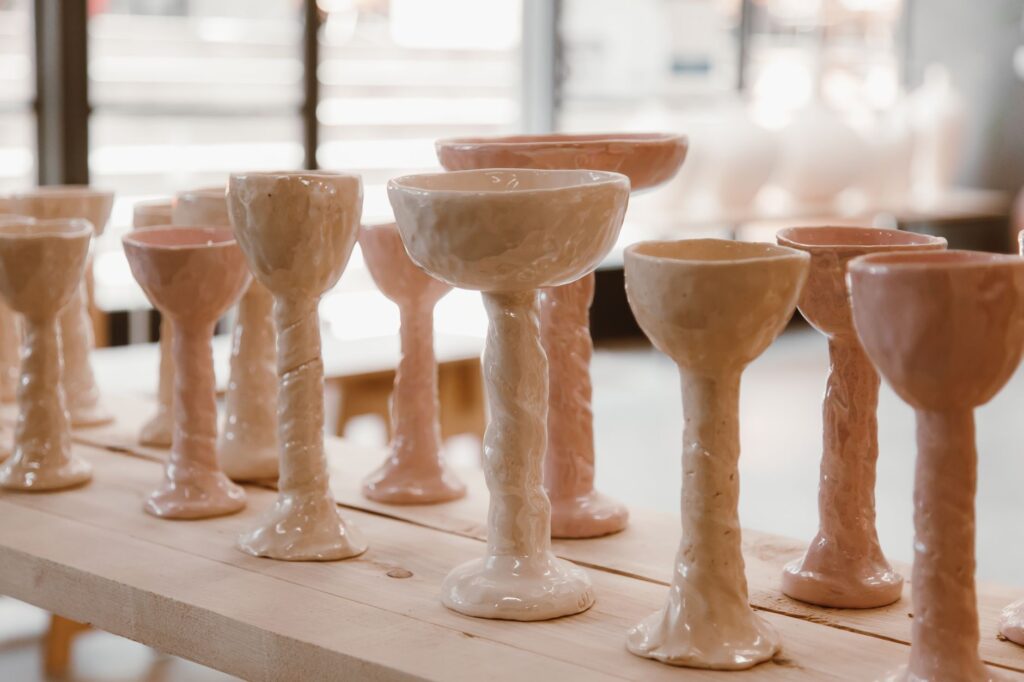
One of the most significant advancements lies in experimentation with matte glazes and rough textures that break away from the traditional specular shine of classical talavera. These innovations allow traditionally utilitarian or decorative pieces to dialogue with modern interior architecture, bringing a tactile warmth that contrasts with the cold minimalism of steel and concrete. The use of parametric geometry applied to handmade plaster molds demonstrates that digital technology and manual molding are not irreconcilable enemies, but rather strategic allies.
True innovation in craftsmanship does not consist of erasing the past, but of endowing the present with a material that possesses memory, touch, and soul.
Architecture and Space Design: Ceramics as an Envelope
The impact of this renaissance goes far beyond the scope of the small object or author tableware. Internationally renowned architects are turning their eyes toward Talavera ceramics to solve aesthetic and bioclimatic issues in contemporary construction. Ceramic lattices, large-format tiles, and ventilated mural panels have become fundamental resources for solar control and energy efficiency.
These elements not only reduce the carbon footprint by employing zero-kilometer materials, but they also bring an untransferable identity to urban facades and public spaces. The modulation of light through glazed ceramic pieces generates dynamic overhead plays that change throughout the day, reminding us that vernacular architecture always contained the answers that sustainable urban planning seeks today.
Sustainability and Circular Economy in the Workshop
At the heart of this renaissance lies a deep revision of production processes under criteria of strict sustainability. The manufacturing of traditional ceramics consumes energy for kiln firing, a critical challenge in times of energy crisis. Therefore, contemporary workshops are implementing high-efficiency kilns powered by biomass or renewable energies, optimizing firing loads to reduce emissions.

Likewise, waste management—dry clay and biscuit manufacturing waste—has been integrated into circular economy circuits. This crushed material is reused to create new ceramic bodies, aggregates for mortars, or bases for artisanal terrazzo sculptures. The traceability of the clay, extracted from local quarries with environmental restoration plans, guarantees that each piece possesses a clean biography respectful of the natural environment.
Transdisciplinary Collaborations: Designers and Master Artisans
The most dynamic engine of this transformation is undoubtedly the symbiotic encounter between industrial designers, fine artists, and traditional master artisans. While the designer brings a conceptual vision oriented toward new ways of living and consuming, the potter provides absolute mastery over the material—that tacit knowledge granted only by decades of friction between hands and damp clay.

These artistic residencies and collaborative projects have given rise to collections of furniture, lighting, and sculptural objects that defy conventional categorization. It is no longer debated whether a piece is art, design, or craftsmanship; the category dissolves in favor of material excellence and cultural relevance. These synergies have allowed family workshops on the verge of disappearing to find new international marketing channels in design fairs in Milan, Paris, and Mexico City.
Global Challenges of the Sector: Generational Renewal and Counterfeiting
Despite creative enthusiasm, the sector faces complex structural challenges. The most pressing is generational renewal. Local youth are often attracted to service economies or digital environments, moving away from a demanding trade that requires years of physical apprenticeship and patience. Municipal ceramic schools and technical institutes play a vital role, but it is necessary to provide the craft with social and economic recognition comparable to any other higher creative discipline.
Another critical front is the proliferation of counterfeits and imported industrial products that imitate traditional motifs under misleading names. The protection of Denominations of Origin and geographical indications is an indispensable legal and commercial battle to safeguard the value of handmade work. Authenticity stamps with digital traceability codes and workshop certificates are tools increasingly used to educate the final consumer.

Preserving a craft does not mean mummifying it in display cases, but ensuring that its tools remain alive in the hands of those who build the future.
Practical Information for Travelers, Designers, and Collectors
For those interested in delving into this creative universe, the in-situ experience is irreplaceable. In Talavera de la Reina (Spain), the itinerary must begin at the Ruiz de Luna Museum, which houses an exceptional collection of historical pieces, to continue with a scheduled visit to active traditional workshops such as those in the Castile-La Mancha region, where it is possible to observe the complete process of throwing, glazing, and firing live.
Across the Atlantic, Puebla de Zaragoza (Mexico) offers the Route of Certified Workshops, concentrated mainly around the Analco neighborhood and its surroundings. It is essential to verify that workshops have the official stamp of the denomination of origin and artisanal quality standards. For the purchase of contemporary pieces, specialized collectible design galleries in Madrid, Barcelona, Mexico City, and Monterrey represent the best showcases to acquire works signed by designers and master potters.
The Future of Clay: Memory and Global Projection
The renaissance of Talavera ceramics proves that the deepest cultural roots possess infinite elasticity. In an era dominated by the ephemeral, the digital, and dematerialization, fired clay stands as a physical reminder of our belonging to the earth. The combination of technical rigor, aesthetic experimentation, and environmental responsibility ensures that this noble craft not only survives, but leads a new era in international contemporary design.