
The Fluvial Artery Where the Continent Dissolves
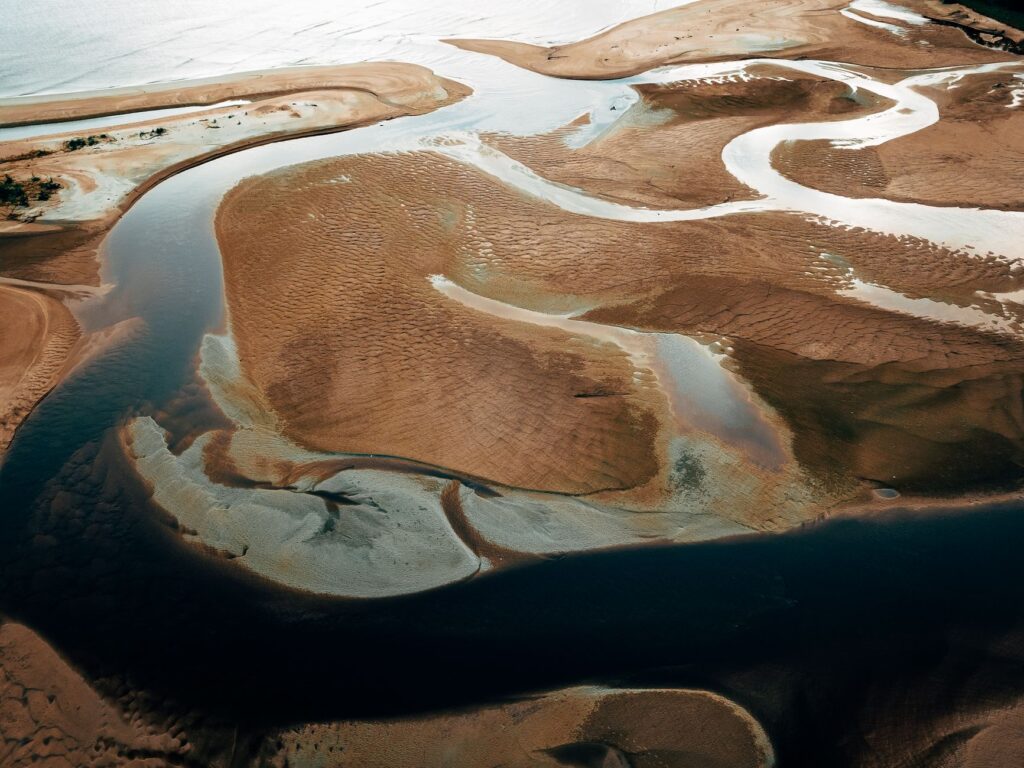
Water in the lower delta of the Volta River does not flow with the arrogant haste of major alpine currents; it glides with an almost ceremonial slowness, widening until it merges with the Atlantic Ocean in a labyrinth of channels, mangroves, and shifting sandbars. In this southeastern corner of Ghana, where the Greater Accra region yields its relief to the waterlogged lands of the coast, contemporary travel ceases to be a matter of accelerated combustion engines and becomes a constant negotiation with tides and seasonal currents. Here, geography imposes a mobility model deeply integrated with the natural environment, an intermodal system where daily survival and the transit of scarce travelers depend on a meticulous choreography between heavy wooden plank barges, hollowed-out canoes, and precarious timber walkways connecting the most isolated islets.
To understand the real pulse of this region, it is not enough to contemplate tourist postcards praising the tranquility of the Ada Foah beaches. It is necessary to venture into the informal piers of the estuary, where the aroma of smoked fish blends with the salty breeze and the rhythmic sound of short-bladed paddles striking the brown surface. In this amphibious territory, conventional infrastructure—asphalt, concrete bridges, and high-voltage grids—gives way to an architecture of light, dismantlable mobility. Every insular community, from Big Ada to the most secluded corners of the mud and reed islands, relies on a fragile logistics chain that reinvents itself every morning according to the water level and the force of the surf at the river mouth.
Floating Architecture: The Engineering of Artisanal Barges
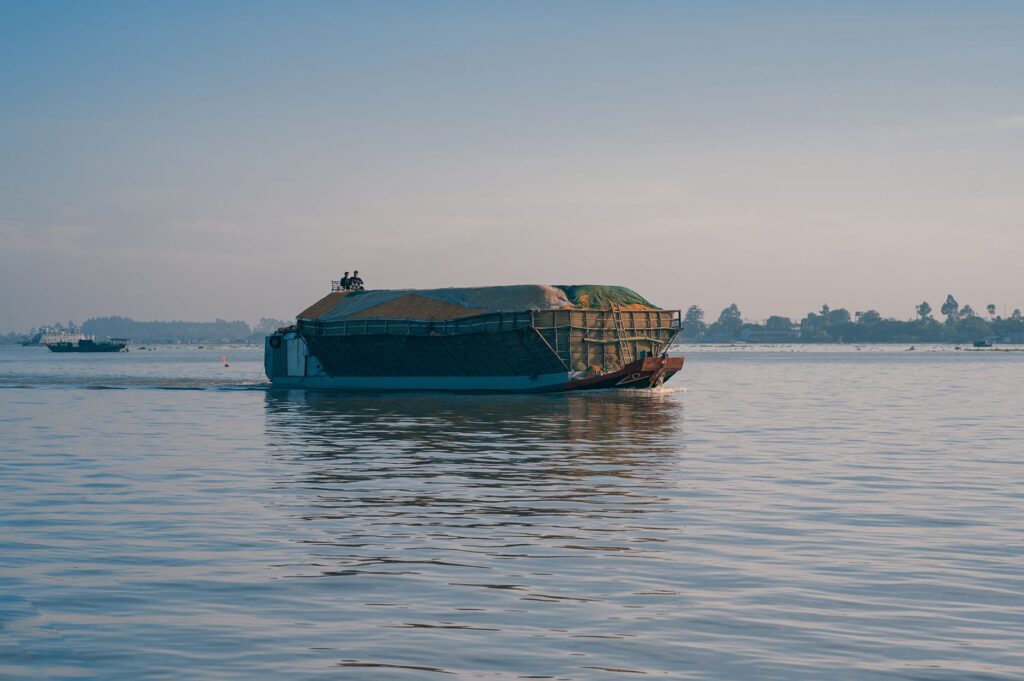
The skeleton supporting freight and passenger transport in the Volta delta consists of vessels built artisanally by boat carpenters whose techniques have passed down through generations with hardly any conceptual modifications. These wooden barges, capable of carrying everything from motorcycles to sacks of cassava and construction materials, are assembled using dense local timbers and iron fasteners reinforced with traditional pitch. There are no mechanized shipyards or digital blueprints; everything is solved through the accumulated experience of craftsmen who read in the wood grain the necessary resistance against constant humidity and friction against shallow shoals.
These river vessels operate without strict schedules, guided exclusively by the principle of a full capacity quota and the will of the skippers. Time in the delta is measured in tides rather than minutes, a concept that disorients the urban traveler but guarantees remarkable economic resilience against fuel supply crises or mechanical breakdowns. When a main barge crosses the primary channel to the interior islands, it carries not only goods but also the social fabric of the district: students commuting to mainland educational institutions, merchants transporting fabrics and groceries, and elders seeking medical attention in mainland clinics.
The Invisible Routes of Secondary Channels
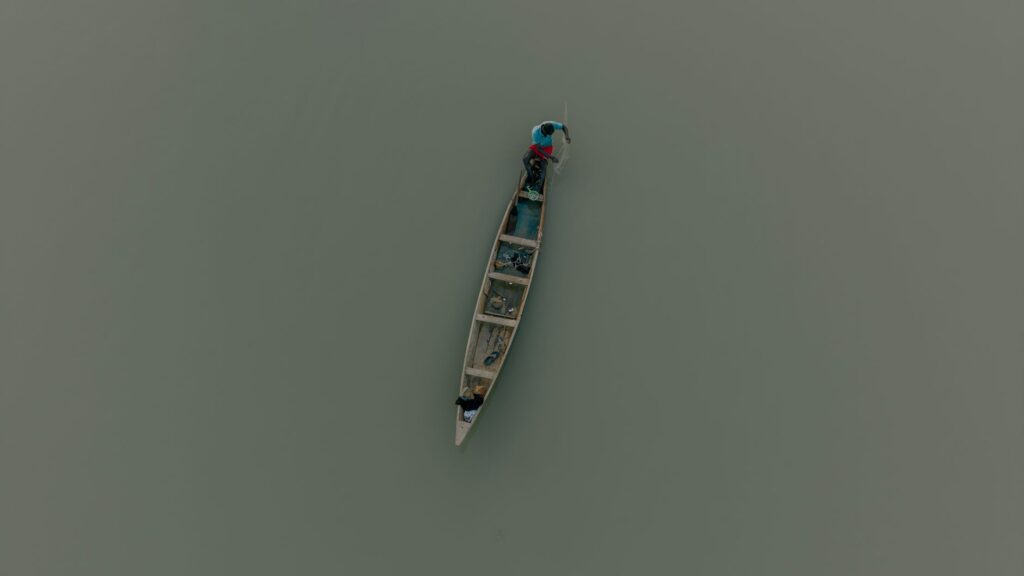
Beyond the main routes navigated by motorized barges, a secondary network exists, composed of thousands of mangrove channels where human propulsion returns to the norm. Monoxylous canoes, carved from entire trunks of ceiba or wawa trees, wind between aerial roots in search of traditional fishing grounds and small domestic docks. In these shallow waters, the draft is so minimal that any modification to the riverbed, whether by sediment accumulation or illegal mangrove cutting for charcoal production, drastically alters the communication routes of the villages.
Local authorities and community organizations face a complex challenge: keeping essential waterways open without destroying the fragile wetland ecosystem that acts as a natural barrier against coastal erosion. Small-scale mechanical dredgers operate intermittently in some river arms, but their high operating cost limits their long-term effectiveness. Thus, maintenance responsibility frequently falls upon the communities themselves, who organize manual cleaning and clearing sessions to prevent water hyacinths and aquatic weeds from strangling traditional passages.
Life in Suspension: Walkways and Artisanal Docks
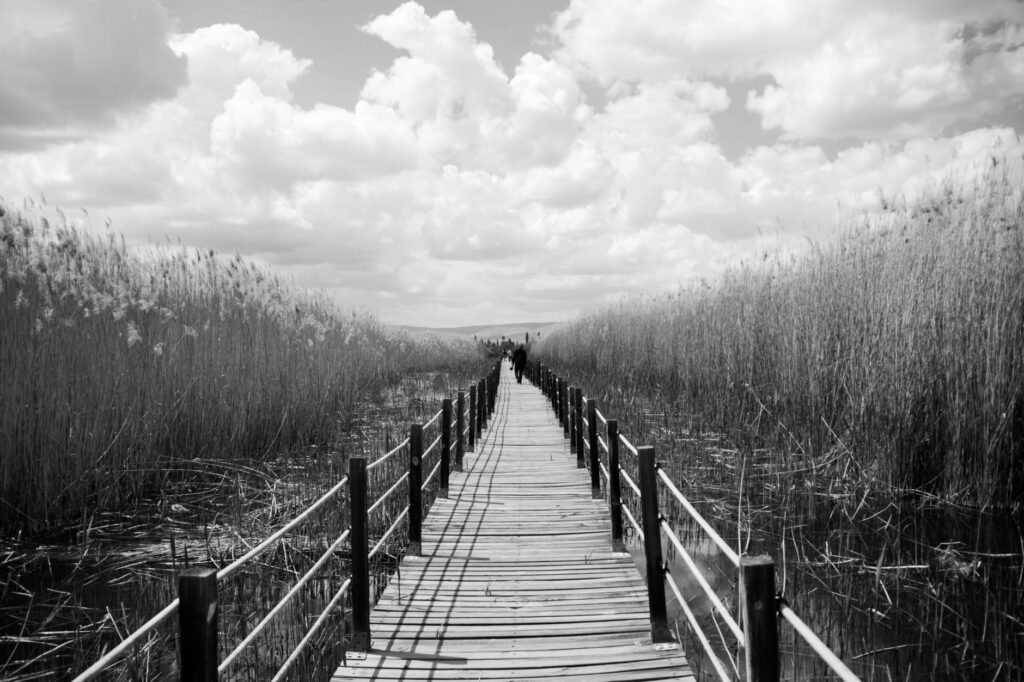
Insular connectivity is not limited to the aquatic medium; it extends through a network of improvised terrestrial infrastructures that defy gravity and engineering common sense. On the swampiest banks, access to boarding points is achieved via elevated walkways on green timber piles crossing marshes and mudflats. These structures, exposed to accelerated decomposition by tropical humidity and termite attacks, require constant plank replacement and structural reinforcement.
Walking across these walkways demands complete attention and respect for balance. For the foreign traveler, they represent an intense sensory experience where the creaking of wood underfoot recalls the precariousness of human presence in these dynamic environments. For locals, they are simply the extension of the domestic floor, the daily path connecting the doorway of the home to the boat leading to the market or school. The vulnerability of these passageways is the price paid for inhabiting the margins of one of West Africa’s richest ecosystems.
Subsistence Economy and Local Supply Chains
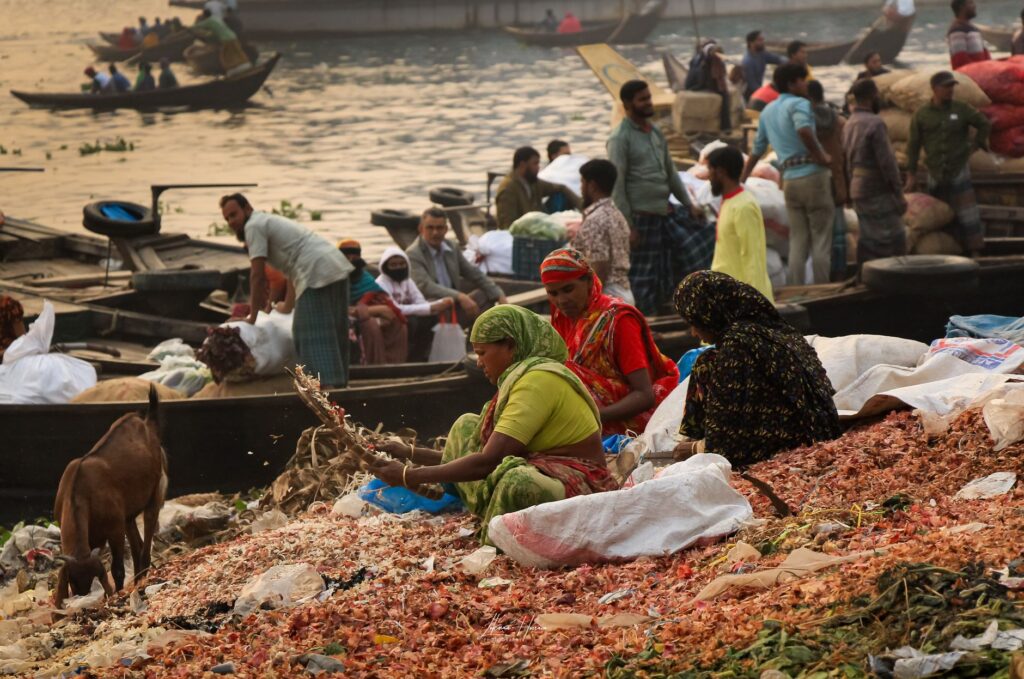
The Volta delta transport system is not a mere tourism displacement mechanism, but the backbone of an economy based on artisanal fishing, small-scale riparian agriculture, and shellfish gathering. Every dawn, canoes leave the shores loaded with nets and traps to fish in brackish waters where the river kisses the sea. The freshness of the catch depends entirely on the efficiency of subsequent river connections; fishermen must reach the markets of Ada or Sogakope before the intense midday heat spoils the cargo.
This absolute dependence on water routes generates structural economic vulnerability. When high-tide storms hinder the departure of barges through the estuary bar, fresh fish prices plummet on the islands due to lack of outflow, while manufactured goods from the continent become scarce and expensive in local convenience stores. Regional economic analysts point out that selective improvement of docking points and the introduction of subsidized, fuel-efficient outboard motors could stabilize these markets without compromising the delta’s ecological balance.
Low-Impact Tourism Facing the Mirror of Accessibility
In recent years, the Volta delta has begun attracting international travelers interested in ecotourism, migratory bird watching, and contact with riverside cultures. However, the sheer complexity of its transport network acts as a natural filter against mass tourism. The absence of paved roads to most islands, the need for complex transfers between different types of vessel, and the unpredictability of river schedules deter conventional visitors while fascinating experienced travelers seeking authenticity and isolation.
This low-intensity tourism model poses an ethical and practical dilemma for local communities. On one hand, the arrival of small groups of visitors generates significant complementary income through canoe rentals, specialized guiding, and the sale of local crafts. On the other hand, pressure on water resources and the potential disruption of traditional social dynamics demand rigorous planning. Community-based sustainable tourism initiatives seek to empower local youth as skippers and guides, ensuring that economic value generated by traveler flows remains within the territory and helps fund the maintenance of communal transport infrastructure.
Practical guide
How to get there: The main starting point for exploring the Volta River delta is the town of Ada Foah, located about 110 kilometers east of Accra, the capital of Ghana. The road journey from Accra is usually made in off-road vehicles or shared taxis via the A1 highway, a trip ranging from two and a half to three hours, depending on metropolitan exit traffic.
When to go: The best time to visit the delta encompasses the dry season months, from November to April, when rainfall is low and river flow remains stable, facilitating navigation through secondary channels. During the rainy season, from May to October, currents intensify and some terrestrial accesses to piers may be temporarily flooded.
Local transport options: Public motorized barges operate in Ada Foah for crossings to the main islands, with economical locally agreed fares. To venture into mangrove channels and visit smaller communities, hiring traditional canoes with a local skipper at authorized piers is essential. There are no mobile applications or advance bookings; all logistics are coordinated directly at the dock.
Accommodation and services: Accommodation options are concentrated in Ada Foah and a few eco-lodges scattered across the islands. Small family-run eco-lodges predominate, built with native materials and powered by solar energy. Carrying cash in Ghanaian cedi is strongly recommended, as ATMs are scarce outside the main urban center and electronic payments are unavailable in insular areas.
Health and safety requirements: Having the yellow fever vaccination and following a preventive malaria treatment are essential, alongside using effective mosquito repellents in wetland zones. Extreme caution is advised when boarding traditional canoes, always using available life jackets and strictly respecting local skippers’ instructions regarding estuary tides and currents.
The Final Echo of Slow Waters
Sitting at dusk on the muddy bank of a pier in the Volta delta allows one to perceive time differently. When the sun merges with the Atlantic horizon and dyes the water a deep copper tone, the distant roar of waves crashing against the bar blends with the murmur of paddles returning home. In this confine where the State manifests through the communal barge and the wooden walkway, mobility is not a mere technical issue, but a form of cultural resistance. The island inhabitants continue weaving their fragile thread of connection with the outside world every day, demonstrating that the true wealth of a territory sometimes lies in its capacity to preserve slowness and respect for nature’s rhythms.