
Southeast Asia is undergoing a profound metamorphosis in its tourism development model, and few regions exemplify this paradigm shift as clearly as Ninh Binh. While major traditional hotspots grapple with overcrowding and infrastructure strain, this territory situated in the Red River Delta has chosen a radically different path: intelligent containment and the elevation of its extraordinary natural and cultural heritage. Far from mass tourism, the province is firmly positioning itself among the world’s most promising emerging destinations for 2027, driven by an institutional commitment that prioritizes conservation over unchecked growth.
The geological singularity of Ninh Binh, often described as ‘Ha Long Bay on land,’ is the result of millions of years of erosion on limestone formations that rise abruptly above vast rice paddies. However, the true appeal of this destination lies not only in its undisputed scenic beauty, but in the way local communities and provincial authorities have managed to integrate tourism activity into the traditional rural fabric. Here, the traveler is not a passive spectator, but an active participant in a fragile ecosystem striving to prove that economic development and environmental protection can harmoniously coexist.
Sacred Geography Among Stone Towers and Wetlands
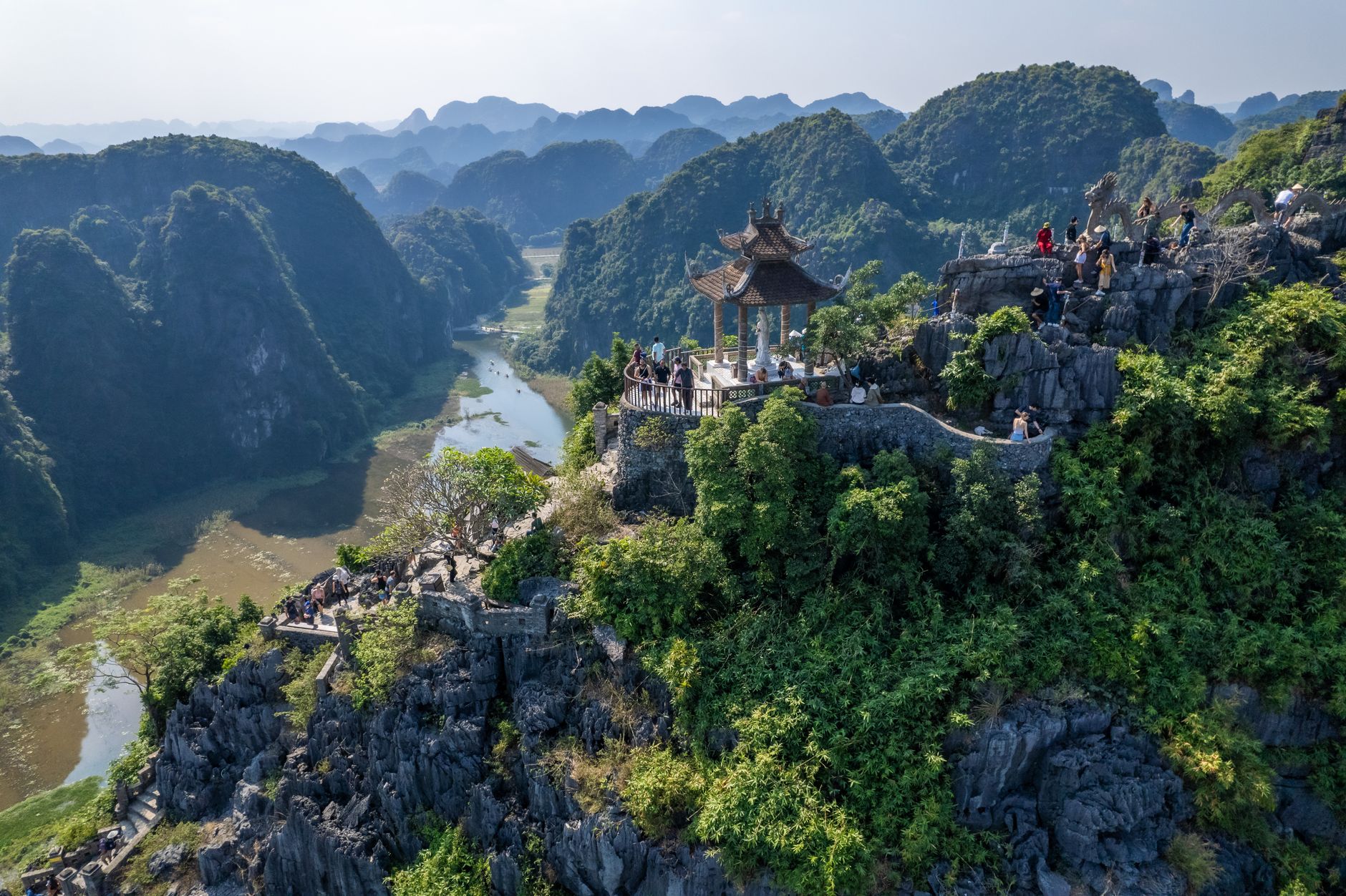
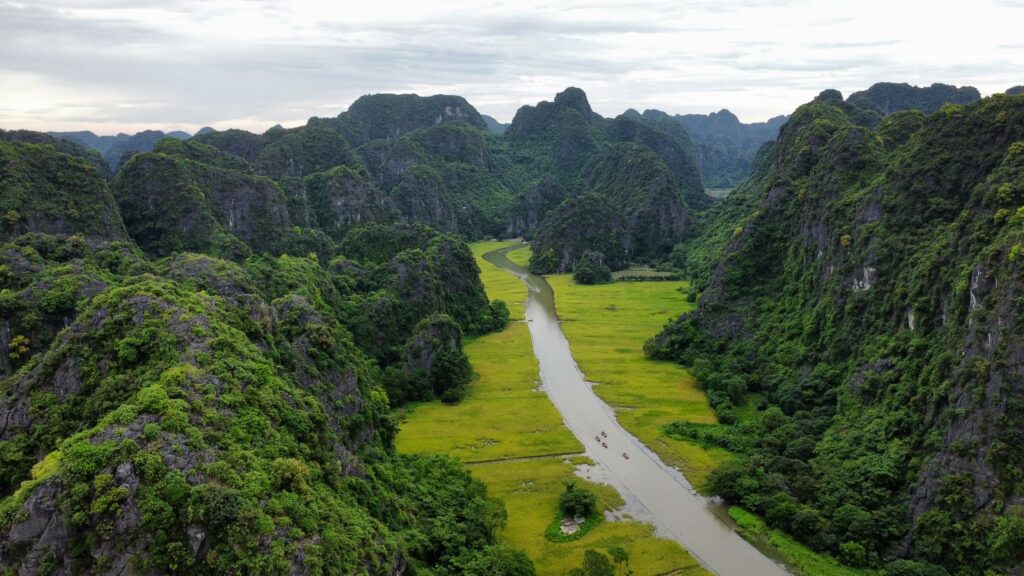
The landscape of Ninh Binh is dominated by towering karst mogotes that trace a vertical labyrinth across the alluvial plain. This unique relief has historically functioned as a natural fortress, sheltering spiritual sanctuaries and strategically significant historical enclaves within its hidden valleys. The rivers winding between the rock formations are not merely communication routes, but the vital arteries nourishing an aquatic ecosystem of exceptional biodiversity, where human intervention has traditionally been limited to subsistence farming and artisanal fishing.
River navigation constitutes the premier approach to this territory. Aboard traditional Bogata or Tam Coc boats, skillfully propelled by foot-operated oars, visitors venture into subterranean caves sculpted by currents over millennia. This silent movement allows for an appreciation of the environment’s geological scale without disrupting the tranquility of the wetlands, preserving vital habitats for local migratory bird populations and endemic flora.
Hoa Lu: The Stony Memory of the Dinh Dynasty
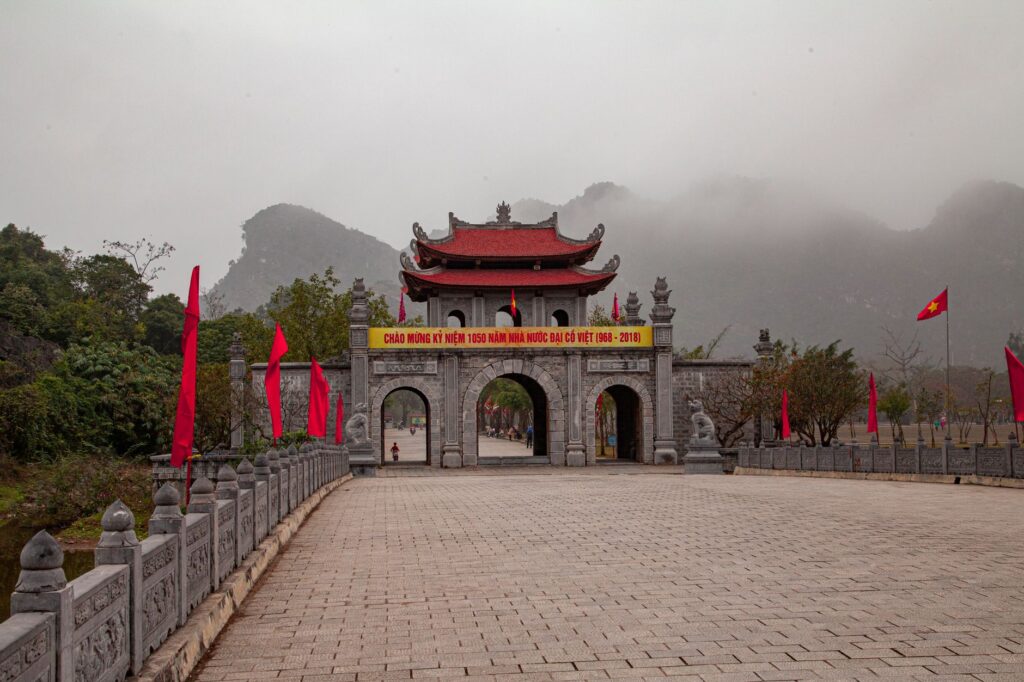
Long before Hanoi consolidated its position as the nation’s political heart, Ninh Binh served as the nerve center of Vietnamese imperial power. In the late 10th century, the ancient capital of Hoa Lu laid the foundations of national independence under the Dinh and Early Le dynasties. Today, the vestiges of this walled citadel offer a poignant testimony of early monarchical architecture, organically integrated into the natural amphitheater formed by the surrounding mountains.
Temples dedicated to former emperors, flanked by centuries-old trees and lotus ponds, maintain an atmosphere of spiritual contemplation far removed from the bustle of major metropolises. Local historians emphasize how the choice of this location responded to both defensive criteria and a profound cosmological connection with the land, an architectural principle that still defines the region’s cultural identity today.
Trang An: The Triumph of Integrated Heritage Management
The Trang An landscape complex, recognized by UNESCO as a mixed cultural and natural World Heritage site, represents the operational core of Ninh Binh’s tourism strategy. Unlike other saturated heritage enclaves, Trang An has implemented strict daily visitor quotas and a boat rotation system that guarantees the protection of the fragile aquatic and archaeological ecosystems discovered within its caves.
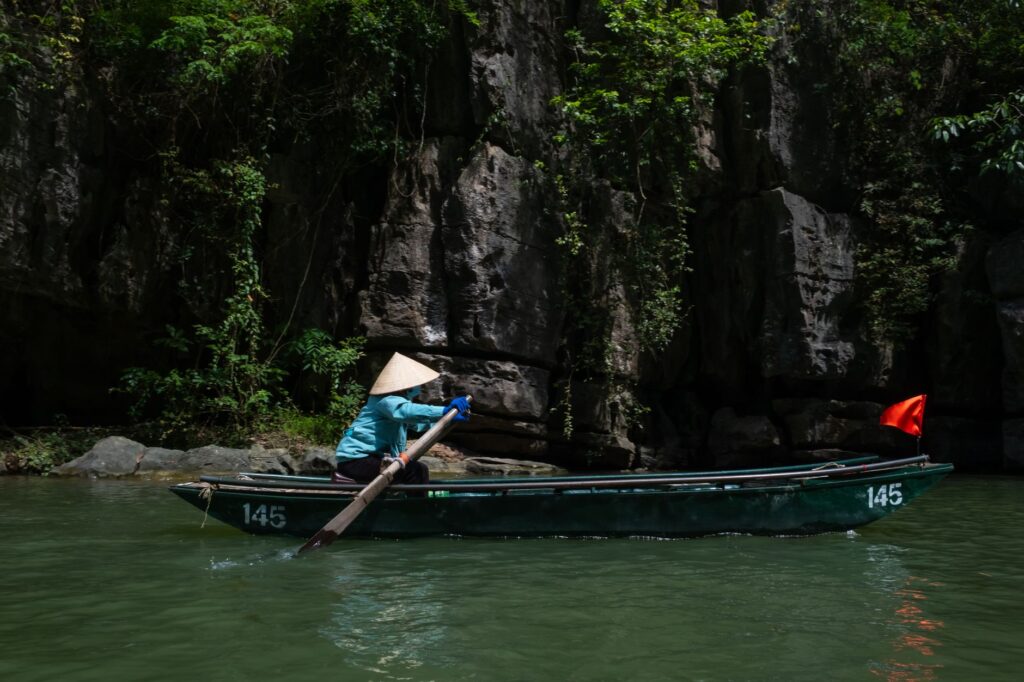
The preservation of Trang An demonstrates that the success of an emerging destination should not be measured by the gross volume of arrivals, but by the long-term integrity of its natural and human heritage.
This rigorous approach has enabled the documentation of prehistoric human settlements dating back over thirty thousand years, preserved virtually intact thanks to the area’s geographical conditions. The scientific rigor applied to excavations and tourist routes makes Trang An an international benchmark for sustainable archaeological tourism.
Vernacular Architecture and Slow Mobility in the Rural Setting
Traveling through the interior of the province invites a leisurely pace. Secondary roads and agricultural paths are designed to prioritize bicycle circulation and low-emission electric vehicles, facilitating direct connection between small rural settlements. Traditional dwellings, built with local materials and oriented according to traditional geomancy principles, dot the farming fields where low-impact crop rotation is practiced.
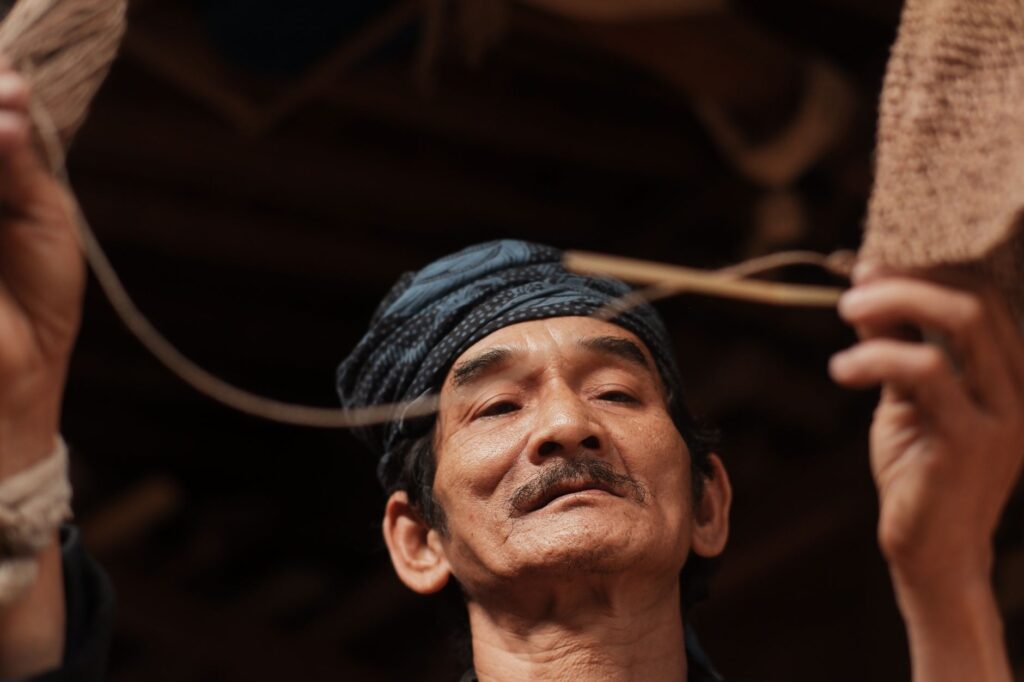
This soft-mobility infrastructure not only reduces the visitor’s carbon footprint, but fosters a more direct economic interaction with local families. Small craft workshops dedicated to traditional embroidery, basketry, and the production of local gastronomic specialties directly benefit from the regulated flow of travelers who choose to explore the region outside conventional mass circuits.
Protected Biodiversity: Cuc Phuong National Park
Situated on the western edges of the province, Cuc Phuong National Park is Vietnam’s oldest nature reserve and a fundamental stronghold for biodiversity conservation in Southeast Asia. This dense tropical rainforest harbors a rich variety of flora and fauna, including endangered endemic species that find a safe haven in this protected sanctuary against urban pressure and deforestation.
Specialized rescue centers operating within the park focus on rehabilitating primates and turtles rescued from the illegal wildlife trade. These centers combine scientific research with educational programs aimed at both local communities and visitors, underlining the importance of active conservation and environmental awareness as indispensable pillars of future tourism.
Identity Gastronomy and Zero-Kilometer Produce
Ninh Binh’s cuisine faithfully reflects the pantry of its geographical and riverine environment. Far from the culinary standardization affecting other tourist destinations, local gastronomy bases its excellence on fresh ingredients sourced from surrounding rice paddies and wetlands. The most emblematic dish is mountain goat meat (dê núi), an animal that grazes freely on karst slopes feeding on wild herbs, imparting a distinct texture and flavor profile to the meat.
Alongside goat meat, specialties such as crispy rice (cơm cháy) and freshwater fish derivatives illustrate a culinary tradition rooted in the sustainable use of local resources. Traditional markets in Ninh Binh city and small rural taverns offer an authentic dining experience where zero-kilometer ingredients guarantee traceability and directly support local farmers and herders.
Practical guide
How to get there: Ninh Binh is located approximately 90 kilometers south of Hanoi. It is accessible by train from Hanoi Central Station (with daily journeys taking around two hours) or via bus services and private transfers organized under sustainability criteria.
When to visit: The period between November and April offers the most favorable weather conditions, featuring temperate temperatures and lower humidity levels. May and June coincide with lotus blooming and the rice harvest, offering a visually striking landscape.
Requirements and regulations: A valid passport with a minimum validity of six months and a visa according to nationality are required. Respecting conservation regulations in protected areas, such as wearing life jackets on river boats and the prohibition of littering, is strictly mandatory.

Accommodation: Visitors are encouraged to prioritize human-scale lodgings managed by local families (homestays) and certified eco-lodges operating on renewable energy and waste management programs.
Final Reflection: The Silent Pulse of an Ancient Land
At dusk, as the last boats return to the docks and golden light fades over the karst peaks, Ninh Binh reveals its true essence. It is not a stage set designed for instantaneous tourism consumption, but a living landscape where history, nature, and the human community engage in a constant and respectful dialogue. Walking along these paths at eventide is to understand that the future of tourism lies not in the accumulation of visited destinations, but in the depth of the connection established with the places we choose to traverse. On the horizon of 2027, this corner of the Red River Delta stands as a luminous reminder that it is possible to travel by caring for, preserving, and above all, listening to the silent pulse of an ancient land.
Source in EN: Vietnam.vn – 10 of the world’s most promising emerging tourist destinations to visit in 2027.