
The Geometry of Touch in the Provençal Landscape
Between the lavender fields fading their violet hues into the horizon and the banks of the Rhône, where water deposits the moisture required for the growth of salix purpurea, lies one of Europe’s most subtle craft traditions. Provençal basketry is not merely a utilitarian response to agricultural storage; it constitutes a formal language where plant fiber yields to the demands of tension, balance, and collective memory. In the small workshops nestled within the valleys of the Luberon and the Lower Alps, raw materials are never sourced from mass industrial catalogues; instead, they are strictly harvested by hand during the winter months, when sap levels drop and the bark achieves optimal flexibility for interlacing.
The rhythm of these workshops stands in sharp contrast to the dizzying pace of contemporary mass design. Here, time is measured by the boiling of rods in centuries-old copper cauldrons, an essential process designed to strip away the bark and reveal the pearlescent white of peeled wicker. Master artisans, heirs to an oral transmission spanning generations, manipulate the material with an anatomical precision that only decades of repetitive mastery can confer. In this corner of Provence, every woven piece embodies a seamless synthesis between local botany and domestic architecture, proving that utilitarian beauty remains a vital bastion of cultural resistance.
Raw Material: Botany and Harvest Along the Banks of the Rhône
Understanding pith basketry requires stepping into the river wetlands where wicker is cultivated long before visiting any workshop. These plantations, locally known as oseraies, demand meticulous ecological management that has remained largely unchanged since the nineteenth century. Local farmers carefully regulate seasonal river floods to ensure that shoots grow straight, free from knots or unwanted branches that might compromise the structural integrity of the final piece. Each botanical variety possesses unique mechanical traits: some strains offer extreme flexibility for curved rims, while others provide the rigidity indispensable for structural bases.
n
Harvesting is a task of millimeter precision executed exclusively between November and February. Cutters use specialized blades known as sécateurs de force to slice the rods flush with the rootstock, stimulating vigorous regrowth for the upcoming season. Once harvested, the wicker is sorted by calibre using calibrated metal hoops, a traditional system ensuring absolute uniformity during subsequent weaving phases. This strict adherence to natural cycles turns the craft into a pioneering model of circular economy, where organic waste safely returns to the earth as natural fertilizer once its processing lifecycle concludes.
The Ritual of Fire and Water: Preparation and Boiling of Wicker
Before rods can be interlaced by expert hands, they must undergo a thermal and hydrological treatment that alters the molecular structure of the cellulose. In the backyard of an artisan workshop in Cavaillon, large cast-iron vats simmer continuously for eight hours. Inside, bundles of raw wicker absorb heat and moisture, softening the lignin holding the plant fibers together. This process not only facilitates subsequent peeling but also infuses the material with natural tannins from the bark itself, endowing it with an ivory hue that will age gracefully under the Provençal sunlight.
Peeling, known as décorticage, is carried out using a V-shaped wooden tool called a sauge, through which the warm rod is slid in a swift, decisive motion. The sharp sound of the bark stripping away sets the acoustic backdrop for these winter mornings. Peeled rods are meticulously spread across south-facing wooden racks, allowing the dry Provençal breeze to complete the drying process without sacrificing the flexibility acquired during boiling. Without this ancient ritual of boiling and drying, the wicker would fracture at the first attempt at torsion, rendering weeks of rigorous botanical selection useless.

Basketry is not the art of bending a branch, but of listening to the intimate resistance of the wood until it decides to adopt the desired form.
Workshop Geometries: Weaving Techniques and Ribs
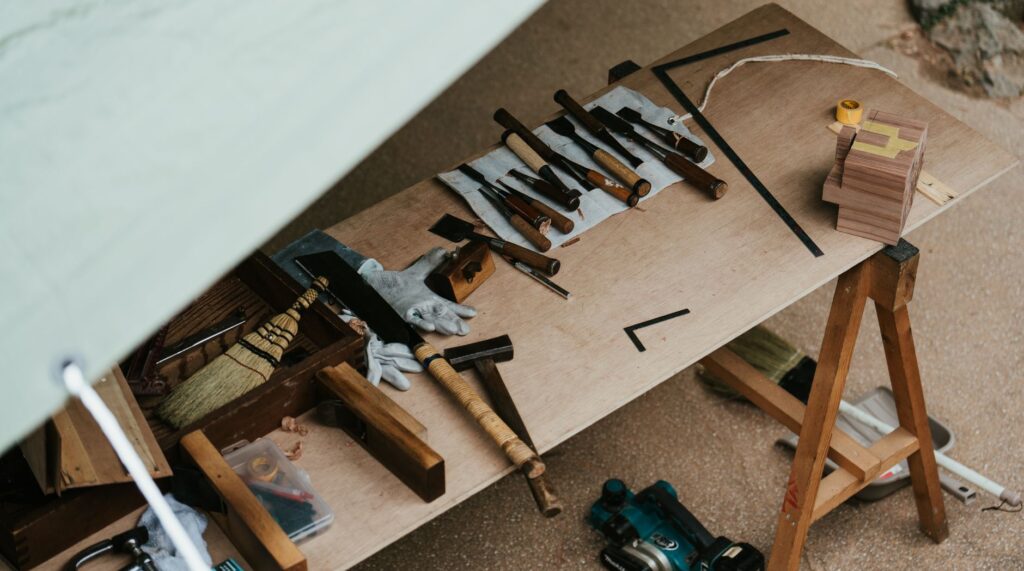
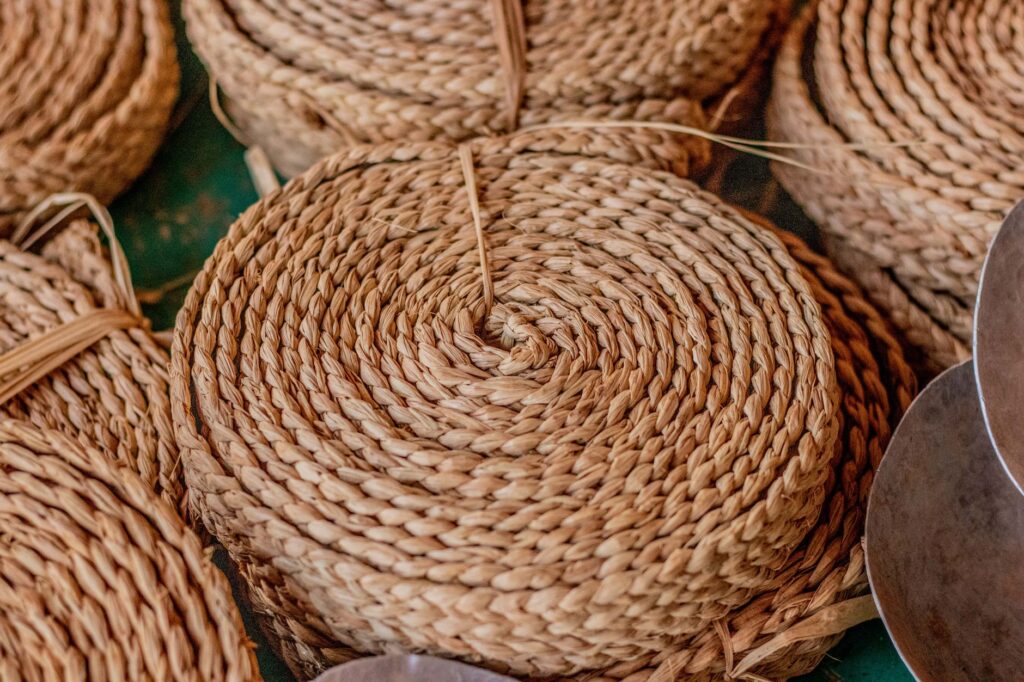
Cross-weavings, stirrup handles, base crosses, and fitch weaves; the technical vocabulary of Provençal basketmakers represents an endangered linguistic treasure. Inside the studio, workbenches are strewn with iron awls, pruning shears, and buckets of water where rods recover their precise moisture level before manipulation. The construction of a basket always begins at the base, utilizing the crossed-warp technique upon which vertical ribs are raised to define the three-dimensional volume of the piece. Tension must remain identical at every point along the perimeter; a single millimeter error at the outset will unbalance the overall symmetry as the weave ascends.
Contemporary artisans blend traditional heritage with vanguard design ventures, collaborating with interior architects seeking organic textures for minimalist spaces. They experiment with alternating thicknesses, introducing rattan pith alongside local wicker to generate subtle material and chromatic contrasts. Unlike industrial manufacturing, where machines standardize defects, human hands leave continuous minor deviations that grant each basket an unmistakable personality, transforming it into a sculptural object endowed with its own soul.
Generational Turnover: Schools and Open Workshops
One of the greatest challenges facing Provençal basketry is the survival of its human capital. For decades, unfair competition from cheap synthetic fiber imports manufactured overseas emptied out traditional workshops. Recently, however, an inverse phenomenon has emerged: young designers, weary of hyper-digitalized labor, migrate southward to learn the secrets of the trade. Specialized craft training centers run intensive programs where design theory merges with the physical rigor of manual labor.
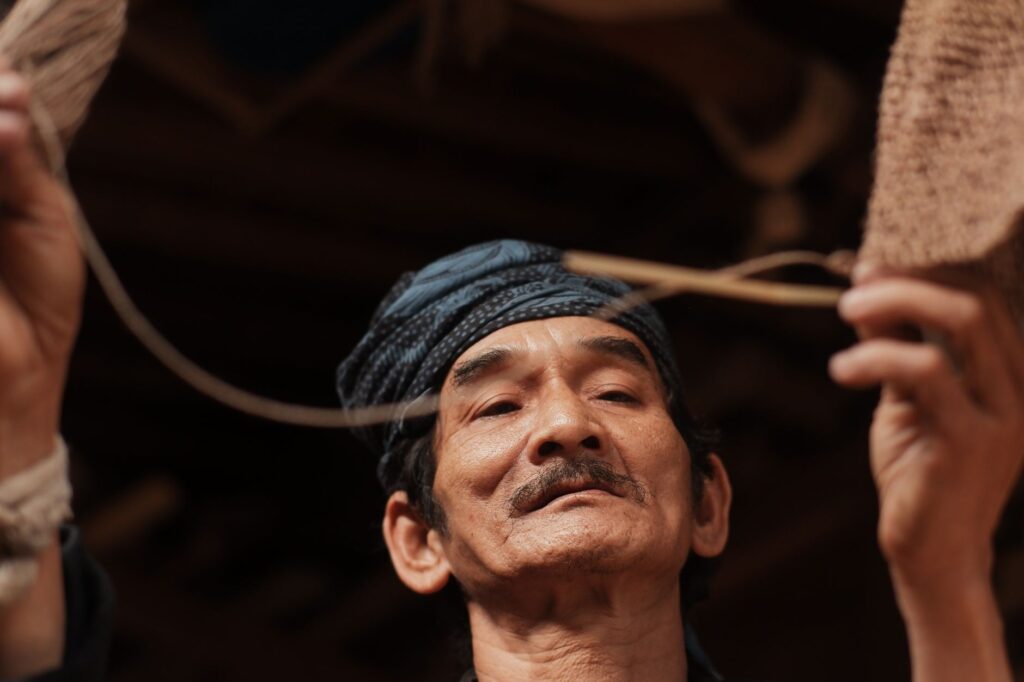
These new apprentices do not seek to blindly replicate ancient models; instead, they apply the structural rigor of basketry to new object typologies, ranging from architectural acoustic panels to large-format pendant lighting. Workshop doors periodically open to the public through cultural routes promoted by local administrations, allowing curious travelers to observe firsthand the geometric complexity of this ancient art and appreciate the true value of a completely handmade object.
Practical guide
How to get there: The Provençal valleys are best explored by private vehicle departing from Avignon or Marseille. The secondary departmental road network connects the small artisan workshops scattered between Cavaillon, Isle-sur-la-Sorgue, and Apt.
When to visit: Optimal months to witness harvesting and wicker boiling processes in workshops run from November to March. During summer, workshops shift focus toward commercialization and open-door public demonstrations.
Recommended workshop route:
- Vannerie Traditionnelle Workshop in Cavaillon: specialized in historical agricultural baskets and hot-peeling demonstrations.
- Plant Design Studio in Isle-sur-la-Sorgue: vanguard applications of natural fibers in contemporary furniture.
- Apt Craft Arts Center: monographic exhibitions on botany applied to interior design.
Shopping and conservation tips: When purchasing an artisanal piece, verify that the base maintains a uniform thickness and that fibers show no excessive splintering. For maintenance, remove dust with a soft-bristle brush and occasionally apply diluted linseed oil to nourish the pith and prevent environmental dryness from fracturing it.
Epilogue: The Silent Echo of Fiber
As evening falls, bathing the Provençal fields in golden light and quieting the murmur of the Rhône, the workshops gather their tools. In a corner of the workbench, a half-finished basket awaits the return of morning light. Within its interlaced curves persists the memory of a landscape resisting oblivion, sustained solely by the patience of those who decided that the future of objects lies in the time invested in creating them. Pith basketry demonstrates that true sustainability is not a marketing label, but a deeply human way of inhabiting the world.