
In recent years, Oslo’s urban skyline has undergone a radical metamorphosis that has shifted its gravitational axis from the fjords toward the institutions of art. The opening of architectural behemoths such as the Munch Museum and the new National Museum has redefined the identity of the Norwegian capital, consolidating it as a first-tier cultural epicenter on the international stage. Far from being a mere exercise in urban ostentation, this renovation responds to a deliberate strategy to integrate artistic heritage into the daily lives of its citizens and visitors.
This report explores the pulse of a city where wood, granite, and glass rise to guard both the existential screams of Edvard Munch and the archaeological treasures of the Viking Age. Through a journey spanning from the contemporary architecture of the waterfront to the most intimate corners of its history, we analyze how Oslo has transformed its urban landscape into a vast open-air museum.
The Renaissance of the Waterfront and the New Urban Profile
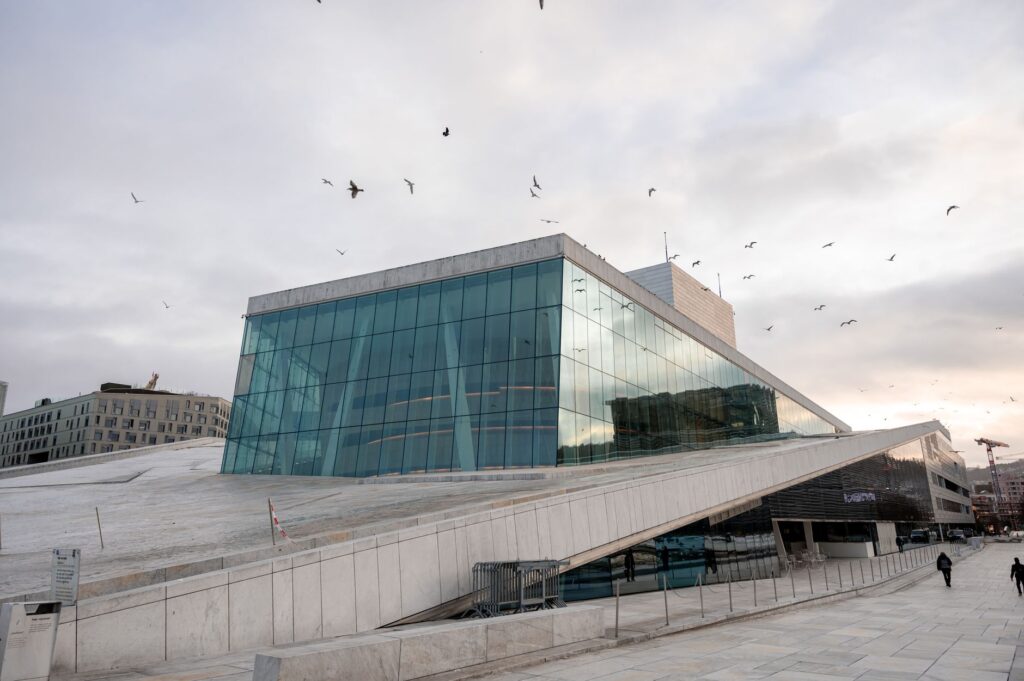
Oslo’s cultural transformation has its epicenter at the port, where the concept of public space has been completely redefined. The project known as Fjord City has returned the sea to the inhabitants, eliminating urban highways and replacing them with pedestrian promenades and cutting-edge cultural centers. The Oslo Opera House, conceived by the Snøhetta studio as a marble iceberg emerging from the fjord’s waters, inaugurated this era of accessible monumental architecture.
A few steps away, the Bjørvika neighborhood has emerged as the city’s new artistic lung. Cranes have given way to open squares where locals and tourists converge, creating a vibrant atmosphere that constantly dialogues with the surrounding maritime landscape. The integration of sustainable architecture is not merely an aesthetic statement, but an ethical commitment to the natural environment that defines Norway.
The New National Museum: A Colossus for Art History
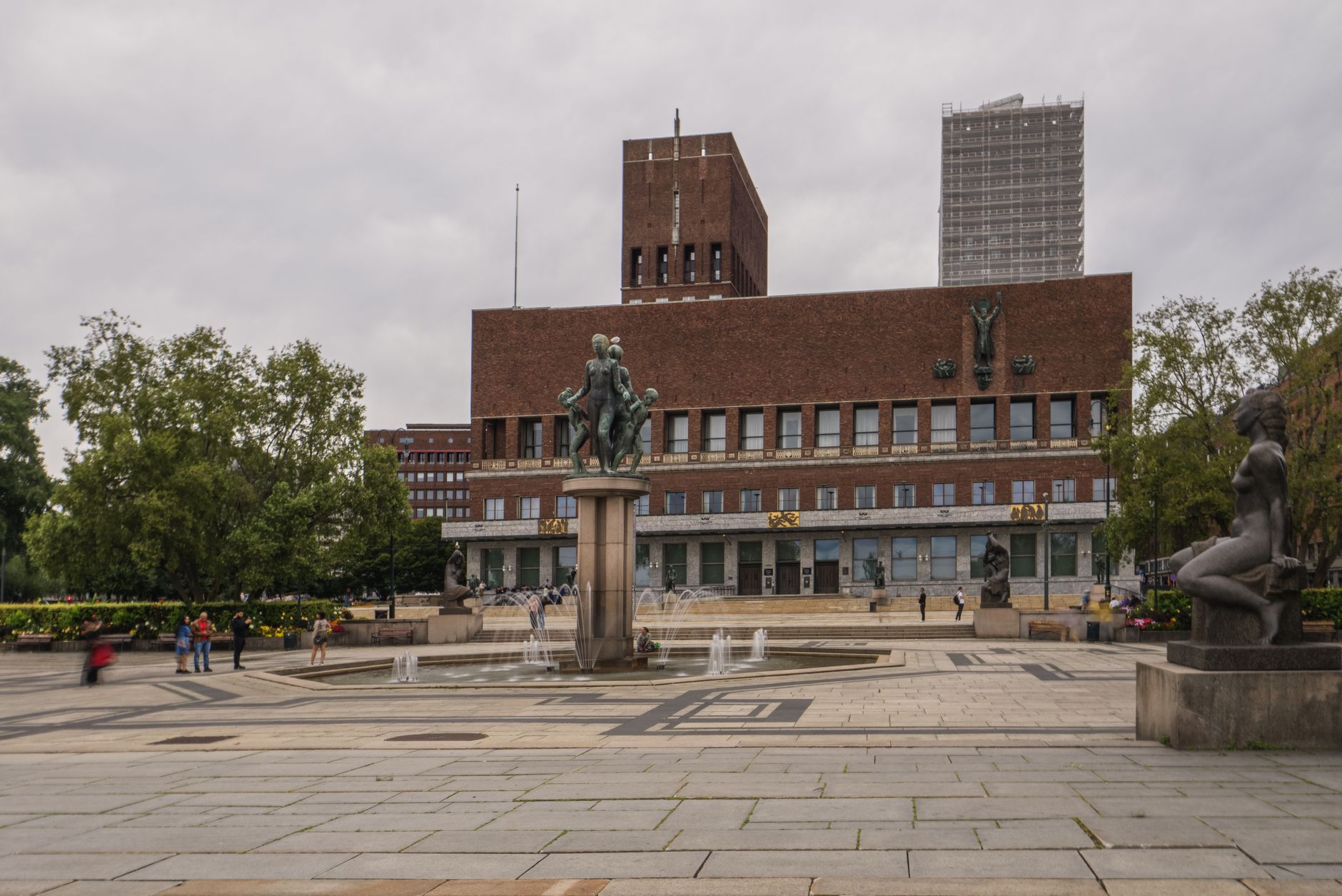
Inaugurated after years of anticipation, Norway’s new National Museum unifies under one roof collections that were previously scattered, becoming the largest art museum in the Nordic countries. Its imposing volume of dark stone and slate, dominated by the so-called Alabaster Room on the rooftop, asserts its presence in front of the historic Rådhusplassen harbor.
The journey through its galleries offers a comprehensive overview spanning from antiquity to contemporary design. The arrangement of the works seeks to establish unexpected dialogues between disciplines, allowing visitors to understand the evolution of Norwegian aesthetics within its European and international context.
Art in Oslo is not contemplated from a distance; it is inhabited, crossed, and breathed at the intersection between the city and the fjord.
Among its most celebrated pieces is one of the iconic versions of Edvard Munch’s The Scream, located in a room specifically designed to guarantee intimate and respectful contemplation of the work’s fragility. Curators have prioritized controlled natural lighting, granting the rooms a shifting atmosphere according to the seasons of the year.
Edvard Munch: The Tormented Genius and His New Sanctuary
Until recently, the work of Norway’s most universal painter was fragmented. The former museum in Tøyen had become too small to house the vast legacy that Munch bequeathed to the city of Oslo. The new Munch Museum, known locally as Lambda, rises slender and curved over the waterfront, defying museum conventions with its thirteen floors clad in perforated aluminum.
The tower is not without civic debate, but its interior more than fulfills the mission of honoring the artist’s psychological complexity. Rotating exhibitions allow visitors to explore not only his most famous oils but also his photographic experiments and graphic work, revealing a creator deeply connected to the avant-gardes of his time.
The Materiality of Anguish and Nordic Light
The experience of touring the Munch Museum transcends mere visual contemplation. The interior architecture, characterized by a monumental atrium and escalators crossing empty spaces, simulates the flow of consciousness that the painter himself captured on his canvases. The windows offer overhead views over the city where he was born and suffered.
Experts on Munch’s work point out that the layout of the rooms allows visitors to understand how the Norwegian landscape—with its dark winters and summers of eternal light—shaped a unique chromatic palette. Each floor of the museum addresses a vital stage of the artist’s life, from his bohemian beginnings in late 19th-century Kristiania to his retirement in Ekely.
The Millennial Legacy: Ships and Memory in Bygdøy
If architectural modernity defines central Oslo, the Bygdøy peninsula guards the historical roots of the nation. Despite temporary closures and ongoing remodeling to unify naval heritage in the future Viking Age Museum, the city’s commitment to preserving its pre-industrial past remains intact.

The Oseberg and Gokstad vessels, recovered from burial mounds, represent pinnacles of boatbuilding and Viking ornamental art. These drakkars not only transported the dead into the afterlife but symbolize the maritime audacity that connected Norway with the rest of the medieval world.
Preservation of centuries-old woods using advanced chemical techniques.
Exhibition of grave goods revealing the complex social stratification of the era.
Integration of augmented reality technologies to visualize the ships in their original navigational state.

Architecture as Social Commitment: The Deichman Library
No tour of the new cultural Oslo would be complete without visiting the Deichman Main Library, located in the Bjørvika neighborhood. This building demonstrates that public investment in culture in Norway is not limited to elitist art, but encompasses the democratization of knowledge and civic space.
With its geometric facades and impressive central atrium bathed in overhead light, Deichman is much more than a book repository. It functions as a community center where citizens come for workshops, film screenings, debates, and children’s activities, redefining the role of libraries in the 21st century.
A society is measured not only by the works hanging in its museums, but by the open spaces it offers for the free thought of its citizens.
Practical guide
Planning a cultural trip to Oslo requires understanding the city’s seasonality and the operation of its tourist passes. The best time to visit the capital spans from late May to September, when days are longer and cultural institutions extend their opening hours.
Public transport, managed by Ruter, is extremely efficient and connects all points of interest via trams, subways, and electric ferries. It is recommended to purchase the Oslo Pass, which includes free admission to the vast majority of museums, unlimited access to public transport, and discounts at selected restaurants.

Essential Tips for the Cultural Traveler
To optimize the visit to major museums such as the National and the Munch, it is advisable to book tickets in advance through their official platforms, especially during the summer months. Likewise, many museums offer time slots with reduced admission or free access one day a week.
Comfortable footwear is essential, as much of the center and waterfront promenades are designed to be explored on foot. Local gastronomy, revitalized by the new Nordic cuisine movement, deserves a stop at food markets such as Mathallen, where fishing tradition and global influences merge.
Emotional Epilogue: The White Silence Over the Fjord
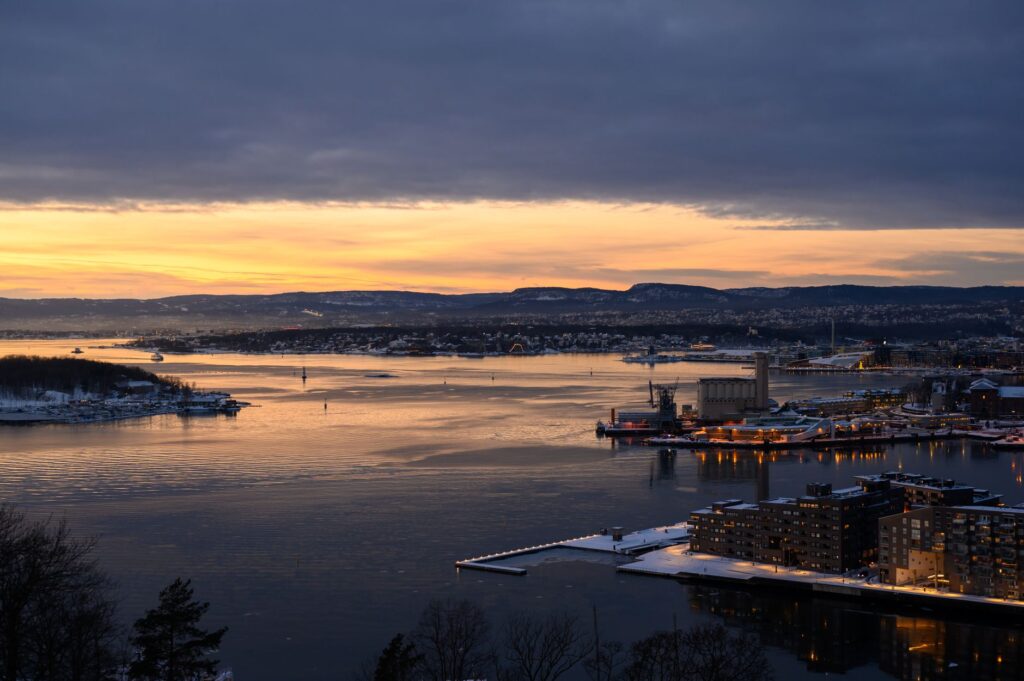
When evening falls in Oslo and the summer light acquires a coppery tone reflected in the waters of the fjord, the city reveals its true essence. It is neither the noise of large metropolises nor the urgency of mass tourism; it is an active stillness, a silent pact between untamed nature and human sophistication.
Sitting on the marble steps of the Opera House, watching the profile of modern museums blend with the maritime horizon, summarizes the cultural triumph of this Scandinavian capital. Oslo has understood that art is not a superfluous ornament, but the mirror where a society recognizes itself, dialogues with its past, and bravely shapes its future.