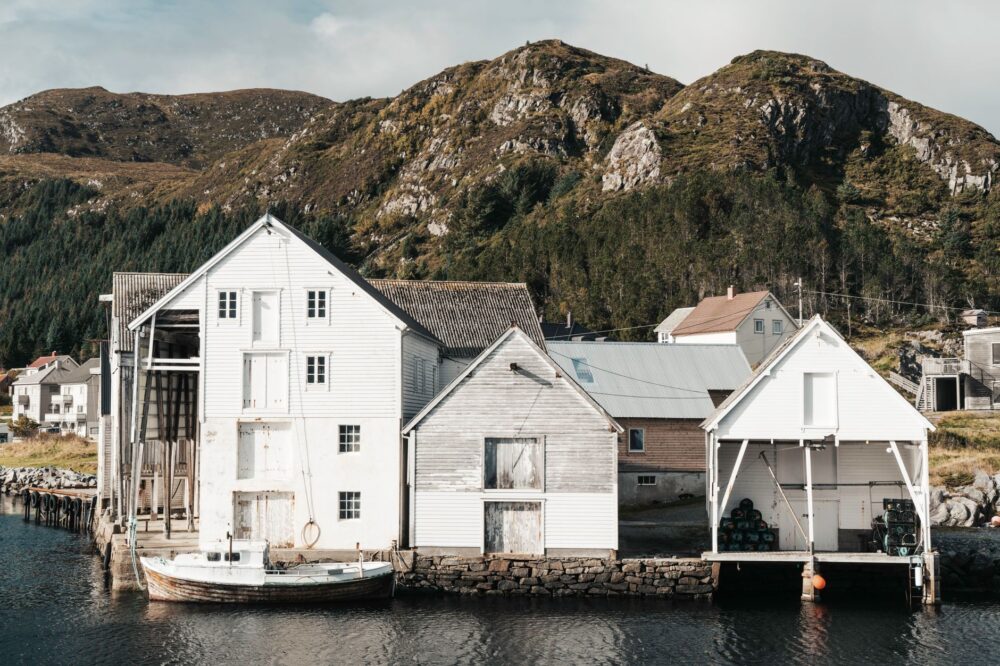
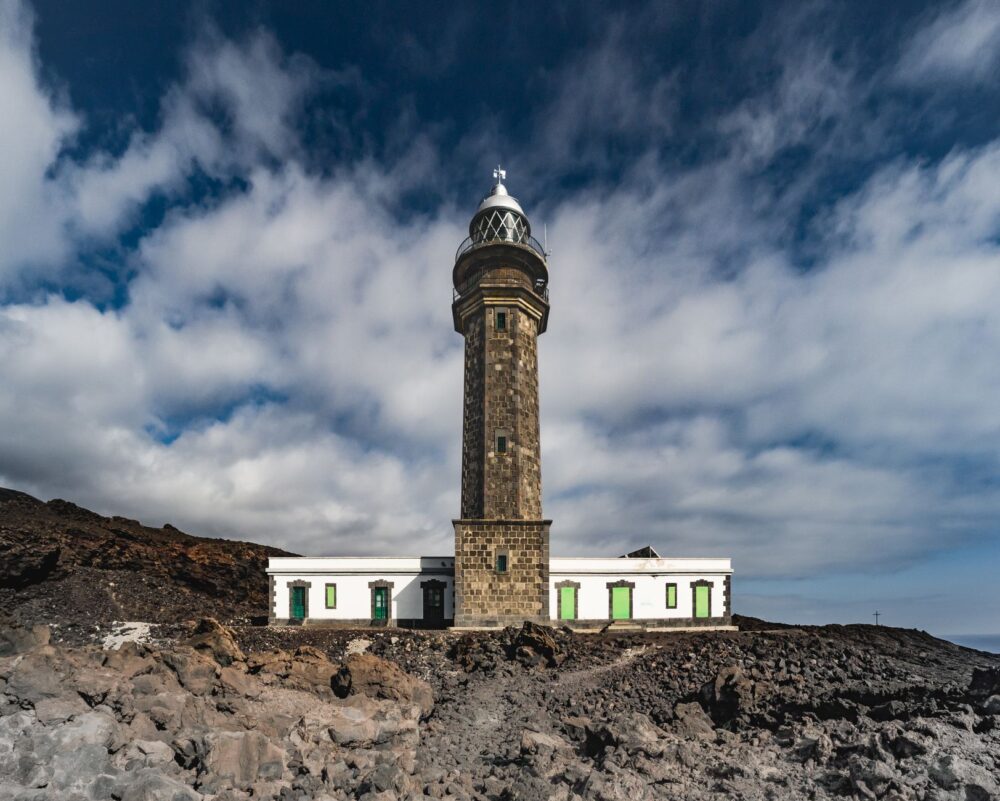
The Cantabrian coastline has historically maintained a complex relationship with the peninsular topography. Where the mountain range presses against the coastline to form vertical cliffs, overland transport demanded titanic engineering solutions throughout the nineteenth and much of the twentieth centuries. In contrast to the breakneck speeds of high-capacity domestic corridors, the metric-gauge railway traversing Northern Spain—inheriting the legacy of old mining and freight companies—has established itself as a moving observatory. Its route meanders along rugged slopes, crosses river mouths via riveted metal bridges, and penetrates valleys where time seems measured by tidal cycles and pastoral routines, offering an uninterrupted masterclass in unhurried geography and environmental respect.
Emarking on this journey implies embracing a different cadence. The trains connecting communities across the Basque Country, Cantabria, Asturias, and Galicia do not seek to break speed records; rather, they preserve the vital link between isolated rural hamlets and seafaring towns. On board, the traveler witnesses a constant chromatic transition: from the intense green of dairy pastures where cattle graze to the saline grey of sandy shores battered by the Cantabrian Sea. This sustainable mobility experience allows travelers to perceive the territory not merely as a transit space, but as a living ecosystem where human intervention—represented by dressed stone stations, manual level crossings, and masonry retaining walls—blends seamlessly with Atlantic vegetation.
The Genesis of Metric Gauge: From Mineral Extraction to Passenger Service
To understand the current infrastructure, one must trace back to the second half of the nineteenth century. The necessity of evacuating coal from Asturian and León basins, alongside iron ore from Basque and Cantabrian deposits, toward northern ports spurred the proliferation of narrow-gauge lines. The metric gauge (1,000 millimeters) was not a capricious choice, but a technical imperative dictated by abrupt topography. Tight curvature radii and steep gradients required lighter rolling stock capable of navigating ravines impossible for heavy Iberian-gauge trains.
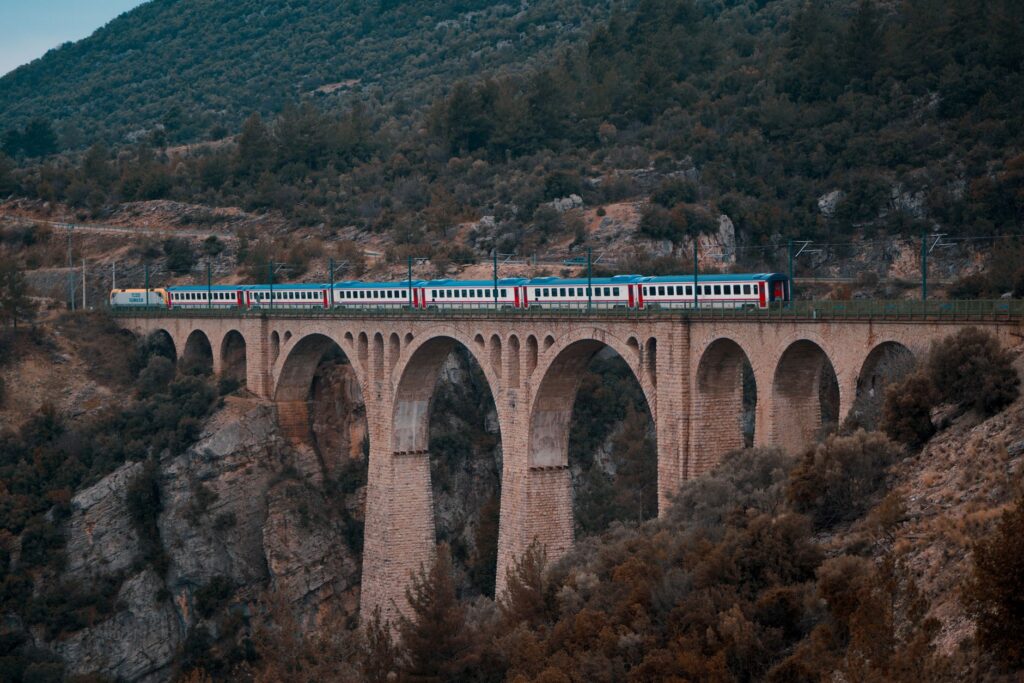
Private mixed-capital companies shaped a fragmented network later unified under state supervision. Those early steam locomotives hauling minerals through thick morning mist laid the groundwork for a route that today astonishes specialists in industrial heritage through its geometric audacity. Lattice iron viaducts designed by British and French engineers crossed roaring rivers such as the Deva, Sella, and Nalón, defying seasonal floods with a stony resilience that continues to impress civil engineering experts.
Station Architecture: Stone and Iron at the Service of the Route
The journey along this railway corridor also serves as a typological inventory of civil railway architecture across the northern cornice. Primary stations and secondary halts adhere to well-defined canons. Built predominantly with local sandstone or limestone masonry, featuring gable roofs clad in ceramic tile or slate to withstand Cantabrian precipitation, these buildings retain original elements such as carved wooden platform overhangs and cast-iron arrival indicators.
In many rural enclaves, the station functioned as the true heartbeat of the community. The stationmaster’s quarters, frequently located on the upper floor of the building, ensured the management of track switches and telegraph communications. Today, even though many halts have been automated, preserving these properties prevents the homogenization of the railway landscape. Stops in towns like Llanes, Cabezón de la Sal, or Unquera maintain that nineteenth-century atmosphere where the arrival of the train remains the defining daily event for local residents.

Fluvial Engineering and the Great Estuary Viaducts
One of the greatest technical challenges in the northern route lies in crossing estuaries and rias, where tidal currents constantly erode the banks. Nineteenth-century engineers had to design deep foundations on timber piles and compressed-air pneumatic caissons to anchor pillars in muddy riverbeds. The result is a collection of historic bridges representing true gems of civil engineering heritage in Spain.
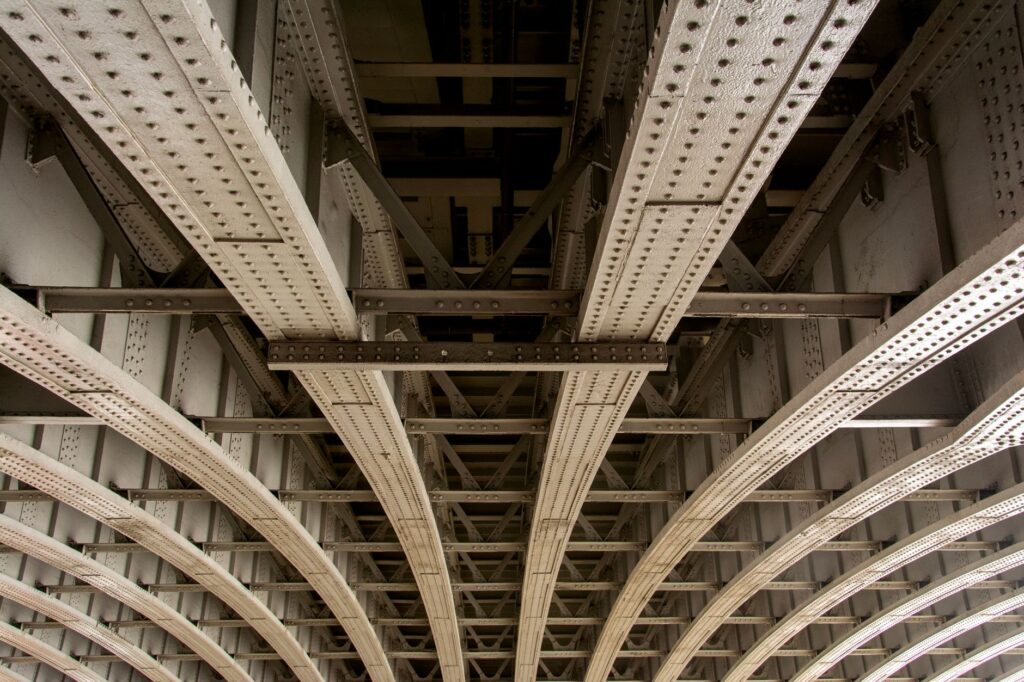
Crossing the Tina Mayor estuary or the multiple bridges spanning the Avilés estuary and Santander bay demonstrates absolute mastery in puddled ironwork. These structures, subjected to constant marine salt attack, require specialized maintenance campaigns preserving their original appearance. Glancing out the window while crossing one of these viaducts offers a privileged perspective: beneath the train wheels, saltwater mirrors the cloudy sky while grey herons take flight from adjacent mudflats.
The metric-gauge railway across Northern Spain is not merely a mode of transport; it is a rolling archive of industrial and landscape memory, where every curve reveals human persistence against the verticality of the mountains.
The Ecological Transition: From Historic Steam to Sustainable Hybridization
In recent decades, modernization efforts have successfully balanced environmental sustainability requirements with improved journey times. The progressive replacement of classic diesel traction with more energy-efficient railcars and the gradual introduction of advanced signaling systems (such as automatic block signaling and centralized traffic control) have enhanced safety without altering the essence of the landscape.

Unlike high-speed rail, which largely runs on concrete viaducts and tunnels sealed off from the outside world, the metric gauge maintains a tactile relationship with the territory. Treated timber ties—and their progressive replacement by concrete on critical sections—support lightweight trains that minimize carbon emissions per passenger transported. This low-intensity mobility approach proves ideal for connecting protected natural spaces within the Cantabrian Mountains and coastal natural parks without increasing automobile pressure on rural roads congested during summer months.
Seafaring Towns and Inland Valleys: The Economic Pulse of the Route
The railway acts as the backbone of a highly diversified local economy, where the fishing traditions of northern ports coexist with the extensive livestock farming of inland valleys. Stopping in enclaves such as Santillana del Mar, San Vicente de la Barquera, or Ribadesella grants travelers direct access to medieval and Renaissance historical centers without relying on private vehicles.

Meanwhile, as the route ventures inland toward river basins heading toward the Castilian plateau—as seen in the historic Ferrocarril de La Robla connecting León and Bilbao across the Cantabrian range—the landscape shifts radically. Deciduous beech and oak forests yield the stage to limestone gorges and former coal loading bays that now form part of industrial tourism routes and long-distance hiking trails.
Practical guide
Planning the Journey: The northern metric-gauge network is operated by Renfe under the commercial brand Cercanías AM and regional services. It is essential to check updated timetables on the official website, as frequencies vary notably between weekdays and weekends, adapting to local school and commuter traffic.
Fares and Passes: Combined transport tickets and monthly passes are available for regular commuters, alongside specific fares for long-distance scenic travel. Tickets should be purchased in advance at main station ticket offices or digital channels, though in many rural halts tickets are issued directly onboard by the conductor.
Luggage and Accessibility: Regional railcars feature specific areas for bicycles and hand luggage, though dimensions vary depending on the rolling stock model (Series 435 or 500). Passengers with reduced mobility should verify in advance which stations feature accessible platforms and operational ramps, as the age of certain historic infrastructures limits universal accessibility.
Best Time to Visit: Although the service operates year-round, spring months (May and June) and early autumn (September and October) offer stable weather conditions and lower passenger volumes, allowing visitors to enjoy the Cantabrian coast in an environment of absolute tranquility.
The Last Refuge of Mist and the Quiet Rail
As evening falls, when sea mist ascends from limestone cliffs to mountain pastures, the rhythm of the train synchronizes with the intermittent flash of automatic level crossings. On worn velvet-upholstered seats, time acquires an unusual density. The goal is no longer to reach a destination urgently, but to watch dusk paint ancient stone stations in ochre tones. In that final instant, as the distant whistle of the locomotive echoing through a solitary gorge announces the end of the day, the traveler realizes that the true wealth of this journey lies not in the speed of movement, but in the unwavering persistence of a landscape refusing to be swallowed by contemporary haste.