
Bergen rises upon a topography where water and rock establish a perpetual truce. Enclosed between seven mountains and the western fringe of the fjords, this Norwegian port city has turned its complex topography into a continuous exercise in transport engineering. Far from being a mere postcard destination, the municipality functions as a living organism where the flow of freight, passengers, and energy depends on a meticulously synchronized network of subterranean tunnels, high-speed ferries, and the historic Bergen railway line.
Understanding the connectivity of this region requires looking beyond its tourism facade. The Port of Bergen, one of Northern Europe’s most active logistics hubs, handles millions of tons of cargo annually and links the Scandinavian Peninsula with the islands of the Atlantic archipelago. This report examines how the interaction between modern road infrastructure and traditional maritime routes sustains the economic life of isolated communities, guaranteeing supply and territorial cohesion in one of the continent’s most challenging natural environments.
Topography as a Challenge: Engineering and Living Rock in Western Norway
Bergen’s geography is dominated by gneiss and granite formations that hinder traditional urban expansion. To connect peripheral neighborhoods and interior valleys with the central district, civil engineers have systematically resorted to underground excavation. The Fløyfjellet tunnel and the recent Bybanen project—the light rail system crossing the city—exemplify how infrastructure must adapt to the bowels of the mountain, minimizing surface environmental impact while optimizing daily commuting times for thousands of citizens.
This mastery of the underground is complemented by a network of bridges and viaducts spanning the numerous arms of the sea penetrating the coast. Constructing these structures requires rigorous maintenance due to salt corrosion and gale-force winds originating in the North Sea. Continuous investment in special alloys and high-strength concrete demonstrates that durability remains the primary criterion in Norwegian civil engineering planning.
The Railway Pulse: The Bergen Line and Its Alpine Connection
Inaugurated in 1909 after decades of titanic labor, the Bergen Line links the Atlantic coast with Oslo across the Hardangervidda plateau. This railway is not merely a historic milestone in European civil engineering, but a vital corridor for passenger and heavy freight transport under extreme weather conditions. The tracks ascend to over a thousand meters of altitude, confronting severe blizzards and snow accumulations that demand the constant use of powerful snowplows and kilometers of avalanche protection galleries.
The management of this rail line combines operational tradition with state-of-the-art digital signaling systems. Conductors must operate under strict safety protocols that account for avalanche risks and terrain instability during spring thaws. For the inhabitants of small rural enclaves along the route, this train represents the only secure overland link to major urban centers during winter months.
Cabotage and Maritime Transport: The Floating Arteries of the Coast
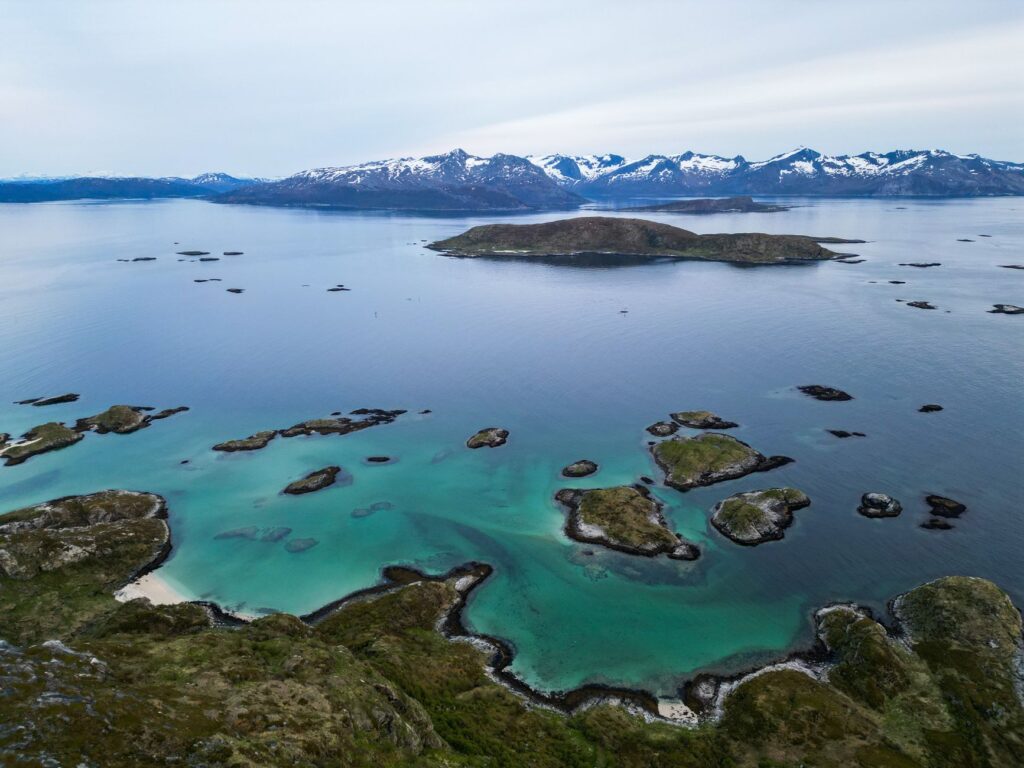
If the mountains impose ironclad limits on road traffic, the sea acts as the true highway of western Norway. From traditional coastal cargo vessels to modern electric passenger catamarans, cabotage navigation underpins communication between Bergen and scattered settlements across the Sognefjord and Hardangerfjord. This maritime network operates with Swiss-clock precision, integrating tidal schedules, roll-on/roll-off cargo capacity, and emergency medical services.
The electrification of the local ferry fleet marks a new era in sustainable Norwegian mobility. Bergen’s docks have been equipped with powerful fast-charging stations capable of recharging large ferry batteries in minutes. This energy transition drastically reduces carbon emissions in ecologically sensitive areas, proving that logistical efficiency and environmental preservation can go hand in hand within the maritime transport sector.
The true measure of engineering is found not in the monumentality of its structures, but in its silent capacity to integrate the territory without disrupting its fragile natural balance.
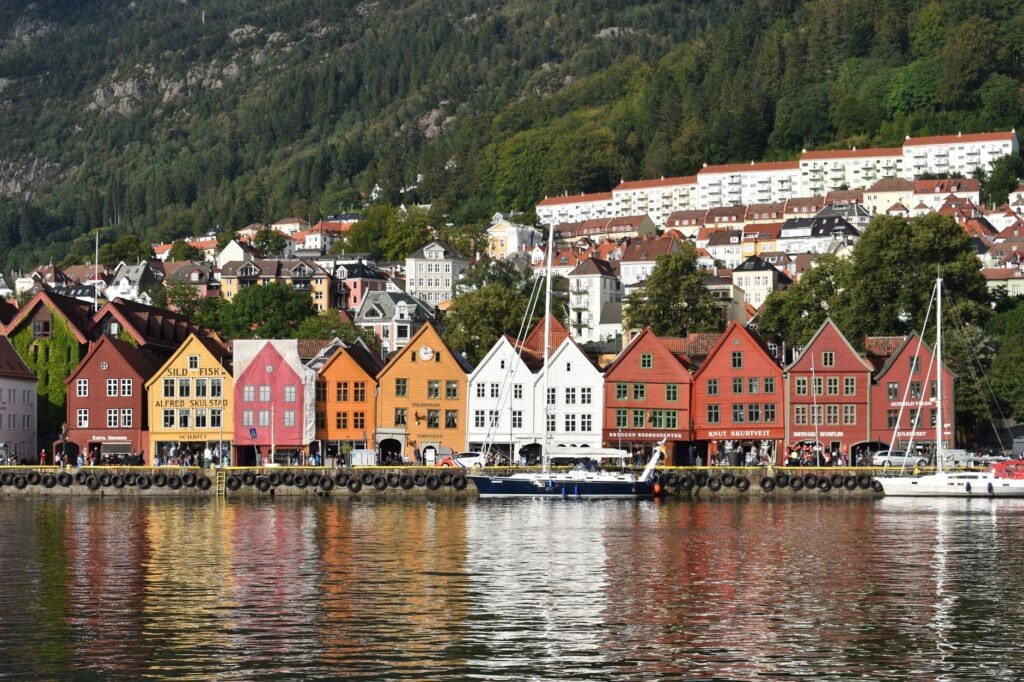
Cruise ship traffic and international cargo vessels also exert considerable pressure on local port authorities. Bergen’s officials have implemented strict emissions restrictions and installed onshore power supply systems, known as cold ironing technologies, allowing ships to shut down auxiliary engines while moored at the historic Bryggen wharf.
Urban Gearing: Funiculars and Vertical Transport
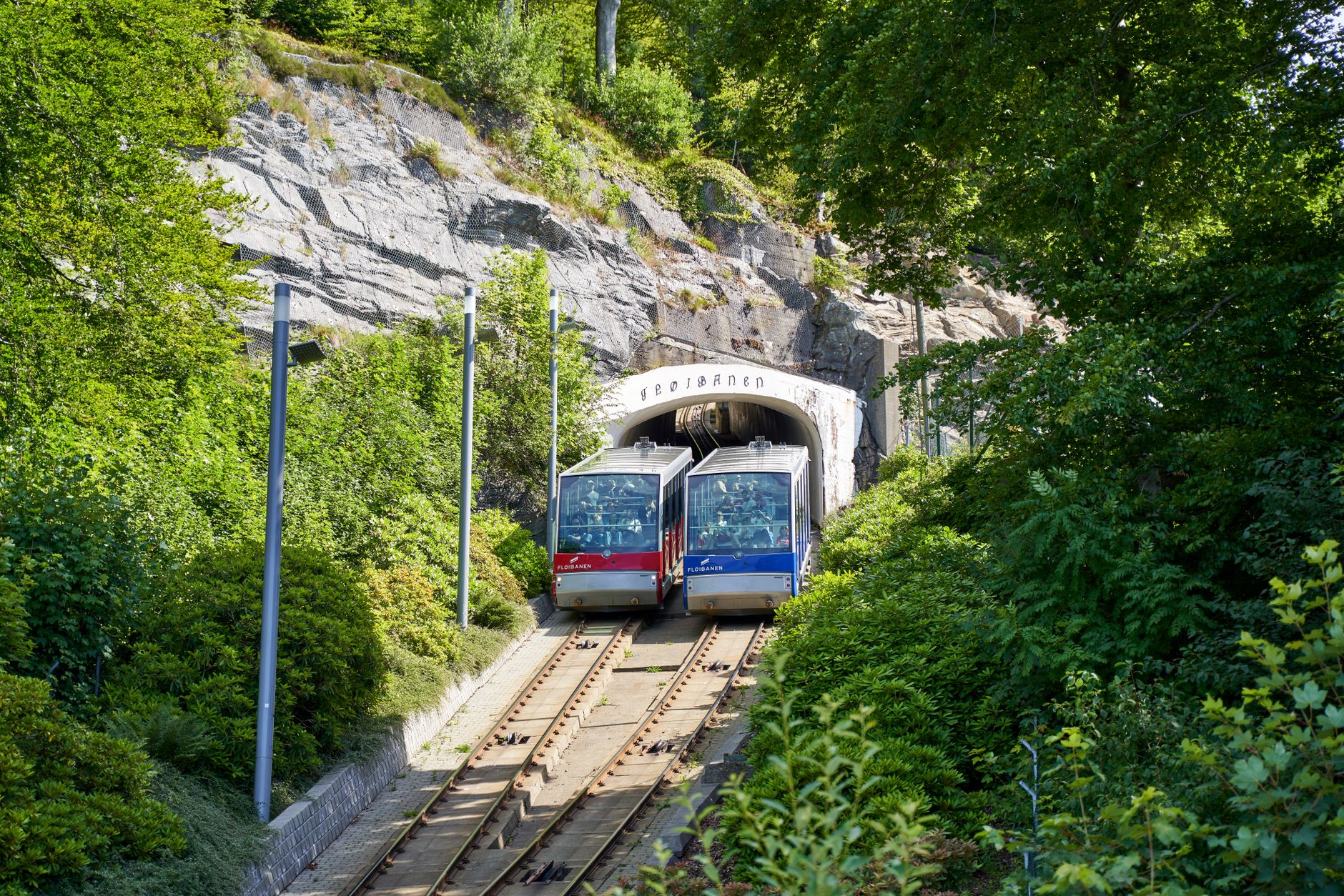
Within the urban fabric, vertical mobility is a daily necessity. The Fløibanen funicular, operating since 1918, annually transports over a million passengers from the city center to the surrounding summits. Beyond its tourist appeal, this system functions as essential public transport for residents of the upper slopes, connecting densely populated residential neighborhoods with the light rail network and urban buses.
Tariff and modal integration is one of the greatest successes of Bergen’s transport system. Through smart cards and unified mobile applications, users can combine the funicular, tram, city buses, and local ferries under a single travel ticket. This intermodal fluidity encourages public transport usage and reduces private vehicle congestion on the narrow Hanseatic streets.

Port Logistics and Regional Supply
The Port of Bergen is the beating heart of the blue economy in western Norway. Its docks handle not only general consumer goods, but also specialized equipment for the aquaculture industry and offshore oil rigs. Managing this heterogeneous volume of cargo requires automated terminals and pinpoint coordination among stevedores, shipping companies, and land freight carriers.
Logistical infrastructure relies on a network of peripheral distribution centers strategically located near major ring roads. This prevents heavy commercial vehicles from entering the historic center, protecting architectural heritage from vibrations and premature wear. The efficiency of this supply chain ensures that perishable goods and industrial supplies reach the entire western region on schedule.
Contemporary Challenges Facing the Green Transition
The future of transport in Bergen is shaped under the prism of strict sustainability. The municipal government and operating companies have set a target to achieve net-zero emissions across the entire urban and interurban mobility system within the next decade. This entails the total renewal of the bus fleet toward hydrogen and pure electric technologies, alongside the expansion of light rail lines to neighboring municipalities.
However, economic and technical challenges are considerable. Constructing new rail tunnels, such as the planned Arna-to-Voss shortcut, requires multi-million-dollar investments and complex geological management. Despite these difficulties, Norwegian society maintains a firm consensus on the need to invest in resilient, environmentally friendly public transport infrastructure.

Practical Guide
Planning a trip or logistical analysis in Bergen requires understanding its operational specificities. Below are the fundamental guidelines for moving efficiently through the region.
How to get there: Bergen-Flesland Airport (BGO) connects with major European hubs and features a direct light rail line (Bybanen) reaching the center in 45 minutes. The railway line from Oslo offers one of the world’s most scenic alpine crossings.
Urban transport: The Skyss network uniformly manages buses, trams, and local ferries. Acquiring the Skyss Billett mobile app is recommended for purchasing 24- or 72-hour passes valid across the metropolitan area.
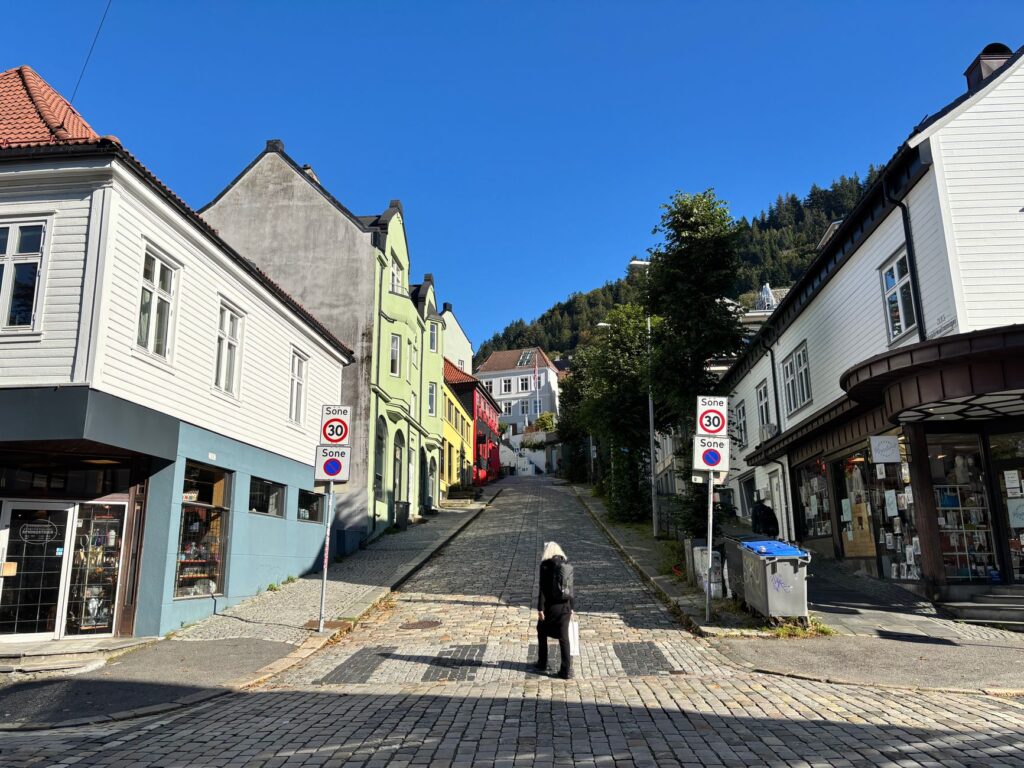
Vertical mobility: The Fløibanen funicular operates from the central market square between 7:30 AM and 11:00 PM. Early morning hours are advisable to avoid tourist crowds and observe local routines.
Fjord navigation: Passenger ferries to minor fjords and outer islands depart mainly from the Strandkaiterminalen wharf. Advance booking is mandatory if traveling with a vehicle during the summer season.
Digital connectivity: 5G coverage is universal throughout the municipality and adjacent rural zones. Major public transport apps provide real-time updates regarding weather incidents and road conditions.
Transport engineering in extreme latitudes does not seek to conquer nature, but to learn to coexist with its vastness through technical precision and absolute respect for the landscape.
At dusk, when golden light reflects off the dark waters of the harbor and the lights of cabotaje vessels begin to trace luminous wakes toward the fjords, Bergen reveals its true identity. It is not merely a city of colorful postcards, but a masterpiece of human engineering where every tunnel, rail line, and stone wharf confirms that the will to connect communities can defy the most implacable frontiers on the planet.