
The Stone Geometry of the Guayangareo Valley
The urban layout of Morelia unfolds across a high-altitude valley where pink quarry stone acts as the unifying element of a unique historical landscape. Founded in the 16th century under the name Valladolid, the current capital of the state of Michoacan in Mexico preserves a grid system that has withstood the passage of centuries without losing its original legibility. Walking through its central streets reveals how civil and religious buildings converse with one another through the systematic use of this volcanic material, whose hues range from soft ocher to intense pink depending on the angle of sunlight. Unlike other colonial centers where architecture competes in stylistic loudness, a restrained ornamentation prevails here, endowing the ensemble with enduring visual harmony. The facades of noble palaces and ancestral manors display portals carved with meticulous artisan precision, reflecting local stonemasons’ mastery of both Spanish and Mesoamerican techniques.
Public space in this Mexican settlement is not a mere transit corridor, but the stage where the daily routines of its residents unfold. Tree-lined squares, flanked by symmetrical arcades, function as intergenerational meeting points where the urban pace slows down. Local residents gather in these enclaves to seek shelter from the afternoon heat beneath the shade of ash and laurel trees, creating a neighborhood atmosphere that contrasts with the monumental scale of the surrounding structures. This coexistence between stone architecture and contemporary community life constitutes one of the city’s greatest heritage assets, proving that historical centers can remain inhabited and dynamic without resorting to artificial museification.
The Cathedral and the Visual Dominance of the Historic Center
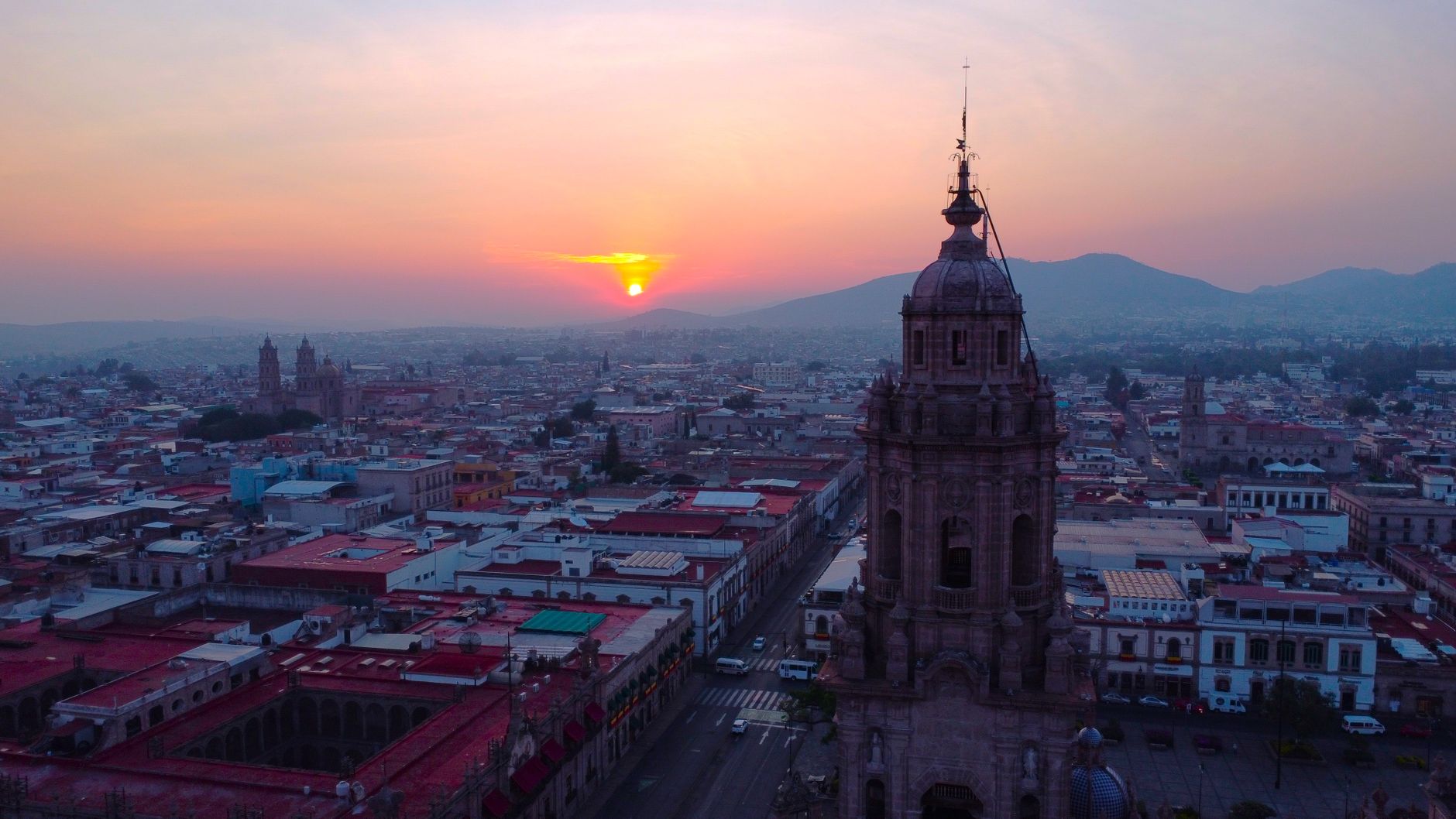
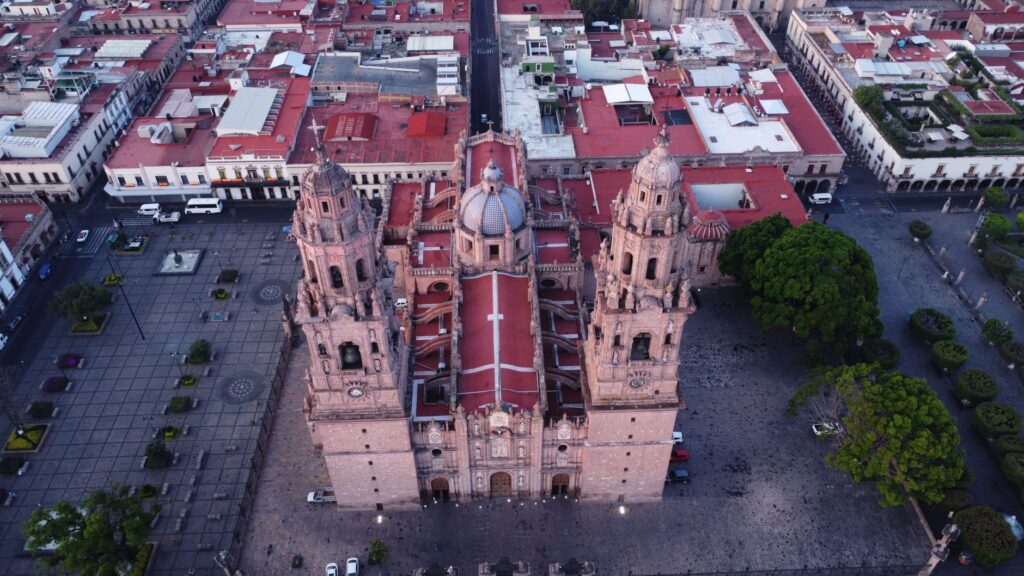
Rising with imposing verticality over the urban grid, the Cathedral of Morelia dominates the city’s architectural profile thanks to its twin paneled Baroque towers. Its construction, initiated in the late 16th century and spanning over a century, involved a colossal technical and artistic effort engaging successive generations of master builders. Unlike other New Spanish cathedrals that opted for whitewashed masonry, this temple relied entirely on pink quarry stone, conferring an unmistakable chromatic unity that stands out particularly during twilight hours. The towers, exceeding sixty meters in height, structurally anchor the valley and serve as an unavoidable spatial reference for any walker exploring the urban core.
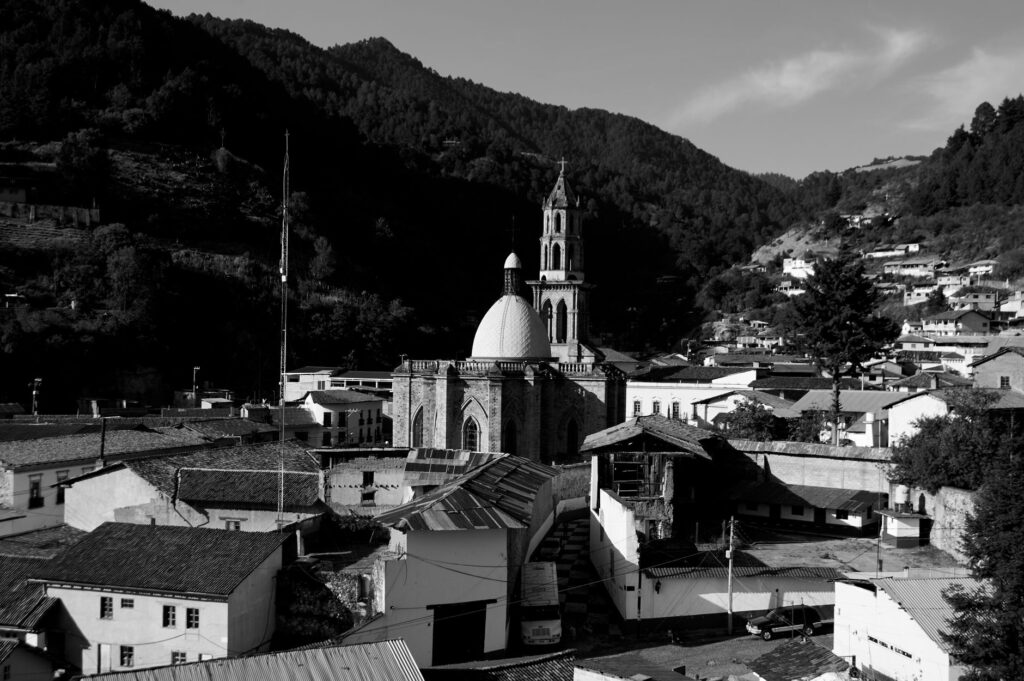
The cathedral atrium and adjacent squares form the civic and religious heart of the Michoacan locality. A network of cobblestone alleys fans out around this circulatory axis, inviting exploration on foot and revealing smaller squares, ornamental fountains, and former convents converted into cultural spaces. The preservation of this urban fabric is no accident, but rather the result of rigorous heritage protection regulations that have prevented the alteration of traditional heights and volumes. Thus, visitors navigating these blocks experience an uninterrupted visual continuity that facilitates the understanding of Latin American colonial urbanism in its highest expression.
The Artisan Craft and the Persistence of Family Workshops
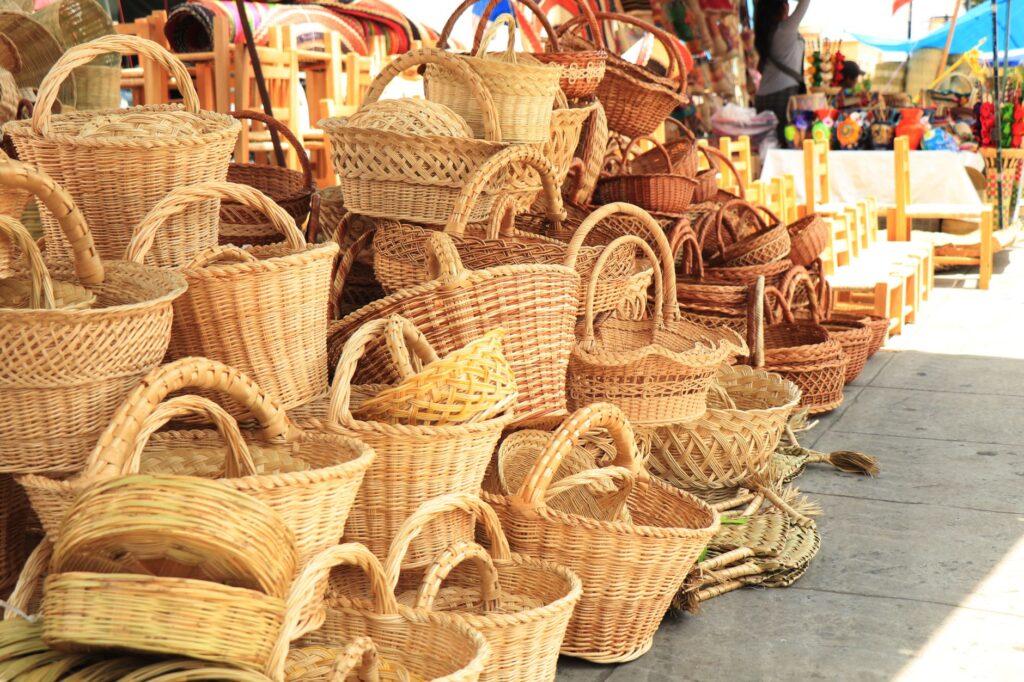
Beyond its monumental architecture, the cultural identity of this Mexican region is grounded in a solid artisan tradition surviving in traditional neighborhoods and surrounding communities. Family workshops specializing in pottery, stonework, and wood carving pass down knowledge from generation to generation, keeping alive production processes that prioritize manual time over industrial serialization. In local markets and artisan hubs, one can observe the dedication with which craftspeople mold clay and work metals, applying traditional techniques dating back to the viceregal period and even to the Purépecha roots predating the Spanish arrival.
This proximity economy not only preserves intangible heritage but also generates a direct bond between creator and visitor, fostering responsible consumption that values the time and effort invested in each piece. Local authorities and civil associations collaborate to promote these trades through thematic fairs and permanent exhibitions, ensuring that younger generations find incentives to continue family labor. In this way, craftsmanship ceases to be a mere tourist souvenir and becomes a living testimony of the Michoacan collective memory, where every texture and color narrates a story of territorial rootedness.

Supply Markets and Traditional Michoacan Cuisine
The region’s gastronomy is manifested in all its splendor within traditional markets, bustling spaces where agricultural products from the state of Michoacán converge with recipes passed down by traditional cooks. Places like the Sweet Market or food stalls in municipal markets offer a sensory immersion in local flavors, characterized by the use of native corn, regional chiles, pork carnitas, and a wide variety of seasonal beverages and fruits. These venues are not merely supply centers, but true social hubs where cuisine acts as a vehicle for cultural transmission and social cohesion.
Respect for locally sourced ingredients and fidelity to ancestral cooking methods have turned Michoacan gastronomy into an international benchmark, recognized for its complexity and deep community roots. Traditional cooks play a fundamental role in safeguarding this culinary heritage, resisting food homogenization through the fierce defense of family cookbooks. For the curious traveler, sitting down at a table in these markets represents an unparalleled opportunity to understand the material culture of the state, where each dish summarizes the biodiversity of the geographical environment and the mestizo history of its inhabitants.
Green Spaces and Natural Respite Within the Urban Fabric
Despite its dense historical fabric, the city incorporates numerous green lungs that soften the rigor of the stone and offer recreational spaces for the local population. Cuauhtémoc Forest, located near the center, constitutes one of the oldest and most beloved urban parks by residents, who gather there to stroll under the shade of centenarian eucalyptus and fruit trees. Such natural enclaves within the urban fabric balance architectural density with resting areas, favoring local biodiversity and improving the environmental quality of surrounding neighborhoods.
Likewise, the banks of the Chiquito River and the tree-filled plazas act as biological and visual corridors connecting the valley with the surrounding mountain foothills. The presence of these open spaces fosters a harmonious relationship between the built environment and the natural landscape, a balance that urban planning policies seek to preserve in the face of contemporary demographic pressures. Walking through these urban parks reveals another, more intimate and tranquil facet of the locality, where commercial noise gives way to the murmur of water and the song of resident birds.
Nightlife and the Scenic Illumination of Heritage
When the sun sets over the valley, the pink quarry stone architecture acquires a completely new visual dimension thanks to a carefully designed scenic lighting system that highlights the reliefs and cornices of the main buildings. The streets of the historic center, free from daytime congestion, invite nighttime walks where artificial dimness accentuates the texture of the walls and the depth of the arches. Traditional cafes and ice cream parlors located along the arcades prolong their activity well into the night, bringing together university students, intellectuals, and local families in an atmosphere of permanent conversation.
This leisurely and cultural nightlife distinguishes the Michoacan capital from other mass-market tourism destinations, opting for an offer based on architectural contemplation, live music in small venues, and the enjoyment of open-air conversation. The local university, with its strong presence in urban life, injects constant intellectual dynamism reflected in independent bookstores, self-managed cultural centers, and street art exhibitions. Thus, the night does not represent the closure of civic activity, but rather the transition to a more intimate atmosphere where history dialogues directly with the present.
Practical guide
How to get there: Morelia is served by General Francisco J. Múgica International Airport (MLM), located about 27 kilometers from the center, offering domestic connections and select international flights. By land, the city is connected via an extensive network of long-distance buses from Mexico City, Guadalajara, and other major urban centers in central Mexico.
When to visit: The climate is temperate for most of the year. The dry season, spanning from November to April, offers sunny days ideal for walking the city, while summer rains (May to October) turn the valleys and urban parks lush and green.
Where to stay: The historic center concentrates the highest concentration of boutique hotels housed in restored viceregal mansions, alongside budget-friendly accommodation options in surrounding neighborhoods.
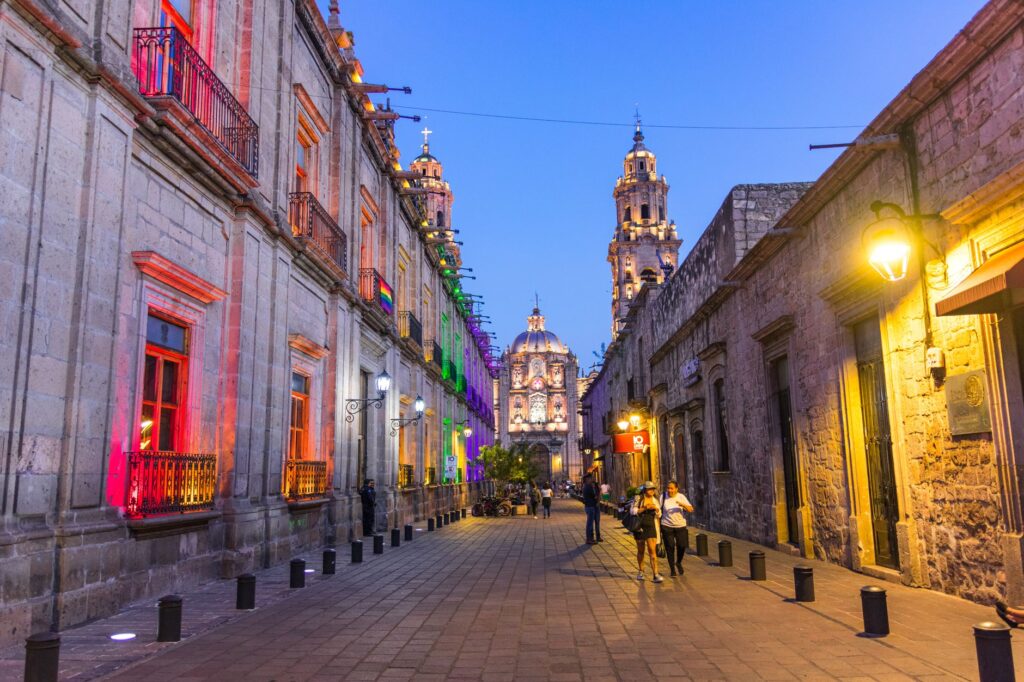
Visitor tips: Comfortable footwear is recommended due to the cobblestone pavements of the colonial streets. Travelers are advised to prioritize purchases at local markets and independent artisan workshops to support the proximity economy and the conservation of cultural heritage.
Memory Written in Walls and Squares
The sunset over the pink quarry domes envelops the city in an atmosphere where time seems suspended, reminding us that the most beautiful stones are those that sustain the daily lives of their people without loudness or artifice.
The true identity of a city resides not solely in its monuments, but in the everyday manner in which its inhabitants inhabit and care for their legacy.
This silent commitment between past and present ensures that heritage endures not as an inaccessible museum piece, but as a shared home for those who walk it every day.