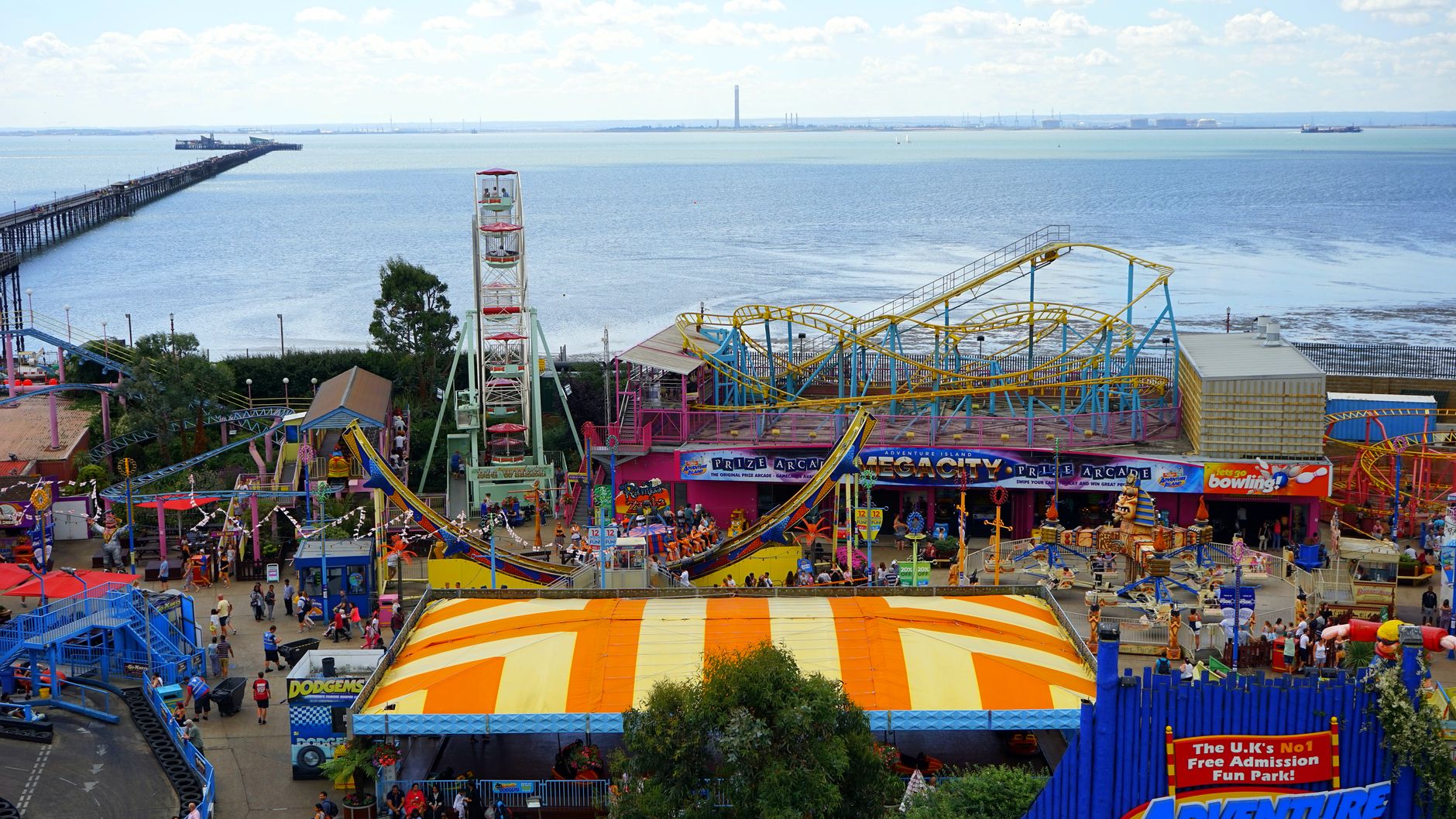

Open gateways to the Thames Estuary
At the eastern edge of the county of Essex, where the waters of the Thames Estuary open towards the North Sea, the city of Southend-on-Sea displays a geography defined by its famous wooden pier and a skyline where commercial aircraft trace the arrival path. This coastal enclave in the United Kingdom, with a population exceeding two hundred and ninety thousand residents, has evolved over the decades from a traditional weekend holiday destination into a benchmark for regional and short-haul civil aviation. The presence of its aeronautical infrastructure does not merely respond to the logic of contemporary connectivity, but rather has deep roots in a history of technical innovation and public service dating back to the early decades of the twentieth century.
Southend Airport, historically known by its IATA code SEN, has successfully reinvented itself without losing sight of its human scale. Unlike the massive, overcrowded terminals dominating the Greater London metropolitan area, this airfield offers an alternative where transit times are drastically reduced. Passengers crossing its doors experience a fluid mobility flow, where the distance between the check-in desk and the boarding gate is measured in minutes rather than kilometers of moving walkways. This architectural and operational uniqueness turns the space into a fascinating case study on how medium-sized communities can manage mass air transport with an inclusive and sustainable approach.
The historical footprint in British air navigation
To understand the current scale of the Southend terminal, it is necessary to look back at its military and civil past. During the years of the Second World War, this site played a vital strategic role under the auspices of the Royal Air Force. Hangars and runways witnessed the departure and arrival of squadrons operating in defense of the island’s airspace. Following the end of the conflict, the facility underwent a gradual transition toward commercial aviation, becoming during the 1950s and 1960s one of the country’s busiest airports for the transport of automobiles and passengers via air ferry services to the European continent.
That pioneering legacy remains alive in the collective memory of Southend-on-Sea residents. Local chronicles recall how neighbors used to gather on weekends near the perimeter to watch the arrival of turboprops and early commercial jets. The infrastructure grew alongside tourist demand, adapting to the needs of a British population beginning to discover affordable international travel. Although over the years the prominence of major London airports temporarily overshadowed its activity, the infrastructure never lost its aeronautical vocation, maintaining a living tradition of hospitality and service that today attracts new generations of travelers.

Airport architecture on a human scale
The contemporary design of the passenger terminal in Southend reflects a deliberate commitment to simplicity and spatial efficiency. Far from the imposing glass and steel cubes characteristic of global mega-airports, the Essex infrastructure prioritizes natural light and clarity in user circulation. High ceilings and panoramic windows allow the estuary light to flood waiting areas, offering travelers direct views toward the parking apron and takeoff runways. This architectural arrangement not only facilitates intuitive passenger wayfinding but also reduces the fatigue commonly associated with air travel.
The integration of the terminal with the urban and rail environment constitutes one of its greatest operational achievements. Just meters from the access doors lies the Southend Airport railway station, directly connected to the main line linking the Essex coast with Liverpool Street station in the financial heart of London. This symbiosis between rail and air transport makes it possible to complete the journey between the center of the British capital and the aircraft stairs in under an hour. The fluidity of this intermodal transfer demonstrates that transport sustainability does not depend exclusively on massive mega-projects, but on intelligent planning that leverages existing mobility corridors.
Daily pulse and the local economy
The impact of the airfield extends far beyond the purely technical realm of flights. For the Southend-on-Sea community, the presence of the infrastructure generates a diversified economic ecosystem ranging from aeronautical maintenance to hospitality and local logistics services. Specialized companies in aircraft repair and pilot training operate on lands adjacent to the runways, making the district a pole of attraction for highly qualified professionals. This steady economic activity helps mitigate the seasonal tourism fluctuations typical of southern English coastal towns.
«The true measure of a regional airport is not how many million passengers it processes annually, but how successfully it intertwines the urgency of global flight with the tranquility of the welcoming community.»
The daily commutes of workers operating the facilities and passengers choosing this route for business or leisure shape a constant choreography along road and rail approaches. The avenues connecting the urban center to the airport complex display a steady flow of buses, private vehicles, and cyclists sharing space in an orderly fashion every morning. This daily coexistence underscores Southend’s status as a living organism where transport infrastructures act as a circulatory system nourishing both local commerce and the international mobility aspirations of its inhabitants.

Estuary landscape and open horizons
The geographical environment surrounding Southend-on-Sea exerts a decisive influence on the experience of flying from this part of the United Kingdom. The area’s average elevation, situated just a few dozen meters above sea level, and the vast expanse of marshes and tidal flats characterizing the Thames mouth offer unique visual conditions during approach and takeoff maneuvers. Travelers departing for European destinations enjoy unrivaled panoramas of navigation channels, offshore wind farms rising on the horizon, and large container ships plying international routes toward the port of London.
This open landscape contrasts with the dense urban sprawl of Greater London, reminding passengers that they are in a transitional zone between the metropolis and the vastness of the North Sea. Local authorities and environmental organizations collaborate closely to ensure that airport activity maintains a strict balance with the protection of surrounding natural reserves, home to numerous species of waterbirds. Acoustic management and the modernization of airline fleets operating at the airfield respond to a growing commitment to environmental sustainability, an essential factor for the long-term viability of any transport infrastructure in the twenty-first century.
Practical guide
- How to get there by train: Southend Airport station offers frequent direct services operated by Greater Anglia from London Liverpool Street, with a journey time of approximately fifty-five minutes.
- Road access: The airfield can be accessed via the A127 and A13 highways from the London orbital (M25), featuring ample short and long-stay parking areas adjacent to the terminal.
- Recommended transit times: Due to the compact scale of the infrastructure, passengers are advised to arrive at the airport between ninety and one hundred and twenty minutes prior to scheduled international departures.
- Terminal amenities: The building features dining areas, duty-free shops, complimentary Wi-Fi connectivity, and assistance counters for passengers with reduced mobility.
- Documentation and requirements: It is essential to check passport validity and required visas according to the chosen European or international destination, completing online formalities in advance.
- Local urban mobility: The local bus network connects the airport with downtown Southend-on-Sea and its iconic tourist pier on a regular daily schedule.
- Sustainability and regulations: Passengers are advised to check individual airline baggage policies and local guidelines regarding emissions reduction and respect for protected estuary natural areas.
Final reflections on the Essex sky
The destiny of Southend-on-Sea remains inextricably linked to the evolution of its communication routes and its capacity to look toward the marine horizon. Far from being a mere impersonal transit point, the city’s airfield embodies a vision of aviation where human scale and operational efficiency converge for the benefit of the community. As one contemplates aircraft climbing over the Thames marshes toward the United Kingdom sky, it becomes clearly evident that true modernity in transport lies in harmony between technical progress, respect for the territory, and the quality of life of those who inhabit the landscape.