
Located in southwestern France, the city of Bordeaux unfolds an urban identity where Enlightenment architectural heritage coexists with a daily life deeply tied to water. Along the banks of the Garonne River, the blond limestone of its buildings reflects the Atlantic light, creating an unmistakable visual atmosphere that has defined the character of the Nouvelle-Aquitaine region for centuries. With a population exceeding 265,000 and an average elevation of around twenty meters above sea level, this port enclave combines its status as an administrative capital with a human scale that invites exploration on foot or by bicycle along its tree-lined boulevards.
The urban layout of Bordeaux is the result of a constant dialogue between its commercial past and the demands of a modernity respectful of its legacy. Far from being a mere open-air museum, the city maintains a lively rhythm in its squares and neighborhood markets, where local residents gather to produce local goods and converse under the shade of centuries-old trees. This balance between heritage preservation and contemporary activity makes the capital of the Gironde a European benchmark for livability and sustainable urban management.
The Neoclassical Monumentality of the Garonne Quays
The riverfront of Bordeaux constitutes one of the most representative architectural ensembles of the 18th century in Europe. Designed to impress navigators and merchants arriving from the Atlantic Ocean, this monumental corridor traces an elegant line along the Garonne River. The symmetrical facades, conceived by royal architects such as Ange-Jacques Gabriel, display a harmony of proportions that prioritizes spatial clarity and discreet monumentality over ornate decoration.
Walking along these quays makes it possible to understand how the city projected its commercial ambition toward the outside world without losing the sense of public scale. The wide pedestrian promenades, established after decades of reconverting former port and industrial spaces, now function as the grand outdoor living room of the citizenry. Here, morning joggers, strolling families, and visitors observing the ebb and flow of the tides in the estuary come together, integrating river nature into the daily experience of urban space.
The Water Mirror and Contemporary Transformation
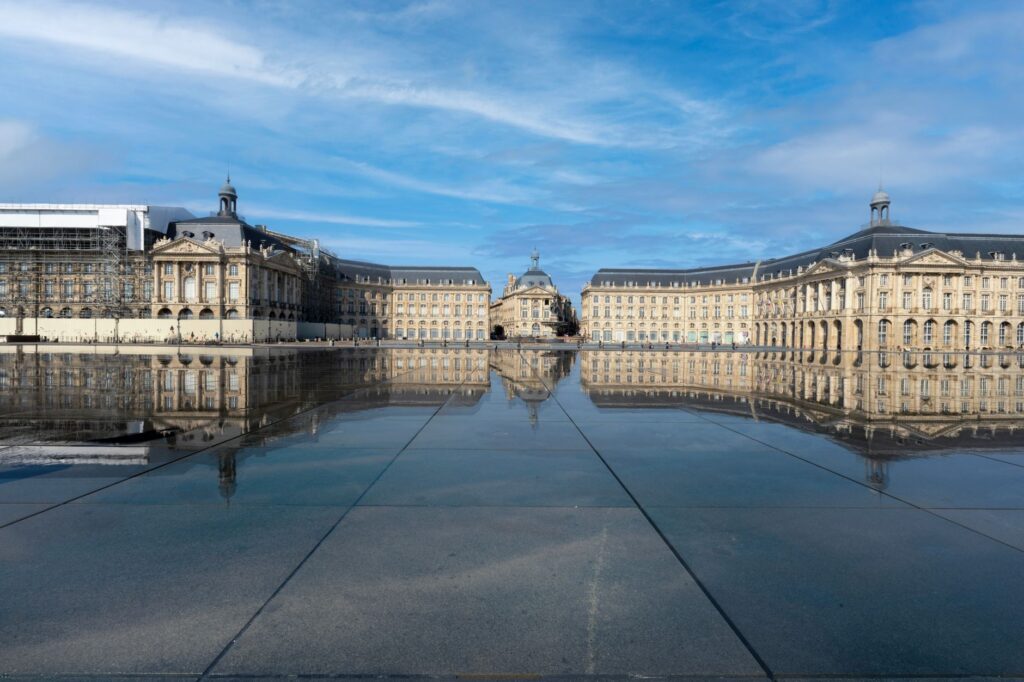
Opposite the iconic Place de la Bourse lies the world’s largest water mirror, a masterpiece of modern landscape engineering designed by Michel Corajoud. This shallow surface subtly alternates sheets of still water with artificial mist effects, reflecting the classic 18th-century facades with millimetric precision. The result is a fascinating visual dialogue between historical heritage and contemporary artistic intervention, which attracts both photographers and children playing in the water during the summer months.
This Place de la Bourse symbolizes Bordeaux’s ability to reinvent itself without erasing the traces of its past. The conversion of degraded quays into green recreational areas and bike lanes reflects a municipal strategy aimed at returning the river to its inhabitants. Sustainable mobility and the pedestrianization of large sectors of the historic center have reduced dependence on private vehicles, promoting cleaner air and a more active social life in the city’s streets and terraces.
The blond limestone of Bordeaux holds the memory of a port open to the Atlantic, where each quay tells a story of cultural and river exchanges.
Neighborhood Life: Saint-Pierre and Les Capucins
Beyond the grand monumental avenues, the true daily essence of Bordeaux is experienced in the network of medieval alleys in the Saint-Pierre neighborhood and the popular bustle of the Capucins market. In Saint-Pierre, narrow facades and stone lintels recall the original layout of ancient Roman and medieval Burdigala. Today, these passages house independent bookstores, craft workshops, and small cafes where time seems to pass more slowly.
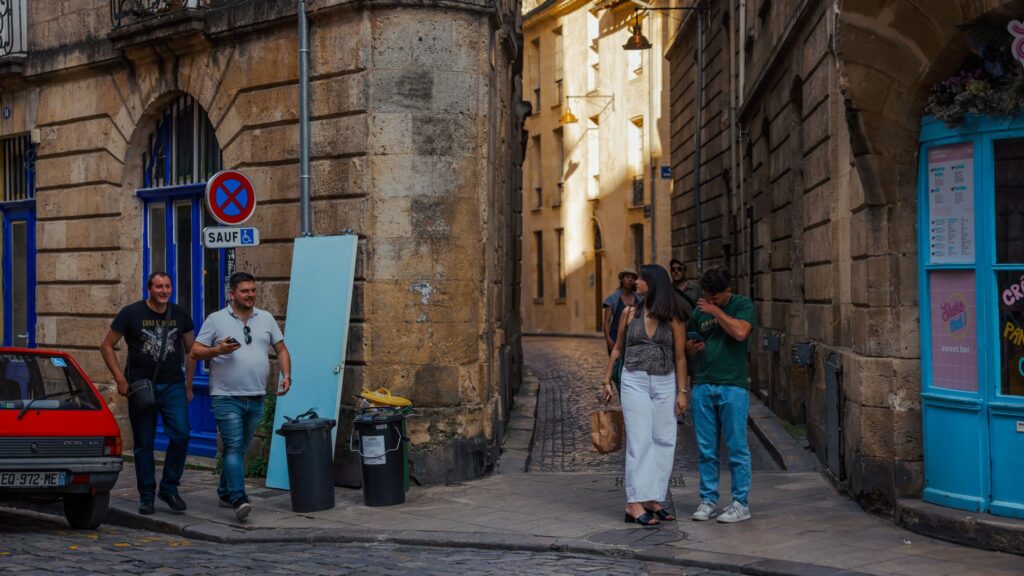
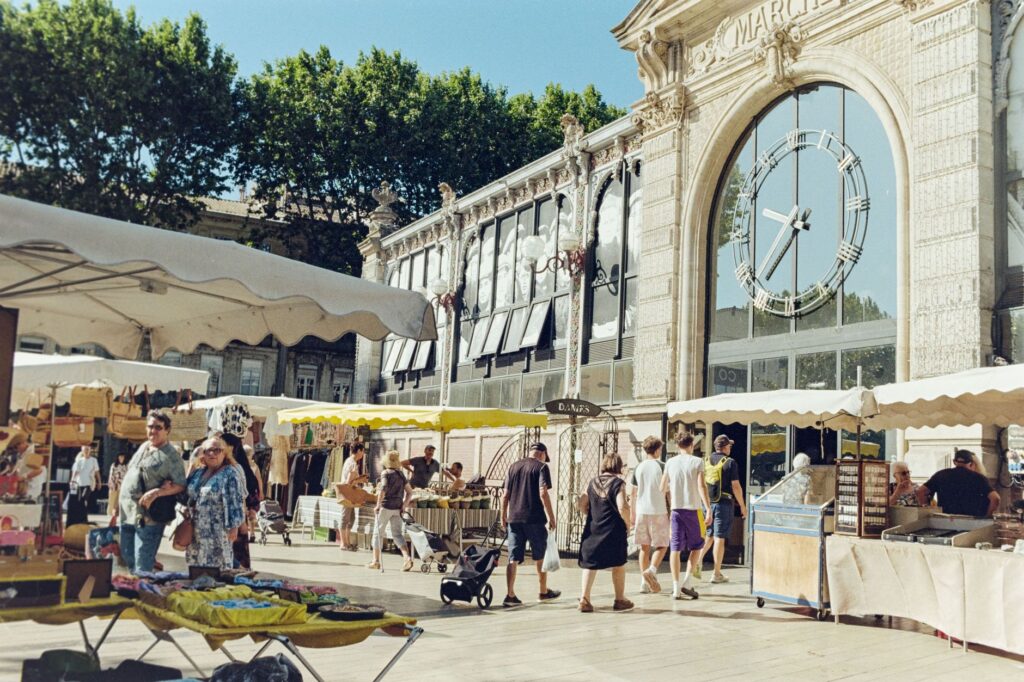
A short distance away, the Capucins market, affectionately known by locals as the belly of Bordeaux, offers an unmatched showcase of the Gironde’s gastronomic culture. Oyster stalls from the nearby Arcachon basin, artisanal farm cheeses, and local specialties like canelés coexist in a bustling and genuine atmosphere. This traditional trading space acts as a true nucleus of social cohesion, where different generations of neighbors converge around the pleasure of good food and sharing daily news.
Wine Heritage and Its Cultural Projection
It is impossible to understand the identity of Bordeaux without referencing its millennial relationship with wine culture. The vineyards stretching across the valleys of the Gironde have shaped not only the local economy but also urban architecture through the historic wine merchants and warehouses dotting the region. Today, this tradition is reinterpreted in modern interpretive centers that explain the history and science of viticulture from a global and educational perspective.
Wine in Bordeaux is not understood as an exclusive product, but as a transversal element running through gastronomy, landscape, and the arts. The city’s cultural institutions regularly organize exhibitions and debates around agrarian heritage, fostering responsible tourism that values the effort of local winemakers and respect for the natural cycles of the land. In this way, vineyard culture is harmoniously integrated into the urban offering, enriching the experience of those seeking to understand the territory in depth.
Defensive Architecture and Military Memory in the Urban Fabric
The defensive heritage of Bordeaux offers a historical counterpoint to the commercial elegance of its neoclassical quays. Monumental gates such as the Grosse Cloche, a remnant of the medieval walls that served as a town hall and prison, and the Cailhau gate, commemorating Charles VIII’s victory at the Battle of Fornovo, recall the city’s strategic past as a stronghold of southwestern France. These dark stone monuments contrast with the clarity of Enlightenment architecture, providing a medieval texture that enriches the urban profile.
The conservation of these fortified structures demonstrates the care with which the city manages its historical stratigraphy. Far from being isolated elements, the medieval gates and towers are organically integrated into the commercial and pedestrian life of the surrounding neighborhoods. Passersby cross under their centuries-old arches on their way to work or the market, naturally fusing contemporary daily life with the memory of a fortified past.
Urban Parks and Green Corridors Along the Water
Bordeaux’s commitment to environmental sustainability is clearly manifested in its green spaces, conceived as ecological lungs and places for citizen encounters. The Public Garden, created in the 18th century according to English-style garden canons, offers a sanctuary of tranquility with its centuries-old trees, winding pond, and children’s play areas. This historic park is frequented by families, students, and readers seeking direct contact with nature in the heart of the city.
Similarly, the linear parks accompanying the course of the Garonne act as ecological corridors that facilitate urban biodiversity and promote active mobility. These public spaces integrate sustainable drainage criteria and native landscaping, reducing the impact of summer heat and offering safe routes for pedestrians and cyclists. The planning of these green zones demonstrates a forward-looking vision prioritizing community well-being and the environmental health of the territory.
Practical guide
How to get there: Bordeaux-Merignac Airport (BOD) connects the city with major European hubs via regular flights. Additionally, Bordeaux-Saint-Jean railway station offers daily high-speed TGV connections with Paris and other major French cities.
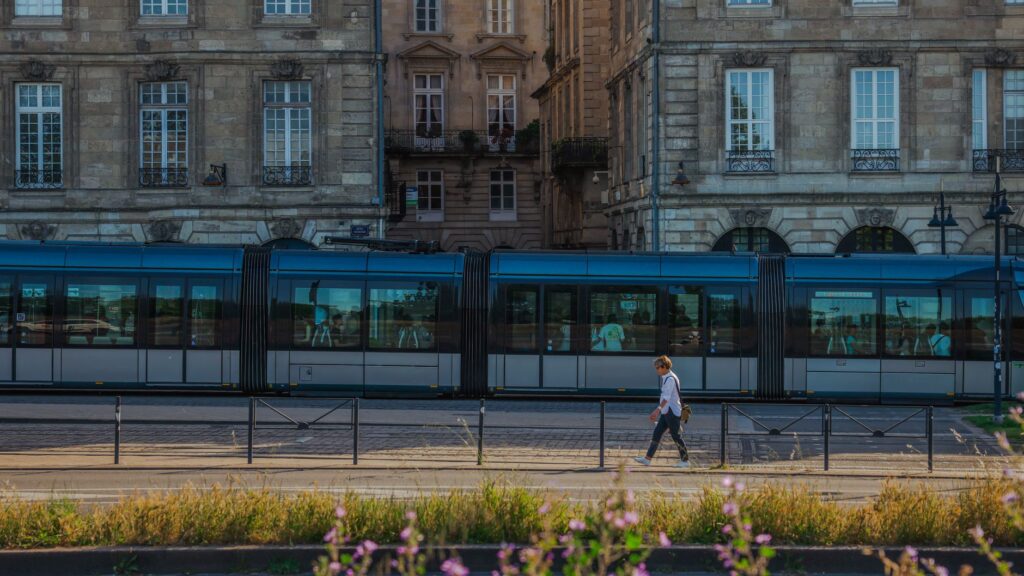
How to get around: Bordeaux’s tram network, combined with an extensive network of bicycle lanes, allows visitors to explore virtually the entire city efficiently without the need for motor vehicles.
When to visit: Spring and autumn offer mild temperatures ideal for walking outdoors and enjoying local markets without summer crowds.
Responsible gastronomy: Visitors are encouraged to prioritize seasonal produce in neighborhood markets like Les Capucins and support local establishments promoting fair trade and short-supply-chain practices.
The Serene Pulse of a Riverside City
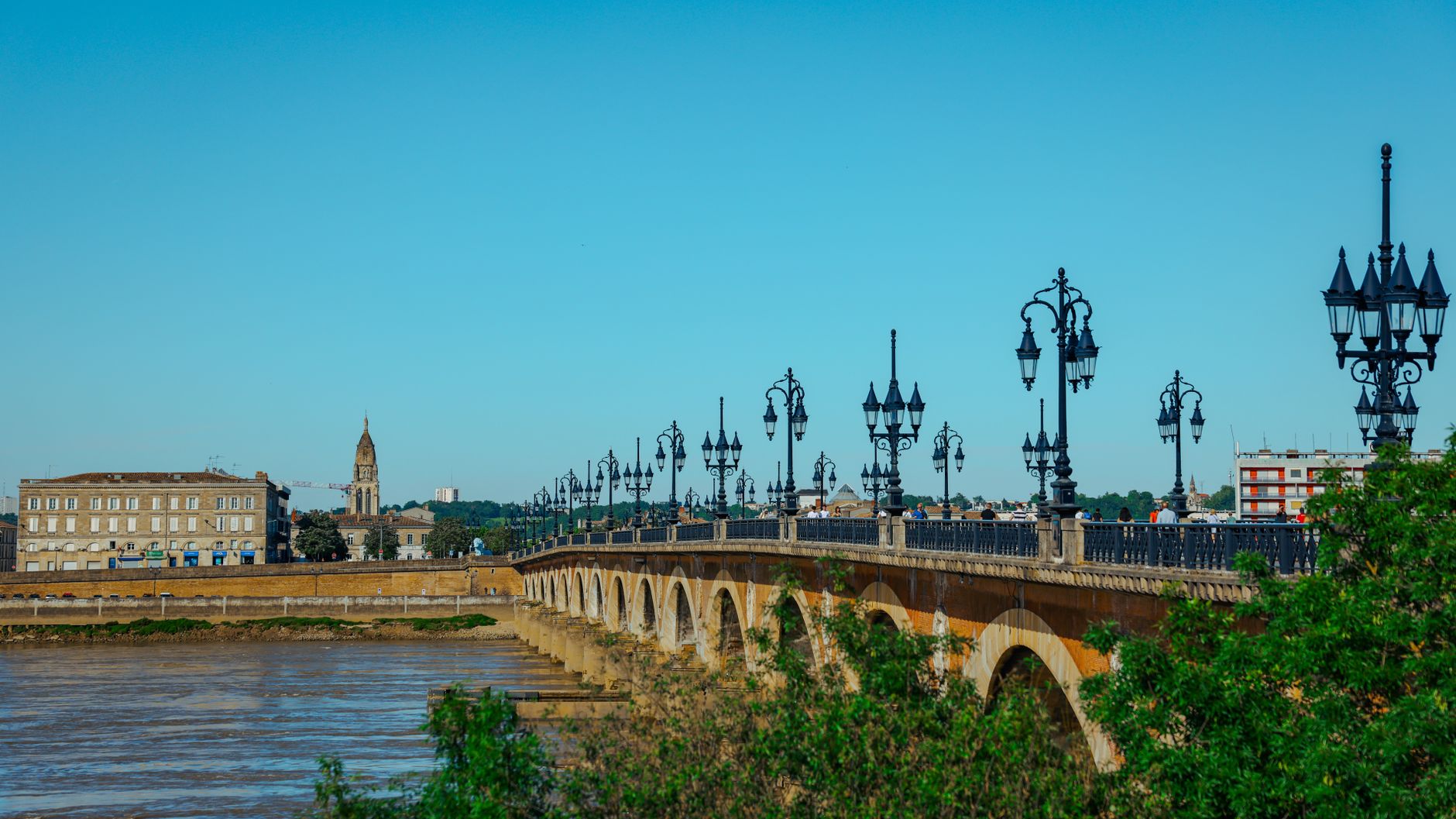
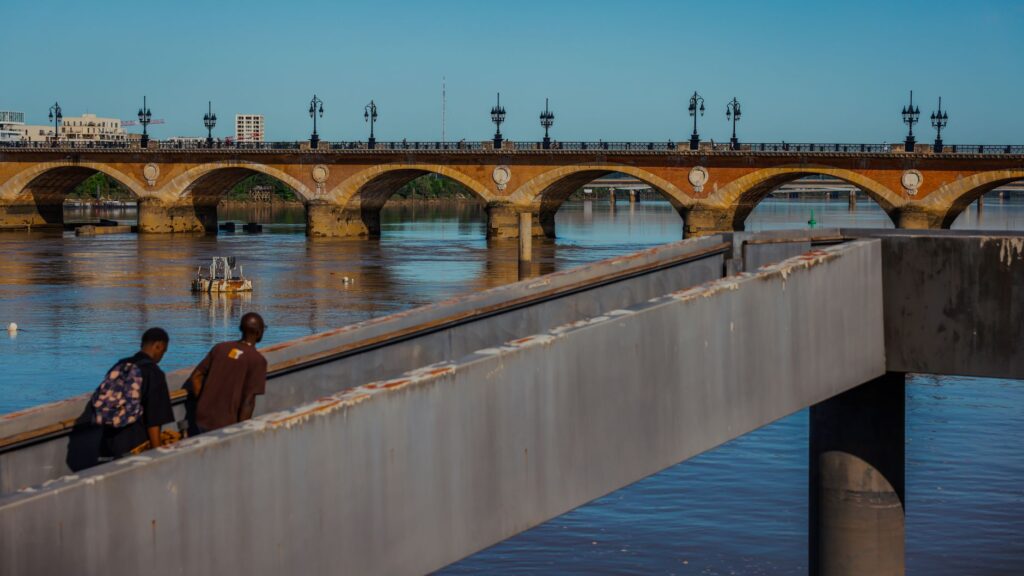
As evening falls, the golden Atlantic light bathes the limestone facades and the bridges uniting both banks of the Garonne, endowing Bordeaux with an unmistakable calm. On the quays, the last rays reflected in the Water Mirror return a diffuse and elegant image of history accumulated over centuries. It is in that moment of transition that the city reveals its true nature: a space where architectural heritage and daily life flow at the same gentle pace, inviting the traveler to understand the territory through respect and leisurely contemplation.