Eindhoven, The Netherlands: Industrial Architecture Transformed into Urban Life
A journey through the Dutch municipality where manufacturing heritage merges with contemporary design, community living, and spaces for collective creation.
The Transformation of a City Shaped by Labor and Ingenuity
In the heart of the North Brabant province, Eindhoven stands as a living testament to how a city can reinvent itself without abandoning its foundations. Far from the medieval canals that characterize other Dutch postcard scenes, this urban enclave of more than two hundred and thirty thousand residents has built its narrative on the pulse of industry, technical innovation, and the constant pursuit of spatial solutions for communal living. Walking through its streets is not merely transiting a grid of exposed brick and steel, but stepping into a territory where design forms part of the daily atmosphere, influencing everything from the layout of public parks to the rehabilitation of former factory complexes that now house art studios and cooperative housing alike.
The contemporary history of the city is inextricably linked to the arrival of large-scale manufacturing in the late nineteenth and throughout the twentieth century. What was once an agglomeration of scattered rural settlements experienced remarkable demographic and urban acceleration thanks to the establishment of global electronics and lighting enterprises. This rapid growth demanded the construction of entire neighborhoods destined for the working class, designed with criteria of hygiene, order, and functionality that still determine the physiognomy of districts such as Strijp or Woensel. Far from constituting mere working-class dormitories, those early settlements integrated tree-lined squares and small neighborhood shops that fostered a strong sense of community belonging, an identity root that resists the passage of decades and contemporary real estate pressures.
Strijp-S and the Regeneration of Manufacturing Heritage
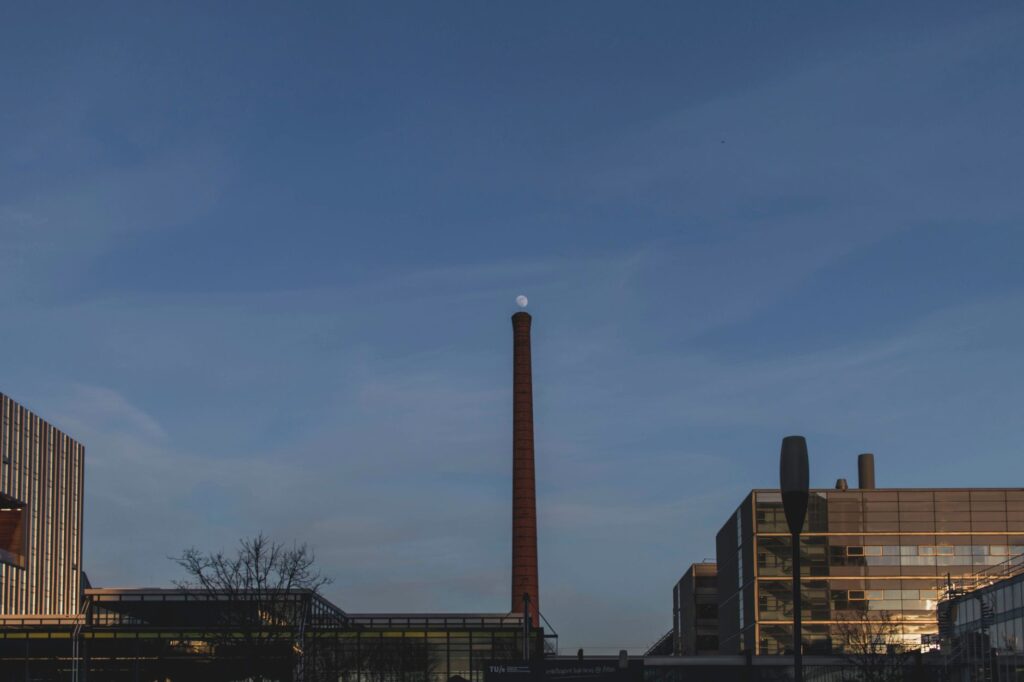
If there is one place where this urban mutation manifests itself most eloquently, it is in the former industrial complex of Strijp-S. For decades, this enclosure walled off by security fences and heavy production sheds remained off-limits to the average citizen, functioning as a city within a city dedicated entirely to technological experimentation. When manufacturing activity declined and the large structures emptied out, local administration and citizen collectives opted for a regeneration model based on adaptive reuse. The old light bulb and electrical component factories were not demolished, but emptied of their original function to receive cultural, residential, and gastronomic uses that respect the monumental scale of the buildings.
The result is a singular urban landscape where elevated metal walkways, exposed industrial pipes, and converted water towers coexist with independent design galleries, second-hand bookstores, and self-managed urban gardens. This contrast attracts creators, designers, and families who value a flexible habitat. Industrial architecture, once synonymous with horizontal and vertical factory hierarchy, becomes here a horizontal framework of coexistence where common spaces predominate over private square meters. The polished concrete plazas that once saw thousands of operators march by during shift changes now serve as open-air stages for local craft markets and sustainable design festivals.
Design as a Everyday Language and Social Tool
The project-based vocation of Eindhoven goes far beyond commercial storefronts; it impregnates the way residents relate to their immediate surroundings. The historical presence of institutions dedicated to technical and artistic training has imbued the social fabric with an inquisitive attitude toward the objects and spaces we inhabit. This is not ornamental design focused exclusively on luxury, but a discipline aimed at solving practical problems of mobility, environmental sustainability, and universal accessibility. Bus stops, underground waste containers, and bicycle lane networks are conceived as elements that converse with surrounding architecture, reducing visual pollution and prioritizing the pedestrian over the motor vehicle.
This aesthetic and functional sensitivity also translates into the way urban green spaces are preserved. The Dommel Park, which meanders gently through the central fabric of the city, acts as an ecological corridor where native flora is allowed to grow with minimal human intervention, allowing river biodiversity to coexist just meters away from dense residential zones. Residents use these green corridors not only for sports, but as intergenerational meeting points where community gardening workshops and public debates on the municipality’s ecological future are organized. Thus, urban nature ceases to be a decorative element to become an active component of public health and social cohesion.
True design does not beautify things; it simplifies the relationships between people and the places they inhabit.
Life in Residential Neighborhoods and the Human Scale
Beyond the major milestones of industrial reconversion, the true texture of Eindhoven is perceived upon entering its peripheral and medium-density residential neighborhoods. In areas like Gestel or Tongelre, the dominant typology continues to be the single-family terraced house with small front gardens lacking high fences, a spatial arrangement that encourages casual greetings between neighbors and natural street surveillance. Wide sidewalks, porous pavement for rainwater absorption, and strict moderation of vehicular speed configure an environment where children can play outdoors safely and older adults maintain an active social life without depending on private transport.
This residential fabric is nourished by a network of small traditional businesses that have managed to adapt to contemporary consumption habits without losing their proximity character. Artisanal bakeries, markets featuring organic Brabant products, and bicycle repair shops operate as neighborhood communication nodes. In these establishments, local news is exchanged, solidarity initiatives are organized, and municipal ordinances affecting the use of public space are debated. The human scale thus becomes the measure of all things, counteracting the global tendency toward commercial homogenization and ensuring that each neighborhood retains a distinct and recognizable personality within the urban whole.
Sustainable Mobility Practices and Respect for the Environment
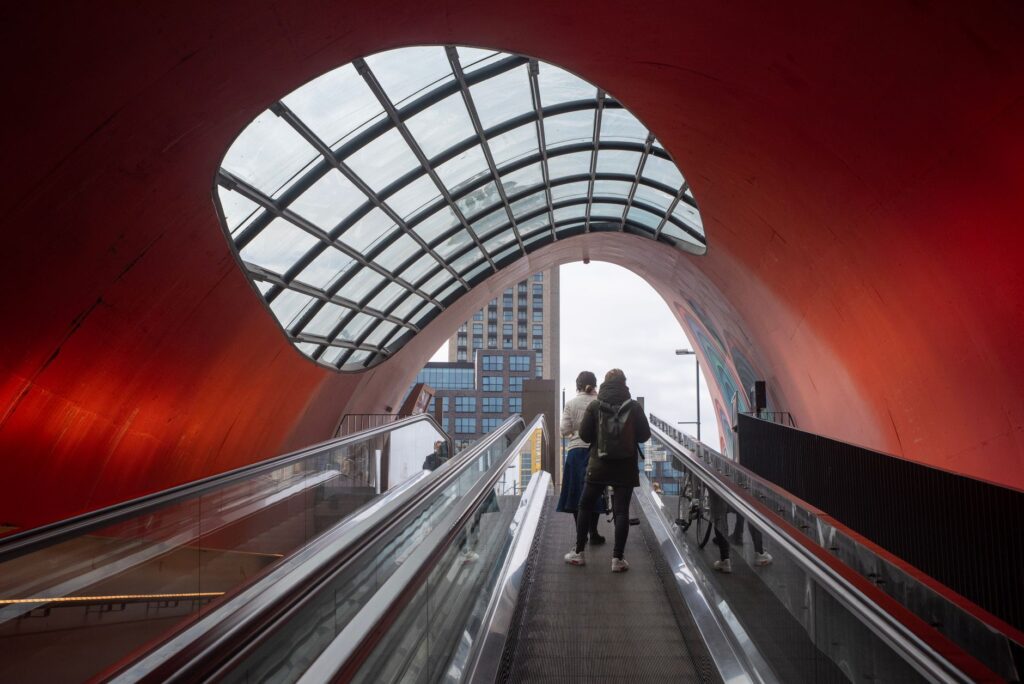
Mobility in the Dutch municipality constitutes a daily exercise in ecological coherence. The network of cycling paths extends for hundreds of kilometers, connecting residential estates with workplaces, educational institutions, and green leisure areas without the need to cross heavy traffic arteries. Elevated bicycle overpasses, traffic lights synchronized with average pedaling speeds, and spacious underground parking facilities specific to cycles demonstrate that infrastructure can be subordinated to an active transport model with zero local emissions.
For the occasional visitor, this absolute priority granted to the cyclist and pedestrian demands a period of adaptation and strict respect for local traffic regulations. Walking distracted along a bicycle lane delimited by reddish asphalt can generate tension with workers and students commuting promptly to their destinations. Local authorities promote ongoing campaigns to remind people that the street is a shared space where courtesy and movement predictability are just as important as respect for horizontal signage. This shared mobility culture drastically reduces ambient noise levels and improves air quality, allowing the sounds of the city to be those of footsteps, conversations, and the whisper of wind through the trees.
The Culture of Light and Nocturnal Encounter
The technological heritage of industrial lighting has translated into a contemporary fascination with light art and the nocturnal transformation of public space. During the winter months, the city hosts international festivals where historical facades, bridges, and parks become living screens for experimental installations created by visual artists from around the world. Far from seeking purely functional or commercial illumination, these installations explore the relationship between darkness, human perception, and architecture, inviting passersby to rediscover everyday corners under a new aesthetic perspective.
Outside of major event dates, nocturnal urban lighting carefully curates the warmth of light to avoid light pollution and create a welcoming atmosphere in plazas and terraces. Cafes and restaurants in the center and former factory areas extend their activity onto the street through simple outdoor furniture and low-energy heaters, maintaining a vibrant public life even during the coldest evenings of the year. Nighttime gatherings are characterized by tranquility and the absence of noisy crowds, reflecting a civic disposition where leisure enjoyment coexists harmoniously with the rest of resident neighbors nearby.
Responsible Practices for a Mindful Visit
Approaching Eindhoven from a respectful touristic perspective implies understanding that we are not dealing with an open-air museum frozen in time, but a living organism in constant evolution. Travelers who choose this destination are invited to integrate into its daily rhythm, using public transport or rented bicycles, supporting local commerce, and respecting the tranquility of residential and natural spaces. The goal is not to consume mass attractions, but to learn from an urban model that has successfully turned its industrial past into a permanent laboratory of social innovation and sustainable design.
The mindful traveler does not seek to duplicate their world at the destination, but to learn to look at the world through the eyes of those who care for it every day.
Practical guide
How to get there: Eindhoven Airport connects directly with major European hubs via several scheduled and low-cost carriers. Alternatively, the city is easily reached by direct intercity trains from Amsterdam Central Station and Utrecht within little more than an hour.
Getting around: The urban center and surrounding neighborhoods are best explored on foot or by renting a bicycle through local mobility providers. Public bus lines operated by Hermes connect all peripheral districts efficiently.
Best time to visit: Spring and early autumn offer mild temperatures ideal for outdoor cycling and exploring parks. November hosts major light art festivals that transform the urban landscape.
Responsible behavior: Always yield the right of way to cyclists on dedicated red asphalt lanes. Respect residential quiet hours and support independent neighborhood shops and eateries.