
Origins and Transformation of a Planned Territory
In the southeastern sector of The Netherlands, the district of Amsterdam-Zuidoost represents one of the most unique twentieth-century urban planning experiments in Western Europe. Originally conceived under the principles of functionalist architecture and the strict separation of functions, this territory was designed to offer spacious, decongested residential areas, large thoroughfares, and extensive green spaces that broke away from the traditional model of Amsterdam’s historic center. Over the years, the initial rigidity of its concrete housing blocks and car-centric design gave way to a continuous renewal process, driven by the very citizens who inhabit this plural space.
The arrival of new residents from diverse geographical latitudes brought a layer of community vitality that completely transformed the utilitarian character of the original design. Today, walking through Amsterdam-Zuidoost reveals a landscape where the monumental scale of residential buildings dialogues with community urban gardens, elevated pedestrian walkways, and tree-lined public squares. The urban layout does not hide its modern past; rather, it exhibits it as a testament to how European cities have had to rethink their peripheries to adapt them to contemporary life, prioritizing social integration and environmental sustainability.
Residential Fabric and Multicultural Coexistence
The social fabric of Amsterdam-Zuidoost stands out for its extraordinary cultural diversity, making it a faithful reflection of present-day Amsterdam. Communities of Surinamese, Ghanaian, Antillean, Turkish, and dozens of other origins coexist here, forming a melting pot that imbues daily neighborhood life with unmatched richness. Neighborhood associations and cultural centers play a fundamental role in the district’s social cohesion, organizing activities ranging from urban art workshops to local markets where culinary traditions from across the globe are shared.
Unlike the mass-tourist circuits of the Dutch urban center, this sector offers a quiet, everyday urban experience. Secondary streets and inner courtyards of residential complexes function as intergenerational meeting points. Children play in parks designed with accessibility and safety in mind, while older adults converse on benches placed alongside artificial canals and ponds that weave through the landscape. This daily dynamic demonstrates that a place’s identity resides not solely in its historical monuments, but in the capacity of its inhabitants to build community on top of a challenging architectural foundation.
Modern Architecture and Transition Spaces
The architecture of Amsterdam-Zuidoost serves as an open manual on the evolution of European urban planning over the past five decades. Large high-rise blocks, built under the promise of decent, luminous housing for all, have undergone deep energy and aesthetic rehabilitations. Contemporary architects and urban planners have worked alongside residents to open up facades, improve natural lighting in entryways, and redefine intermediate public spaces—areas once considered residual zones that now host outdoor sports facilities and public art projects.
This architectural approach highlights the importance of caring for the transition between public and private realms. Access galleries and community corridors have transformed into extensions of the home, where plants tended by neighbors and small wooden benches humanize the scale of concrete structures. Walking through these sectors allows one to appreciate a brutalist aesthetic softened by the passage of time and community care, proving that urban beauty can also be found in honest functionality and material durability.
The true measure of an urban space is not found in the perfection of its original blueprints, but in the capacity of its inhabitants to inhabit it, transform it, and imbue it with a soul of their own over the decades.
Integrated Nature and Green Corridors
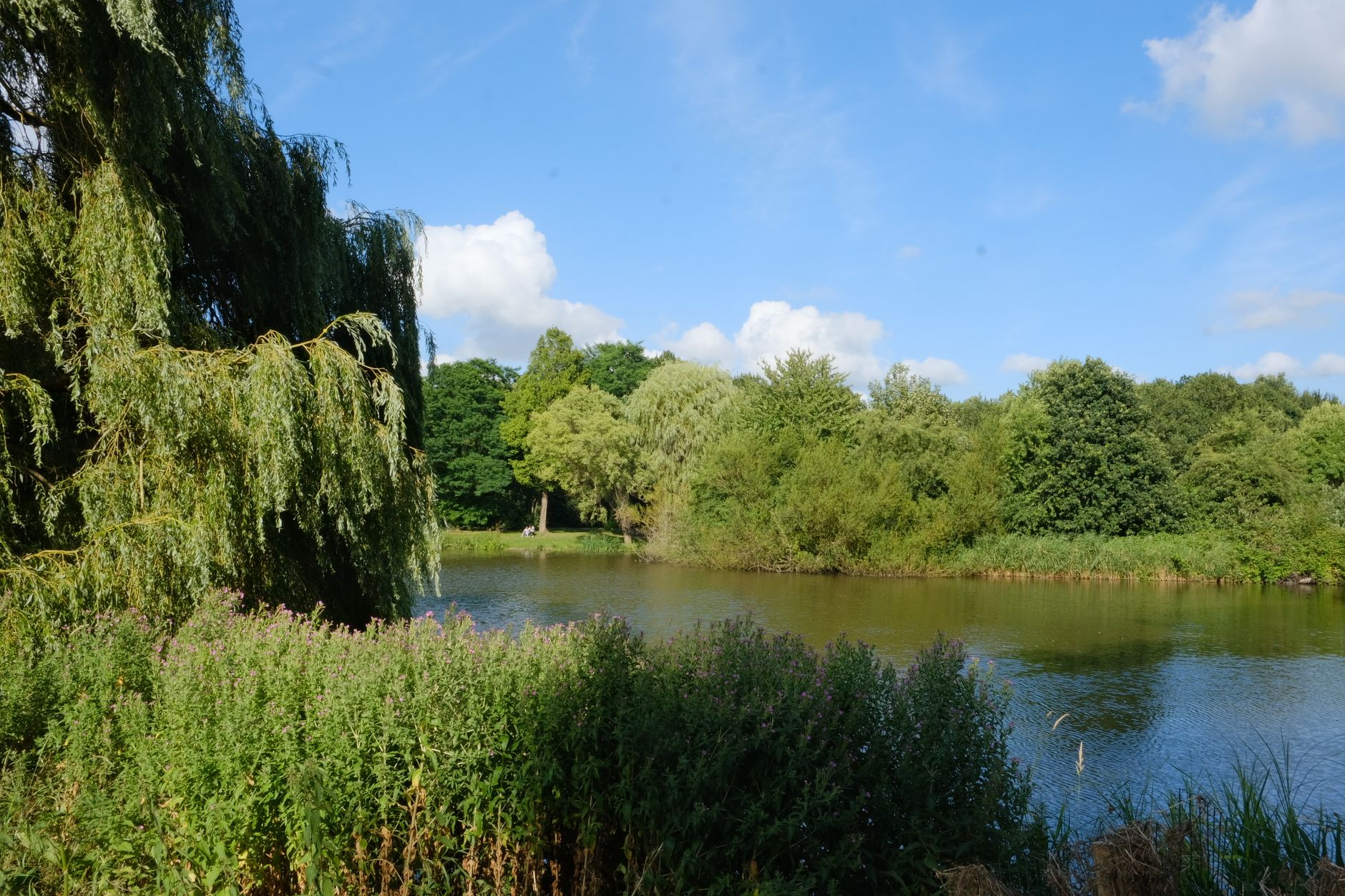
Far from the asphalt jungle image sometimes attributed to peripheral developments, Amsterdam-Zuidoost stands out for its generous planning of natural spaces and ecological corridors. The district is crossed by expansive parks, such as Gaasperplas, which surrounds a lake with clean waters where residents swim in summer, ride bicycles, or simply seek silence among riparian woodlands and grassy meadows. These green lungs are not merely ornamental elements; they act as the vital infrastructure that balances built density and provides refuge for local wildlife.
Pedestrian paths and bike lanes fluidly connect residential zones with these natural areas, encouraging an active, environmentally respectful lifestyle. It is common to see entire families cycling toward recreational areas or using bridges that cross the main canals. Sustainable water management, visible in natural drainage systems and renaturalized riverbanks, evidences the commitment of local authorities and residents alike to preserving the environment in the face of current climate challenges.
Local Commerce and Open Markets
The economic and social pulse of Amsterdam-Zuidoost beats strongly in its open-air markets and small neighborhood shops occupying the ground floors of large residential complexes. These spaces are much more than points of exchange for goods; they represent everyday agoras where accents, languages, and products of a global community intersect. Stalls offer spices imported from Suriname, fresh vegetables grown in regional gardens, and traditional textiles that connect the diaspora with their roots.
Supporting local commerce in this district is a direct way to understand neighborhood economics in The Netherlands. Shopkeepers and merchants know their clientele by name, and conversations about the weather, neighborhood news, or family recipes are part of the daily transaction. This consumption model sharply contrasts with the homogeneity of large commercial centers, offering visitors an authentic immersion into genuine, multi-ethnic Dutch daily life.
Sustainable Mobility and Urban Accessibility
Mobility in Amsterdam-Zuidoost constitutes an integrated planning model where public transport and non-motorized means hold absolute priority. The metro network, combined with an extensive mesh of exclusive bicycle lanes, connects the district to historic central Amsterdam in minutes, without reliance on private vehicles. Transport stations are designed as efficient intermodal hubs, surrounded by secure bicycle parking and well-lit pedestrian transfer zones.
This circulation design significantly reduces acoustic and atmospheric pollution, allowing residential streets to maintain a peaceful and safe atmosphere. Visitors who choose to explore the district on foot or on two wheels discover a road hierarchy designed to protect pedestrians. Clear signage, the absence of architectural barriers, and the integration of well-maintained underpasses and overpasses demonstrate that universal accessibility is a guiding principle in managing this Dutch territory.
Practical guide
How to get there: Amsterdam-Zuidoost is seamlessly connected to central Amsterdam and Schiphol Airport via frequent train services and metro lines 50 and 54, which operate continuously throughout the day.
When to visit: Any time of year is suitable, though spring and summer months (May to September) allow visitors to fully enjoy the parks, nature trails, and open-air markets under extended daylight.
Where to walk: It is recommended to start the journey around the modernist residential complexes and move toward the green spaces of Gaasperplas, following marked routes for cyclists and pedestrians.
Local gastronomy: Exploring neighborhood markets is advisable to taste culinary specialties from the Surinamese community, such as roti, alongside traditional Dutch bakery items available at local shops.
Recommended mobility: Renting a bicycle is the best option to navigate the district’s wide bike lanes at a slow, sustainable pace.
Emotional Close Between Memory and Future
The journey through Amsterdam-Zuidoost concludes with a sense of quiet optimism, watching the sunset light reflect upon rehabilitated facades and the calm surface of peripheral canals. There are no imperial monuments or medieval alleys in this corner of The Netherlands, but there is something equally valuable: tangible proof that a diverse community can build a shared home based on mutual respect, urban memory, and environmental care. Leaving the district behind, one carries the certainty that the true value of contemporary travel lies in knowing how to observe the discreet beauty of ordinary life.