
A Historical Layout Sculpted by Water and Stone
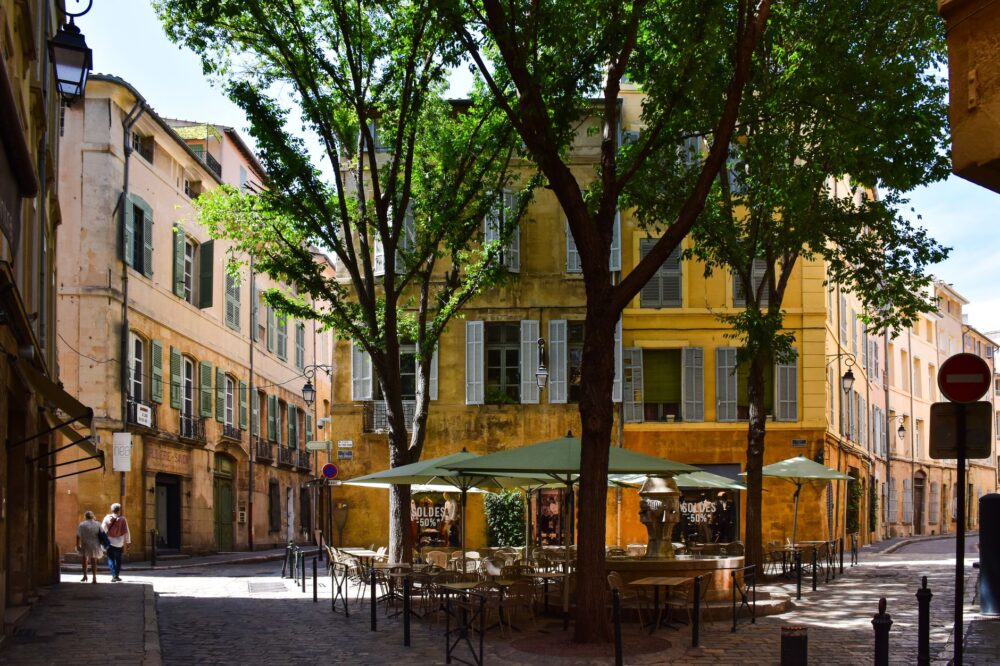
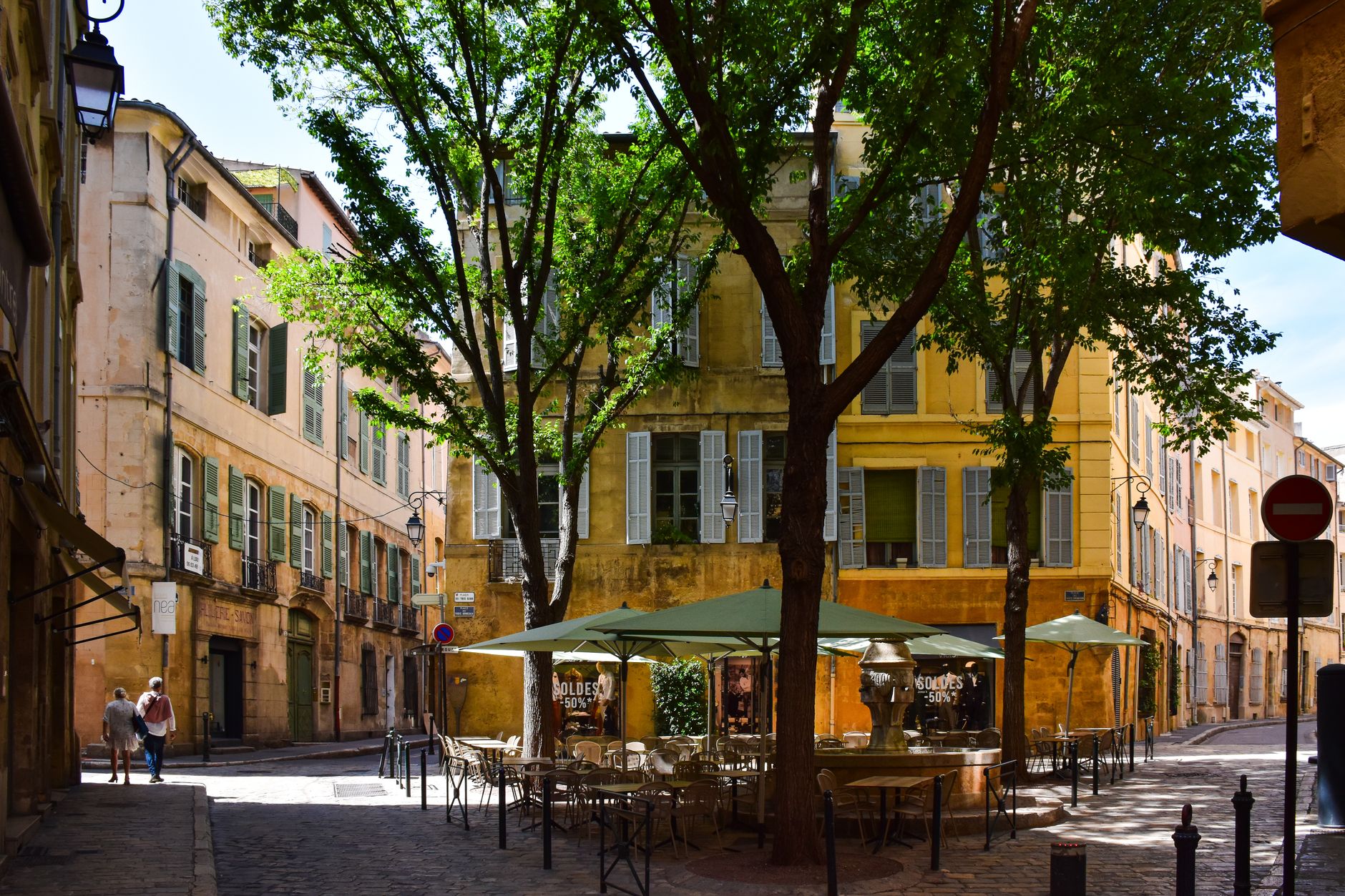
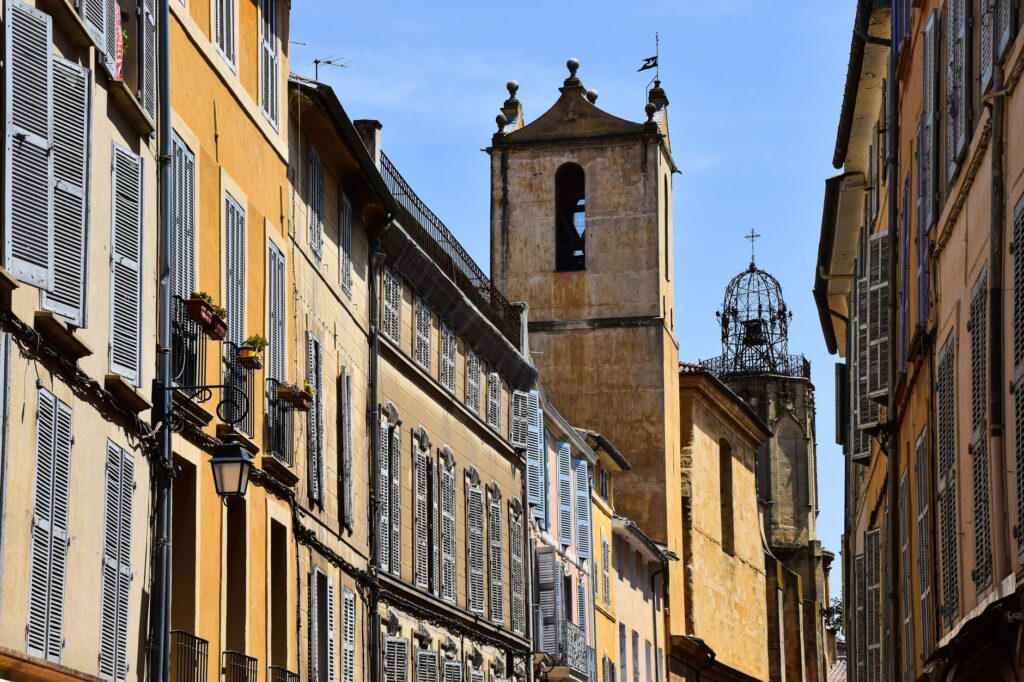
In southeastern France, the city of Aix-en-Provence unfolds as a living testament to Provençal history. Situated in the Bouches-du-Rhône department within the Provence-Alpes-Côte d’Azur region, this municipality of over 146,000 residents owes much of its character to the subterranean and surface presence of water. Since the times when Romans established the thermal settlement of Aquae Sextiae here, the flowing element has set the rhythm for streets and squares. Today, exploring its old town involves walking along cobblestone lanes where every corner reveals an ornamental fountain, a historic washhouse, or a warm-toned facade reflecting the Mediterranean light.
The urban morphology of Aix-en-Provence combines medieval traces with the architectural elegance of the 17th and 18th centuries. The Cours Mirabeau, tree-lined and flanked by stately mansions, acts as the backbone separating the old quarter from the bourgeois extensions. In this space, centurions plane trees offer shade to cafes frequented both by residents and by those arriving drawn by its cultural legacy. The preservation of this architectural heritage is no coincidence; it responds to strict municipal policies aimed at protecting carved stone details, noble wooden gates, and wrought-iron balustrades that define the urban landscape.
Daily Life in the Markets and Squares of the Center
Beyond the monuments and tourist routes, the true pulse of Aix-en-Provence is perceived in its squares. Every morning, Place Richelme and Place de l’Hôtel de Ville transform into meeting points where local producers display seasonal fruits, artisanal cheeses, olives, and Provençal herbs. This proximity trade keeps alive the bond between the surrounding countryside and the city, ensuring that the market is not a mere visual showcase, but an essential service for the community. Neighbors arrive with wicker baskets, exchange impressions with vendors, and decide the menu of the day based on what the earth offers in each season.
The presence of university institutions adds a layer of intellectual dynamism to the local atmosphere. Students and professors coexist with lifelong residents in independent bookstores, neighborhood cinemas, and artistic ateliers. This duality between bourgeois tradition and youthful effervescence prevents the municipality from turning into a static film set. Neighborhood life flows on the benches of smaller squares, where the sound of water gushing from fountains accompanies leisurely afternoon conversations, reminding visitors that time in Provence possesses its own cadence.
The heritage of a city does not reside solely in the stone of its monuments, but in the capacity of its inhabitants to keep alive the daily customs that give meaning to those spaces.
The Legacy of Paul Cézanne and the Inspiration of the Surrounding Landscape
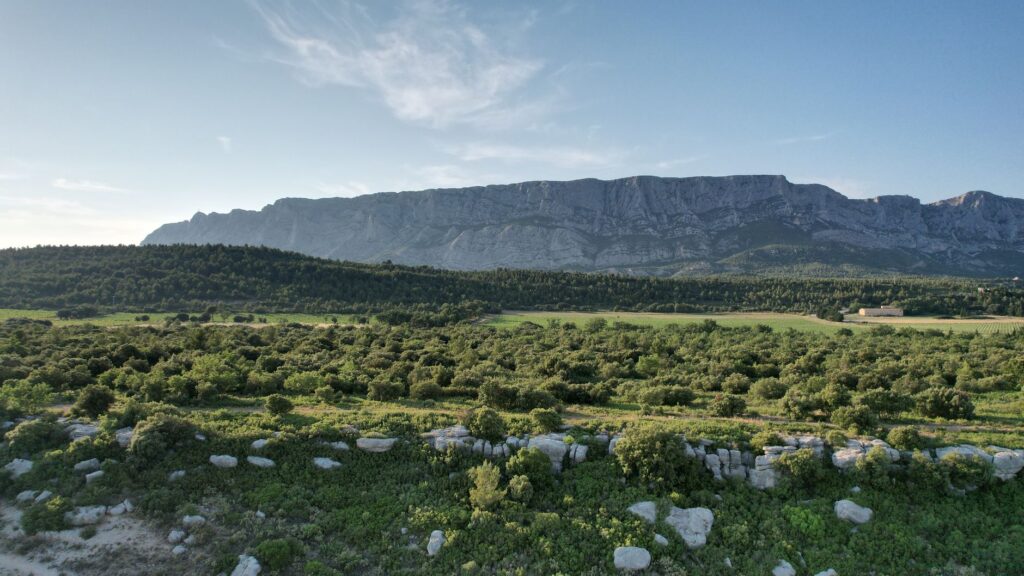
It is impossible to understand the visual identity of Aix-en-Provence without referencing its most illustrious son, the painter Paul Cézanne. The artist found in the changing light of the Provençal countryside and the imposing silhouette of the Sainte-Victoire mountain the central motif of his pictorial work. Today, following in Cézanne’s footsteps allows visitors to understand how the natural environment influenced the evolution of artistic avant-gardes. His former studio on the Les Lauves hill is preserved just as he left it, complete with everyday objects he immortalized in his still lifes, ranging from clay jars to skulls and dark fabrics.
The Sainte-Victoire mountain, located east of the town, acts as a geological and symbolic backdrop. The trails ascending toward its peak form part of a network of protected natural areas where Mediterranean vegetation—composed of Aleppo pines, holm oaks, and aromatic scrub—is maintained under strict environmental regulations. Local authorities promote low-intensity tourism in these areas to prevent soil erosion and preserve the tranquility of a landscape that has inspired poets, painters, and naturalists for centuries.
Architectural Heritage and Responsible Urban Conservation
The historic center of Aix-en-Provence, locally known as Vieil Aix, stands out for the richness of its hôtels particuliers, private residences built by the Provençal aristocracy during the 17th and 18th centuries. Buildings like the Hôtel de Caumont, converted into an art center, showcase the sumptuousness of interior courtyards, monumental staircases, and rooms decorated with stucco. The preservation of these properties demands a constant effort of artisanal restoration, employing traditional materials such as regional limestone and carpentry techniques that respect original authenticity.
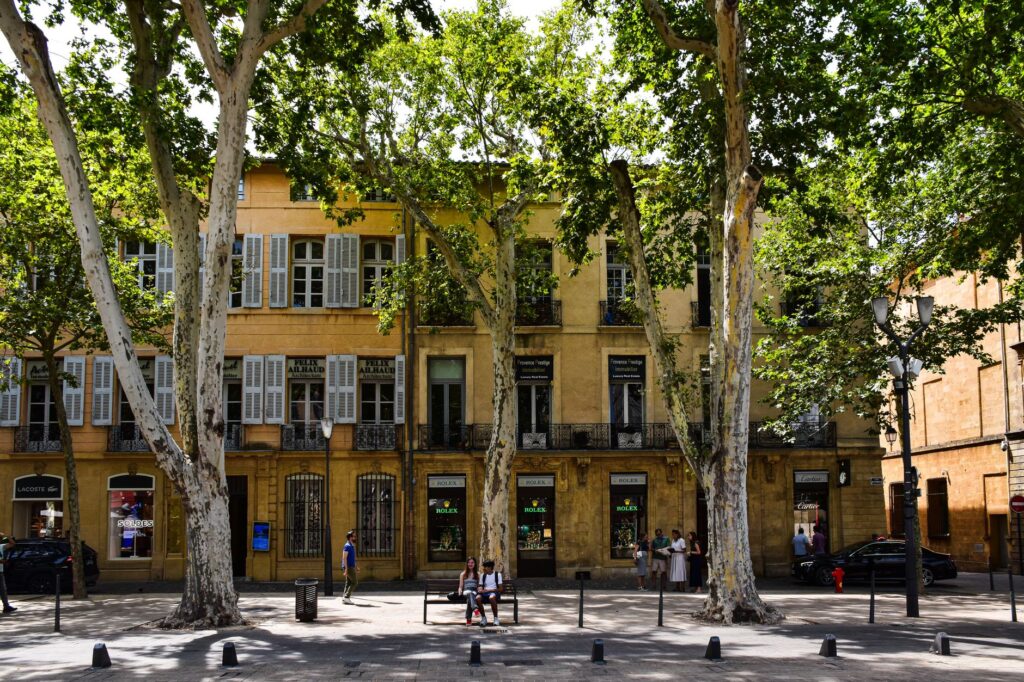
The decisions adopted by the city council regarding mobility and urban planning aim to mitigate the negative effects of tourism pressure. The progressive pedestrianization of streets in the historic center has significantly reduced vehicular traffic, favoring travel on foot and by bicycle. This transition toward a more sustainable mobility model not only improves air quality but also returns public space to pedestrians, allowing them to enjoy architecture without the constant interruption of engine noise and facilitating harmonious coexistence between residents and visitors.
Provençal Gastronomy: Land Produce and Traditional Recipes
The cuisine of Aix-en-Provence reflects the larder of interior Provence, where garden crops, olive groves, and minor livestock converge. In traditional restaurants and family tables, dishes such as black olive tapenade, vegetable and cod aioli, and seasonal vegetable soups occupy a central place. The generous use of aromatic herbs such as thyme, rosemary, and savory brings an unmistakable identity to preparations that prioritize product quality over complex artifices.
Likewise, local pastry-making features an undisputed emblem: the calisson. This traditional sweet, made from a fine paste of crushed almonds, candied melon, and orange peel, crowned with a layer of royal icing, possesses a designation and artisanal tradition dating back several centuries. The city’s historic bakeries continue to produce them by hand, maintaining a craft that forms part of the region’s intangible heritage and which visitors can taste in traditional confectionery shops downtown.
Green Spaces and Urban Gardens for Relaxation
Amidst the density of the urban fabric, Aix-en-Provence integrates numerous parks and public gardens acting as green lungs and recreational spots. Parc Jourdan, located south of the historic center, offers wide wooded areas, grass lawns, and play zones where local families enjoy sunny afternoons. Designed in the late 19th century, this space combines English landscape elements with native Mediterranean vegetation, creating a propitious environment for reading, walking, and disconnecting from urban hustle.
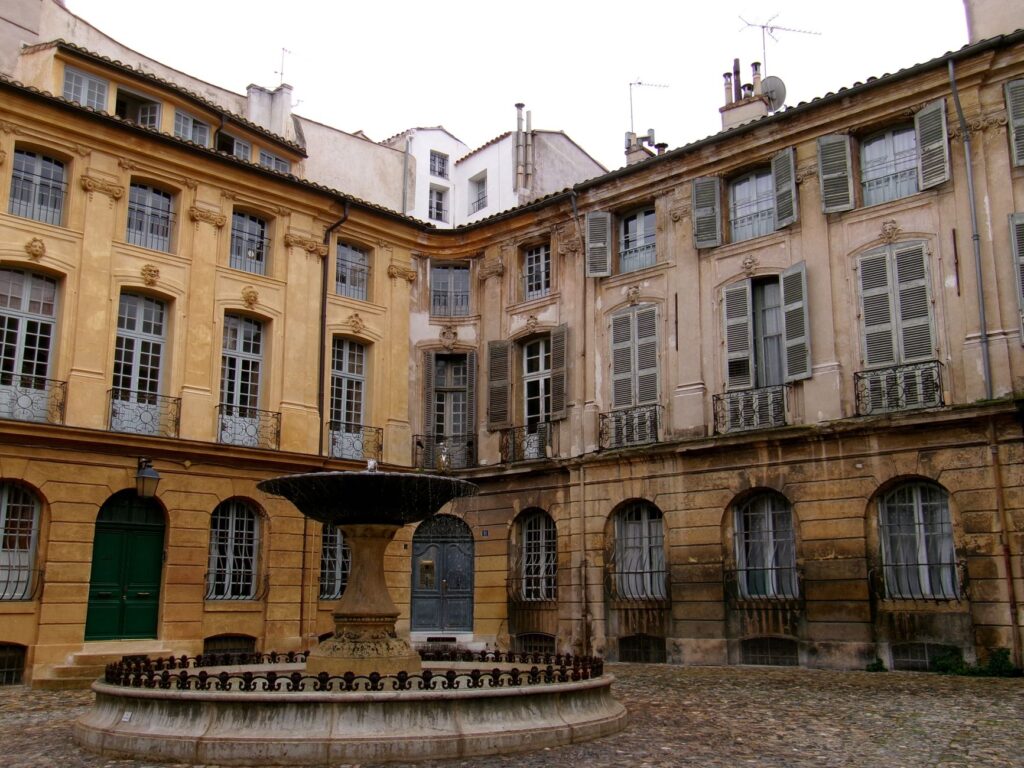
Another prominent corner is the garden of the Pavillon de Vendôme, a small mansion surrounded by baroque fountains and rose gardens notable for the tranquility of its atmosphere. These green spaces not only beautify the city but play a fundamental role in urban biodiversity, harboring bird and pollinator species adapted to the dry climate of southern France. The management of these parks prioritizes efficient irrigation water use and the avoidance of chemical pesticides, in line with ecological guidelines adopted by the municipality.
Sustainable Tourism Practices and Citizen Participation
The contemporary challenge for Aix-en-Provence is managing its international appeal without eroding the quality of life of its permanent inhabitants. To this end, sustainable tourism initiatives promote the diversification of routes toward less crowded neighborhoods and the promotion of stays outside the peak summer season. Local associations collaborate closely with the tourist office to raise visitor awareness about respecting neighborhood quiet hours, reducing plastic waste generation, and supporting zero-kilometer commerce.
Citizen participation is articulated through neighborhood councils and participatory budgets allowing residents to propose improvements in urban furniture, lighting, or the creation of new pedestrian zones. This local governance model strengthens a sense of belonging and ensures urban development responds to the real needs of those inhabiting the city 365 days a year, maintaining a dynamic balance between historical past and community future.
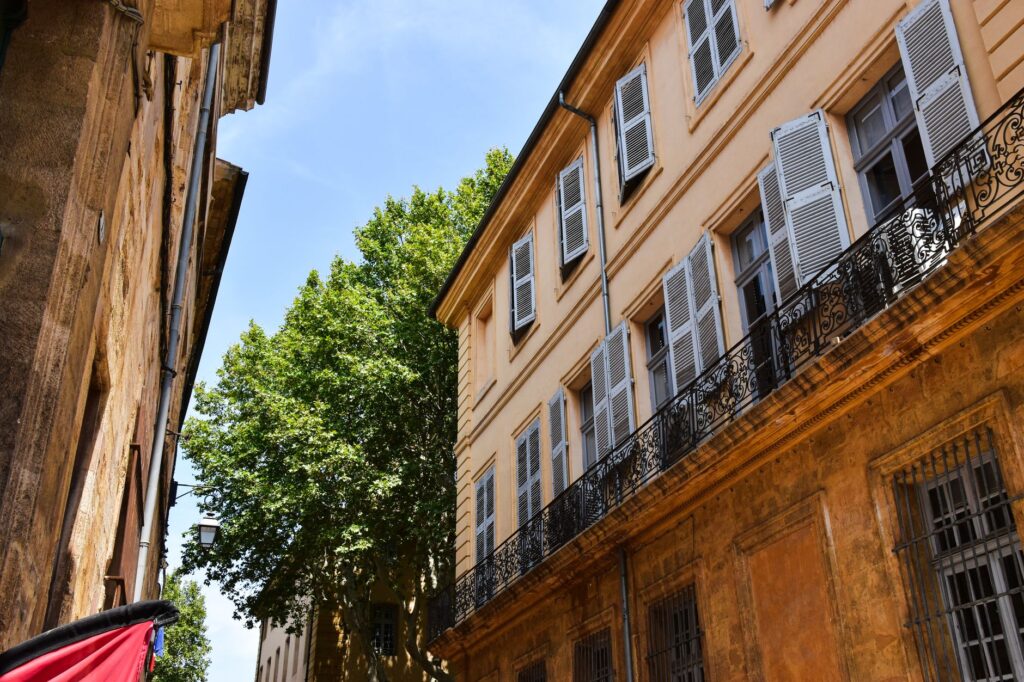
Respect for the urban environment and collective memory is the only way for a historic city to continue belonging, above all, to those who inhabit it every day.
Practical guide
How to get there: The nearest airport is Marseille Provence, located about 25 kilometers away. From there, regular buses connect directly to the Aix-en-Provence bus station. The city also features a high-speed train (TGV) station located on the outskirts, connected via urban shuttle buses.
When to travel: Spring months (April to June) and early autumn (September to October) offer pleasant temperatures and lower tourist crowding compared to core summer months.
How to get around: The historic center is designed for walking. For longer distances or trips to peripheral neighborhoods and natural areas, the urban bus network efficiently covers the entire municipality.
Accommodation: Varied options exist ranging from small boutique hotels located in historic townhouses in the center to family-run lodgings in the rural outskirts.
Gastronomy and shopping: Visiting morning markets in central squares is recommended to acquire local products and specialties like calissons in authorized traditional confectioneries.
Sunset Over Ocher Rooftops and the Calm of the Squares
When the sun begins to descend over the Provençal horizon, the red-tiled roofs and ocher-toned facades of Aix-en-Provence acquire a golden hue evoking the canvases of the great Impressionism masters. In the squares, the murmur of water continuously gushing from fountains blends with the distant echo of Saint-Sauveur Cathedral bells. This is the moment when the city recovers its most intimate scale—that of neighbors walking without rush and of a heritage that, far from being a museum piece, beats to the leisurely rhythm of daily life in southern France.