
A Valley Guarded by the Andes
In the far northwest of Argentina, at an altitude of around twelve hundred meters above sea level, San Salvador de Jujuy unfolds as a crossroads where the mountain range begins to take center stage. Framed by the confluence of the Grande and Xibi Xibi rivers, the provincial capital maintains an urban profile that blends its original colonial layout with the dynamic pulse of an administrative and commercial hub. Far from the country’s sprawling metropolises, this enclave preserves a peaceful atmosphere where mornings begin with the whistle of the mountain wind and the aroma of homemade bread drifting from neighborhood bakeries.
The local geography dictates not only the climate, characterized by marked thermal ranges, but also the way residents spend their hours. The streets of the historic center, laid out in a grid around Plaza Belgrano, act as a stage where civil servants, local merchants, university students, and community members coming down from the Puna converge for errands or to sell artisan goods. The presence of the hills is felt from every corner, serving as a constant reminder that the lowland plains are far behind and that here the mountains impose their monumental scale.
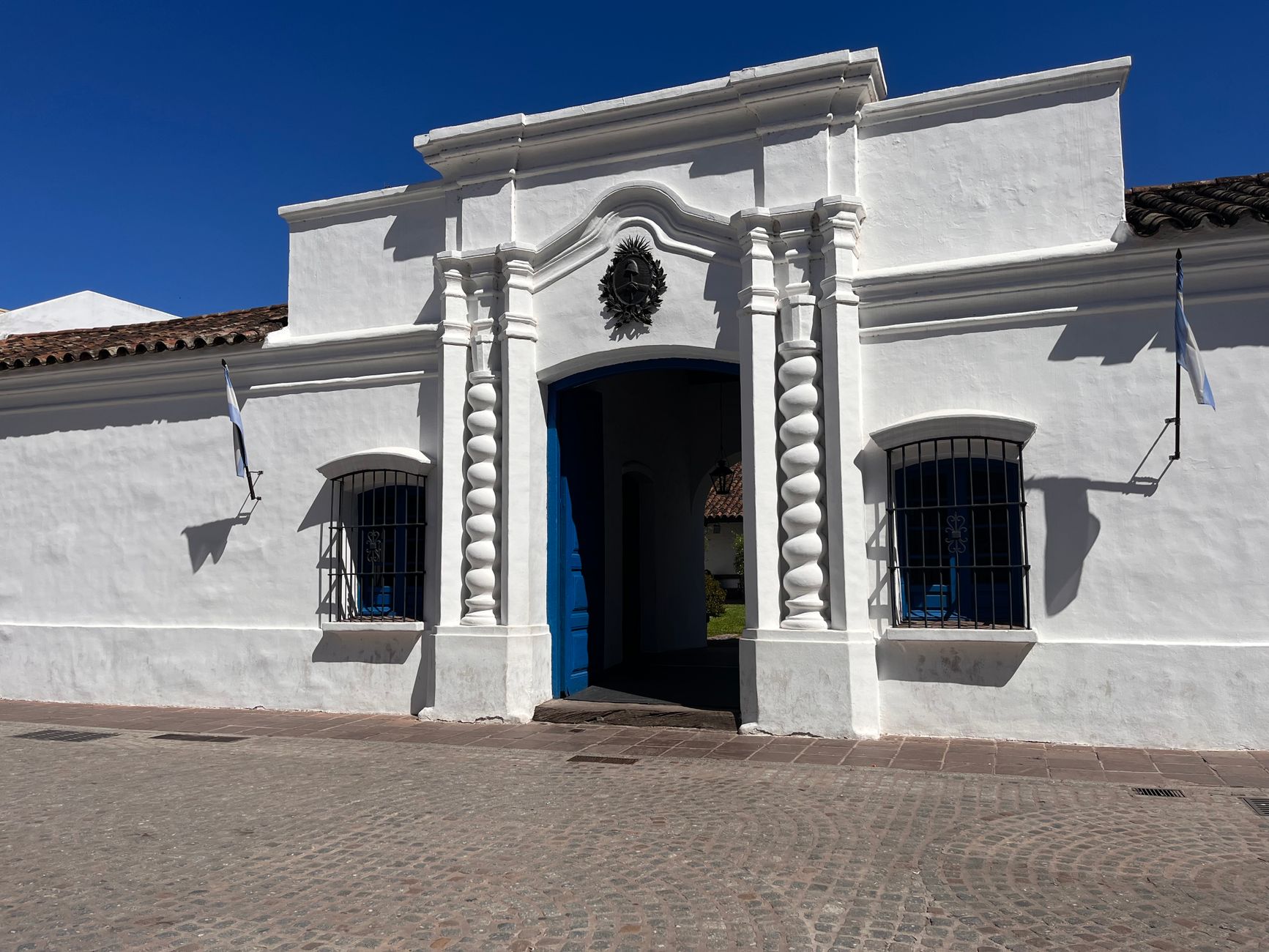
The urban fabric is punctuated by single and two-story houses, open galleries, and dark entryways that shelter interior courtyards populated with native plants. These architectural spaces are not mere ornaments of the past, but living settings where families continue to gather to escape the afternoon heat or share mate. The preservation of this built heritage reflects the silent efforts of neighbors and institutions dedicated to defending local identity against the advance of contemporary urban standardization.
The Central Market as Social Pulse
If there is one place where the daily life of San Salvador de Jujuy expresses itself most clearly, it is the Municipal Market. Located a few blocks from the main public walks, this covered enclosure constitutes the true commercial and human heart of the city. From the early hours of dawn, stalls open to receive goods arriving from both the temperate valleys and the high Puna altitudes. Here, local varieties of Andean potatoes, multicolored corn, medicinal herbs such as muña muña, and regionally produced meats are sold.

Strolling through the market aisles offers insight into the cultural diversity that shapes Jujuy society. Veteran merchants who have spent decades tending the same stall converse quietly with buyers seeking precise ingredients to prepare a lamb stew or a traditional country chicken soup. The verbal exchange goes beyond a simple commercial transaction; it is a socialization ritual where weather news, home remedy advice, and daily economic commentary are shared.
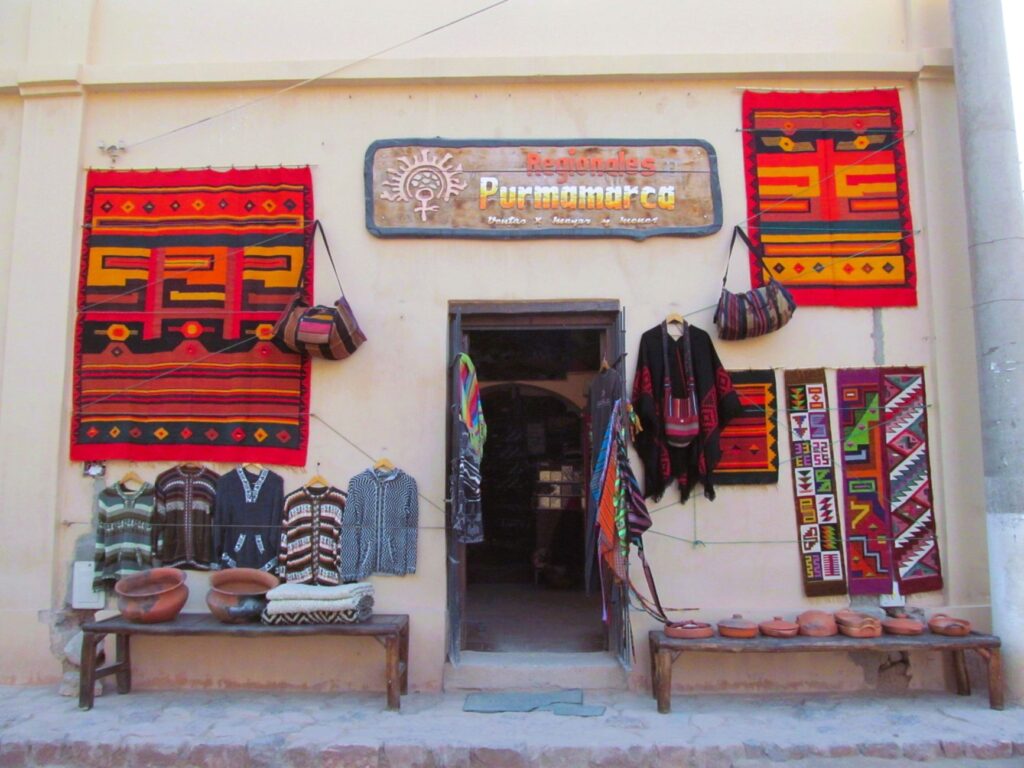
Outside the main building, street vendors spread blankets on sidewalks to offer llama wool crafts, utilitarian ceramics, and objects carved from cardón cactus wood. The relationship between rural producers and urban consumers remains close and direct, without industrial intermediaries. This human-scale economic dynamic strengthens the local economy and ensures that traditional knowledge linked to land cultivation and manual manufacturing retains value in the twenty-first century.
The Memory of Independence in Stone
The history of San Salvador de Jujuy is deeply intertwined with the struggles for Argentine independence. Unlike other regions of the country, the city experienced the hardships of the emancipation war at close range, notably during the celebrated 1812 Jujuy Exodus, when the entire population abandoned their homes and property to leave neither provisions nor shelter for advancing royalist troops. This heroic event left an indelible mark on the collective consciousness of its residents, who commemorate the feat every year with civic events and deep patriotic devotion.

Inside the Cathedral Church, situated opposite the main square, rests the historic National Flag of Civil Liberty, presented by General Manuel Belgrano to the cabildo and people of Jujuy in gratitude for the sacrifices endured during the conflict. The temple, with its carved gilded wood altarpieces and thick-walled foundations, functions as a civic and religious sanctuary where Catholic devotion and regional historical memory intersect. Every corner of the old quarter breathes a past that is not confined to school textbooks, but forms part of everyday conversation on street corners and in traditional cafés.
Monuments and plaques scattered throughout public spaces invite a leisurely reading of the territory. Unlike modern cities that seek to erase their tracks to accelerate traffic, the Jujuy capital integrates monuments into its routine. Passersby walk alongside statues of founding figures and anonymous heroes without stopping formally, yet recognizing them as an inseparable part of their urban landscape—a constant reminder of the resistance and collective sacrifice that gave birth to the community.
Traditional Neighborhoods and Adobe Architecture
Beyond the core center, traditional neighborhoods such as Ciudad Barrial, Gorriti, or the residential sectors climbing the lower foothills display another face of the city. Low-rise constructions predominate in these areas, where the use of adobe and colonial tiles coexists with more recent architectural solutions. Secondary streets, many of them paved with cobblestones or firm earth, preserve a neighborhood scale where neighbors still greet one another by name and children play outdoors on sidewalks during mild afternoons.
Raw earth architecture, far from representing a symbol of precariousness, represents an intelligent climate adaptation to the rigors of the Andean environment. Thick adobe walls act as natural thermal regulators, keeping interiors cool during hot summer days and warm when nighttime temperatures drop. Traditional builder-craftsmen who master this technique are highly valued, as their expertise ensures the maintenance of a sustainable architectural heritage perfectly integrated into the surrounding natural landscape.

Walking through these neighborhoods reveals small carpentry, blacksmithing, and leatherworking shops still operating in garages or backyards. These family trades ensure the continuity of a domestic economy based on repair and local manufacturing. The absence of large retail chains in these areas reinforces neighborhood autonomy, as residents meet daily needs through local grocery shops, neighborhood fairs, and well-established community cooperation networks.
Music and Celebrations as Social Cohesion
The annual calendar of San Salvador de Jujuy is marked by festivities that mobilize the entire community and reinforce bonds of belonging. Among them, Carnival stands out, though with unique characteristics distinguishing it from other regions of the continent. Here, the celebration is not a spectacle staged exclusively for tourism, but a ritual expression where troupes descend from the hills wearing colorful costumes, masks, and the unmistakable sound of erkenchos and chayera drums. During those days, the city alters its usual rhythm and surrenders to a community celebration of ancestral origin.
Folk music—with its takquiris, carnavalitos, and bailecitos—resounds in traditional peñas, as well as on neighborhood street corners and weekend family gatherings. Learning to play the quena or charango is a tradition passed down from generation to generation within the domestic sphere. Popular culture is not consumed passively, but actively practiced in neighborhood cultural centers, folk art schools, and community groups operating year-round.
This vibrant cultural fabric acts as a protective shield against global cultural homogenization. Young people in Jujuy grow up listening to both international musical trends and traditional songbooks of the Andean region, achieving a harmonious synthesis where the local and the universal coexist without apparent contradiction. Religious celebrations, such as patron saint festivals and pilgrimages to nearby sanctuaries, mobilize crowds walking together for hours, consolidating a sense of solidarity and mutual aid extending far beyond the strictly spiritual realm.
Practical guide
How to get there: San Salvador de Jujuy is served by Governor Horacio Guzmán International Airport (JUJ), located about thirty kilometers from the urban center, with regular connections from Buenos Aires. It is also accessible via long-distance bus services operating from major cities in northern Argentina and across the country.
When to go: Autumn months (March to May) and spring (September to November) offer mild and pleasant temperatures for exploring the city on foot. Summer can bring frequent rains and very hot days, while winter features cold mornings and nights with clear skies.
Where to stay: The historic center and surroundings of Plaza Belgrano concentrate traditional hotels, family-run guesthouses, and short-term rental apartments. More modern accommodations can be found along the main avenues connecting with major highway access points.

Local gastronomy: Trying traditional dishes in markets and family-run fondas is recommended, such as hand-cut Jujuy empanadas, tamales, humita in corn husks, and stews made with llama and lamb meats, accompanied by high-altitude wines produced in the province.
Getting around: Most of the historic center can be comfortably explored on foot due to accessible distances. For traveling to outlying neighborhoods or transport terminals, the municipal bus network and local taxis offer affordable fares and constant coverage.
An Horizon of Adobe and Silence
At dusk, when the last rays of sunlight strike adobe facades and dye the surrounding hills in ochre tones, San Salvador de Jujuy acquires a solemn stillness. Cathedral bells chime to announce the end of the working day, and families settle onto park benches or their doorsteps to enjoy the cool breeze drifting down from the mountain. In that fleeting instant, the city seems to pause, uniting in a single heartbeat the heroic past of its founders and the simplicity of those who sustain its streets today. The traveler who contemplates this scene understands that the true value of this Andean corner does not lie in colossal monuments, but in the silent persistence of a community that has learned to turn its identity into a refuge against oblivion.