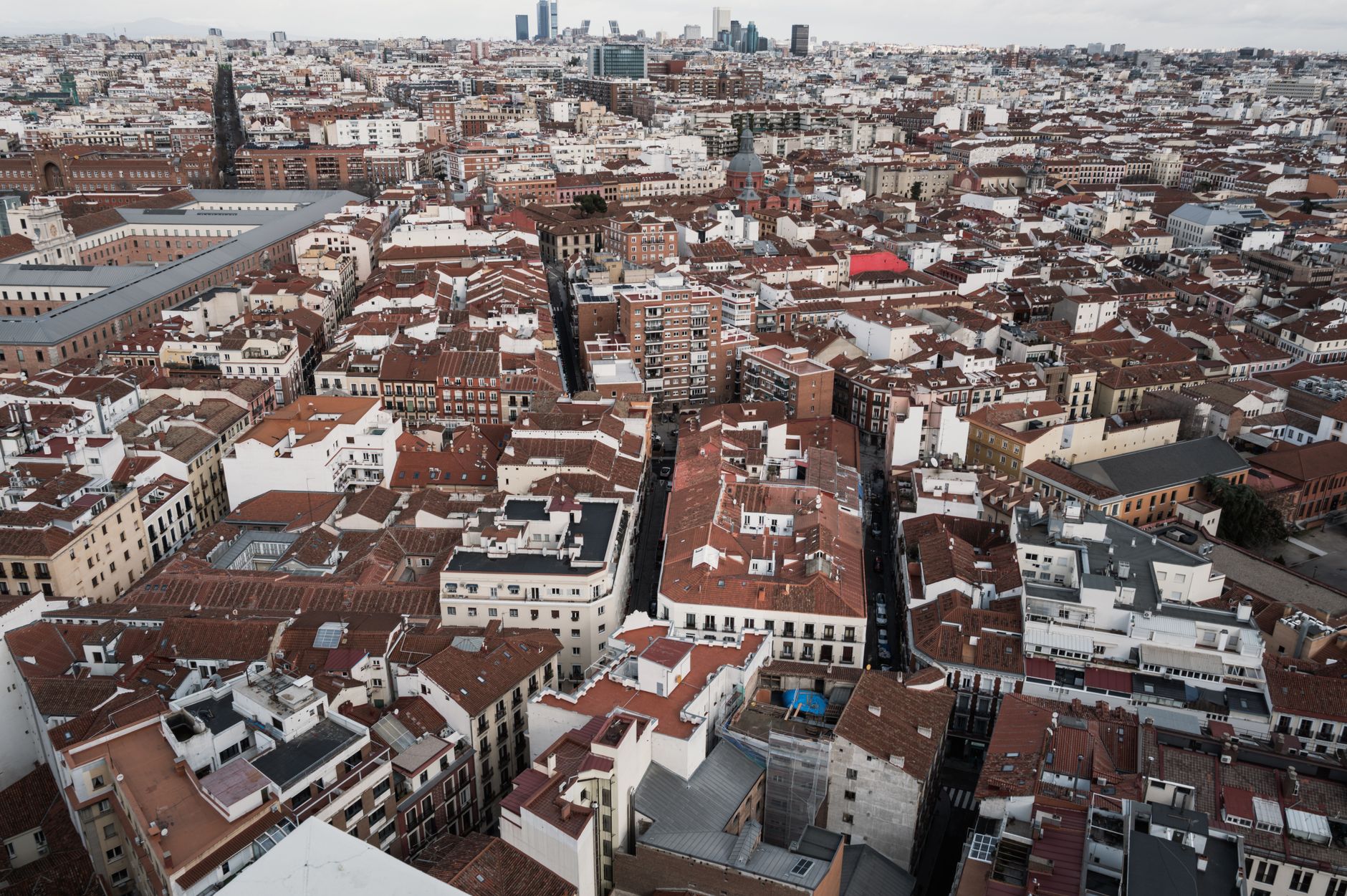

At the northern edge of Madrid, where the city dissolves into holm oak groves and housing estates, lies a territory that few visitors associate with the Spanish capital. Fuencarral-El Pardo occupies a large part of the municipality’s northwest and brings together realities that rarely coexist: a protected forest of considerable size, former rural settlements absorbed by urban growth and residential neighbourhoods of varying social conditions. With more than 220,000 inhabitants, it is a key piece in understanding how Madrid negotiates its relationship with the natural environment.
The question guiding this report is not what to see, but how to visit a place whose identity rests on the daily lives of those who inhabit it. Heritage here is not displayed behind glass: it is practised in the routines of its residents, in the management of a protected forest and in the memory of villages that retain their names and their parish churches.
A district explained by its geography
The first key to understanding Fuencarral-El Pardo is its size. It is the largest district in Madrid, and its appearance changes radically depending on where you start. To the west, the Monte de El Pardo, a Crown property managed as a protected area, imposes a landscape of holm oaks, cork oaks and Mediterranean scrub that acts as both lung and boundary. To the east, the neighbourhoods of Fuencarral, La Paz, Tres Olivos and Las Tablas show a dense urban fabric of residential towers, hospitals and shopping centres.
This duality is not an administrative accident: it is the result of a historical process of annexation. Fuencarral was an independent municipality until the mid-twentieth century, and El Pardo, with its village centre and palace, maintained for centuries a singular status linked to the court. The merger with Madrid transformed the administration but did not entirely erase the traces of that autonomy.

Visitors who arrive looking for a single landscape leave with the feeling of having travelled through several places within one.
The Monte de El Pardo and the ethics of limited access
The Monte de El Pardo is probably the most recognisable element of the district. Its status as a protected area and its historical link to the Spanish Crown have determined a restricted visiting regime. This is not a conventional urban park: access is organised through signposted routes and permits, and much of its surface remains closed to the public to preserve wildlife and vegetation.
This limitation, which at first glance may seem like an obstacle, is a lesson in sustainability. The overcrowding of other natural areas near major capitals has shown that unrestricted access accelerates degradation. Here, restriction is understood as a conservation tool rather than a privilege.
For the responsible traveller, the recommendation is to gather information before visiting, respect the authorised routes and understand that the forest is not a backdrop but a functioning ecosystem. Birdwatching, landscape photography and low-impact hiking are more appropriate than any activity requiring heavy infrastructure.
The villages Madrid absorbed without dissolving
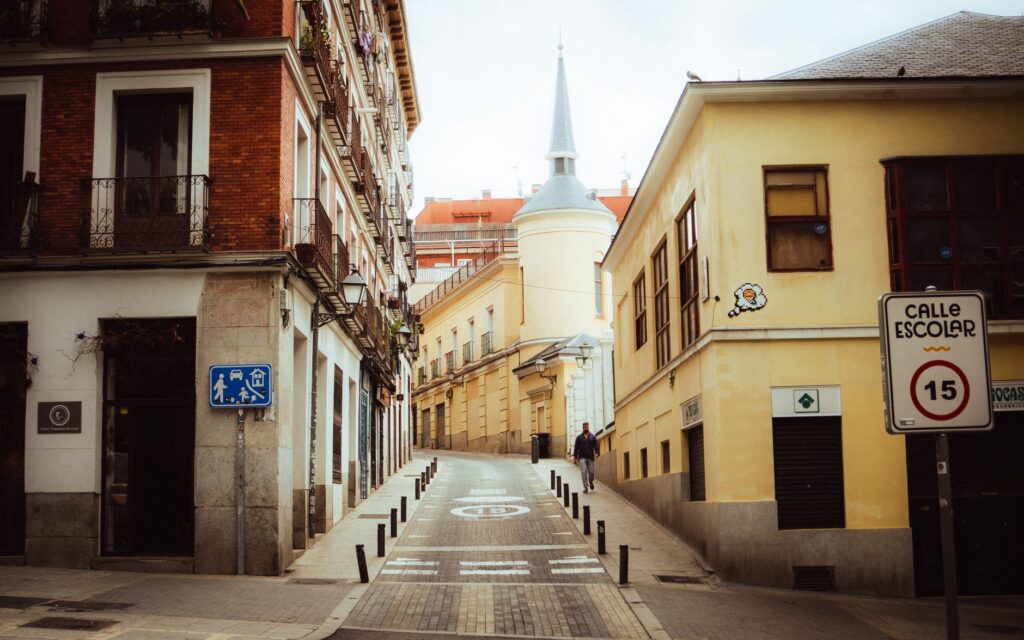
Fuencarral retains a recognisable historic centre, articulated around the church of Nuestra Señora del Carmen and a square that still functions as the heart of the neighbourhood. A short distance away, urban development in recent decades has raised a completely different environment, but the parish church and some traditional buildings maintain the thread with the past.
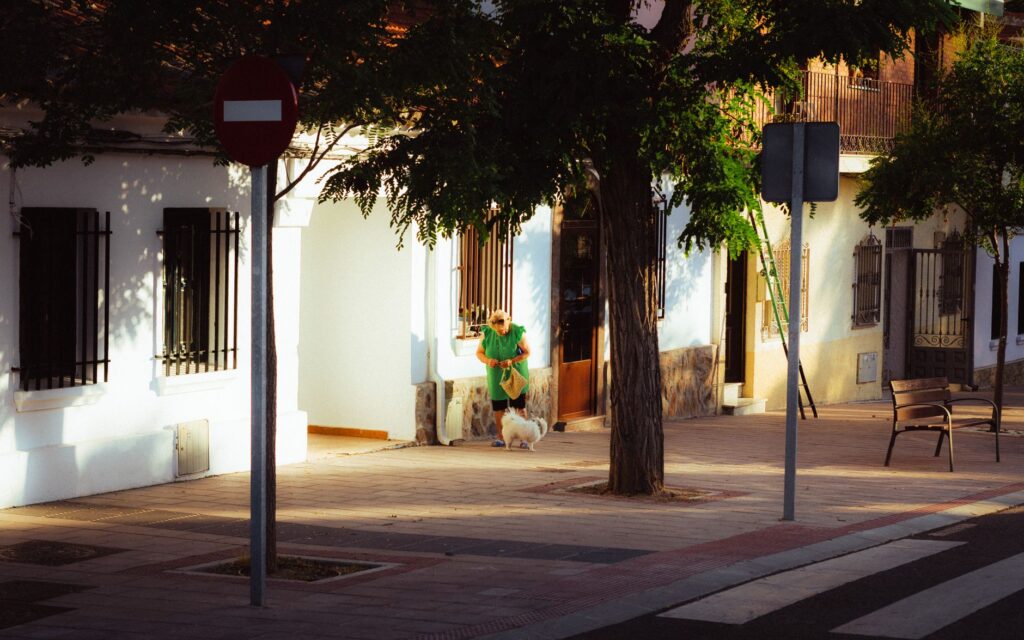
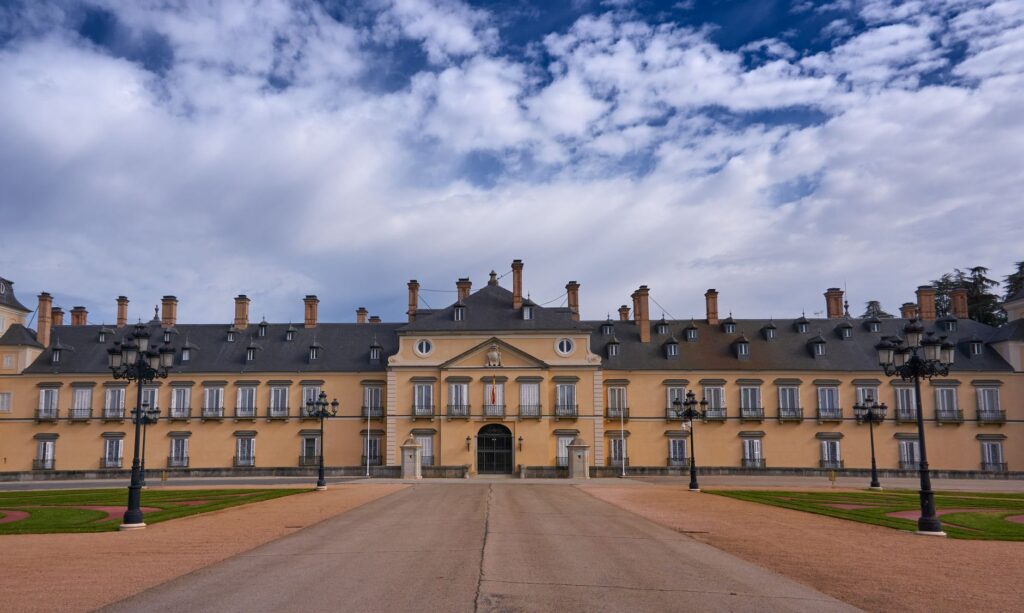
El Pardo, for its part, offers a village centre of irregular layout, with brick buildings and tiled roofs, which retains an air of a village within the capital. Its link with the Royal Palace and the history of the Spanish monarchy adds a layer of heritage that transcends architecture. Walking through its streets on an ordinary morning reveals a neighbourhood life that does not revolve around tourism.
- The centre of El Pardo retains local shops and a low density of visitors compared with central Madrid.
- The church of Nuestra Señora del Carmen, in Fuencarral, is a reference point for understanding the former municipal autonomy.
- The neighbourhoods of La Paz and Tres Olivos show the other face of the district: residential planning, hospitals and metropolitan-scale services.
Heritage that cannot be explained by stones alone
Beyond buildings, the heritage of Fuencarral-El Pardo includes practices and knowledge that rarely appear in guidebooks. The forest management of the monte, the memory of trades linked to water and dryland farming, and the structure of the patron saint festivals of the former villages form part of a body of knowledge transmitted through neighbourhood networks.
Visitors who wish to approach this heritage must do so with humility: ask before photographing, respect places of worship and avoid turning a procession or pilgrimage into a spectacle. The difference between a tourist and a responsible traveller, in this context, lies in the willingness to listen.
In Fuencarral-El Pardo, the most valuable heritage is not visited: it is lived alongside.
Sustainability as a daily decision
The district faces environmental challenges typical of a transition zone between urban and rural. Pressure on land, waste management in densely populated neighbourhoods and mobility between nuclei separated by major infrastructure are issues that affect daily life. At the same time, the presence of the protected forest forces a balance between development and conservation.
For visitors, sustainability is not an abstract label: it translates into choosing public transport to move between neighbourhoods, avoiding private vehicle excursions into restricted areas and spending in local businesses in El Pardo and Fuencarral. The most responsible decision is often the one that involves less travel and more time in a single place.
Getting around a district of different scales
The public transport network connects the district with central Madrid, but travel times between neighbourhoods can be considerable. Metro and bus lines cover the main nuclei, although the connection to the centre of El Pardo requires specific planning. For first-time visitors, it is advisable to choose a single sector and explore it on foot.
The neighbourhood of Las Tablas, with its contemporary architecture and wide avenues, offers an interesting contrast to the village centre of El Pardo. The Fuencarral area, older, allows visitors to see the district’s evolution throughout the twentieth century. None of these areas depends on tourism, which facilitates a more authentic experience less conditioned by commercial circuits.
Eating, shopping and understanding the local rhythm
The district’s gastronomic offer reflects its residential character: neighbourhood bars, local restaurants and a few establishments serving traditional Castilian cuisine around El Pardo. This is not a destination for those seeking haute cuisine, but for those who value a set menu served without haste and a conversation with the owner.
Local commerce is concentrated on the main streets of each nucleus. In El Pardo, small establishments coexist with the flow of visitors arriving at the palace. In Fuencarral, commercial life is distributed between the old centre and the more modern areas. Shopping here is, to some extent, a contribution to these neighbourhoods maintaining their own economy.
A look at the future without losing the thread of the past
The future of Fuencarral-El Pardo involves managing the tension between urban growth and the conservation of its natural environment. Infrastructure projects, housing demand and the protection of the forest are the axes of a debate that directly affects the daily lives of its inhabitants.
For the traveller, the conclusion is simple: this is not a district to be consumed in an afternoon. It requires time, curiosity and a willingness to accept that there are places where the visitor should take a back seat. That is, perhaps, the most valuable lesson to be taken away.
Practical guide
Getting there and getting around
The district is connected to central Madrid by metro and bus. To visit the centre of El Pardo, it is advisable to check available lines and schedules in advance, as frequency may be lower than in the centre. Walking is the best way to explore the historic centres, but distances between neighbourhoods make it advisable to combine public transport and walking.
What to bring and when to go
Spring and autumn are the most pleasant seasons for exploring the forest surroundings and historic centres. In summer, heat can be intense during the central hours, and in winter mornings are cold. Comfortable shoes, water and sun protection are advisable at any time of year.

Rules for visiting the protected area
Access to the Monte de El Pardo is subject to restrictions. It is essential to check which routes are permitted and to respect the instructions of management staff. Visitors should not leave marked trails or disturb wildlife. All litter must be taken away.
Where to eat and shop
Establishments in El Pardo and Fuencarral offer local cuisine and products. It is advisable to avoid peak hours and choose family-run businesses, which tend to maintain a closer relationship and an offer linked to the territory.
A final warning
This is an inhabited district, not a theme park. Photographs should be taken with respect, especially in places of worship and in areas where neighbourhood life unfolds normally. The best way to get to know Fuencarral-El Pardo is the one that interferes least with those who live there.