
Coquimbo is a port city in northern Chile, capital of the Elqui province, with a population of more than 160,000. Its cuisine cannot be understood without the ocean, but neither without the hills that surround it nor the trade that connected it to the rest of the country for decades. Here, the table is an everyday affair: people shop early, cook with what is available and share meals in spaces that do not always appear in guidebooks.
This report proposes a gastronomic reading of Coquimbo through local identity, daily life and heritage. The aim is not to find the most photographed dish but to understand how an urban pantry is organised when it faces the Pacific and, at the same time, depends on the logistics of an intermediate city. Visitors who arrive with respect find an honest cuisine shaped by seasonality and by the work of fishermen, market vendors and neighbourhood cooks.
The port as pantry: what arrives and what stays
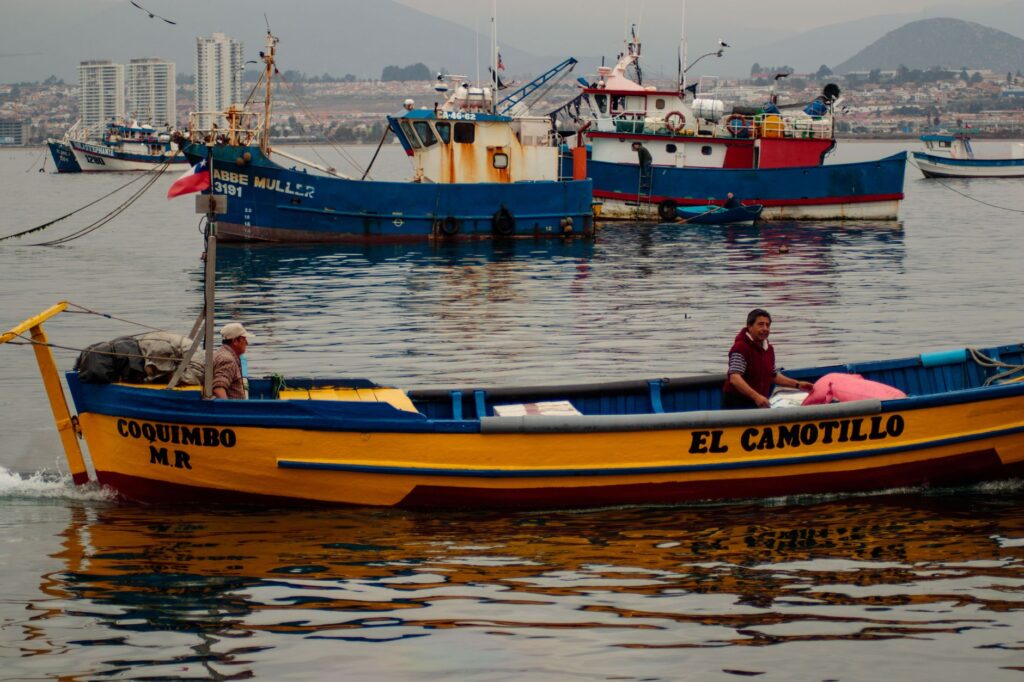
Coquimbo’s relationship with the sea is material, not merely symbolic. Part of the fishing activity that supplies the city and other markets is concentrated at the docks and landing points. Local cooking uses seasonal species, often the ones tourists know least, and works them with simple techniques: juices, grilling, artisanal smoking and slow-cooked pots.
Do not expect a fixed menu. Availability changes with fishing bans, weather and the effort of the fleets. That is why the gastronomic question in Coquimbo is not only which fish is available but which fish can be bought and at what price. This market logic explains why neighbourhood cooking turns to preserves, pulses and dry goods when the catch is scarce.
Coquimbo’s pantry is read in two movements: what the sea brings and what the city keeps for the days when the sea does not provide.
Markets and street fairs: the real map of daily shopping
To understand Coquimbo’s cooking, you have to walk through its markets and supply fairs. This is where vegetables, fruit, pulses and produce from the Elqui valley are sold, arriving in the city by road. The offer is not uniform: it depends on the season and on small producers’ ability to bring their harvests to market.
The market works as a social thermometer. In its aisles, people negotiate, recommend and learn. Neighbourhood fairs, for their part, keep a human scale that allows conversation with the seller and an understanding of where the food comes from. For visitors, the advice is to observe before buying, ask about origin and avoid impulse purchases of products that will not be consumed.
- Fruit and vegetables: the offer changes with the seasons; ask what is in season.
- Pulses and dry goods: the basis of many everyday preparations and long-term storage.
- Fish and shellfish: availability depends on fishing bans and sea conditions.
- Bread: neighbourhood bakeries keep traditional recipes and early hours.
The heritage of the hills: home cooking and migrant memory
Coquimbo also grew upwards into the hills, and that geography left its mark on cooking. Homes on higher ground, often self-built, developed their own supply strategies: weekly shopping, careful storage and recipes that stretch. Home cooking is not a spectacle but a domestic economy.
Migrant memory also matters. The city has historically received people from other regions of Chile and neighbouring countries, and that mix shows in preparations that combine local products with techniques brought from elsewhere. It is not a spectacular fusion but a quiet adaptation: a stew that incorporates valley produce, a sauce that changes according to what the pantry holds.
Seasonal fish: a cuisine that respects the ban
Sustainability is not a slogan in a fishing city: it is a practical condition. Fishing bans and minimum sizes determine what can be bought and what cannot. Visitors who ask for species out of season not only pay more: they also pressure a system that already has limits.
Responsible eating in Coquimbo starts by accepting the menu of the day. Restaurants and stalls that work with fresh produce tend to adjust their offer to what arrives. That flexibility is a sign of quality, not a shortcoming. Asking about origin and season is a simple way to support those who work with judgement.
In a fishing city, eating well also means knowing how to wait: the season rules and the kitchen adapts.
From valley to table: the Elqui and inland produce
The Elqui valley, east of Coquimbo, provides an important part of the regional pantry. Fruit, vegetables and processed goods reach the city and are integrated into daily cooking. The relationship between the port and the interior is not folkloric: it is commercial and logistical.
That connection explains why Coquimbo offers preparations that combine the marine with the agricultural. These are not fusion dishes but a cuisine of proximity that uses what the region produces. For visitors, the advice is to look for stalls selling valley produce and ask about its season.

Eating in the neighbourhood: where daily life sits down
Coquimbo’s gastronomic offer is not concentrated only on the waterfront. In the neighbourhoods, cooks and small establishments keep a cuisine of proximity that does not always appear on review platforms. There people eat what is cooked for the community: stews, soups, fried fish and pot preparations.
Visitors who want to know that cuisine must adjust their expectations: they will not find extensive menus or décor designed for photographs. They will find limited hours, moderate prices and service that values conversation. The advice is to ask before sitting down, respect the pace of the establishment and not demand dishes that are not on the day’s offer.
Heritage and landscape: what the table says about the city
Coquimbo has a port history reflected in its architecture and urban layout. The city has gone through periods of boom and transformation, and that memory is present in its buildings and in the stories of its inhabitants. Gastronomy is not separate from that heritage: markets, bakeries and historic establishments are part of the everyday landscape.
For visitors, gastronomic heritage is not only in the dishes but in the spaces where people shop and cook. Walking through the port, entering a market and observing how sales are organised is a way to understand the city. That gaze requires respect: this is not a stage set but a place of work.
Responsible decisions: how to visit without disrupting the rhythm
Gastronomic tourism can be a positive force if practised with judgement. In Coquimbo, that means buying in local markets and fairs, choosing neighbourhood establishments and avoiding demands that break the season. It also means not romanticising poverty or turning daily life into a spectacle.
Visitor responsibility involves informing yourself before arriving, respecting the hours and rules of each space, and accepting that local cooking is not designed for your entertainment. A fair tip, a kind question and a conscious purchase are small gestures that sustain a fragile economy.
Practical guide
When to go: the busiest tourist season coincides with the southern summer, but local cooking can be enjoyed all year round. It is worth checking fishing bans and product availability before planning the trip.

Where to shop: markets and neighbourhood fairs are the best entry point to the local pantry. Asking about origin and season is a welcome practice.
What to eat: seasonal fish preparations, pulses, neighbourhood bread and produce from the Elqui valley. The offer changes with the day and the season.
How to get around: public transport and walking routes allow you to explore neighbourhoods and markets without relying on closed circuits. Check schedules and routes in advance.
Respectful rules: do not photograph workers without permission, do not demand out-of-season dishes and do not disrupt the rhythm of establishments with demands unrelated to their operation.
Closing: a table that needs no shop window
Coquimbo is not a city that cooks for visitors. It cooks for itself, with what the sea and the valley provide, and with a memory passed down in home kitchens. That is its strength and also its fragility. Travellers who arrive with curiosity and respect find an honest table, without artifice, where each dish tells a story of work and adaptation.
The invitation is to look at the city from its pantry: the market, the fair, the bakery, the fish stall. There it becomes clear that gastronomy is not an ornament of the journey but a central part of daily life. And that eating well in Coquimbo is also a way of caring for what makes that cooking possible.