
Barranquilla does not reveal itself immediately. The capital of Colombia’s Atlántico department stretches across a coastal plain just a few meters above sea level, between the Magdalena River and the Caribbean Sea. Anyone arriving in search of a postcard of beaches and palm trees will find something else: a city of work, commerce and neighborhoods known by the name of the corner where residents gather.
Its identity was built on movement. For much of the twentieth century, its river and sea port made it a gateway for goods, ideas and people arriving from Europe, the Middle East and the Caribbean. That mix produced a distinctive urban culture, with music heard in homes, on buses and in public squares: cumbia, porro, mapalé. To walk through Barranquilla is, to a large extent, to learn to listen to that everyday rhythm.
A city understood through its river
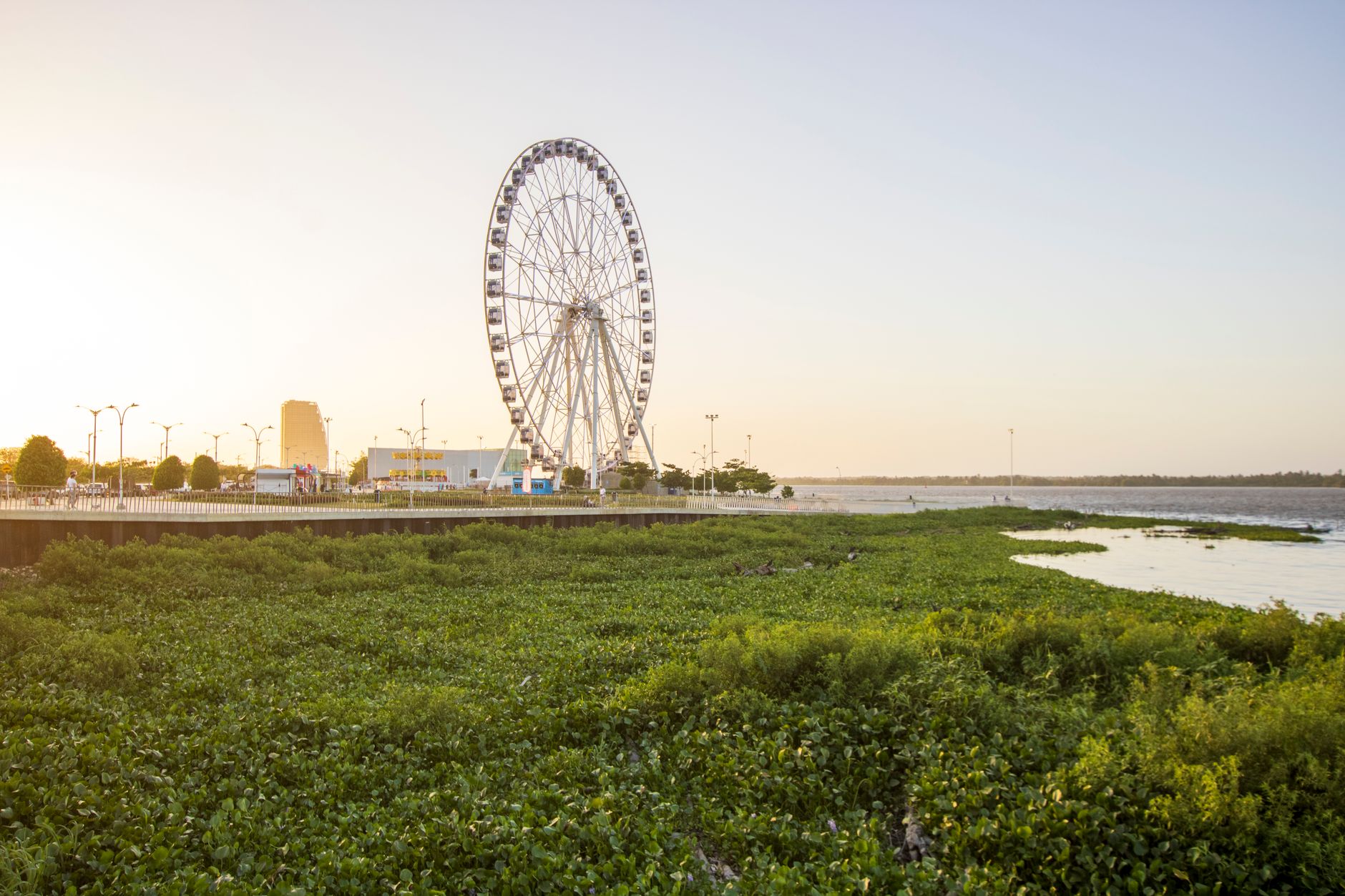
The Magdalena is the backbone of the country and, for Barranquilla, something more than a geographical feature. The river marks the city’s western edge and defines its history: goods entered and left through it for decades, and the neighborhoods that grew around it still carry that memory. Walking along the riverside promenade is one of the first things a visitor should do, not only for the views but because it reveals the scale of the city.
The Gran Malecón, a public space recovered along the riverbank, has become a meeting point for families, athletes and vendors. It is not monumental in the traditional sense but a living place: bicycles, skateboards, children running and food stalls setting up at dusk. For travelers, it is an honest introduction to local life.

It is worth remembering that Barranquilla has a hot, humid climate throughout the year. Walking without rush, with water at hand and light clothing, is part of the experience. The heat is not an obstacle: it is the pace at which the city moves.
The historic center and its layers of time
Barranquilla’s center preserves buildings that speak of its era of commercial splendor. The Aduana Building, the Intendencia Fluvial and several republican-era structures reflect a period when the city looked toward the river and the world. Many have been restored, others await their turn, and that mix of care and neglect is part of the urban story.
Paseo Bolívar and Plaza de San Nicolás serve as axes of the center. Shops, offices and intense activity concentrate around them during the day. This is not an area designed for postcard tourism but a working space where visitors should move naturally and respectfully.
In Barranquilla, heritage is not behind glass: it is used, crossed and negotiated every day.
For those who want to go deeper, the Museo del Caribe offers an organized reading of regional history, from pre-Hispanic cultures to the shaping of the modern city. It is a useful stop for understanding what will be seen later in the streets.
The neighborhood as a unit of meaning
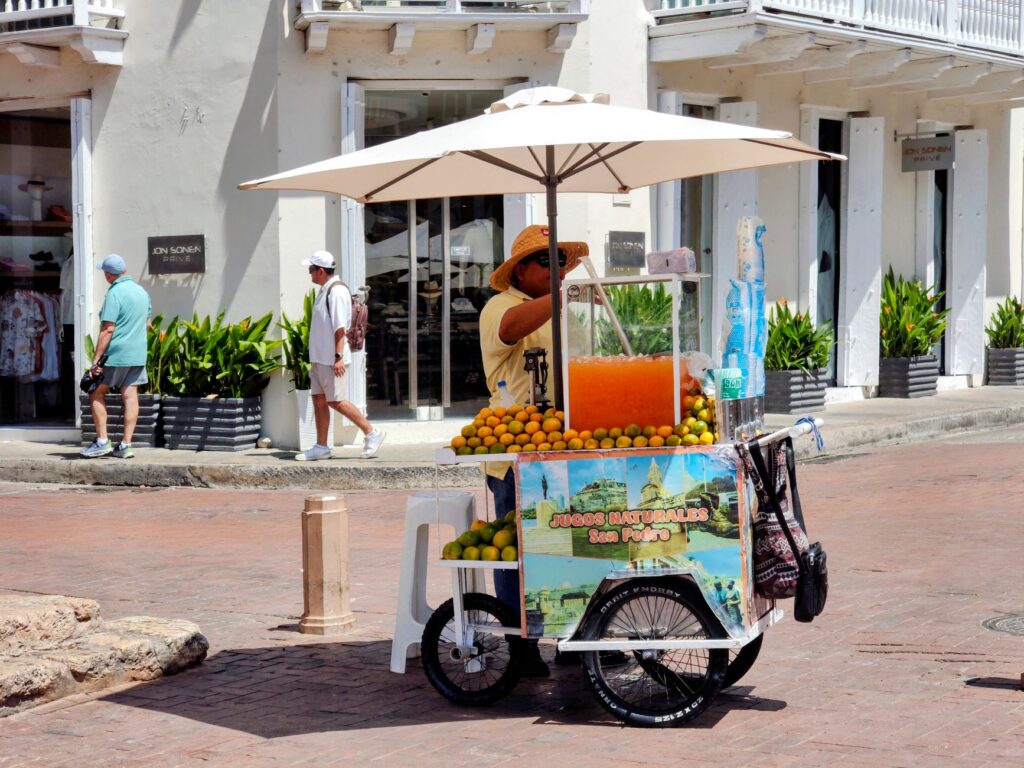
Barranquilla is organized into neighborhoods that function almost as small worlds. Barrio Abajo, one of the oldest, is known for its connection to music and for traditional houses that stand among new construction. Neighborhood life is intense there: residents at their doors, music coming from windows, street vendors who know everyone by name.
Other areas such as El Prado show another face: republican and neoclassical houses, tree-lined streets and the memory of the commercial bourgeoisie that built the city. Walking through El Prado is a lesson in urban architecture and an invitation to ask how heritage is preserved as the city grows and changes.
The practical recommendation is simple: explore the neighborhoods on foot, slowly and without looking for a closed itinerary. Barranquilla does not lend itself to rigid routes; it lends itself to conversation and observation.
Music as living heritage
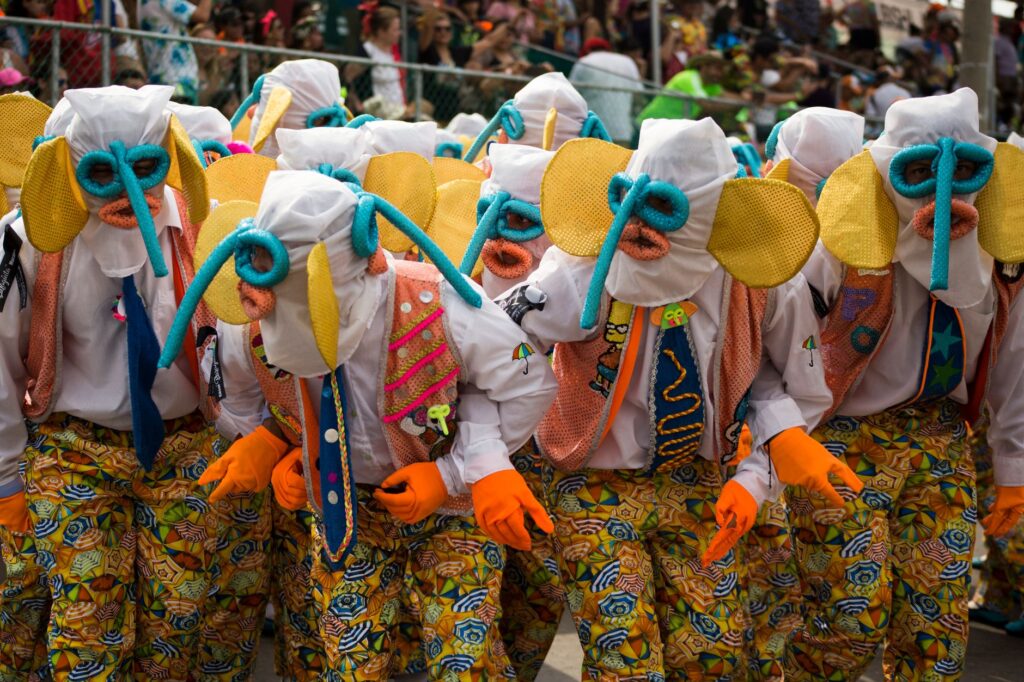
To speak of Barranquilla is to speak of music. The city is one of the great centers of cumbia and porro, and its Carnaval, declared Intangible Cultural Heritage of Humanity by UNESCO, is the most visible expression of that tradition. But reducing the music to carnival would be a mistake: Barranquilla sings and dances all year, at neighborhood parties, in rehearsals of local groups and on the radio stations heard in any shop.

Visitors can approach that tradition through spaces such as the Casa del Carnaval or the Museo del Carnaval, where the history of comparsas, costumes and dances is explained. There are also workshops and schools that keep musical practices alive, though they are not always open to the general public.
A useful warning: carnival takes place in February or March, depending on the calendar, and draws a large number of visitors. Those who prefer a quieter experience can travel at other times and still find music and cultural life.
Flavors of a port city
Barranquilla’s cuisine reflects its history as a port and a crossroads. Arroz de lisa, sancocho, arepa de huevo and Caribbean fish are part of the daily table. Markets and neighborhood eateries are good places to try these dishes, though it is wise to check the conditions of each establishment.
The Mercado Público in the center is a space of intense activity where food, spices and local products are sold. It is not a tourist site in the conventional sense, and visitors should move with caution and respect for the work of those who occupy it.
For a slower experience, the city’s restaurants offer contemporary versions of Caribbean cooking. The recommendation is to ask about the dishes of the day and let local flavors guide you.
Architecture between memory and neglect
Barranquilla’s architecture tells a story of boom and transformation. The republican buildings of the center, the houses of El Prado and the traditional constructions of Barrio Abajo form a heterogeneous urban landscape. Some properties have been carefully restored; others show the wear of time and the lack of maintenance.
That duality is part of the city’s interest. Travelers who seek only the immaculate will miss the real texture of a place that has been built and rebuilt many times. Walking attentively, looking up and observing the details of facades is a way of reading that history.
Getting around and when to travel
Barranquilla has the Ernesto Cortissoz international airport, connecting it with other Colombian cities and international destinations. Urban transport includes buses, taxis and ride-hailing apps; for visitors, the latter are often the most comfortable option, though it is wise to check fares and conditions.

The climate is warm throughout the year, with a rainy season that can intensify in certain months. Light clothing, sunscreen and hydration are basic recommendations. For carnival, accommodation should be booked well in advance.
Practical guide
- When to go: carnival takes place in February or March depending on the calendar; the rest of the year the city maintains an active cultural life.
- Getting there: the Ernesto Cortissoz international airport connects Barranquilla with other cities in Colombia and abroad.
- Getting around: ride-hailing apps and taxis are common options; public transport also covers much of the city.
- What to bring: light clothing, comfortable shoes, water and sun protection.
- Local respect: neighborhoods are lived-in spaces; walk with caution and avoid filming or photographing people without their consent.
- Language: Spanish is the main language; English may be available in tourist areas.
A city remembered for its people
In the end, what stays with you from Barranquilla is not a monument or a postcard. It is the feeling of having walked through a city that works, sings and talks. Visitors who arrive in a hurry will take away a partial impression; those who stop to listen will probably understand why its residents defend their city with such pride.
Traveling to Barranquilla means accepting a different pace, closer to heat and conversation than to a closed itinerary. And above all, it is an invitation to look with respect at a place that does not need to invent its history to be interesting.