
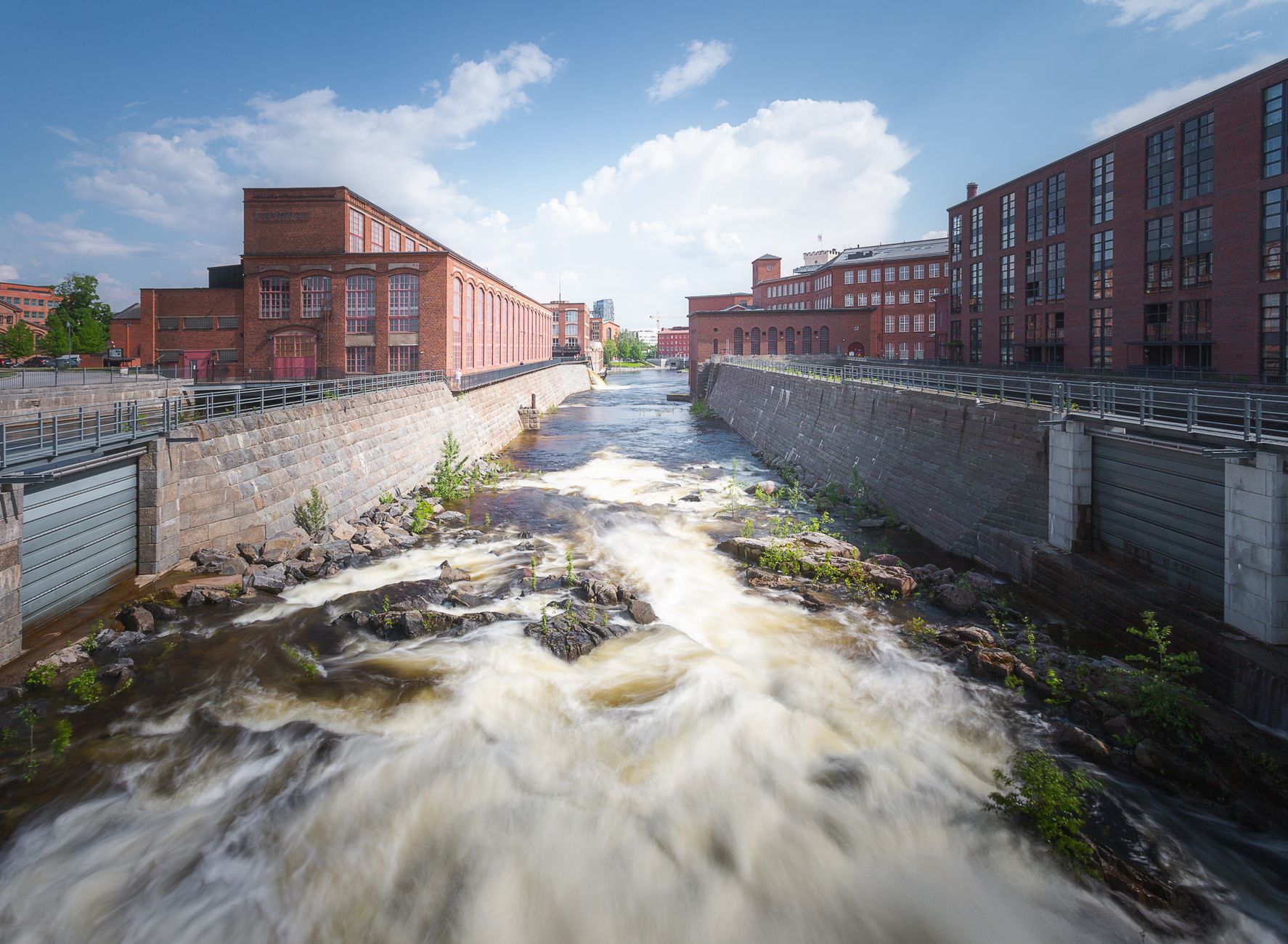

Some cities are understood from a bridge. Tampere, in southwestern Finland, is one of them: the Tammerkoski, a rapid barely a kilometre long, cuts through the urban centre and separates Lake Näsijärvi from Lake Pyhäjärvi, two bodies of water that shaped the region’s life for centuries. On that watery gap an industrial city was built, and today it is best explored on foot, with the calm of those who know that cold is not fought with haste.
The city is not a destination of grand gestures. Its interest lies in a domestic scale: a red-brick chimney rising above rooftops, a covered market where fish is bought mid-morning, a public sauna by the river, a tram crossing the centre without fuss. This report proposes looking at Tampere from that everyday perspective, with attention to heritage and to the responsible choices a visitor can make.
A geography of water that orders the city
Tampere’s location explains almost everything else. The isthmus between Lake Näsijärvi and Lake Pyhäjärvi turned the rapids into an early source of energy: first mills, then textile factories, later metal workshops. That sequence left a recognisable urban trace, with brick buildings lining the water and streets descending towards it.
For the visitor, the practical consequence is that the historic centre is compact and walkable. The rapids are not a backdrop: they are the axis connecting neighbourhoods, bridges and former industrial halls. Walking along the banks allows the city to be read in layers, from old workshops to the cultural spaces that now occupy those same volumes.
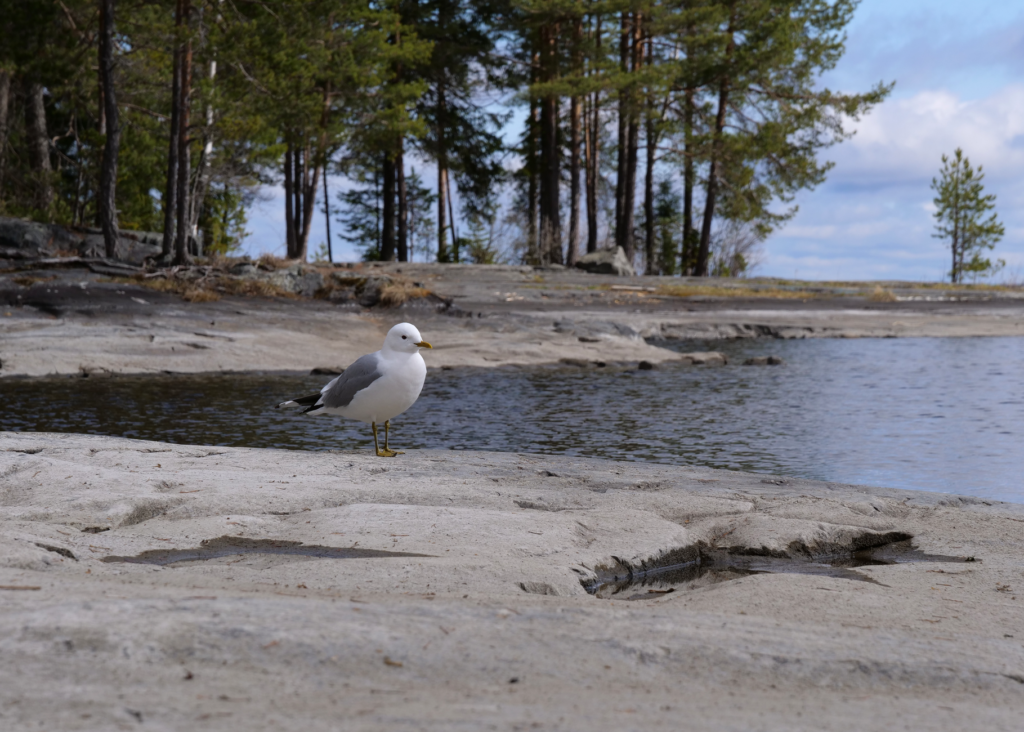
Water does not surround Tampere: it runs through it, and with it orders the way the city is walked.
Finlayson: brick that became a neighbourhood
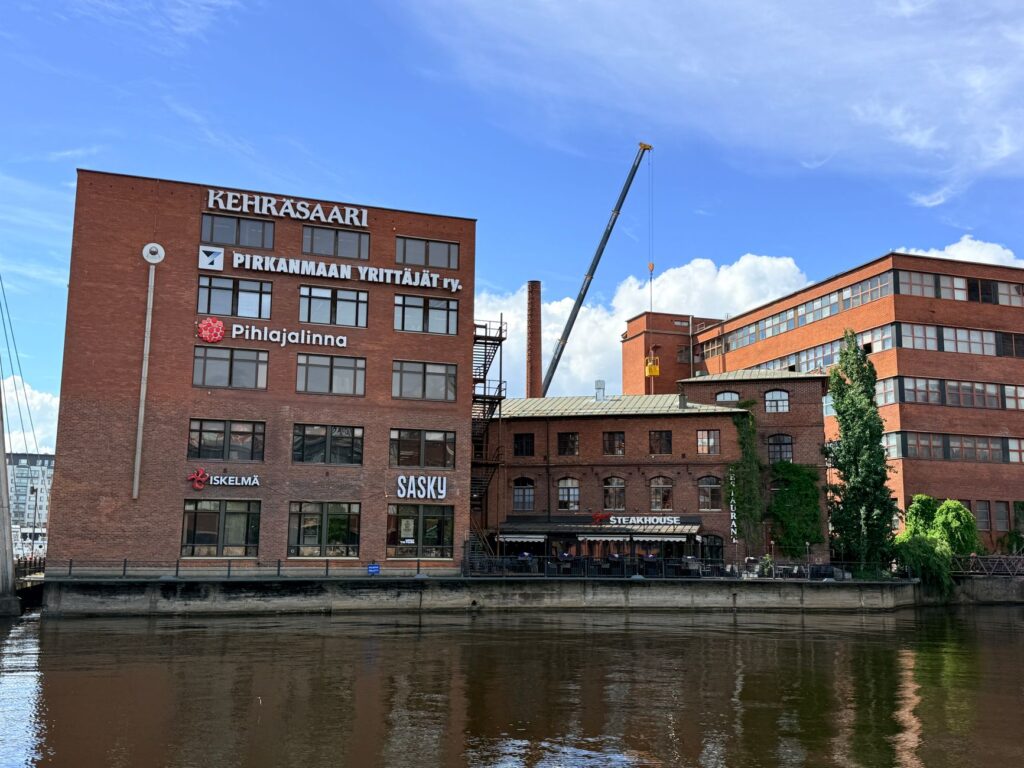
The former Finlayson industrial complex, founded in the nineteenth century, is probably Tampere’s most recognisable heritage ensemble. Its red-brick buildings, inner courtyards and chimney form a kind of city within the city, now occupied by shops, museums, cinemas and workspaces.
What matters is not only the architecture but how it has been reused. Rather than emptying the complex, the scale of the buildings has been kept and everyday life allowed to pass through them. It is an example of rehabilitation worth observing with a critical eye: not every converted industrial space retains its character, and here visitors can judge for themselves what has been preserved and what has been transformed.
What to look at without rushing
- The brick facades and industrial windows that still set the rhythm of the courtyards.
- The chimney, a visual reference for the complex and much of the central skyline.
- The access points to the rapids, which reveal the link between factory and water power.
Workers’ districts and the memory of labour
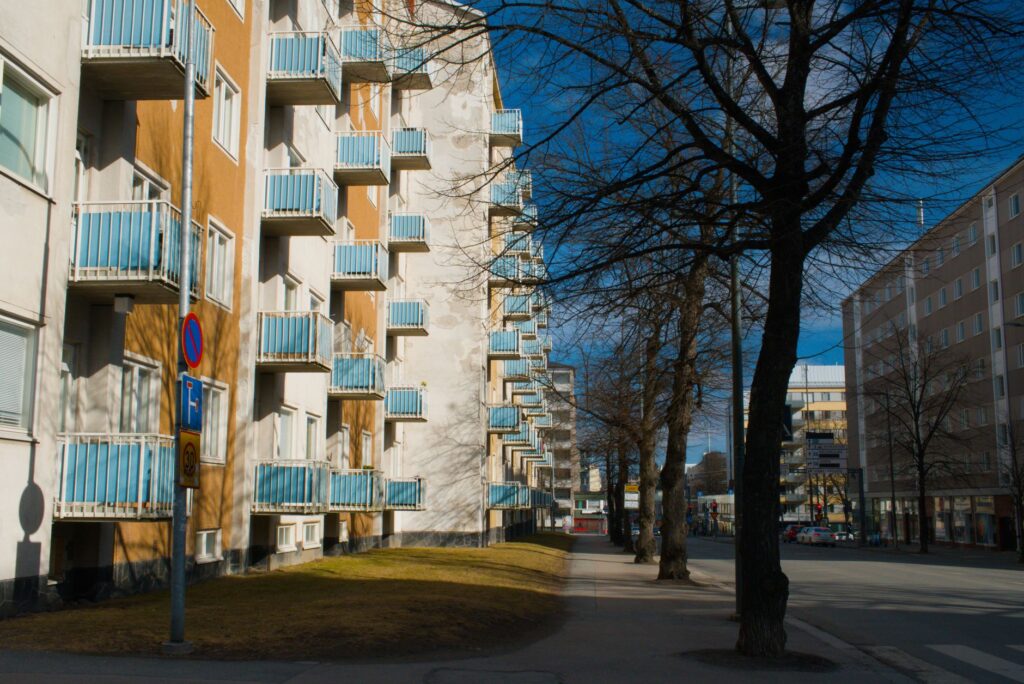
Around the industrial centre grew workers’ neighbourhoods such as Pispala and Amuri, which today tell another part of the story. Pispala, on a slope between two lakes, preserves wooden houses from different periods and an irregular layout that contrasts with the planned centre. It is a residential area, not a stage set: it should be walked with respect for those who live there.
Amuri, closer to the centre, shows the evolution of workers’ housing into mixed urban fabric. Tampere’s industrial memory is not only in the large buildings but in the small scale of these streets. Walking them without looking for a specific landmark is one of the best ways to understand the city.
A covered market and the Finnish pantry
The central covered market, Kauppahalli, is a useful stop for understanding local daily life. Its stalls offer fish, bread, cheeses and prepared foods, and it functions as a real place to shop, not only an attraction. It is a good spot to observe how food is organised in a city where winter conditions availability and the rhythm of meals.
The cuisine of this region combines simple products: lake fish, potato, rye, berries and dairy. Trying a seasonal menu in a market canteen or a neighbourhood restaurant offers a more honest reading than strictly tourist fare. It is worth checking the daily menu and the hours, which tend to concentrate around midday.
In Tampere, the pantry is best understood in a neighbourhood market rather than in any shop window.
Public sauna: an everyday institution
The sauna in Finland is not a tourist extra but a social practice. Tampere has public saunas linked to the river and to urban tradition, some in rehabilitated buildings. For the visitor, the experience requires attention to the rules: separate or mixed hours depending on the establishment, reasonable silence, respect for shared spaces and no rush.
Beyond the ritual, the sauna explains a way of inhabiting the climate. In a city with long winters, shared heat works as social infrastructure. Those who visit with curiosity and without expectations of spectacle will find one of the clearest keys to local identity.
Winter: low light, ice and practical decisions
Tampere’s winter imposes its own rhythm. Light is scarce for several weeks, and ice and snow alter pedestrian routes. Local authorities usually keep main arteries clear, but secondary paths can be slippery. Suitable footwear and some flexibility with schedules are more useful than any list of monuments.

That season also reveals a way of life: cafés that become shelters, busy libraries, cultural activities indoors and a serene relationship with darkness. The visitor who accepts that rhythm will find a city that is less photogenic but more truthful.
Clothing and footwear: what to know
- Thermal layers and a windproof coat are more effective than a single thick garment.
- Footwear with good grip helps on icy pavements; check route conditions after snowfall.
- Days are short: planning movements in daylight improves the experience.
Museums and industrial heritage with judgement
Tampere preserves several spaces devoted to its industrial history, from former factories to neighbourhood museums. The offer changes with the season, so it is worth checking hours and exhibitions before planning a visit. The interest of these spaces lies in documenting work and daily life rather than in isolated objects.
For a broader reading, local archives and interpretation centres help explain how a small city became an industrial reference in the country. It is heritage best enjoyed with time and without the need to cover everything.
Getting around Tampere without friction
The centre is easy on foot, and the tram and bus network covers longer journeys. For short stays, it is worth considering urban transport passes and local cards, whose conditions may vary; official information is the reliable source. Cycling works in milder seasons, but ice limits its use in winter.
Tampere-Pirkkala Airport connects the region with several routes, and the central railway station links to Helsinki and other Finnish cities. Schedules and services change, so planning should rely on each operator’s official websites.
Practical guide
When to go: summer offers abundant light and outdoor life; winter brings a more contained urban experience. Spring and autumn are intermediate and changeable.
What to book: public saunas, some restaurants and guided visits may require advance booking in high season. Confirm hours through official sources.
How to move: on foot in the centre; public transport for longer trips. Check current fares and passes.
What to avoid: treating residential neighbourhoods as theme parks; respecting silence in saunas and shared spaces; not assuming everyone speaks English.
Budget: Finland is a medium-to-high cost country; markets and lunch menus soften spending, while guided activities and dinner restaurants raise it.
A city to walk again
At the end of the route, Tampere stays in the memory as a city of small gestures: the sound of the rapids under a bridge, the light of a winter afternoon on brick, the steam rising from a sauna by the water. It is not a destination exhausted by a list of sights, but a place best understood when its rhythm is accepted.
Those who arrive looking for grand monuments will find instead a lesson in urbanity: a city that has reused its heritage without erasing its memory, and that invites visitors to walk it with the same calm with which it lives through winter.


