Indianapolis is a city of the plain. Its relief poses no great challenge, but its location in the heart of the American Midwest demands a careful reading of the weather, the cycles of the White River and the rules governing the use of its natural spaces. With more than 880,000 inhabitants according to available geographic data, the capital of Indiana is one of the country’s major cities and, at the same time, a starting point for low-altitude expeditions that combine urban forest, riverbanks and industrial heritage.
Planning is the difference between a pleasant outing and a frustrating day. This guide proposes an expedition approach for those who want to explore Indianapolis with judgment: understanding the terrain, anticipating the weather, respecting permits and taking responsibility for leaving the environment better than it was found.
A city built on the plain
Indianapolis sits at about 218 metres above sea level, in a transition zone between the prairies of the north and the more rolling lands of southern Indiana. That modest altitude should not be confused with an absence of difficulty: the plain favors long journeys and exposes the walker to wind and humidity without the protection of mountains.
The White River crosses the city and acts as the axis of many outdoor activities. Its flow varies with spring rains and summer storms, so any outing involving water must be checked in advance. The city has developed a network of parks and trails that allow it to be explored on foot or by bicycle, but the scale is large and the distance between points of interest can be considerable.
Understanding the geography also means accepting that the terrain offers few natural reference points. In a landscape without ridges or prominent valleys, orientation depends on the street grid, the course of the river and the green corridors that break the regularity of the blocks. That apparent uniformity is precisely what makes a prior study of the route worthwhile: knowing where the river bends, where the parks connect and where the crossings are avoids unnecessary detours and keeps the expedition within reasonable margins.
Weather as the first decision variable
Indianapolis has a humid continental climate. Winters are cold, with frequent frosts and episodes of snow, while summers are warm and humid, with temperatures that can exceed 30 degrees and a higher heat index due to humidity. Spring and autumn are the most pleasant seasons for physical activity, although also the most changeable.
Planning should include a review of forecasts at least 48 hours in advance and a backup plan. Summer storms can appear quickly and force a route to be suspended. In winter, ice on the trails and reduced daylight hours require adequate equipment and conservative time management.
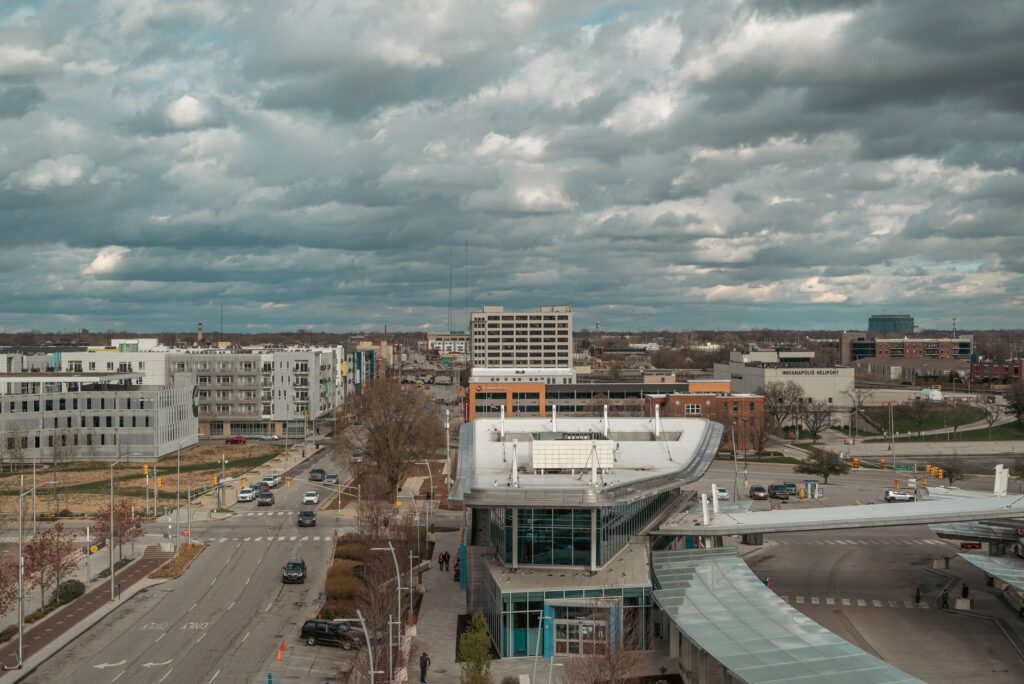
The transition between seasons deserves special attention. In early spring, the combination of thaw and rain can raise water levels in the river corridors, while in late autumn the first frosts change the condition of the ground and shorten the usable daylight. A responsible expedition adapts its ambition to the season and does not treat a mild day as a guarantee for the rest of the week.
On a plain, the weather cannot be seen coming from afar: it is felt on the skin and checked before setting out.
Permits, rules and responsibility
Natural spaces managed by the state and the county have specific regulations on hours, trail use, access with pets and water activities. Some areas require permits for camping or for the use of boats, and the rules may vary by season. The recommendation is to consult official sources before traveling and not to assume that an area is freely accessible.
Responsibility also includes waste management, respect for wildlife and the prohibition of lighting fires outside designated areas. In an urban and peri-urban environment, human pressure is high and conservation depends on individual conduct as much as on public policy.
It is useful to distinguish between the different levels of administration that manage the territory. The city, the county and the state may each apply their own criteria to the same green corridor, and a rule that applies in one section may not apply in the next. Checking the specific regulations of each area, rather than assuming a single framework, is part of the preparation and avoids unpleasant surprises at the entrance to a park or at the start of a riverside trail.
The equipment that makes a difference
For a one-day expedition through Indianapolis, equipment must adapt to the season. In summer, light, breathable clothing, sun protection, enough water and insect repellent. In winter, thermal layers, waterproof footwear and an additional light source in case the day runs long. In spring and autumn, the key is versatility: layers that can be removed or added as the weather changes.
A physical map or an app with downloaded maps is useful in areas where coverage is irregular. Orientation in a plain city may seem simple, but the repetition of streets and the extent of the parks make constant reference essential.

Beyond clothing, the equipment should include a small repair kit, a charged power source and a basic first-aid kit suited to the planned activity. In a city of this size, help is usually within reach, but the ability to solve a minor problem without depending on third parties is what distinguishes a well-prepared group. The weight of the backpack should remain moderate: on flat terrain, excess load translates into fatigue rather than technical difficulty.
Urban routes and riverbanks
Indianapolis’s trail network allows urban sections to be combined with riverside sections. The White River and its tributaries offer green corridors that cross the city and connect neighborhoods with parks. These routes are suitable for walks of several hours, but require attention to crossings, signage and the closing times of some sections.
For those seeking a more immersive experience, nearby state parks expand the options. The distance from the urban center to these areas can be considerable, so transport must be planned in advance. Cycling is a common alternative, although it requires knowing the traffic rules and the condition of the roads.
The design of a route should combine ambition with realism. A common mistake is to accumulate too many points of interest in a single day without calculating the distance between them. Dividing the expedition into segments with clear start and end points, and identifying a possible exit at each stage, allows the plan to be adjusted without improvising in the middle of the route.
Heritage and cultural context
Indianapolis is not only a starting point for nature. Its heritage includes monuments, museums and historic neighborhoods that help explain the city’s relationship with its environment. Midwestern American culture is reflected in the life of its parks, in community activities and in a conservation tradition that has gained weight in recent decades.
Visiting the city with an expedition mindset also means taking an interest in its history: how the urban plan was laid out, how water was managed and how the landscape was transformed by population growth. That understanding adds depth to any outing and helps make more informed decisions.
The heritage dimension is not a decorative complement. Knowing how the city grew around its waterways and how green spaces were reserved within the urban grid allows the walker to interpret what they see and to understand why some areas are protected and others are not. That context also helps to respect the signs and the uses established by the communities that frequent each space.

Real risks and risk management
The risks in Indianapolis are not those of high mountains, but they exist. Flash floods on the riverbanks, summer thunderstorms, humid heat and winter ice are the main ones. Risk management consists of avoiding flood-prone areas when heavy rain is forecast, suspending activity when lightning appears and adjusting intensity to physical condition and acclimatization.
Communication is another factor: informing someone of the itinerary and expected return time is a basic practice that should not be omitted. In a large city, the sense of security can be deceptive, and individual responsibility remains the first filter.
Risk management should also include an honest assessment of the group’s experience. A flat route can become demanding under intense heat or after several hours of walking, and recognizing the signs of exhaustion in time is as important as carrying the right equipment. Establishing a return time and a meeting point, and accepting that turning back is a valid decision, are habits that reduce incidents.
Practical guide
- Best season: spring and autumn for moderate temperatures; summer with caution for heat and storms; winter with specific equipment.
- Documentation: check state and county park regulations before setting out; verify whether a permit is required for camping or boats.
- Transport: plan trips to the center and to peri-urban parks; the city is extensive and public transport has limited coverage in some areas.
- Minimum equipment: water, sun protection, waterproof layer, suitable footwear, downloaded map and flashlight.
- Safety: avoid riverbanks during floods, suspend activity during thunderstorms and communicate the itinerary.
- Responsibility: leave no waste, respect wildlife and restricted areas, and use only designated fire pits.
An outing with judgment
Indianapolis offers a discreet adventure experience, without great summits but with clear demands: reading the weather, respecting the rules and understanding that the plain also imposes its own rules. A well-planned expedition in the capital of Indiana is measured not by the difficulty of the terrain but by the quality of the decisions made beforehand.
The city invites you to walk slowly, observe the river and understand that conservation is a daily task. Those who approach it with that disposition find in Indianapolis a territory richer than its low profile suggests.