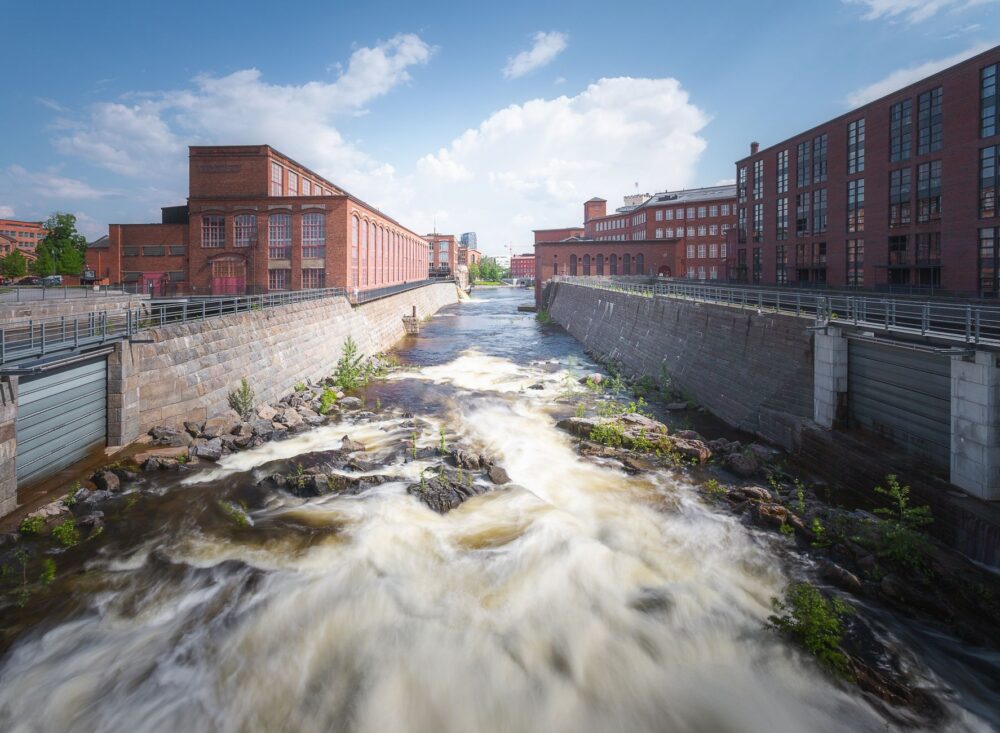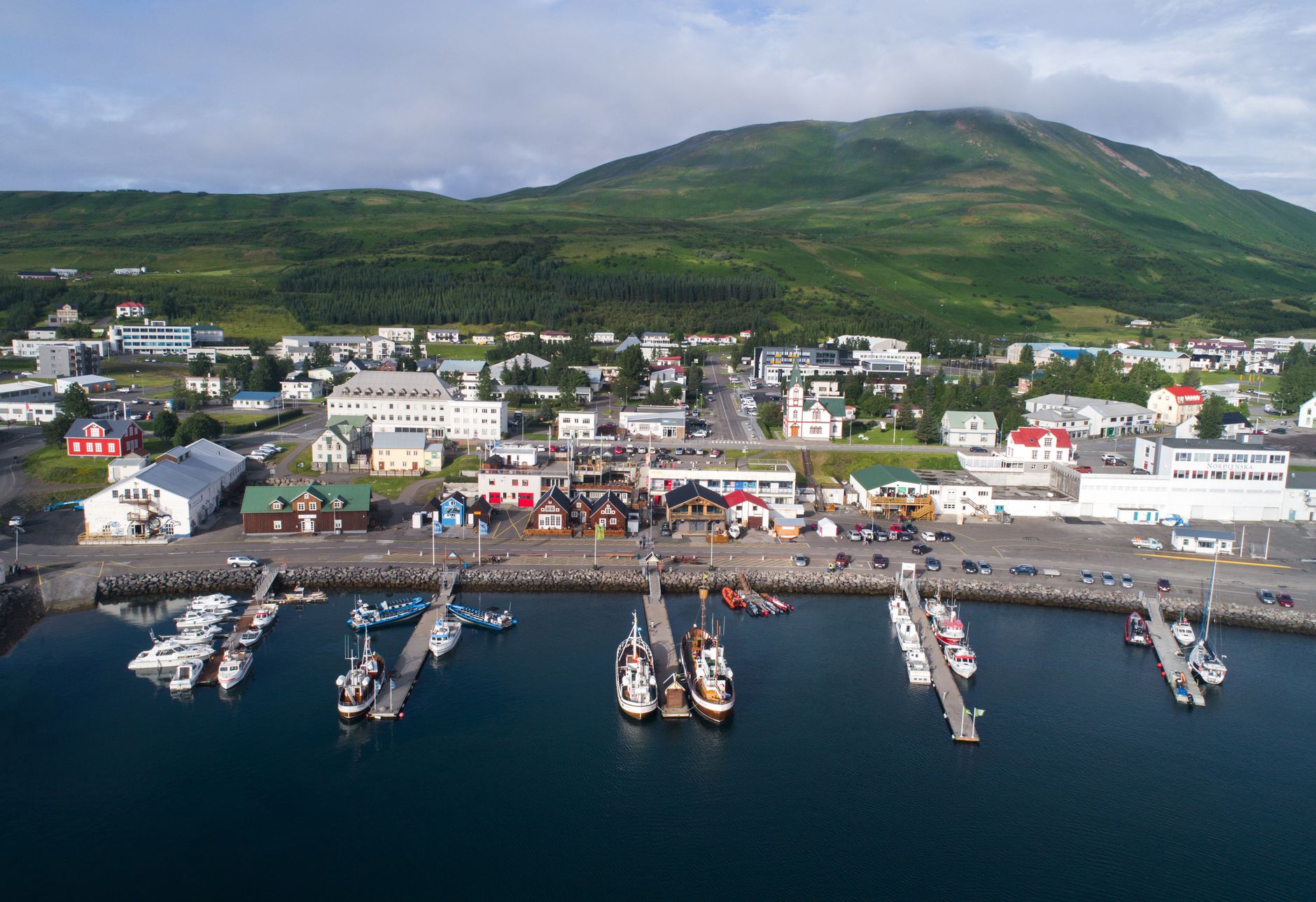

Hafnarfjörður rarely makes international headlines. It is not the capital, it has no geysers and it does not host the airport that receives most travelers to Iceland. Yet, some fifteen to twenty minutes by car from downtown Reykjavík, this town of just over 31,000 residents — according to the most recent geographic records — offers one of the country’s most complete urban experiences: a harbor that never stopped working, a human-scale historic center and a cultural scene that mixes maritime tradition with contemporary design.
The question guiding this report is not what to see in Hafnarfjörður, but how to visit it without reducing it to a backdrop. The town has an identity of its own, built on lava, the sea and a community that has learned to live with both. Understanding that identity is the difference between spending an afternoon and comprehending a place.
A geography that orders everyday life
Hafnarfjörður sits on volcanic terrain that shapes its layout. The lava hills, covered in moss and low shrubs, surround the urban core and remind visitors that geology is not a backdrop but a factor that has determined where buildings can rise and where they cannot. The harbor, sheltered by the topography, has been the area’s economic engine for centuries.
The town is part of the capital region but keeps a different rhythm. While Reykjavík concentrates political life and the major museums, Hafnarfjörður retains a neighborhood scale. The streets of the center can be walked in under an hour, and that proximity allows for a more direct relationship with heritage.
Hafnarfjörður’s identity is not explained only by what is visible, but by what the community decides to preserve.
First-time visitors are often struck by the coexistence of old and new: wooden houses from the early 20th century next to contemporary design buildings, a working harbor a few meters from an art gallery, and a network of trails connecting the center with the lava landscape in minutes.
The harbor as the town’s archive
Hafnarfjörður’s harbor is one of the oldest in Iceland and remains operational. It is not a museum harbor or a tourist set: it is a working space where fish is unloaded, boats are repaired and an activity that has shaped the town for generations continues. That authenticity is precisely what makes it interesting for visitors.
Walking the harbor reveals Hafnarfjörður’s relationship with the sea. Cranes, warehouses and small family businesses coexist with public spaces and viewpoints. The best way to visit is on foot, respecting work areas and avoiding private zones.
- The harbor is an active space: keep a distance from loading and unloading operations.
- The best views are from the public viewpoints in the center.
- Fishing activity varies by season and weather conditions.
Wood and stone architecture: a heritage that is lived in
Hafnarfjörður’s historic center preserves a collection of wooden and stone houses that reflect Iceland’s urban history. Many have been restored and remain in use, meaning heritage is not frozen: it is lived in, renovated and adapted.
One of the most cited examples is the area known as Hafnarfjarðarkaupstaður, the historic administrative core, where institutional buildings and traditional homes are concentrated. Visitors can walk these streets without a guide, though an organized tour helps contextualize what they see.
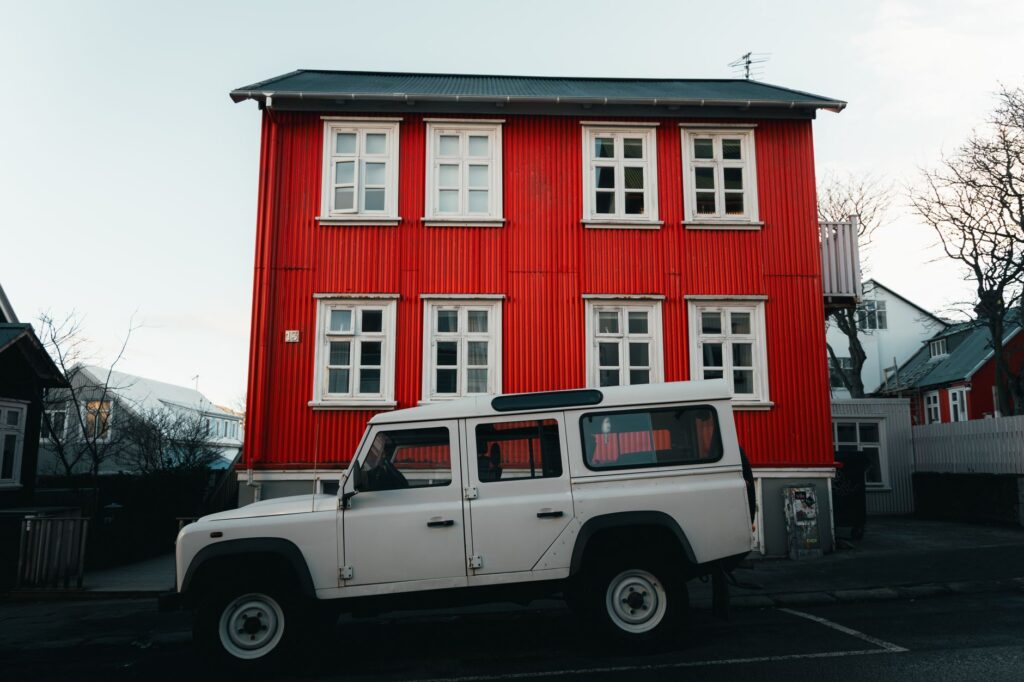
Hafnarfjörður’s heritage is explained not only by its age but by its continuity of use. Many of these houses are private residences, so visits should be made from public space, without entering gardens or private access points.
Contemporary design and culture: the other face of the town
Hafnarfjörður is not only a place of memory. In recent decades it has developed a cultural scene of its own, with galleries, design studios and music spaces that take advantage of the town’s small scale to experiment with more intimate formats.
Contemporary Icelandic design has an interesting observation point in Hafnarfjörður: it is not the Reykjavík shop window, but a place where creators work with local materials and a direct relationship to the environment. Ceramics, textiles and furniture design find here a space for production and exhibition that combines the artisanal with the functional.
Culture in Hafnarfjörður is not organized in large institutions but in small networks that sustain a constant program.
For visitors, this means the cultural offering may be less visible than in the capital, but also more accessible and less crowded. It is worth checking the local program before traveling, as many activities are announced with little notice.
Lava as everyday landscape
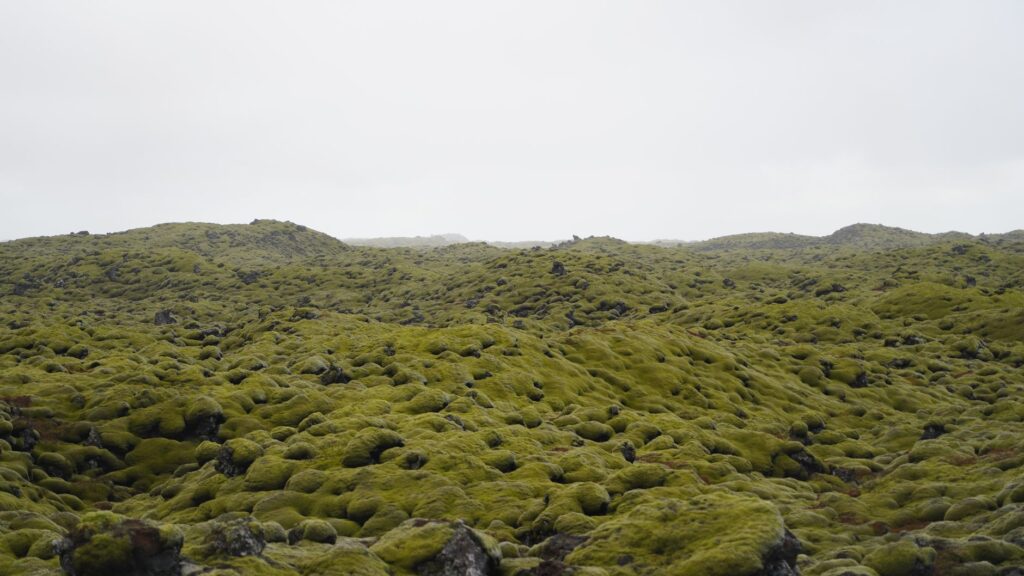
Surrounded by moss-covered lava fields, Hafnarfjörður offers contact with the Icelandic landscape without long journeys. Trails leaving from the center allow walks among volcanic formations and observation of the vegetation that adapts to difficult soil.

This landscape is not a theme park: it is a fragile environment that requires care. The moss covering the lava takes decades to grow and is easily damaged when stepped on. Walking off marked trails has an impact that can last for generations.
The town’s relationship with lava is also symbolic: Hafnarfjörður was built on terrain that geology shaped long before the first settlers arrived. That awareness of geological time permeates the way residents talk about their environment.
Everyday life: the rhythm of a small town
Beyond tourist attractions, Hafnarfjörður functions as a residential town with an active daily life. Schools, public pools and community centers are part of the infrastructure that sustains daily life and that, in Iceland, carries cultural value.
Geothermal pools are a clear example: they are not only a leisure space but a social one where conversations are held and local culture is passed on. For visitors, respecting usage rules and silence in designated areas is a way of integrating into that daily life.
- Public pools have specific schedules and rules that should be checked.
- Respect for shared spaces is part of local culture.
- Neighborhood life is organized around accessible public facilities.
Responsible choices: how to visit without causing harm
Hafnarfjörður receives a growing number of visitors, though it remains a less crowded alternative to Reykjavík. That relative advantage depends on tourism being managed with judgment.

Some concrete decisions make a difference: choosing public transport or carpooling, avoiding excursions that concentrate groups in fragile spaces, shopping at local businesses and respecting schedules and rules in public spaces. Responsible tourism is not a label but a series of small decisions that, added together, determine the impact of a visit.
The town has a limited capacity to absorb visitors without straining daily life. That is why the best time to visit is not necessarily the busiest season, but the one that allows a more unhurried relationship with the place.
Practical guide
Getting there
Hafnarfjörður is about fifteen to twenty minutes by car from downtown Reykjavík, depending on traffic. Public transport connections exist, though frequency may be limited outside peak hours. Check updated schedules before traveling.
When to go
The summer season offers more daylight hours and a broader cultural program. Winter, by contrast, allows a quieter experience, though weather conditions can be demanding. Spring and autumn are good options for those seeking a balance between light and lower crowds.

What to bring
Icelandic weather is changeable: waterproof clothing, thermal layers and footwear suitable for uneven terrain are recommended. For lava trails, footwear that does not damage moss is essential, and marked areas must be respected.
Visiting rules
Respect harbor work zones, do not enter private property and follow trail signs. At public pools, comply with hygiene and silence rules. Icelandic hospitality is based on mutual respect.
A closing facing the water
At the end of the day, when light reflects on the harbor and the lava hills stand against the sky, Hafnarfjörður shows its most honest dimension: a town that works, that preserves and that decides every day how it wants to be visited. There is no single monument that sums up its history, but rather a sum of everyday gestures that keep it alive.
Travelers leaving Hafnarfjörður do not take away a postcard but a question: what it means to inhabit a place without turning it into a spectacle. The answer, as with almost everything in Iceland, lies in the landscape and in the way the community cares for it.