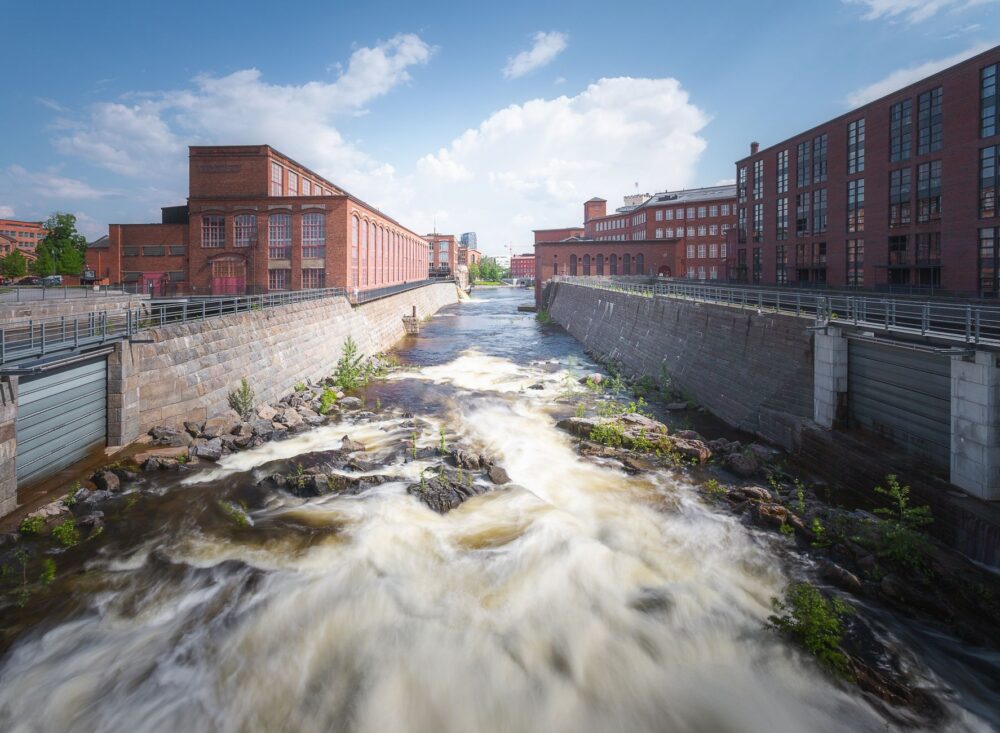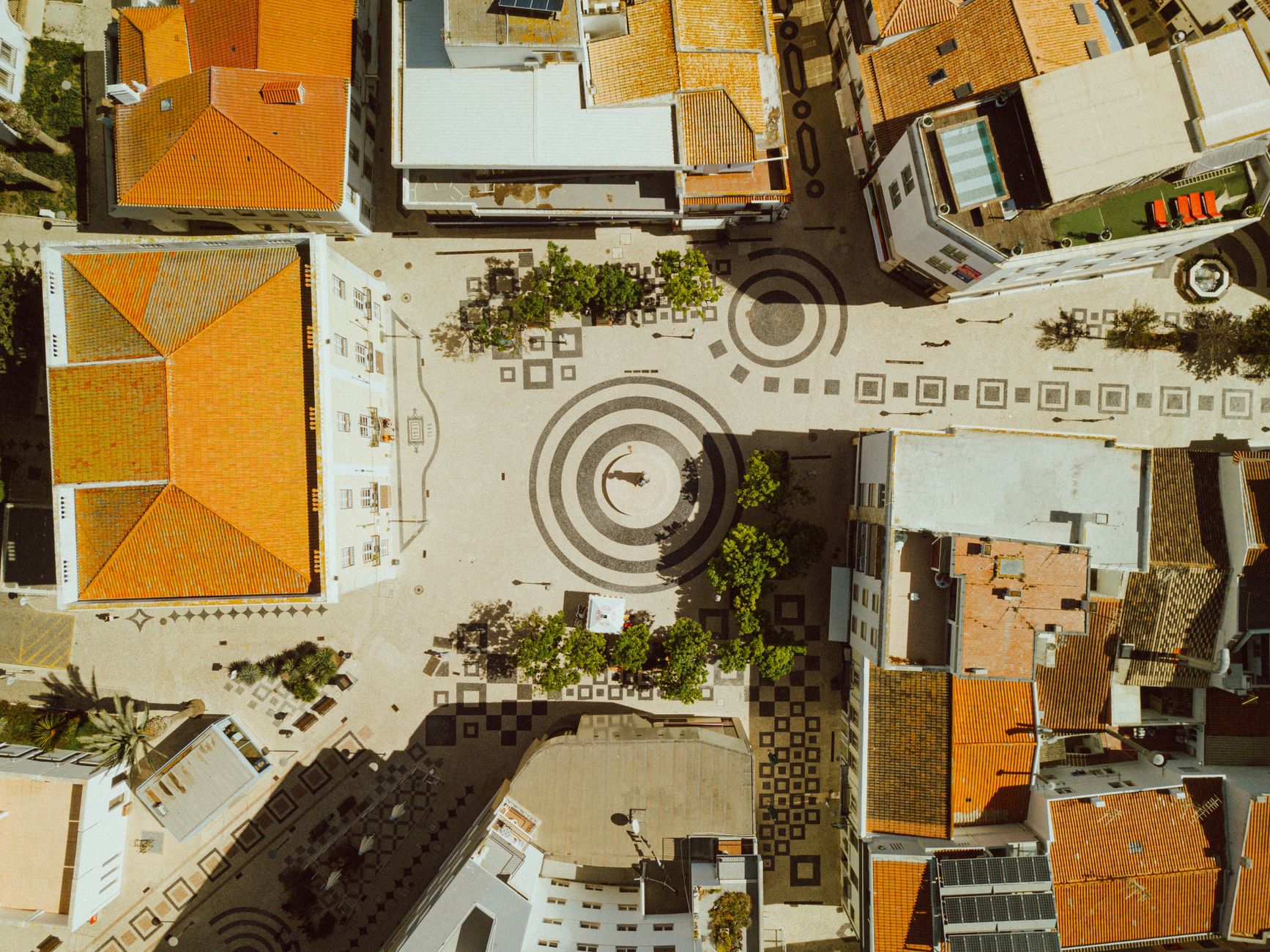

Felgueiras does not feature in the major itineraries of northern Portugal. Yet few towns in the Portuguese interior explain better how a single trade can shape a territory. Located in the district of Porto, at around 348 metres above sea level and with a population of roughly 58,000, this city of functional streets and a working atmosphere has built much of its identity around shoemaking. It is not a monumental postcard or a quick-escape destination: it is a place where daily life unfolds between factory shifts, neighbourhood cafés and a network of rural paths that still keep the rhythm of the Sousa valley.
Those who arrive looking for spectacular heritage may leave with the feeling of having found something less showy and more interesting: a town that works, that keeps its churches and squares, and that offers visitors the chance to understand a living industrial landscape without giving up walking, shared meals and unhurried conversation.
A town that explains itself from the workshop
The recent history of Felgueiras is tied to the industrial transformation of Portugal’s northern interior. Shoemaking, a craft activity for generations, gradually became the economic engine of the municipality and its surroundings. Today the town preserves that imprint in its urban fabric: medium-scale industrial buildings, family workshops and a work culture that can be sensed in schedules and conversations.
For visitors, the interest lies not in touring a specific factory or seeking a commercial experience, but in understanding that Felgueiras is a productive landscape. Walking through its industrial areas shows how economic activity has been integrated into daily life without turning the town into an impersonal estate. Local identity is read better on the street than in brochures.
In Felgueiras, the landscape is not a backdrop: it is the result of a trade that has organised the time and space of several generations.
Religious heritage as a point of reference
Like much of northern Portugal, Felgueiras organises its social life around parishes and heritage on a human scale. The churches and chapels of the municipality, spread across its different parishes, act as landmarks in the landscape and as meeting places on key dates in the calendar.
This is not an exceptional monumental ensemble, but heritage integrated into everyday life. The church of Santa Eulália, in the parish of Margaride, and other temples across the municipality are part of that discreet fabric that gives shape to neighbourhoods. Walking through them without haste, respecting worship times and the silence of the spaces, allows visitors to understand how community life is organised in this part of the Portuguese interior.

How to approach parish heritage
Parish churches in this part of Portugal are not usually open all day as visitor attractions; they open around services and local devotions. A respectful approach consists of checking the parish notice board, attending a mass as an observer rather than a spectator, and dressing with the same care one would use in any place of worship. Outside service times, the churchyard and the surrounding square often say as much about community life as the interior itself: benches, shade, a small café nearby, the coming and going of neighbours.
It also helps to remember that many of these temples are modest in scale and decoration. Their value is not artistic spectacle but continuity: they mark the rhythm of baptisms, festivals and funerals, and they anchor the identity of parishes that grew around them long before industry arrived.
The Sousa valley and the paths around it
Felgueiras sits in a transition zone between the densely urbanised coast of Porto and the first mountain foothills of the interior. The Sousa river, which crosses the municipality, organises a landscape of gentle valleys, crops and small farms that resist on the margins of industrial activity.
Walking the rural paths of the municipality’s parishes is one of the simplest and most rewarding ways to know the territory. Trails between vineyards, maize fields and riverside woods reveal that Felgueiras is not only an industrial town: it is also a municipality with an active, if discreet, rural life.
- Paths between parishes offer low-difficulty routes, suitable for walking without technical equipment.
- Spring and autumn are the most pleasant seasons to explore the valley, with mild temperatures and changing scenery.
- Comfortable shoes and water are recommended, as services in rural areas are limited.
Reading an agricultural landscape
The smallholdings around Felgueiras follow a pattern common across the Portuguese northwest: narrow plots, mixed crops, stone walls and water channels that predate mechanisation. Walking through them is an exercise in reading layers. A maize field may sit beside a vineyard; a stone threshing floor may survive next to a modern shed. None of this is signposted as heritage, and that is precisely the point: it is a working countryside, not a museum.
Visitors who slow down will notice how the valley connects the town to its parishes. Roads that begin as ordinary streets thin into lanes, then into tracks between fields. That continuity between urban and rural is one of the most distinctive features of Felgueiras, and one of the easiest to miss if the visit is limited to the centre.

The interior table: simple, seasonal and shared
The gastronomy of Felgueiras follows the logic of Portugal’s northern interior: hearty stews, braised meats, local sausages and a pastry tradition linked to festivals and parishes. This is not avant-garde cooking but a cuisine of resourcefulness and season, designed to feed those who work.
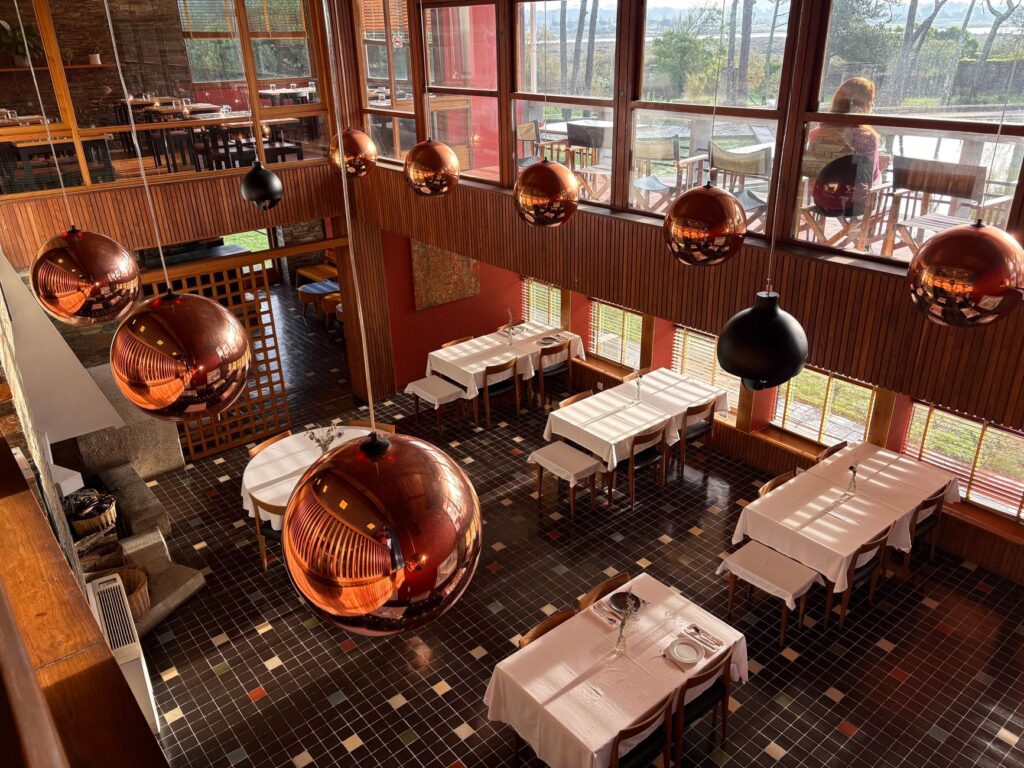
The cafés and taverns of the centre and the parishes remain spaces of social life where visitors can eat without pretension and at moderate prices. The recommendation, in any case, is the usual one: ask about the dishes of the day, respect local schedules and do not expect a tourist offering that the town has not built.
The hospitality of Felgueiras is not advertised: it is practised at the shared table and in unhurried conversation.
Meal times and small rituals
In this part of Portugal, lunch is still the main meal of the day, and many kitchens close their doors in the mid-afternoon. Arriving outside the usual hours may mean finding only a coffee and a sandwich. Adapting to that rhythm is part of the experience: it forces the visitor to plan less and observe more. The same applies to Sundays and public holidays, when family lunches take priority over commercial service.
Coffee culture deserves a note of its own. A short espresso taken standing at the counter, a pastry from the parish festival, a glass of local wine at the end of the day: these are small rituals that structure social time and offer the traveller a natural point of contact with residents, provided the approach is discreet and unhurried.
What it means to visit a place that works
Felgueiras poses an unusual question to travellers: how do you visit a town that was not designed for tourism? The answer involves adopting a respectful and curious attitude, avoiding the consumer’s gaze and accepting that the interest of the place lies in its daily life.
This implies some practical decisions: not entering industrial spaces without authorisation, not photographing workers without consent and not expecting a guided experience where none exists. In return, visitors find an authentic town, with modest but coherent heritage and a scale that invites walking.
A code of conduct for the curious visitor
Responsible visiting in a working town begins with a simple principle: the town is not a stage. Factory gates, loading bays and warehouse yards are workplaces, not attractions. Photographs of people require consent, and photographs of premises usually require permission. If a workshop or an industrial building interests you, ask at the local parish council or a nearby café whether there is any legitimate way to learn more; often the honest answer is no, and that answer should be accepted without insistence.
The same courtesy applies to residential streets and parish squares. Felgueiras is a place where people live, and the visitor’s presence is most welcome when it does not interrupt. That restraint is not a limitation but a form of respect that makes the encounter more genuine.
Industrial heritage and the memory of a trade
Although Felgueiras does not have a major internationally renowned shoemaking museum, the memory of the trade is present in the landscape and local culture. Industrial buildings, warehouses and the former houses of merchants are part of a heritage that deserves an attentive and respectful look.
For those interested in the economic history of the Portuguese interior, Felgueiras is an accessible case study: it shows how a craft activity became industry without completely erasing the traces of the past. That reading requires, however, some patience and a willingness to observe rather than consume.
What to look for in the urban fabric
Industrial heritage here is rarely monumental. It appears in the scale of the buildings, in the names painted on old facades, in the relationship between workshops and the houses of those who worked in them. A walk through the areas where production is concentrated reveals a settlement pattern organised around work: wide access roads for vehicles, modest residential streets nearby, and a centre that grew to serve both.
Understanding that pattern does not require specialist knowledge. It requires curiosity about how a town earns its living, and the willingness to see economic history as part of cultural heritage rather than something separate from it.
A town to walk without a fixed itinerary
The centre of Felgueiras is not a monumental old town, but it is a functional and legible urban space. The square, public buildings and commercial streets concentrate daily life and allow visitors to explore the town in a short time, without the need for a rigid plan.
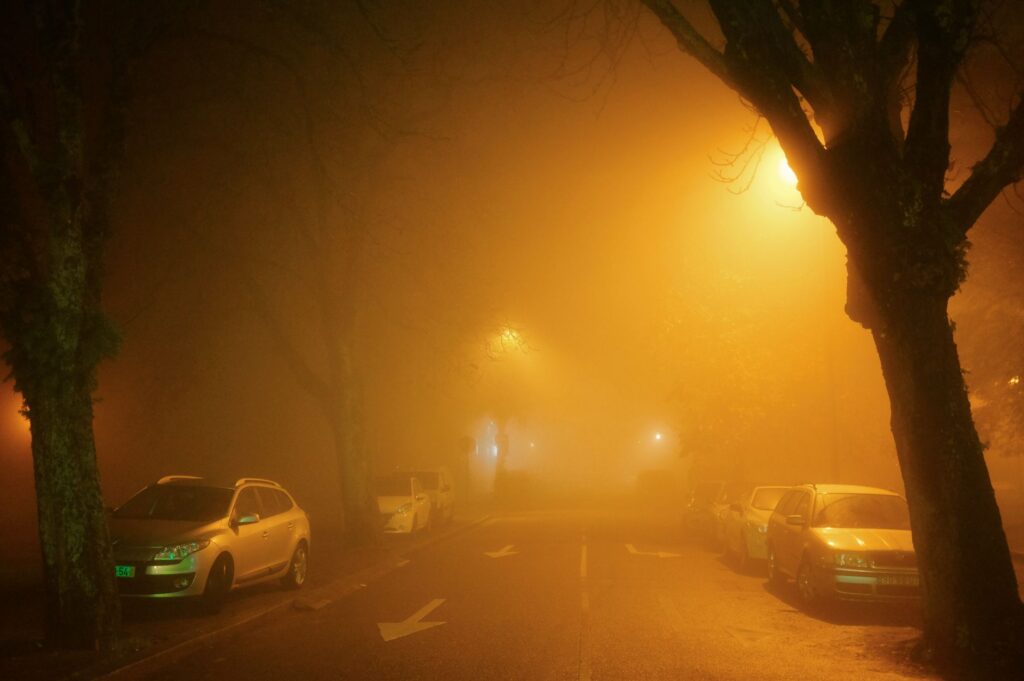
Walking without a fixed itinerary is perhaps the best way to know Felgueiras: stopping at a café, observing the rhythm of the streets, listening to conversations and accepting that the interest of the place lies in its normality. Here the journey is not measured in monuments visited but in the quality of attention paid.
Walking with attention
A useful method in a town like this is to choose a single theme per walk. One day, follow the parish churches; another, trace the edge where the town meets the fields; another, walk the streets where workshops and warehouses cluster. Each route is short, and none requires special equipment. What they require is the patience to notice repetition and variation: the same café filled at the same hour, the same corner where neighbours stop to talk.
This kind of walking also reveals the town’s geography. Felgueiras sits at around 348 metres above sea level, and the gentle slopes of the municipality become apparent as you move away from the centre. The views open towards the valley, and the relationship between the built town and the surrounding countryside becomes legible without a map.
Practical guide
Felgueiras is located in the district of Porto, in northern Portugal, at an average altitude of around 348 metres and with a population of approximately 58,000. The usual access is by road from Porto, and public transport connects the municipality with nearby towns, although frequencies are limited in rural areas.
- Best time to travel: spring and autumn, for mild temperatures and lower visitor numbers.
- What to bring: comfortable walking shoes, water and sun protection in summer.
- Language: Portuguese; English is understood in tourist contexts but not widely spoken.
- Local respect: avoid entering industrial spaces without authorisation and respect worship times.
- Budget: moderate; accommodation and dining options are limited and locally scaled.
- Mobility: a car is useful for reaching rural parishes, where public transport is scarce.
- Planning: check opening hours of cafés and churches locally; do not assume tourist-office services.
Felgueiras is not a destination for those seeking spectacle, but for those who value the coherence of a place that has not betrayed its identity. That is perhaps its greatest virtue: offering travellers the chance to know a real town, with its factories, churches and paths, without intermediaries or artifice.