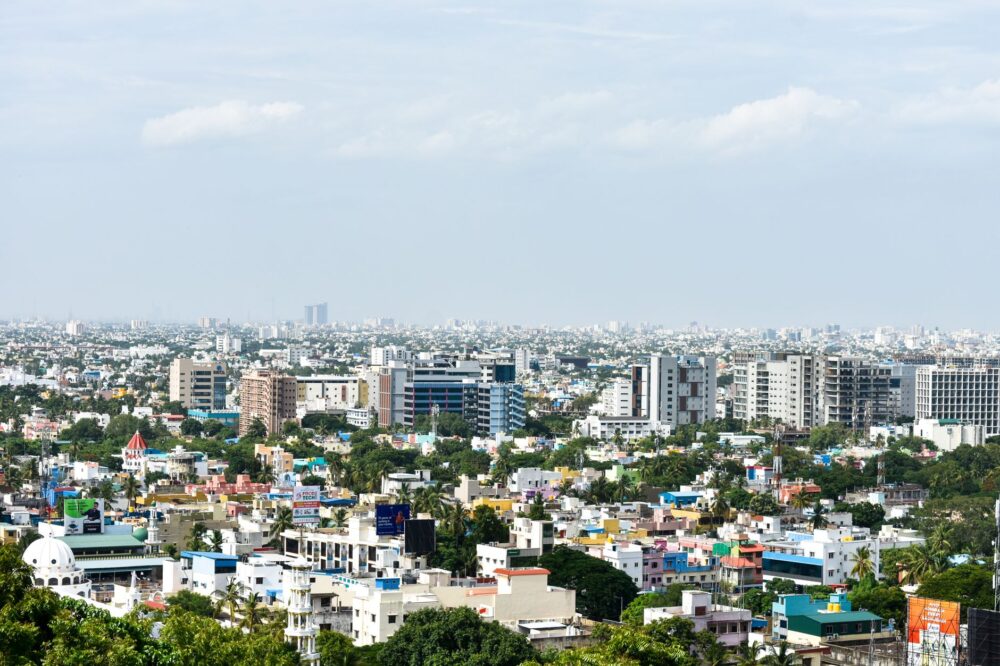
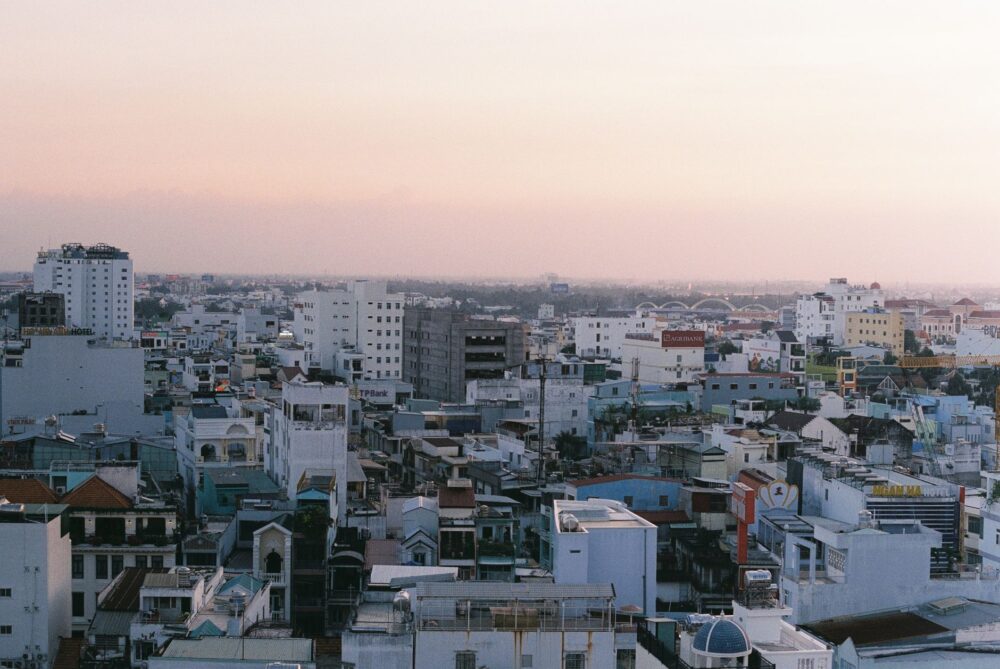
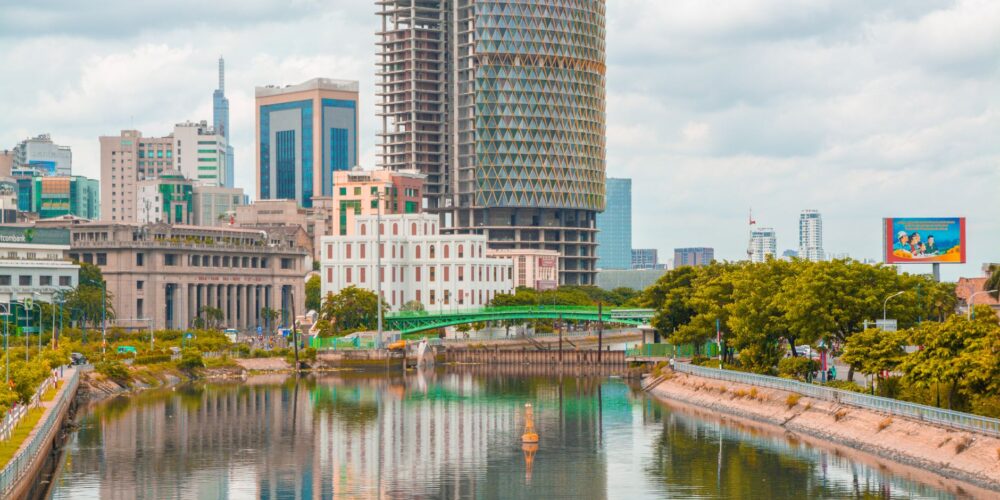
In western Ho Chi Minh City, District 10 — Quận Mười to its residents — occupies a dense, working-class strip that rarely appears in tourism brochures with the insistence of other neighbourhoods. Yet its 399,000 residents, according to Vietnamese geographic records, live within one of the city’s most instructive urban fabrics: bridges crossing the canal, alleys that fold back on themselves and a bus network linking the district to the wider metropolis.
Understanding how Quận Mười moves is understanding how much of Saigon works outside the financial centre. There is no single architectural landmark here that justifies the trip on its own, but rather an everyday system that asks visitors to observe, ask questions and adapt. This report proposes a reading of the district through transport, ordinary heritage and the responsible decisions of those who travel through it.
A district understood through its canal
The Đôi canal and its branches have historically marked the edge of District 10 and its relationship with neighbouring areas. For decades, those waters were a physical and social boundary; today they remain a reference point for orientation. Pedestrian bridges and small crossings over the canal act as seams between neighbourhoods and as points where informal commerce concentrates.
For visitors, the canal offers a first practical lesson: in Saigon, geography is read not only in avenues but in waterways and in the way streets wrap around them. Walking beside the canal reveals how commerce is organised, where motorbikes stop and which areas are best avoided after dark.

In Quận Mười, the canal is not a backdrop: it is infrastructure that orders commerce, bridges and the way residents walk.
The alley as a unit of life
Much of the district’s life takes place in its alleys, or hẻm, a network of narrow passages branching away from the main avenues. Homes, workshops, small shops and food stalls coexist there. For travellers, entering an alley requires discretion: these are residential spaces, not tourist attractions.
The practical advice is to move through alleys with the same logic as a resident: on foot, unhurried and without intruding on private homes. The alley also explains why the motorbike remains the dominant mode of transport: many addresses are inaccessible to a car, and goods are delivered by hand or with small carts.
What to notice in a hẻm
- Local signage, which usually indicates the house number and the name of the alley.
- Water points and electrical connections, which reveal how housing has adapted over time.
- Neighbourhood businesses: grocery shops, repair workshops and food stalls serving residents.
How public transport is organised
District 10 forms part of Ho Chi Minh City’s bus network, which connects the western districts with the centre and with intercity transport hubs. The network is extensive and inexpensive, but it requires some familiarity: stops are not always clearly marked and routes can change depending on the hour and the day.
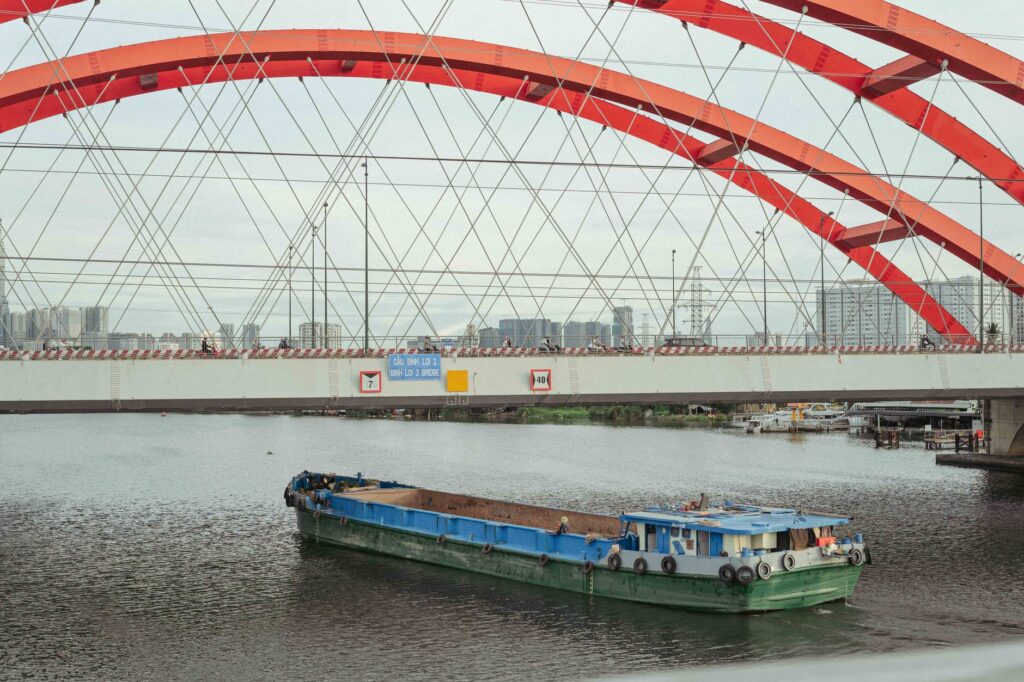
For visitors, the advice is to check up-to-date information at the time of travel rather than relying on timetables printed in older guides. Mapping applications usually reflect active lines, but it is worth confirming the information with staff at the stop or with the driver.
The bus in Quận Mười is not an attraction: it is how thousands of people cross the city every day to work, study or shop.
Motorbike taxis, apps and the logic of the short trip
In District 10, short journeys are the norm. Traditional motorbike taxis and ride-hailing apps compete for the same market of trips covering only a few kilometres. For visitors, the app has the advantage of fixing the price before getting on, while the traditional motorbike taxi requires negotiation and some knowledge of the going rate.
It is important to remember that helmets are compulsory and that the rider should provide one in suitable condition. If the helmet does not look safe, it is reasonable to decline the ride. Caution is not an overreaction: Saigon’s traffic is dense and short distances can become long journeys at peak hours.
Ordinary heritage: temples, markets and neighbourhood memory
Quận Mười preserves a neighbourhood life with local temples, nearby markets and community associations that sustain its social fabric. These are not grand monuments but an ordinary heritage expressed in domestic architecture, family altars and the festivities that mark the calendar.

Visitors who wish to know that heritage should do so respectfully: ask before taking photographs, do not interrupt religious ceremonies and avoid visiting private homes without an invitation. The best approach is through markets and public spaces, where neighbourhood life shows itself without being forced.
A market as a starting point
The district’s markets work as unofficial information centres: there you can ask for an address, understand which bus lines pass nearby and observe how local commerce is organised. Visiting a market requires patience and, above all, a willingness not to turn a purchase into a spectacle.
Eating in the district: everyday cooking
District 10’s food offer is that of a city that eats in the street and in small family-run eateries. The most common dishes belong to everyday Vietnamese cooking: soups, rice dishes, noodles and grilled preparations served in simple portions at prices suited to the neighbourhood.
For visitors, the advice is to choose stalls with a high turnover of customers and to observe hygiene conditions before sitting down. This is not about suspicion but about applying the same standard one would use in any city in the world. Drinking bottled water and avoiding ice of uncertain origin remain reasonable precautions.

Moving with judgement: time, distance and safety
District 10 is not a destination to be covered with a rigid itinerary. Distances look short on a map, but traffic and the alley network stretch journeys. It is worth grouping visits by area and allowing time for unexpected delays.
As for safety, the precautions are those of any large city: do not display valuables, keep your phone out of sight in the street and avoid poorly lit areas at night. Crime does not define the district, but caution is part of a responsible visit.
Practical guide
Before travelling, check official information on visas and entry requirements for Vietnam, as well as current health recommendations. Within the city, the bus network and ride-hailing apps cover most visitor needs, but information changes frequently and should be checked at the time of travel.

- Best time to walk: early morning and late afternoon, when the heat eases and street commerce is active.
- Payment: cash remains useful in markets and small shops; carry small notes.
- Clothing: light clothes and comfortable shoes; when visiting temples, cover shoulders and knees.
- Photography: ask permission before photographing people or homes.
- Health: bottled water and sun protection throughout the year.
Visiting Quận Mười does not require a large budget, but it does require a particular disposition: understanding that this is a residential district and that the traveller is a guest. That attitude, more than any itinerary, is what allows the place to be known without disrupting its daily life.
The district that needs no shop window
At the end of the day, the bridges over the canal resume their role as seams between neighbourhoods and the alleys fill again with domestic life. Quận Mười does not compete for visitors’ attention with grand monuments, but it offers something harder to find: the chance to observe how a dense, working-class city functions without that life having become a spectacle.
For those who travel with time and curiosity, District 10 is a lesson in everyday urbanity. The final advice is simple: move slowly, ask before acting and remember that the best testimony to a neighbourhood is the respect with which it is travelled.