Algueirão does not appear on Sintra’s postcards. There is no colourful palace here, no romantic garden drawing coachloads of visitors. Yet in this parish of the Sintra municipality, some thirty kilometres from central Lisbon, lives one of the largest communities in the metropolitan area. To understand Algueirão is to understand how identity is built in a territory that grew fast, between railway lines and housing estates, and that now seeks its place on Portugal’s cultural map.
The locality, which forms the parish of Algueirão-Mem Martins together with its neighbour, offers visitors something different from the usual circuits: a look at everyday life on Lisbon’s periphery, with its discreet heritage, its markets, its associations and its cultural practices. It is not a destination for grand monuments, but a place where heritage is measured in gestures, routines and shared spaces.
A parish that recognises itself in its double name
The parish of Algueirão-Mem Martins, in the municipality of Sintra, Lisbon district, brings together two urban centres that share an administration and, to a large extent, daily life. The double name is not a minor detail: it reflects the history of two places that grew separately and today form an urban continuity that is hard to separate at first glance.
Algueirão appears in geographical records as a population centre of considerable size, with tens of thousands of inhabitants, within one of the most populous parishes in the country. That scale explains much of what visitors find: a dense urban fabric, local services, railway stations and an associative life that sustains much of the cultural activity.
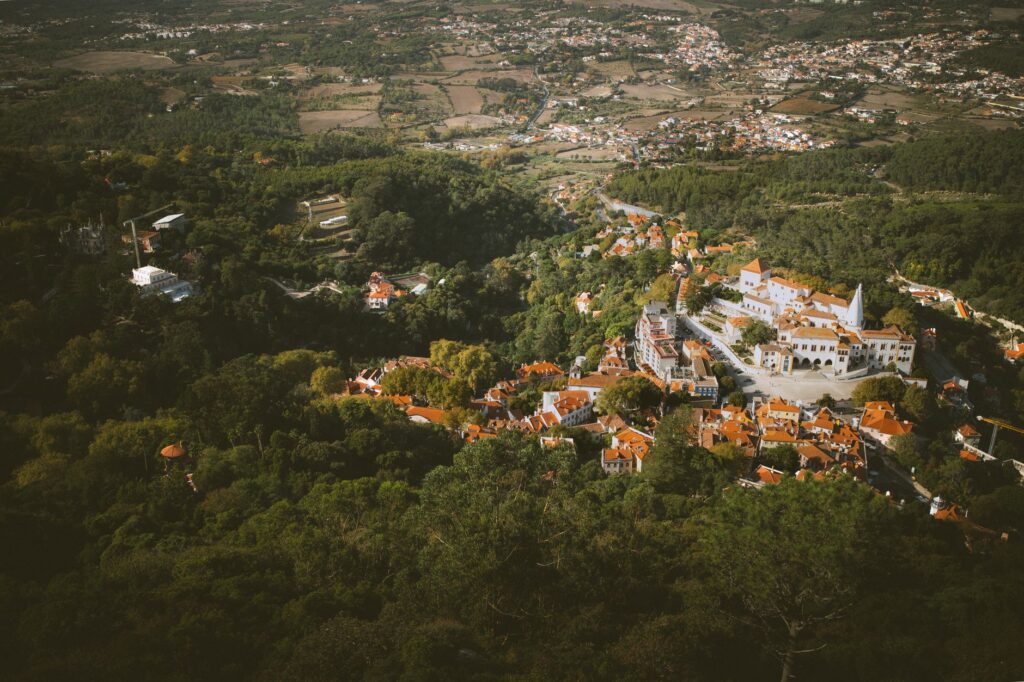
On the metropolitan periphery, culture does not always occupy large facilities: it is often organised in small halls, squares and venues that the community maintains with effort.
The railway as the backbone of the territory
The Sintra line, which connects the capital with the municipality, crosses the parish and has shaped its development. The stations of Algueirão-Mem Martins and Mercês function as gateways for a population that largely works or studies outside the municipality. That dependence on the railway has shaped a particular urban landscape: shops beside the stations, streets leading to the entrances and a life organised around train timetables.
For visitors, that train is not just a means of transport: it is a way of reading the territory. A journey from Lisbon reveals how the landscape shifts from urban density to the hills of Sintra, and how Algueirão presents itself as a place of transition between the city and the mountains.
Discreet heritage: churches, estates and rural memory
Although urban growth has transformed much of the territory, Algueirão preserves traces of its rural past. The parish church and some buildings linked to former estates and farms remind us that, until a few decades ago, this was a landscape of fields, paths and small settlements.
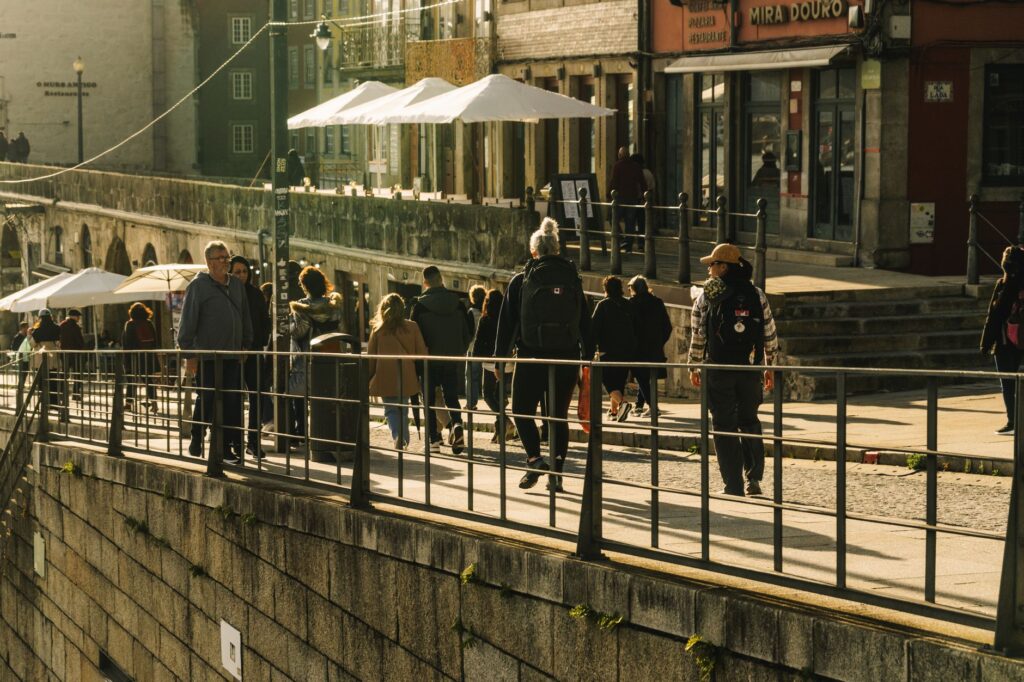
That heritage is not always monumental, but it is significant. Traditional buildings, stone walls and the open spaces that still resist amid the construction allow us to reconstruct a history that does not appear in general guides to Sintra. Those who wish to understand it should walk the streets paying attention to details: the tiles on facades, the ironwork, the street names and the traces of a popular architecture that speaks of those who lived here before the expansion.
Cultural life on the periphery: associations and meeting places
Algueirão’s cultural activity is sustained largely by associations, collectives and local facilities. Venues, libraries, social centres and municipal spaces host workshops, concerts, theatre and activities for all ages. It is not an offer comparable to the major tourist circuits, but it has a valuable characteristic: it is designed for those who live there.
That everyday dimension is what visitors can appreciate if they take an interest in local programming. It is advisable to check municipal channels and association networks before travelling, as the schedule varies and is not always aimed at outside audiences. Culture here is, above all, a local service.
The market and the square as spaces of sociability
The markets and squares of the parish serve a function that goes beyond shopping: they are places of encounter, exchange and oral transmission. There one can observe the diversity of a population that includes long-established families and communities from other countries, especially Portuguese-speaking African countries and Brazil.
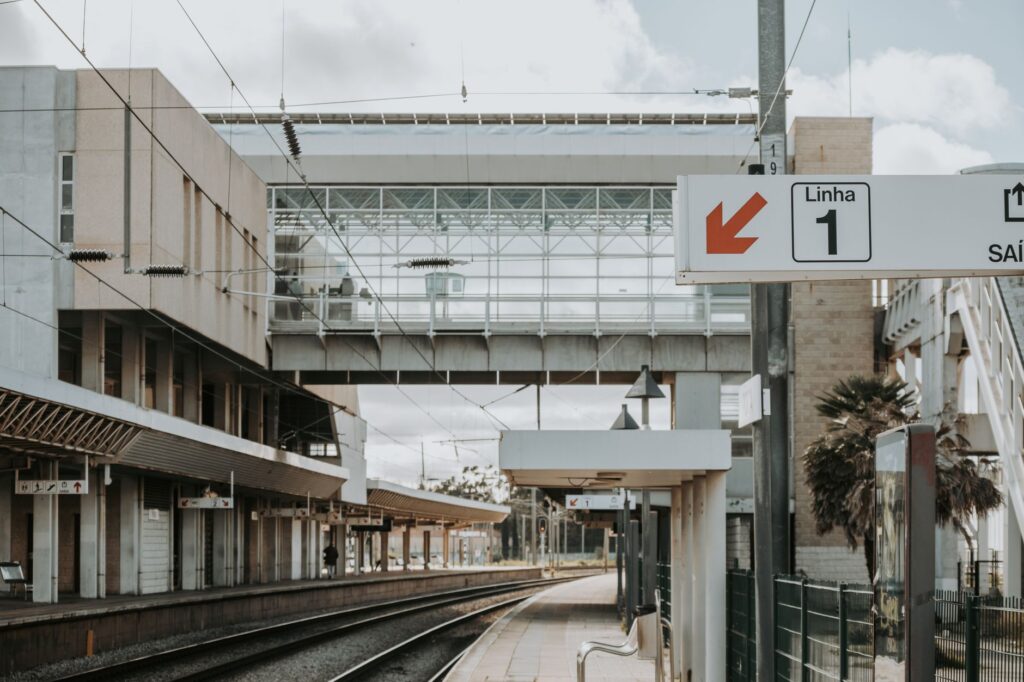
That mix is reflected in local gastronomy, in shops and in the languages heard in the street. For travellers interested in everyday life, spending a morning in a neighbourhood market offers more information about the place than any monument.
Urban art and contemporary expressions
As in many metropolitan peripheries, urban art has found space in Algueirão. Murals and paintings on walls and facades reflect local concerns and add colour to an often grey urban landscape. It is not an organised circuit, but scattered interventions to be discovered on foot.
That art does not replace historical heritage, but it dialogues with it: it shows how a young and diverse community reinterprets its surroundings. For visitors, it is an invitation to look carefully and to respect public space for what it is: a shared place.
Local food: between Portuguese tradition and migrant influence
Algueirão’s food offer combines traditional Portuguese cooking with flavours from elsewhere. Cafés, taverns and neighbourhood restaurants serve simple dishes, often at accessible prices, and become spaces where conversation and conviviality are part of the experience.
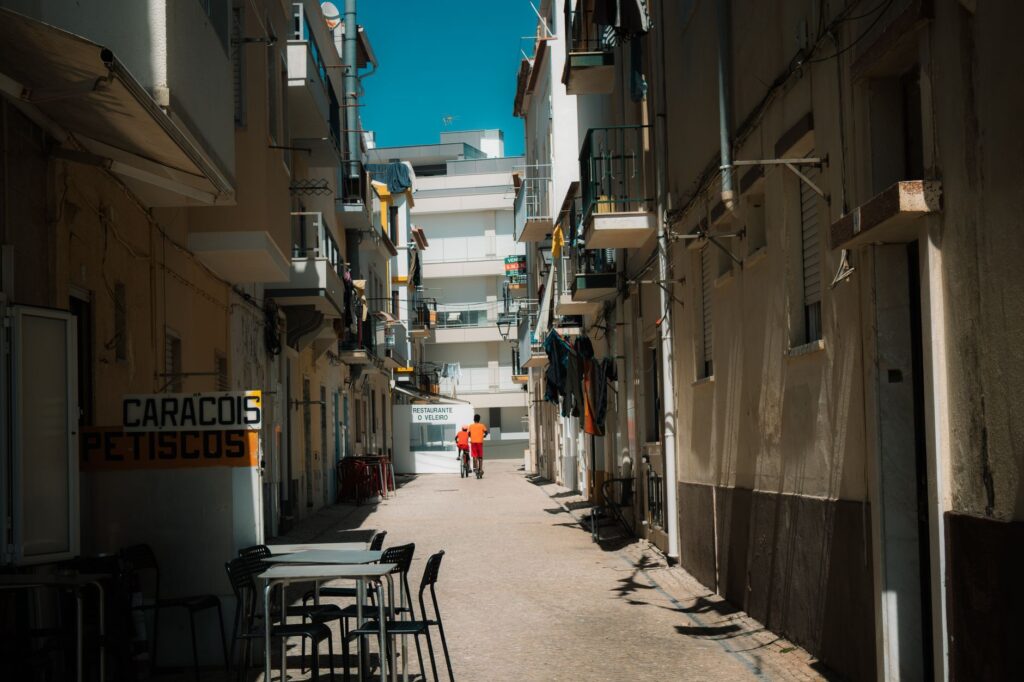
There is no need to look for fine dining or grand shopfronts here. The richness lies in the mix: a traditional bacalhau alongside a dish of Brazilian or African influence, a coffee taken standing at the bar, a conversation with whoever serves you. It is a cuisine that speaks of the place’s recent history.
Responsible choices for visitors
Algueirão is not a mass destination and it is better that it remains so. Responsible visitors should approach everyday life with respect, avoid treating neighbourhoods as stage sets and spend in local businesses. It is also advisable to check public transport and travel by train or bus, as parking can be difficult in denser areas.
The parish is part of the municipality of Sintra, whose historic centre is a UNESCO World Heritage Site. That proximity allows visitors to combine a trip to the major attractions with an incursion into the periphery, but Algueirão should not be reduced to an extension of the palace: it has its own identity and deserves to be seen in its own right.
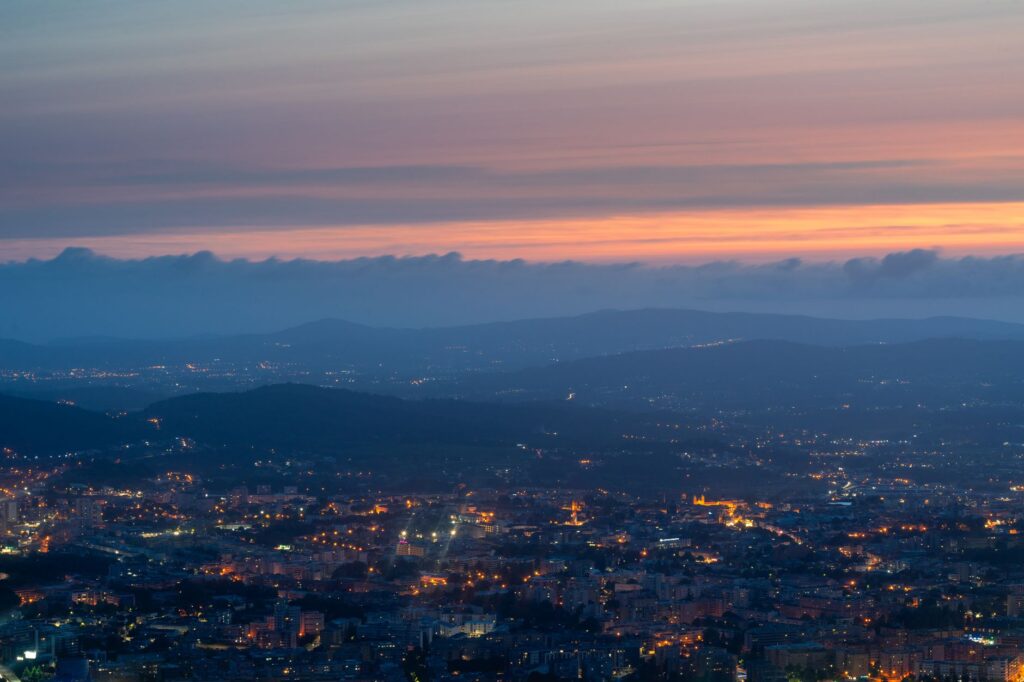
Travelling to the periphery requires changing the question: not what there is to see, but how life is lived here and what we can learn from it.
A place in transformation
Algueirão is a territory in motion. Its demographic growth, urban pressure and the diversity of its population make it a privileged observatory of the changes sweeping through the Lisbon metropolitan area. For the curious traveller, it offers a valuable lesson: culture is not only in the great museums, but also in the way a community organises its daily life.
Walking its streets, pausing in its squares and listening to its conversations is a way of understanding Portugal beyond clichés. There is no need to invent experiences: it is enough to look carefully and respect the place.
Practical guide
- Getting there: Algueirão-Mem Martins has railway stations on the Sintra line, which connects with Lisbon. The journey is a comfortable and frequent option; check updated timetables before travelling.
- When to go: Spring and autumn offer mild temperatures. Summer can be busy across the Sintra region; those seeking calm should avoid the busiest weekends.
- What to see: The parish church, traces of former estates, the local market and urban art interventions. Walking slowly and paying attention to details is recommended.
- Where to eat: Neighbourhood cafés and taverns offer simple cooking at accessible prices. Look for places frequented by locals.
- Transport: The train is the most practical option from Lisbon. Within the parish, urban buses connect the different centres.
- Respect: This is a lived-in place, not a theme park. Avoid unnecessary noise, respect public space and spend in local businesses.
- Language: Portuguese is the main language. English is understood in many tourist establishments, but not in all neighbourhood shops.
- Information: Check the official channels of the Sintra municipality and the parish for cultural programming and available services.
A final look
Algueirão does not pretend to compete with the great destinations. Its value lies elsewhere: in the authenticity of an everyday life built between stations, markets and associations. For those who approach with curiosity and respect, the parish offers a lesson in how communities create culture on the margins of tourist circuits. It is not a place to consume quickly, but to observe calmly and take away a fuller idea of what it means to live in Portugal today.