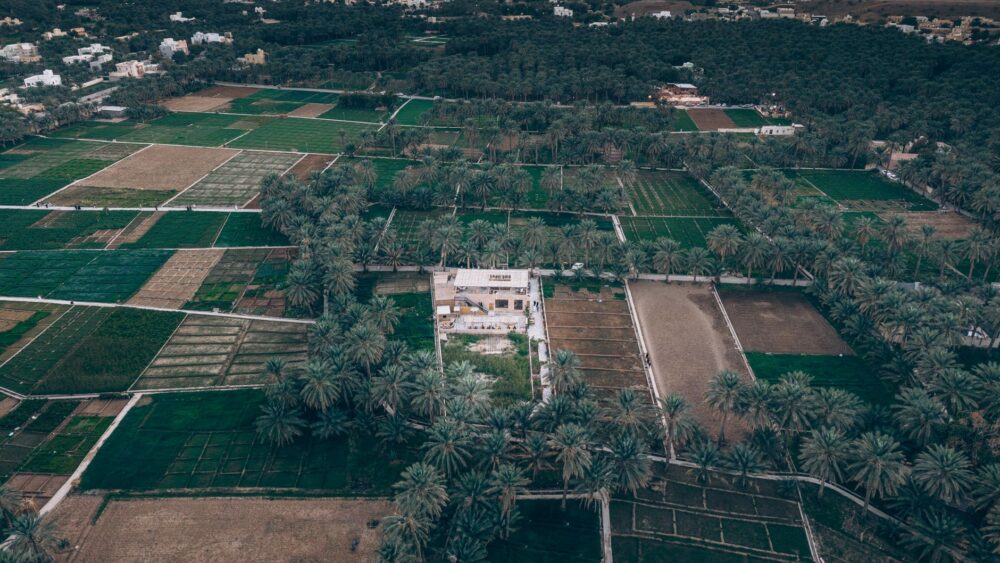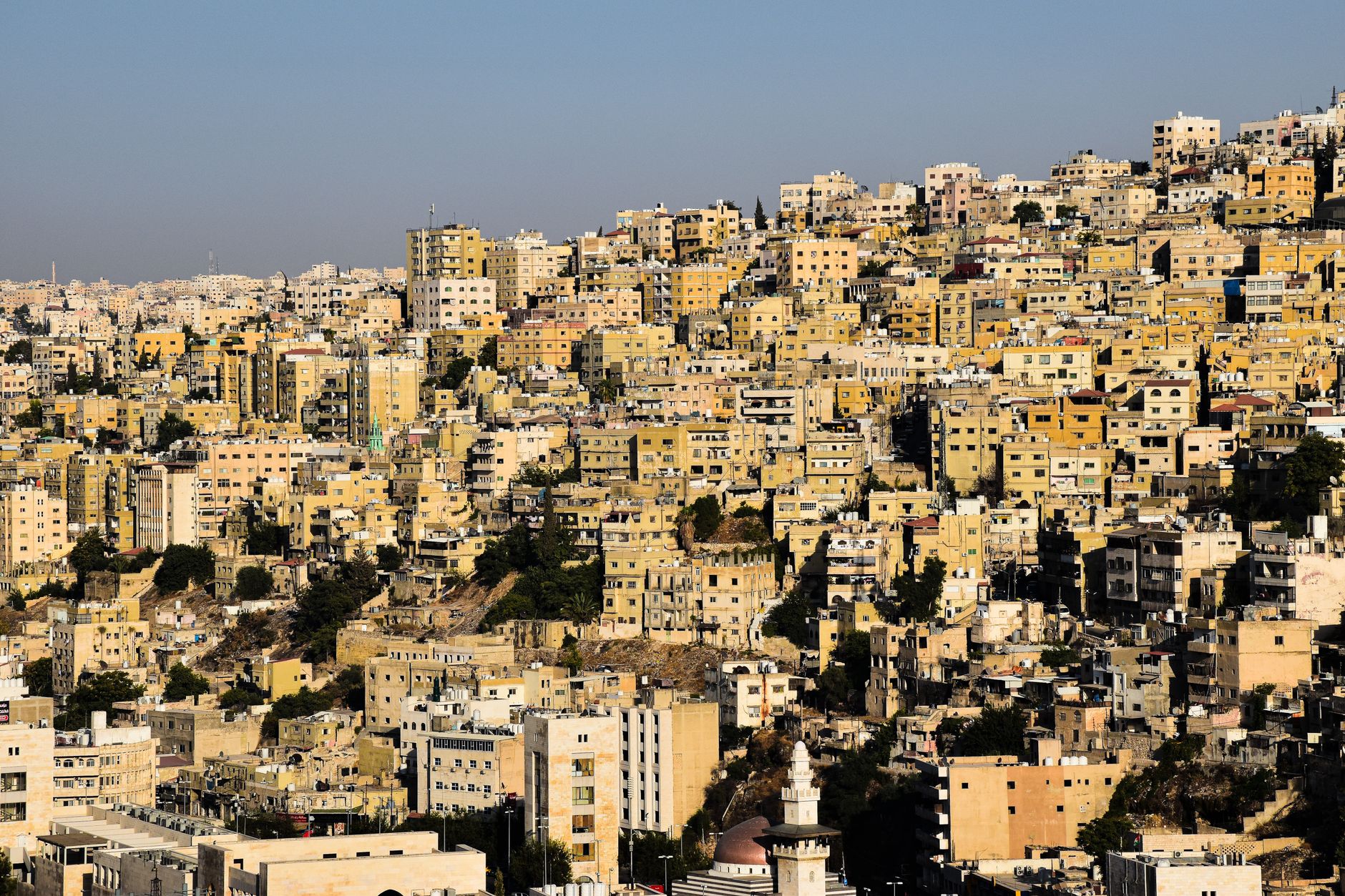

Al Jubayhah spreads across a limestone plateau northwest of Amman, at around 989 metres above sea level, in Jordan. What for decades was a cluster of villages and farmland is now one of the most populated areas of greater Amman, with just over 46,000 residents recorded in its administrative core. The figure, however, does not explain what you see: a daily life that mixes the rural memory of its first inhabitants with the activity of a university that sets timetables, buses and cafés.
Those who arrive looking for a monument will not find one. Al Jubayhah is explored on foot, among bakeries, stone walls and streets that rise and fall. Its interest lies not in a single building but in how a place in Jordan has been transforming its identity without entirely losing the pulse of a neighbourhood.
A plateau that grew in layers
The recent history of Al Jubayhah is the history of Amman’s expansion. Until the mid-twentieth century, the area was known for its rain-fed fields, olive groves and limestone quarries, the material used to build much of the surrounding housing. As the Jordanian capital grew, those plots were divided and the place moved from village to residential district, and later to the seat of one of the country’s largest universities.
That transition left visible traces. There are streets where recent apartment blocks coexist with one- or two-storey houses, enclosed courtyards and stone walls that keep the pale colour of the land. It is not a homogeneous whole, and that is precisely why it is interesting: Al Jubayhah reads as an archive of how Jordan has managed its urban growth.
The university as the neighbourhood clock
The main campus of the University of Jordan occupies a significant part of the sector and works as a clock that orders the day. In the morning, traffic concentrates on the access roads; at midday, cafés and food stalls nearby serve students and staff; in the afternoon, the pace slows and the streets recover a more domestic tone.
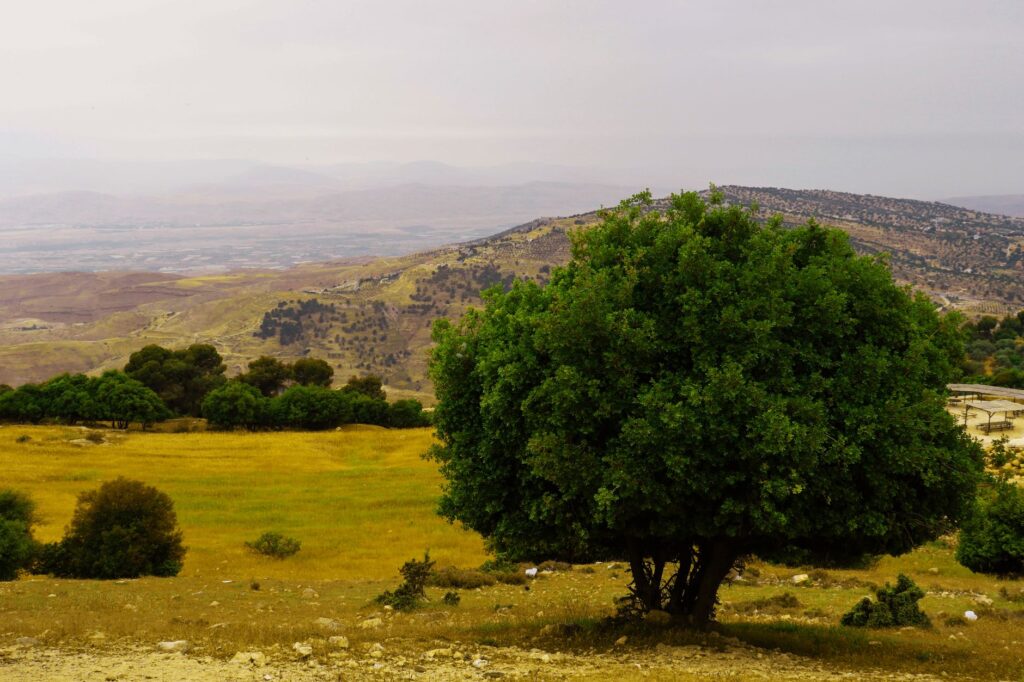
For the visitor, that dynamic offers an advantage: it allows you to observe daily life without entering private spaces. Simply walk along the pavements near the campus, respect the entrances and do not photograph people without permission. The university is not a tourist attraction in itself, but it explains why the neighbourhood has the vitality it does.
Limestone, olives and rural memory
Limestone is the material that gives the place its character. It appears in walls, façades and kerbstones, and also in the quarries still visible in the surroundings. That pale stone, which reflects light intensely in summer, connects the built landscape with the natural landscape of the plateau.
Alongside it, traces of the agricultural past survive: scattered olive groves, family gardens and the occasional open plot between housing blocks. They do not form a continuous landscape, but they recall that Al Jubayhah was, before it was a neighbourhood, countryside. The olive tree, present in Jordanian culture, remains a useful symbol for understanding that past.
In Al Jubayhah, heritage is not behind glass: you walk on it, cross it on a pavement and recognise it in the colour of a façade.
What can be visited without intruding on private life
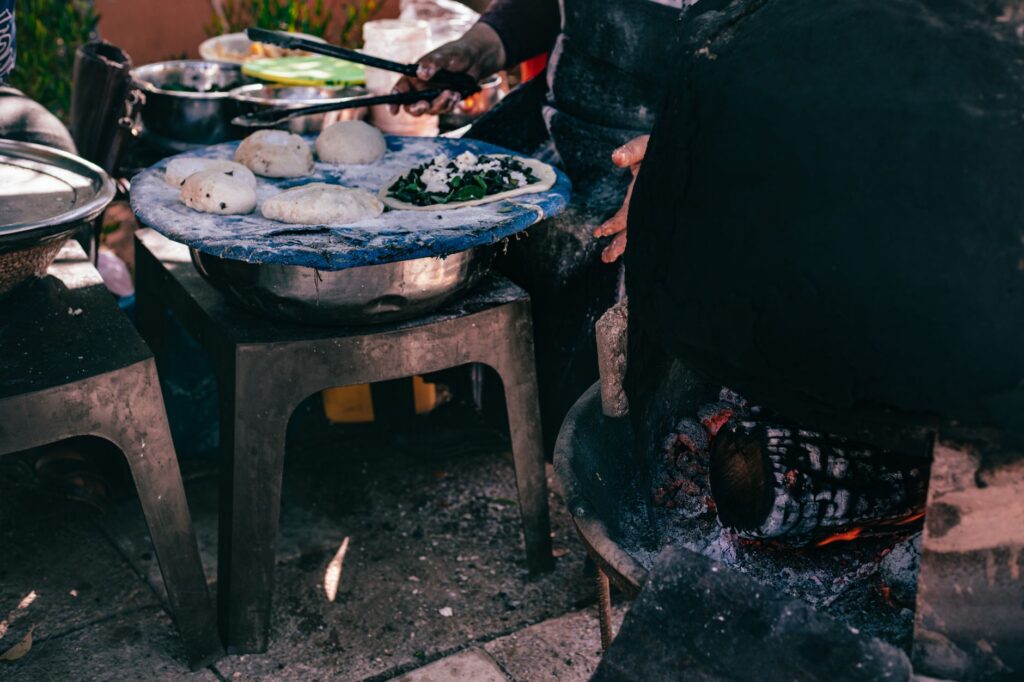
Al Jubayhah has no formal tourist circuit. Its interest is urban and ethnographic, and that demands a careful attitude. You can walk the main commercial area, observe residential architecture from the street and stop at bakeries and food shops, which offer a direct image of the local diet: flatbread, cheeses, olives, spices and sweets.
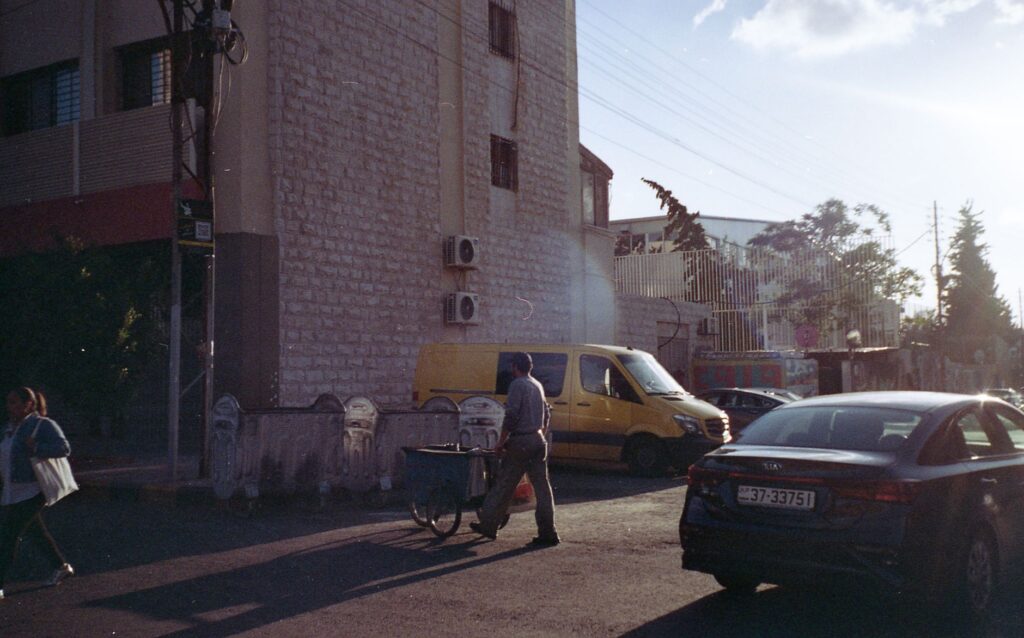
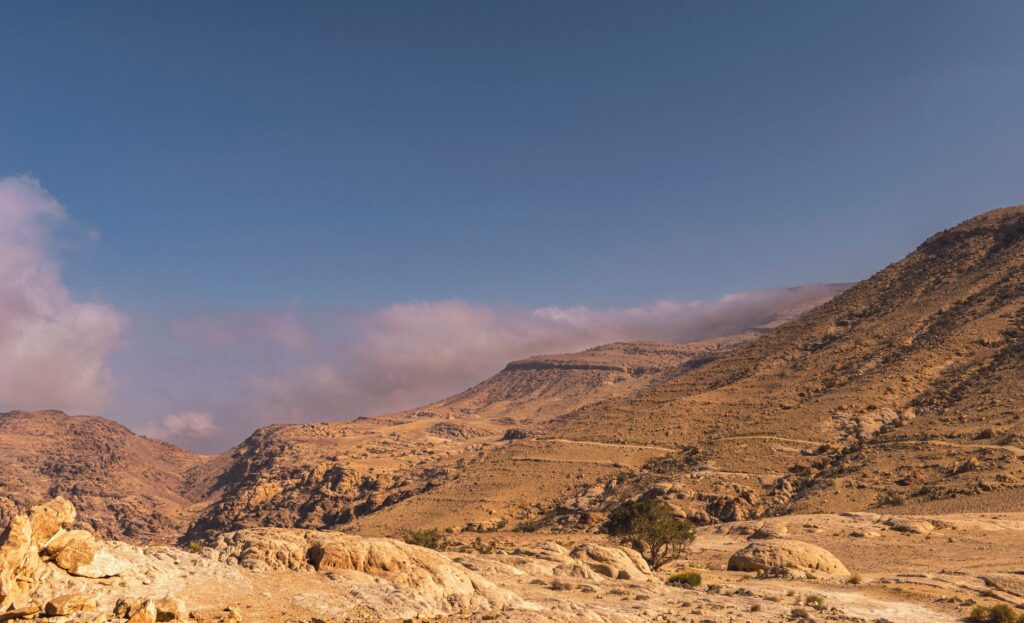
It is also possible to approach the natural viewpoints that the altitude allows, always without crossing private property. The plateau offers wide views over the rest of Amman, especially at sunset, when the light changes and the limestone takes on warm tones.
- Walk the commercial streets in the morning, when activity is greatest.
- Visit the bakeries and try freshly made bread, an essential part of the Jordanian table.
- Observe the architecture from the public road, without entering courtyards or photographing interiors.
- Respect prayer times and local customs in public spaces.
The Jordanian table in a neighbourhood on the move
Food is one of the most accessible ways to understand Al Jubayhah. Simple stalls and restaurants serve dishes from everyday Jordanian cooking: hummus, fuul, falafel, herb salads and warm bread. This is not haute cuisine but food tied to the timetable and to neighbourhood life.
Visitors will also find sweets with honey and nuts, and drinks such as herb tea or coffee flavoured with cardamom. It is advisable to ask prices before ordering and to stick to what is consumed, a usual and welcome practice.
Getting around: what to know
Al Jubayhah lies northwest of Amman and connects to the capital centre through a network of buses and transport services that vary by time of day. There is no single line that solves every journey, so it is worth planning with margin and checking updated routes at the time of the visit.
Traffic can be heavy at peak hours, especially near the university campus. Walking is the best way to know the neighbourhood, but bear in mind the slopes and the lack of shade on some stretches. The plateau’s climate is cooler than in other parts of Jordan, although in summer the sun is still strong at midday.

Heritage and responsible visitor decisions
Al Jubayhah is not a mass destination, and that is an advantage. The absence of large tourism infrastructures calls for more attentive travel: buy in local shops, avoid unnecessary waste, respect the quiet of residential streets and do not treat the neighbourhood as a stage set.
Jordanian hospitality is well known, but it should not be confused with an automatic invitation to enter homes or courtyards. The best way to reciprocate is to ask, accept a no and not take access to private spaces for granted. That basic courtesy protects the daily life of the place and improves the experience of those who visit.
A neighbourhood is not known for what is photographed, but for what is respected while walking through it.
Architecture without grand gestures
The architecture of Al Jubayhah is functional and discreet. Multi-storey houses predominate, with balconies, railings and walls that seek privacy. Local limestone, sometimes combined with concrete and iron, gives a palette that runs from beige to pale grey.
There is no emblematic building that justifies the trip on its own, and that should be said clearly. The interest lies in the whole: the way a community has built its environment with the materials available and has adapted the space to the needs of a growing population.
When to go and how to prepare the visit
Spring and autumn are the most pleasant seasons for walking on the plateau, with milder temperatures than in high summer. In winter it can be cold and occasionally rainy, so bring suitable clothing. Ramadan transforms the opening hours of shops and restaurants, and visitors should adapt to that rhythm.
It is advisable to carry water, comfortable shoes and sun protection. It is also worth finding out about local dress and behaviour rules in public spaces, especially near places of worship.
Practical guide
How to get there: Al Jubayhah is located northwest of Amman, in Jordan, and connects to the capital by road. Public transport exists, but routes and frequencies change, so check current options when planning.
What to bring: comfortable shoes, water, sun protection and clothing that respects local customs. In winter, a light coat.
Where to eat: bakeries, stalls and simple restaurants in the commercial area, with everyday Jordanian cooking. Ask prices before ordering.
What to avoid: entering private property without permission, photographing people without consent and treating the neighbourhood as a theme park.
Language: Arabic is the main language; English is used in university and commercial settings, but not in every establishment.
Currency: Jordanian dinar. It is worth carrying cash for small businesses.
Closing: a hill remembered on foot
Al Jubayhah does not offer a single postcard. It offers something harder to summarise: the feeling of having walked through a place where daily life has not been organised for the visitor but for those who live there. That authenticity demands care, but it also rewards. Those who arrive with curiosity and respect find on this plateau in Jordan a simple lesson in how cities grow, change and preserve, between stone and olive tree, something of what they once were.