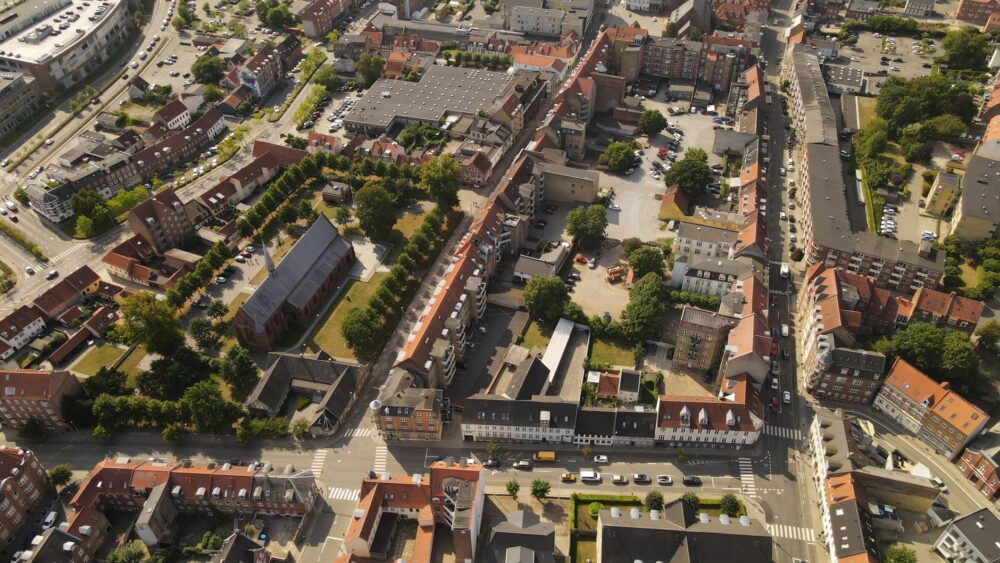
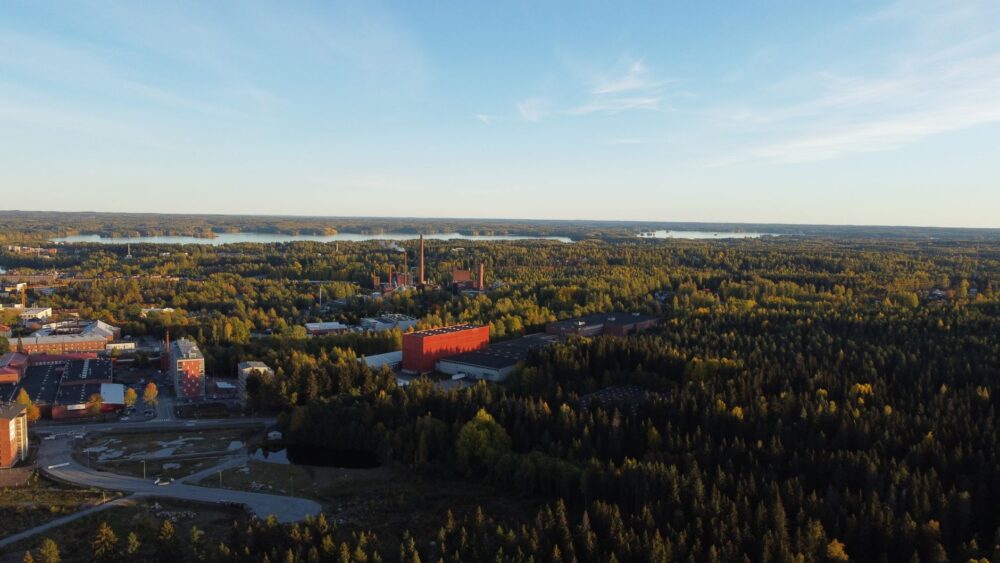
Lumiar rarely appears in Lisbon’s most reproduced postcards, yet its recent history is best understood from a platform rather than a viewpoint. This parish in the northern part of the Portuguese capital, home to roughly 46,000 people according to available geographic records, grew over centuries as a string of estates, orchards and dirt roads supplying the lower city. Today it is a district of wide avenues, schools, markets and housing blocks where the metro has become the backbone of daily life.
The arrival of the Yellow Line transformed Lumiar’s relationship with the rest of Lisbon. What once required a slow bus or a private car was reduced to a short underground journey. This report traces that transformation from the station itself, without inventing figures or testimonies, with the caution of someone who knows that a neighbourhood’s railway history is written in small details: the departure time, the name of the stop, the landscape that appears as the train emerges.
From estates to platforms: a parish’s long awakening
For much of the twentieth century, Lumiar retained a semi-rural air that surprised visitors from the centre. The estates produced wine, oil and vegetables; the roads were named after the families who tended them, and life revolved around the church and small squares. Lisbon’s urban expansion, however, pushed the city northward, and Lumiar stopped being an edge to become a place where people lived.
That growth was neither harmonious nor immediate. Housing developments, schools, sports centres and shopping areas arrived, but mobility continued to depend on buses and cars. The parish became an extensive dormitory, with thousands of people crossing to the centre each morning and returning at dusk. The question hanging over the neighbourhood was simple: how to connect all of this without choking the streets?
The answer came in the form of a tunnel. Lisbon’s Yellow Line, which already linked the centre with northern areas, was extended toward Lumiar and Telheiras in successive phases. The stations of Quinta das Conchas, Lumiar and Ameixoeira became new gateways to a territory that had until then depended on buses.
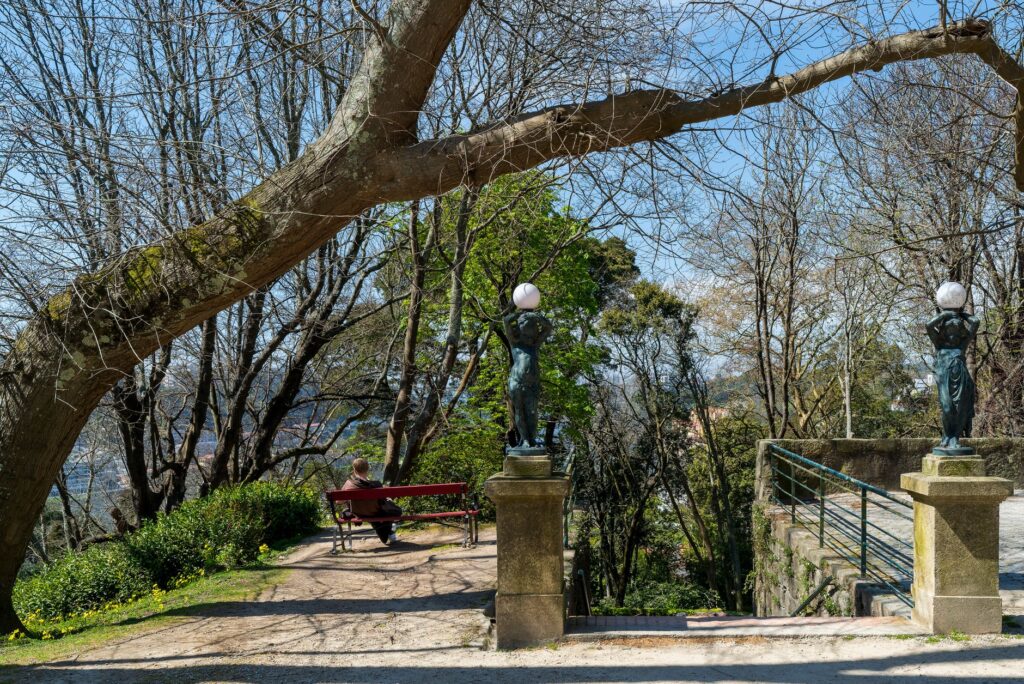
In Lumiar, the metro did more than bring the centre closer: it forced the neighbourhood to rethink itself as a network of pedestrian streets, squares and facilities around each entrance.
Quinta das Conchas: the station that breathes among trees
Quinta das Conchas station takes its name from the park beside it, one of northern Lisbon’s green lungs. Its location is significant: the underground platform coexists with a landscape of holm oaks, dirt paths and play areas. Those who leave the metro in the morning find a neighbourhood that still retains fragments of its agricultural past.
The station’s surroundings combine recent housing with public facilities. There are schools, a health centre and neighbourhood shops that serve as meeting points. The station is not a simple stop: it is a node where the daily journeys of students, workers and families intersect. The entrances are arranged so that pedestrians do not have to cross major avenues, a detail that seems minor but changes the daily experience.
The park as a waiting room
The proximity of Quinta das Conchas allows something unusual for an urban station: waiting outdoors, under the trees, rather than on an enclosed platform. That relationship between transport and public space is one of the keys to the light rail model Lisbon has developed in the city’s north.
Lumiar: the administrative and commercial heart of the neighbourhood
Lumiar station occupies a central position within the parish. Administrative services, shops, restaurants and offices cluster around it. It is the stop many residents use to run errands, do their shopping or attend a medical appointment. Its design prioritises accessibility: lifts, escalators and clear signage make movement easier for older people and those travelling with pushchairs or luggage.
The station’s surroundings have changed over the years. Where there were once empty plots or industrial units, there are now residential buildings and commercial spaces. That process is not free of tension: rising housing demand and pressure on prices are recurring topics in neighbourhood conversations. The metro, in this sense, is not just a means of transport: it is a factor in how a parish is lived in and transformed.

A useful detail for travellers: Lumiar station works as a reference point for getting your bearings in the neighbourhood. Its exits connect with the main avenues and with bus stops covering routes the metro does not reach.
Ameixoeira: the stop at the northern edge
Ameixoeira is the station marking the end of the Yellow Line in this sector. Its surroundings are more residential and quieter than those of Lumiar, with tree-lined streets and a neighbourhood life organised around small shops. For many residents, this stop is the gateway to the city without having to cross the centre.
The station has also helped to revitalise an area that for years remained on the margins of major urban investment. The metro brought improvements to pavements, lighting and access to services. Nevertheless, the neighbourhood keeps its own rhythm, slower than that of the central avenues, and retains a human scale that many Lisbon residents appreciate.
A landscape of transition
Leaving Ameixoeira, one senses the boundary between the dense city and the more open areas of northern Lisbon. There are urban allotments, sports spaces and views that remind you that the Portuguese capital does not end in the historic centre. That mix of uses is one reason the neighbourhood attracts families seeking calm without giving up connection to the rest of the city.
The Yellow Line as the backbone of mobility
Lisbon’s Yellow Line connects the centre with the north of the city through a route crossing very different neighbourhoods. In Lumiar, the line serves a dual function: on the one hand, it brings residents closer to the centre and to the main transport nodes; on the other, it structures the neighbourhood itself, connecting its stations with buses and the commuter rail network.

The system is not without limitations. Peak hours concentrate high demand, and frequencies, though reasonable, do not always meet the needs of those working shifts. Urban buses cover routes the metro does not reach, but coordination between modes is a constant challenge for transport authorities.
Practical tip: to get around Lumiar without depending on a car, combine the metro with local buses. The stations of Quinta das Conchas, Lumiar and Ameixoeira have nearby bus stops connecting with residential areas and the airport.
The heritage that survives between avenues
Despite urbanisation, Lumiar retains elements of its past worth a leisurely visit. The parish church, of ancient origin, remains a reference point for residents. Near it, remnants of old estates and walls recall the parish’s rural character. The palace and gardens of Quinta das Conchas, now integrated into the park, are another example of how heritage coexists with the modern city.
Place names also hold memory. Names such as Quinta das Conchas, Ameixoeira or Lumiar refer to crops, trees and families who inhabited these lands. For travellers interested in local history, walking the neighbourhood between station and station is a way of reading that past in the present.
Lumiar’s heritage is not in a museum: it is in the names of the streets, in the walls of the estates and in the church that still brings residents together.
Daily life: markets, schools and squares
Lumiar’s daily life is organised around its facilities. The municipal market, schools and sports centres are places where generations meet and neighbourhood networks are woven. The metro station has made access to these spaces easier, but it has also changed how they are used: many purchases are made on the way to work, and shops have adapted their hours to that rhythm.
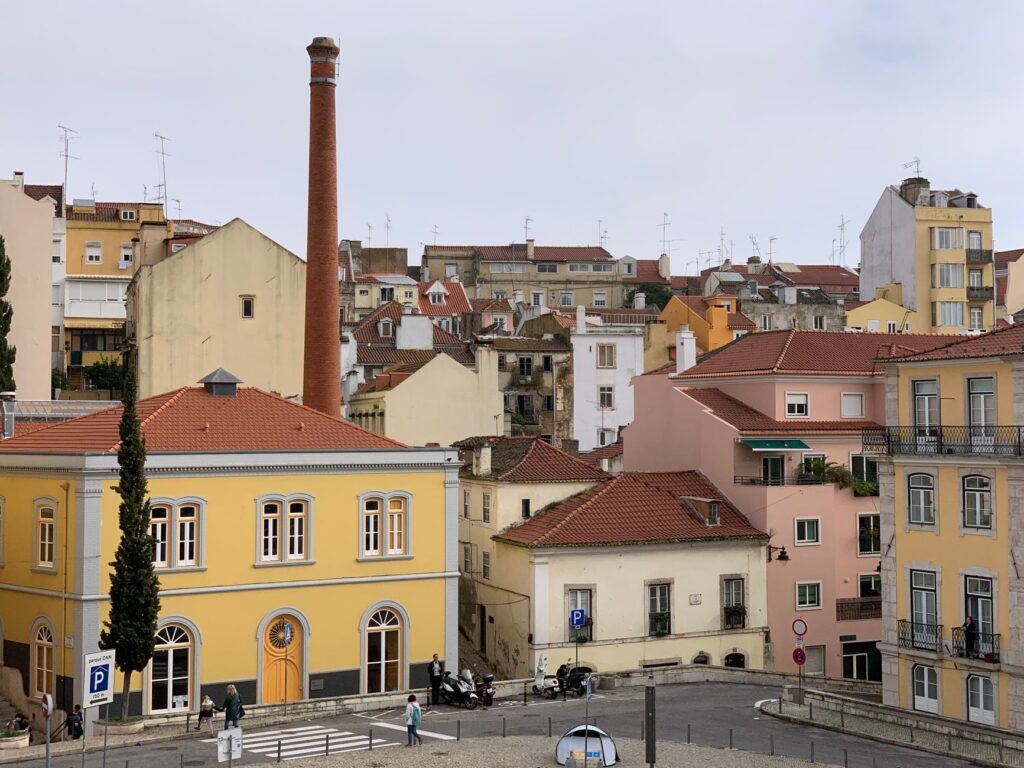
Local gastronomy reflects that mix. There are traditional tascas, neighbourhood bakeries and restaurants serving Portuguese cuisine without pretension. At weekends, Quinta das Conchas park fills with families having picnics or cycling. It is an urban life that does not renounce calm.
A neighbourhood for walking
Although the metro is the main means of transport, Lumiar invites walking. Distances between stations are reasonable and pavements are generally well maintained. Walking reveals details the underground journey hides: tiled façades, hidden gardens and small shops that have been open for decades.
Practical guide
Getting there: Lisbon’s Yellow Line connects the city centre with the stations of Quinta das Conchas, Lumiar and Ameixoeira. The airport is a reasonable bus or taxi ride from these stops.
When to travel: spring and autumn are the most pleasant seasons for exploring the neighbourhood on foot. Summer can be hot, and August brings closures of some local shops.
What to see: Quinta das Conchas park, the parish church of Lumiar, the remains of old estates and the municipal market. The neighbourhood is also a useful base for exploring northern Lisbon away from the crowds of the centre.
Mobility: the metro is accessible at its main stations, with lifts and escalators. Urban buses cover routes the light rail does not reach. For short journeys, walking is the best option.
Where to eat: the neighbourhood’s tascas and bakeries offer Portuguese cuisine at moderate prices. Booking is advisable at busier restaurants at weekends.
The platform looking to the future
Lumiar is a neighbourhood in motion, and its metro station is the best place to understand it. There, the agricultural past and the urban present intersect, as do neighbourhood life and connection with the city. The light rail did not solve all mobility problems, but it did change the scale of the everyday: it brought the centre closer, reorganised routes and gave residents a new way of inhabiting their parish.
For travellers arriving in Lisbon and wanting to understand how the city works beyond its monuments, Lumiar offers a discreet lesson. There are no grand architectural gestures or crowds, but there is a real story of urban transformation that can be read on every platform, in every park and on every street named after an old crop. The metro, after all, is only the thread that ties all those stories together.