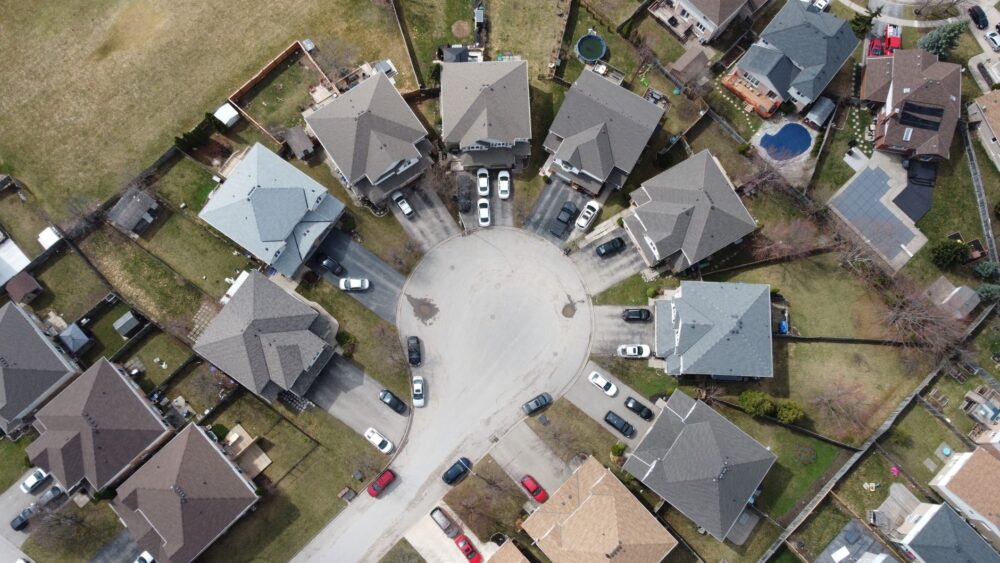

On the map, Kópavogur looks like an urban patch stuck to Reykjavík, almost an appendage of the Icelandic capital. But anyone who stops discovers a city with its own government, neighbourhoods named after hills and coves, and a relationship with the sea that is not decorative: for generations, fish and harbour work sustained local life before residential expansion changed the landscape.
The question guiding this journey is simple: how does a city build an identity when it grew so fast it barely had time to invent a story for itself? The answer is not in a grand monument, but in a set of everyday decisions: a library open late, an outdoor heated pool, a coastal path and a music school that trains many of the musicians in the metropolitan area.
A city born twice
The name Kópavogur refers to a cove and an old farming settlement. For centuries, the area was a scattered collection of farms and fishermen’s houses facing the fjord. Urbanisation arrived with the twentieth century, when demographic pressure from Reykjavík pushed thousands of families south and turned meadows into residential streets.
That growth was not an accident planned from a distant office. It was a constant negotiation between landowners, cooperatives and local authorities who needed housing quickly and cheaply. The result is a city on a human scale, with low buildings, wide streets and a density that allows walking without stress.
Kópavogur’s history is not told through heroic dates, but through small decisions about where to put a school, a pool or a bus stop.
Today, with around forty thousand inhabitants according to available geographic records, it is the country’s second-largest settlement. That figure makes it an interesting laboratory: it is not a capital, but it is not a village either. It must solve the problems of both scales.
Water as a public square
In Iceland, the municipal pool functions as a public square. In Kópavogur, the outdoor pool and sports facilities fulfil that social role: neighbours meeting at seven in the morning, retirees swimming before coffee, families spending Saturday afternoon between hot water and steam.
It is not an aggressive tourist attraction, but everyday infrastructure. Visitors who step inside discover that bathing is a ritual with clear rules: shower without a swimsuit before entering, leave towels in the changing rooms, respect the relative silence of the hot tubs. Those rules are not a whim: they are how the community maintains a shared space.
- Public pools usually have long opening hours and reduced rates for residents.
- Steam saunas are often found next to the outdoor tubs.
- Respect for hygiene rules is part of the social contract, not an arbitrary imposition.
The library that holds the neighbourhood together
Kópavogur’s municipal library is one of those buildings that explains a city better than any brochure. It is not just a book depository: it is a study space, a meeting point for teenagers, a reading room for older people and a venue for cultural activities throughout the year.
Its architecture, with clean lines and abundant light, dialogues with the Nordic landscape. In winter, when daylight shrinks to a few hours, these luminous interiors become a refuge. The library does not compete with the landscape: it compensates for it.
In a country where winter darkness is a physical reality, well-designed interiors are a form of emotional infrastructure.
For travellers, the library is also a gateway to local life: Icelandic press, regional maps, cultural programming and a silence that invites you to stay longer than planned.
The marina and the fishing memory
Kópavogur’s coastline preserves a marina and a dock area that recall the area’s maritime past. It is not a large industrial port, but a place where the direct relationship with water is visible: recreational boats, amateur fishermen and walkers along the shore.

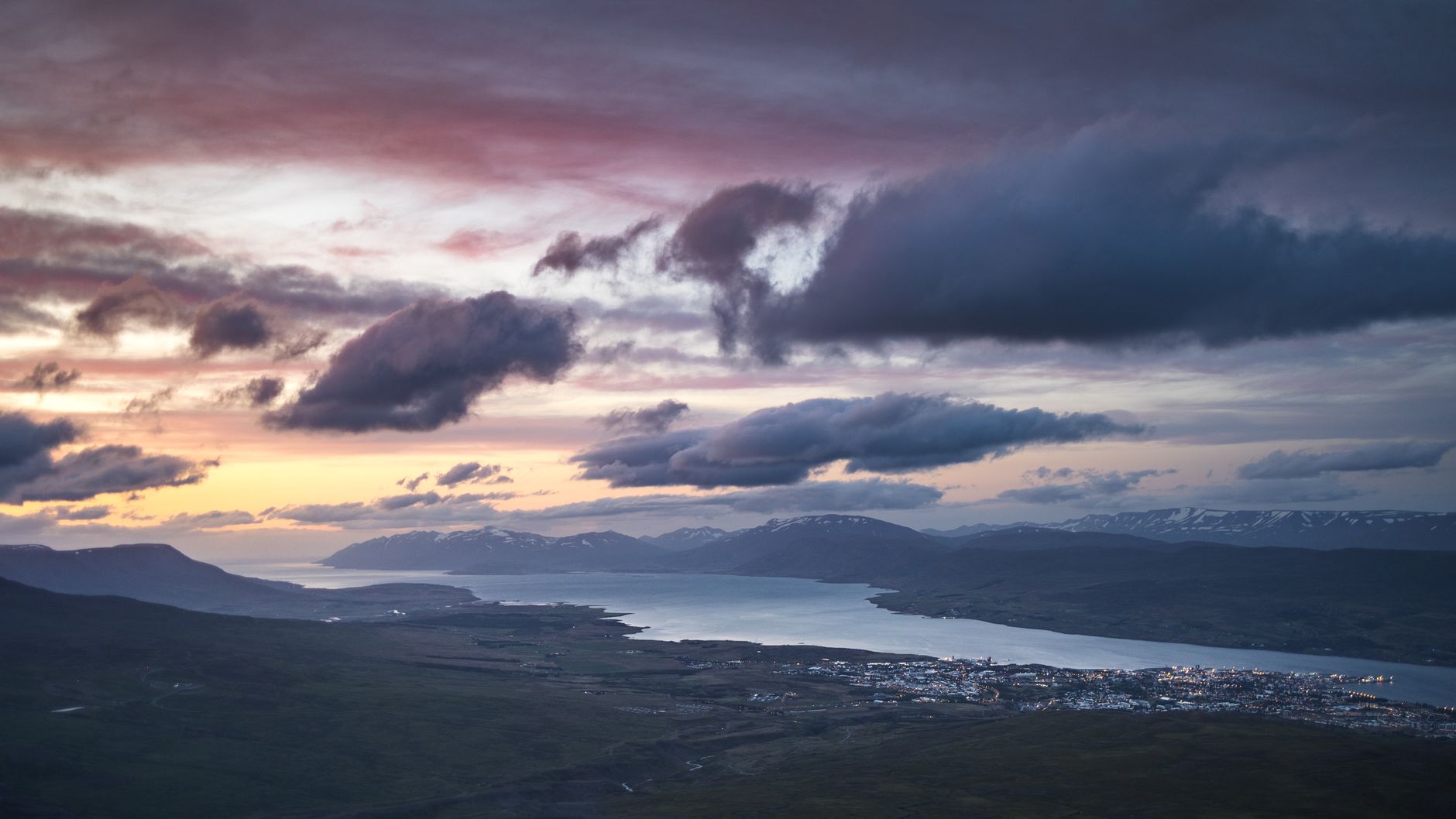
Walking along the fjord edge helps explain the city’s geography. Reykjavík is visible across the water, and that visual closeness explains the history of both settlements: two cities that grew together, look at each other and share infrastructure, but maintain separate administrations.
The coastal path is one of the best places to watch seabirds and, on clear days, the silhouette of the mountains surrounding the bay. It is an unpretentious walk, suitable for all ages and especially pleasant at sunset.
Architecture on a human scale
Kópavogur has no monumental historic centre. Its architectural heritage is recent and functional: housing blocks from the 1950s and 1960s, high-quality public facilities and a church that has become a visual reference for the municipality.
That absence of grand monuments may disappoint those looking for postcards. But it also frees visitors from the obligation to run from one point to another. Here you walk, enter a café, watch children play in a park. Heritage is everyday life, well organised.
What to observe on an urban walk
Public service buildings, schools and sports centres show contemporary Nordic architecture that prioritises light, thermal insulation and functionality. It is not spectacular, but it is coherent. And that coherence is, in itself, a form of identity.
Music, education and cultural life
Kópavogur’s music school has a reputation that extends beyond the municipality. Many musicians from the metropolitan area trained in its classrooms, and the city maintains a steady cultural programme with concerts, workshops and activities for young people.
That investment in artistic training explains part of the local character: a city that does not wait for a grand theatre to make culture, but introduces it into compulsory education and community spaces.
Visitors interested in the Icelandic cultural scene should check the municipal programme before travelling. There are not always major events, but activity is constant and accessible.
Eating like a local
Kópavogur’s food scene does not aspire to compete with central Reykjavík restaurants. Its offer is practical: bakeries, cafés, food stalls and the occasional family restaurant serving fresh fish and simple Icelandic dishes.
Visitors who want to understand local life would do well to have breakfast in a neighbourhood bakery, shop in a supermarket and observe seasonal products. That routine, more than any tourist-designed food experience, reveals how a Nordic city feeds itself.

- Bakeries usually open early and offer dense breads and cardamom pastries.
- Local supermarkets allow you to discover regional fish and dairy products.
- Tap water is drinkable and of excellent quality; there is no need to buy bottles.
Responsible choices for visitors
Kópavogur is not a mass destination, and that is an advantage worth preserving. Responsible travellers should treat the city as what it is: a place where people live, not a stage set. That means respecting pool schedules, not invading residential areas with noise and using public transport where possible.
Closeness to Reykjavík allows visitors to stay in Kópavogur and travel to the capital without a car. That decision reduces pressure on Reykjavík’s historic centre and distributes tourist spending towards municipalities that also offer services.
In winter, check weather conditions before any excursion. Icelandic weather changes quickly and local authorities issue regular warnings. Caution is not a limitation: it is part of the experience.
Practical guide
Getting there: Kópavogur is connected to Reykjavík by road and urban bus lines. The journey is short and frequent. To move around the municipality, bus and bicycle are reasonable options in the months of light.
When to go: Summer offers long days and mild temperatures, ideal for walking by the water. Winter is more demanding, but allows you to discover the city’s interior life: libraries, pools and cultural spaces. In both cases, bring waterproof clothing and suitable footwear.
What to visit: The municipal library, the coastal path, the marina and the public pools. The local church and urban parks complete a half-day route. For a longer stay, Kópavogur works well as a base for exploring the capital region.
Budget: Iceland is an expensive country. Accommodation and restaurants can consume much of the budget. Public pools and cultural spaces offer affordable alternatives. Book in advance during high season.
Local rules: Showering without a swimsuit before entering pools is mandatory. Respect for silence in libraries and community spaces is valued. Do not leave litter on paths or disturb wildlife.
A city looking at itself in the water
At the end of the walk, when the sun drops over the fjord and Reykjavík’s lights begin to come on across the water, Kópavogur reveals its true scale. It is not a city that impresses in a single blow. It is a city understood by walking, entering a bakery, swimming in a public pool or reading the newspaper in a luminous library.
Its identity is not in a monument, but in the way it organises the daily life of forty thousand people. That is its lesson for travellers: sometimes the most valuable heritage is a community that knows how to live together in a difficult climate.