Austin, in the state of Texas, United States, is one of those capitals best explained by walking than by consulting a checklist of must-see sites. The city grew around an administrative centre, a river that shapes the skyline and a network of neighbourhoods where music, university life and local commerce coexist with the tensions of a place that receives more residents and visitors every year.
This report proposes a slower reading of Austin: understanding what is preserved, what is changing and how a visitor can move through it without turning the trip into a sequence of obligatory stops. Local identity is not only on the big stages; it is also on the pavements, in neighbourhood markets and in the conversations that repeat every morning.
A capital recognised by its layout
Austin is the capital of Texas and the seat of Travis County, according to geographic records that place it about 149 metres above sea level, in a transition zone between the coastal plains and the relief of central Texas. That position explains part of its character: it is neither a coastal city nor a classic industrial metropolis, but a crossroads where the Colorado River, the Capitol and the university campus organise daily life.
The administrative centre is not a stage set for tourists. Anyone walking through its surroundings will find offices, courts, cafeterias frequented by workers and architecture that mixes the institutional with the everyday. That mix is useful for travellers: it makes clear that Austin does not live only on its cultural reputation, but on an urban structure that functions all year round.
The river, meanwhile, acts as a seam between neighbourhoods. There is no need to invent an ideal walk: it is enough to observe how the city organises itself around the water, with rest areas, trails and spaces where neighbourhood life becomes visible.
Heritage that needs no display case
Talking about heritage in Austin requires precision. The city is not an open-air museum or a closed set of monuments, but a place where historic buildings coexist with recent construction. That coexistence raises interesting questions: what is chosen to be preserved, what is transformed and what is lost when growth puts pressure on the city.

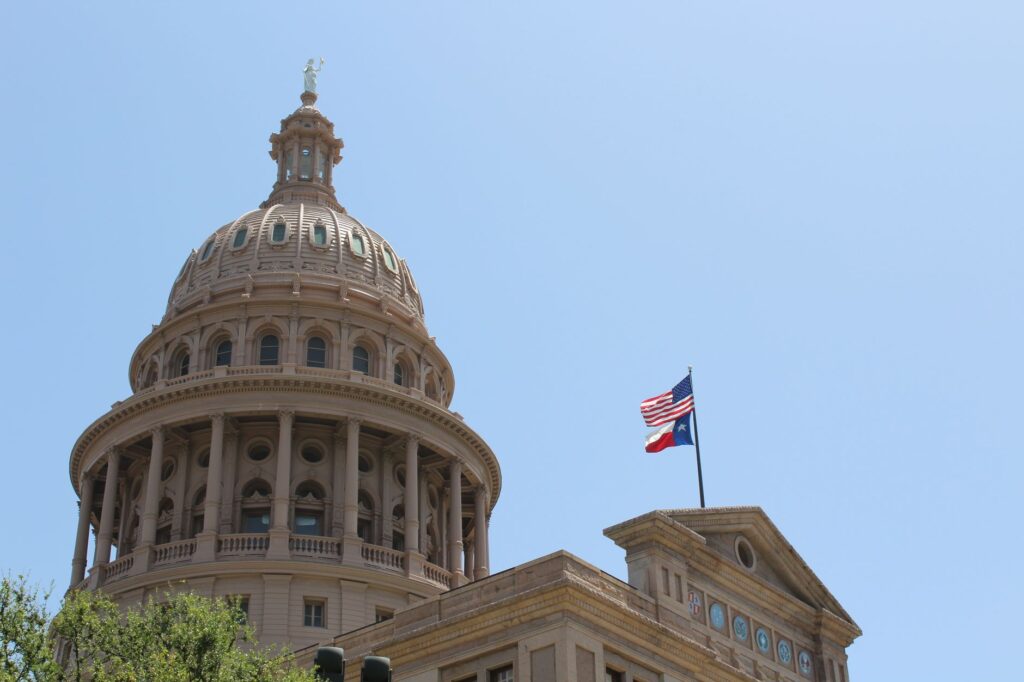
The state Capitol and the administrative buildings downtown are part of that visible heritage, but they do not exhaust the subject. Older neighbourhoods, wooden houses and businesses that have been open for decades tell another story, more fragile and more dependent on the daily decisions of their inhabitants.
Austin’s identity rests not only on its best-known stages, but on the continuity of the places where daily life repeats without fuss.
For visitors, the advice is simple: look beyond the main facade, read old signs and pay attention to the businesses that remain open on streets changing quickly.
Music, memory and neighbourhood life
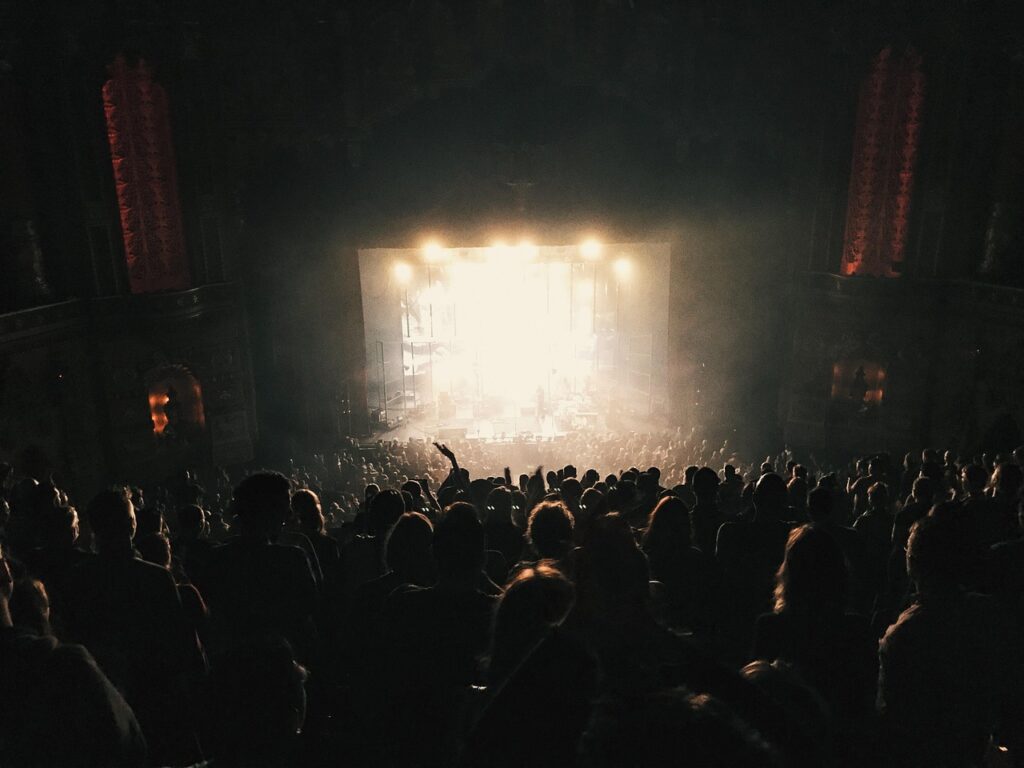
Music occupies a central place in Austin’s story, and not only because of the big festivals. What distinguishes the city is the density of small venues, concert rooms and spaces where local musicians try new material in front of small audiences. That scene is not improvised: it relies on a network of bars, instrument shops and a neighbourhood culture that has been working for decades.
Anyone visiting Austin with an interest in music should check local listings in advance, rather than assuming tickets will be available at the last minute. It is also worth remembering that many of these venues are family businesses or independent projects: spending money there, respecting their schedules and not treating them as free attractions is part of responsible tourism.
Neighbourhood life also offers a less spectacular but equally valuable reading. Markets, bakeries and local cafés allow visitors to observe how the city organises itself outside the best-known circuit.
Eating without a script: markets and neighbourhood kitchens
Austin’s food scene is often associated with Texan cooking and with formulas that have become brands. However, to understand the city it is worth widening the focus: farmers’ markets, neighbourhood kitchens and small migrant-run restaurants explain better the diversity of a capital that is growing and receiving people from across the state and the country.
Visitors can organise a morning around a market, buy local produce and eat at simple stalls. There is no need to chase the most famous restaurant: often, places with less media presence offer an experience closer to daily life.
It is also worth checking opening days and hours, which vary by establishment and season. The city does not run on a single calendar, and relying entirely on improvisation can lead to closed doors.
Architecture between the institutional and the domestic
Austin’s built landscape combines administrative buildings, office towers, single-family homes and recent residential complexes. That mix reflects a city that has grown quickly and is still debating how to do so without losing quality of life.
For travellers interested in architecture, the most useful route is not the one that accumulates singular buildings, but the one that compares scales: the institutional centre, the low-rise neighbourhoods and the areas in transformation. That comparison helps explain the tensions between conservation and development running through the city.
Local authorities and neighbourhood organisations have addressed the debate on growth, housing and heritage protection at different moments. It is not a settled matter, but an ongoing conversation that visitors can follow through the local press and public participation spaces.
A river that sets the rhythm of free time
The Colorado River and its banks offer one of the spaces most used by Austin residents for rest and sport. Trails, shaded areas and water access points are part of the daily life of many residents, and also of a leisure offer that does not depend on large infrastructure.
Visitors can use these areas to walk, rest or simply observe. It is important to respect usage rules, signage and protected areas, and to remember that these are spaces shared with people who live there all year round.
The city’s relationship with water also raises questions about sustainability and resource management, themes that appear frequently in local public debate and affect urban planning.
University, innovation and social fabric
The presence of a large public university has shaped Austin’s development and contributed to its image as an innovative city. That institution not only educates students but also generates cultural activity, research and employment, and its influence extends across entire neighbourhoods.
For visitors, that link translates into a varied cultural offer and a young population that energises cafés, bookshops and creative spaces. At the same time, growth linked to innovation has generated debates about housing, mobility and inequality, issues worth knowing before idealising the city.
Reading the local press and listening to neighbourhood organisations helps make clear that Austin is not only a leisure destination, but a place where decisions affecting residents are made.
How to explore without turning it into a theme park
The best way to visit Austin is to accept that the city is not exhausted by its icons. Walking without haste, using public transport where possible and setting aside time for lesser-known neighbourhoods allows for a richer and less predictable experience.

It is also useful to check the weather, which can be demanding at different times of year, and local events, which affect accommodation availability and mobility. Reasonable planning avoids frustration and allows visitors to enjoy what the city offers without stress.
Finally, it is worth remembering that Austin is an inhabited city: pavements, parks and venues are spaces of daily life. Respectful tourism begins by recognising that reality.
Practical guide
Before travelling, consult official sources and the local press for the events calendar, weather conditions and mobility advice. The city has an international airport and a public transport network worth studying according to the neighbourhood chosen for accommodation.
- Mobility: consider walking downtown and using public transport or bicycles for short trips; a car may be necessary for outlying areas.
- Accommodation: compare neighbourhoods according to your interests (downtown, campus, riverside) and book ahead during event seasons.
- Music: check listings and ticket availability days in advance; many venues are small.
- Food: combine markets and neighbourhood places; verify opening hours before setting out.
- Heritage: respect the rules of historic buildings and protected areas; follow signage.
- Weather: check forecasts and carry sun protection and water in hot seasons.
Travelling to Austin with care means accepting that the city is discovered at short distances and through respect for those who live there.
A closing note on downtown pavements
At the end of the day, Austin looks less like a shop window and more like a long conversation. The lights downtown, the noise of a small venue and the shade of a tree by the river make up an image that does not appear in brochures, but explains why so many people decide to stay.
Visitors who leave with that impression will have understood something important: the city is not visited only with the eyes, but with a willingness to listen to what its streets have to say.