


Bukit Batok rarely appears on the itineraries of travelers arriving in Singapore. Twenty minutes by metro from the financial district, this western new town is organized around an old granite hill and a network of public housing blocks that are home to more than 150,000 people. There are no spectacular sky gardens or casinos here: there are wet markets, hawker centres, Chinese and Malay temples, and a trail network that climbs to a flooded quarry now used as a park.
Understanding Bukit Batok means understanding how Singapore manages coexistence: high density, services at the foot of each block, and green spaces crossed daily. For visitors willing to step off the Marina Bay circuit, the neighborhood offers an honest reading of everyday life in the city-state.
A granite hill that became a neighborhood
The name Bukit Batok comes from Malay: bukit means hill, and batok is associated with the sound of granite being quarried. For decades, this promontory was an active quarry. The stone extracted here contributed to the construction of modern Singapore. When quarrying ceased, urban planners repurposed the land: today the former Little Guilin quarry, with its vertical rock walls and calm lake, is one of the most photographed landscapes in the west.
Residential development arrived with the decades of public housing expansion. Blocks built by the Housing and Development Board (HDB) were grouped into estates with schools, clinics and neighborhood shopping centers. Bukit Batok MRT station, on the North-South Line, connects the area to the rest of the island and serves as a natural gateway for those arriving from the center.

Bukit Batok is not visited like a monument: it is walked like a neighborhood, paying attention to what happens at seven in the morning in a wet market.
The wet market as a social thermometer
Bukit Batok Wet Market, inside the neighborhood shopping complex, opens early. Fishmongers, vegetable sellers and tofu stalls coexist with customers who have been shopping in the same place for decades. The wet market remains an institution in Singapore: a space where fresh food, quiet bargaining and conversation in several languages —English, Mandarin, Malay, Hokkien— mix without ceremony.
For visitors, the etiquette is simple: do not block the aisles, ask before taking photos and carry cash in small bills. Many stalls accept digital payment, but not all. The market is not an attraction designed for tourists; it is everyday infrastructure. That is precisely its virtue.
What to look for in a wet market
- The organization by sections: vegetables, fish, meat, dry goods.
- Handwritten price signs, often in several languages.
- The silent logistics: carts, ice, boxes arriving before dawn.
- The adjacent food courts, where local breakfast is served from early morning.
Hawker centres: eating well for little
The hawker centres of Bukit Batok follow the logic of all Singapore: food from multiple traditions at accessible prices. Here you find Hokkien, Cantonese, Malay and Indian dishes under one roof. The Bukit Batok and nearby Bukit Gombak centres concentrate stalls that have been running for years, some with queues that start before noon.
Singapore’s hawker culture was recognized by UNESCO as intangible cultural heritage, an acknowledgment that underlines its social rather than gastronomic value. In Bukit Batok, that value translates into shared tables, trays returned to the correct racks and daily coexistence across generations and origins.
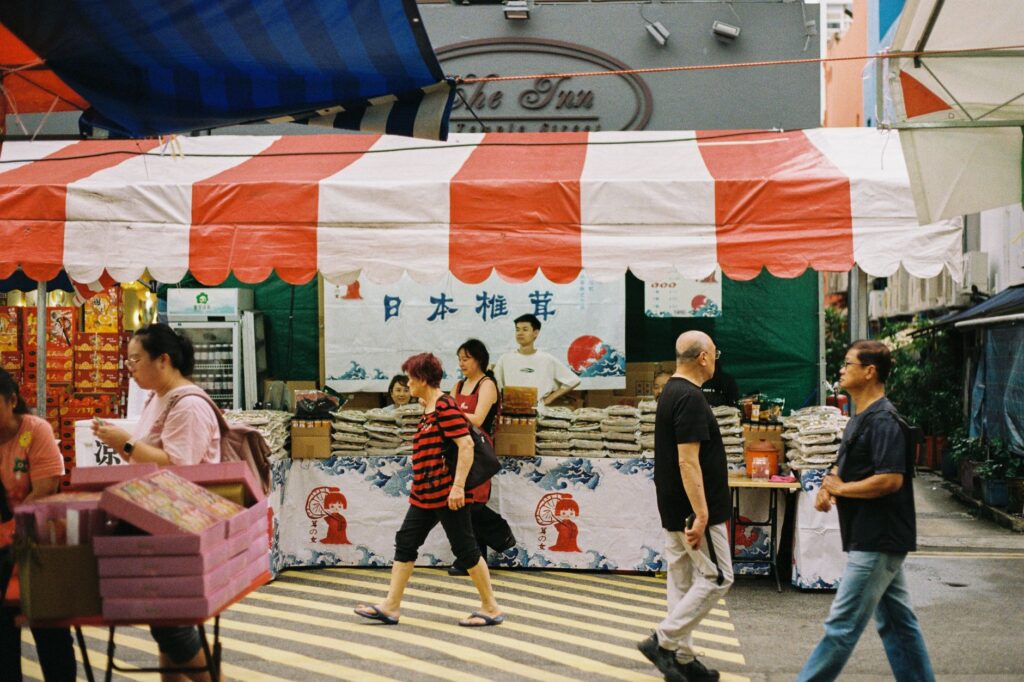
Food in a hawker centre is not a designed experience: it is how a dense city decides to feed itself every day.
Little Guilin and the western trails
The former Bukit Batok quarry, known as Little Guilin for its resemblance to the karst landscapes of Guilin, China, is now a quiet park with a lake, walkways and viewpoints. The granite walls, cut vertically by extraction, dominate the skyline and recall the site’s industrial origins.
From there, trails connect to Bukit Batok Nature Park and, beyond, to the park network that crosses western Singapore. Walking these paths early in the morning reveals residents exercising, bird groups and, with luck, a long-tailed macaque, a common primate in Singapore’s parks.
Tips for walking the area
- Carry water: humidity is high year-round.
- Wear comfortable shoes; some sections have stairs and slopes.
- Avoid the middle of the day because of the heat.
- Respect wildlife: do not feed animals or leave the trails.
Temples and religious diversity
Bukit Batok reflects Singapore’s multi-religious makeup. Chinese temples, mosques and community centers serving a diverse population coexist in the neighborhood. The Bukit Batok Chinese temple and the local mosque are examples of how religious space integrates into the residential fabric without fanfare.
For visitors, the rule is the same as in any place of worship: dress respectfully, remove shoes when appropriate and do not interrupt ceremonies. Many temples allow entry outside prayer times, but it is best to observe and ask before photographing.
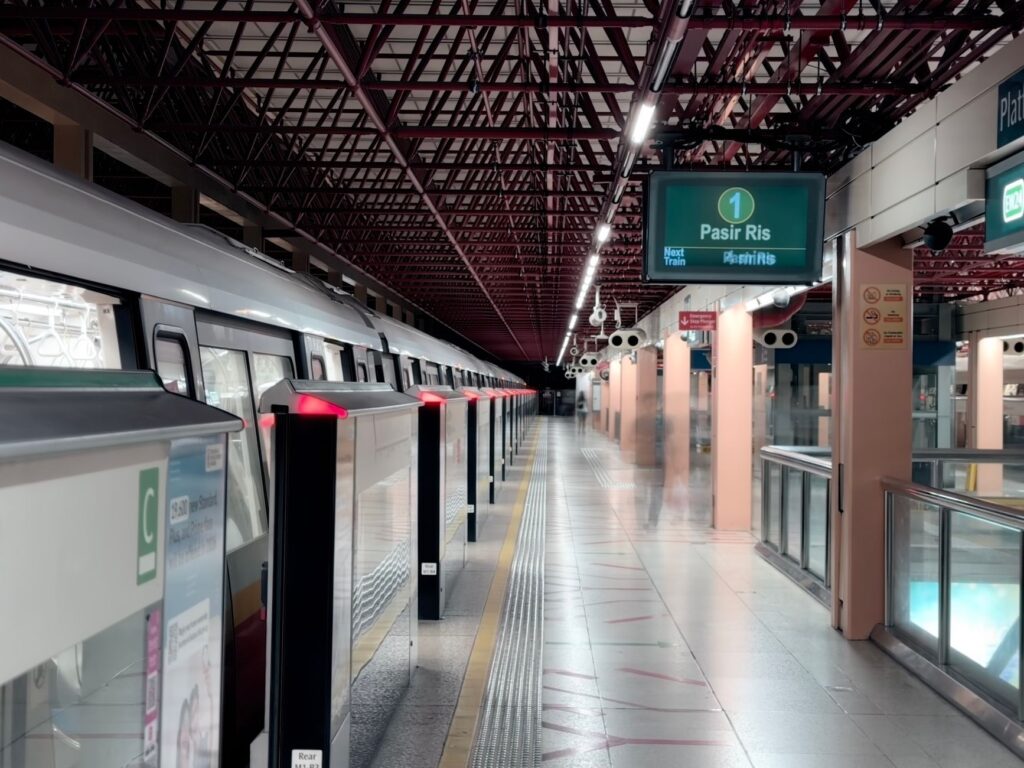
Public housing: understanding the city from within
HDB blocks are not a minor experiment: they are the backbone of Singapore. In Bukit Batok, residential estates are organized into towns with proximity services. The void decks, open ground floors, function as community spaces: weddings, funerals, flea markets and neighborhood activities take place there.
Watching life in a void deck is watching how a dense city manages coexistence. It is not a spectacle for tourists but a daily reality that visitors can understand if they remain discreet and respectful.
What to observe respectfully
- Bilingual and multilingual signage in public spaces.
- Corridors connecting blocks and stations, sheltered from rain.
- Community gardens, often tended by neighbors.
- The generational mix: children, adults and older people sharing the same space.
Neighborhood shopping and daily life
The Bukit Batok shopping center and nearby markets cover daily needs: pharmacies, bakeries, phone shops, hairdressers and repair stalls. For visitors, these spaces offer a window into real prices and local habits, far from the more tourist-oriented commercial areas.

Shopping in these environments requires patience and some flexibility: not everything is in English, not everything accepts cards and not everything keeps long hours. In return, the experience is authentic and shows how life is organized in a planned neighborhood.
Practical guide
Bukit Batok is in the western region of Singapore, within the country of Singapore. It is accessible via the North-South MRT line, with Bukit Batok station as the main arrival point. From the center, the metro journey takes roughly twenty to thirty minutes depending on the starting point.
The best time to visit coincides with the less rainy months, although the tropical climate brings frequent showers year-round. Carry an umbrella or raincoat and protect yourself from the sun. The neighborhood is easy to explore on foot, combining MRT and local buses.
For meals, hawker centres and markets offer varied, affordable options. Cash remains useful, although digital payment is widespread. As for accommodation, Bukit Batok is not a traditional hotel area; many visitors stay in the center and arrive by metro.

Responsible visiting means respecting community spaces, not blocking aisles, not photographing people without permission and following the rules of temples and mosques. Bukit Batok is not a theme park: it is an inhabited neighborhood, and that is its main appeal.
A photograph at the end of the day
At dusk, the corridors connecting the blocks to the station fill with people heading home. The lights of the food courts come on, the first dishes are served and the neighborhood recovers its rhythm. At Little Guilin, the water reflects the granite walls and silence returns for a few hours.
That image —a neighborhood that works without needing visitors— is perhaps the most useful lesson Bukit Batok offers to anyone traveling to Singapore with curiosity and without rush.


