
Karlovac does not reveal itself all at once. The city presents itself as a green and grey chessboard, where the Kupa, Korana, Mrežnica and Dobra rivers draw liquid borders and the old town retains the mark of a military design that is now being reinvented. Located about 50 kilometres southwest of Zagreb, this county capital of some 42,000 inhabitants (according to 2021 data) has turned its crossroads condition into a character trait: here heritage is not displayed in glass cases—it is walked, inhabited and often recycled.
For travellers seeking more than postcards, Karlovac offers a lesson in adaptation. The city was founded in the 16th century as a fortress to halt Ottoman advances, and its six-pointed star plan still organises the streets of the centre. Today, that legacy coexists with a cultural life that occupies former barracks, factories and public spaces, and with a local identity expressed in coffee, rivers and art.
A fortress that became a city
The name Karlovac comes from Archduke Charles of Habsburg, who ordered its construction in 1579 on a plain between two rivers. The fortress, designed by military engineers, had a star-shaped plan with bastions and moats that can still be glimpsed in the urban layout. The historic centre preserves that geometry, although today its streets host cafés, galleries and shops instead of soldiers.
The city was an outpost of the Habsburg Empire and later a railway and river hub. Its strategic position made it a melting pot of cultures: Croats, Serbs, Slovaks, Germans and Hungarians left their mark on architecture and customs. That mix is felt in the cuisine, in surnames and in a way of doing things that combines Central European discipline with Balkan warmth.
“Karlovac is not a city you visit: it is a city you learn by walking between its rivers and squares.”
The art of recycling the past
One of Karlovac’s most interesting traits is its ability to reuse inherited spaces. The former Vojarna barracks, in the very centre, has been transformed into a cultural and educational centre hosting exhibitions, workshops and events. The conversion is not an isolated gesture: it is part of a broader urban revitalisation strategy that seeks to attract young creators and curb depopulation.
The local art scene draws on independent initiatives. Galerija Kortil, in the old town, programmes exhibitions by contemporary Croatian and international artists, while the Muzej grada Karlovca (City Museum) documents history from prehistory to the present, with special attention to the fortress period and industrialisation. Both spaces are worth visiting to understand the city’s character.
In recent years, festivals such as the Karlovac Blues Festival or Dani piva (Beer Days) have raised the city’s profile, but day-to-day culture is more discreet: small galleries, concerts in squares and a calendar of events that intensifies in summer.
Rivers as public space
Karlovac is known as “the city of four rivers”, although in fact five watercourses cross or skirt it: Kupa, Korana, Mrežnica, Dobra and a small stream called Kupica. The rivers are not just a geographical accident: they are the stage for social life. In summer, the banks of the Korana fill with swimmers, and the Kupa offers boat trips and hiking routes.
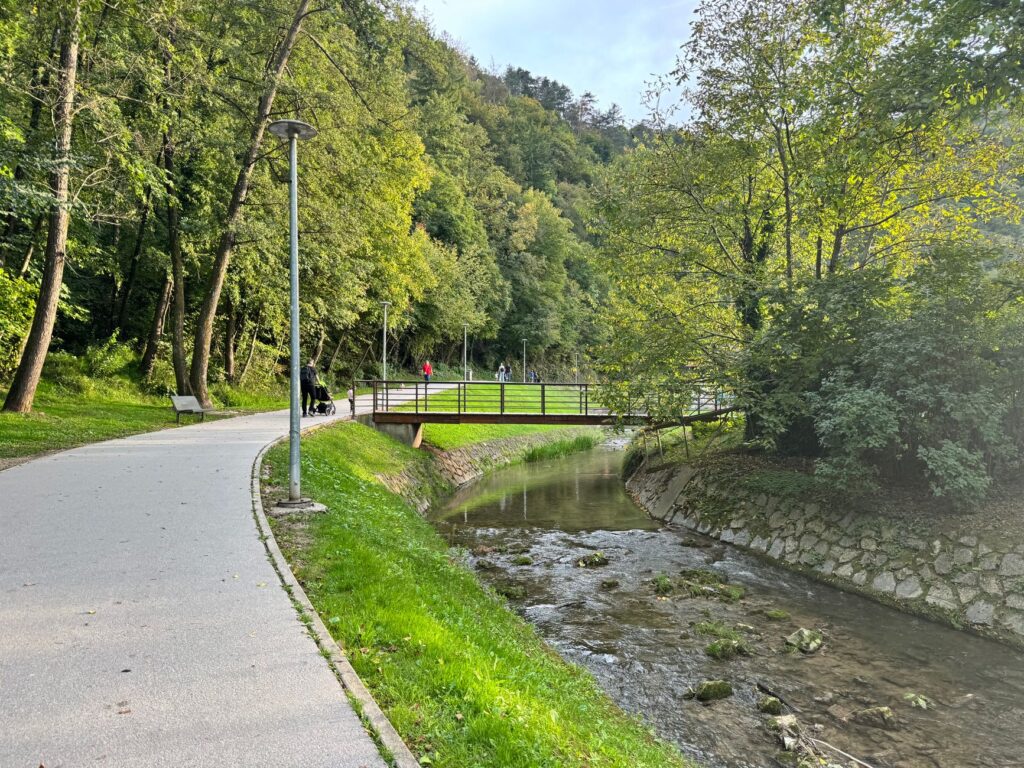
The Park šuma (forest park) next to the Korana is a green lung that invites walking or cycling. The city has developed a network of trails and viewpoints that allow visitors to enjoy the landscape without overcrowding. For travellers, renting a bicycle is one of the best ways to explore the surroundings and understand Karlovac’s relationship with water.
Industrial heritage and workers’ memory
Karlovac was a significant industrial centre in socialist Yugoslavia. The Karlovačko brewery, founded in 1854, is one of the local symbols and still operates. Other industries, such as textiles or machinery, suffered the blow of the economic transition of the 1990s. Today, some of those spaces have been converted into cultural centres or technology company headquarters.
Workers’ memory is present in the Muzej grada Karlovca and in initiatives such as the Karlovac 2.0 project, which seeks to document and revitalise industrial heritage. For travellers interested in industrial archaeology, exploring the Banija neighbourhood or the area around the old railway station offers a less touristy but very revealing perspective.
A guide for the responsible visitor
Karlovac is not a mass destination, and that is an advantage. To enjoy it without harming it, adopt a slow, respectful pace. Here are some keys:
- Move by bicycle or on foot: the centre is compact and flat; the rivers invite tranquil walks.
- Spend at local businesses: family cafés, markets and traditional Croatian restaurants.
- Respect natural spaces: do not leave waste on riverbanks and follow marked trails.
- Visit museums and galleries: they help keep the cultural scene alive and fund heritage conservation.
- Learn about history: understanding the context of the 1990s war helps interpret certain silences and absences in the city.
Karlovac at the table
Local cuisine reflects Karlovac’s position between the interior and the coast. Dishes such as štrukli (filo pastry filled with cheese), kulen (spicy pork sausage) or fiš paprikaš (river fish stew) are common on tables. Karlovačko beer, of course, is the emblematic drink, but there is also a growing wine culture in the nearby hills.
For an authentic experience, visit the municipal market, where local producers sell fruit, vegetables and cheeses. Prices are reasonable and quality is high. In summer, riverside terraces offer a relaxed, family-friendly atmosphere.
Beyond the centre: nature and villages
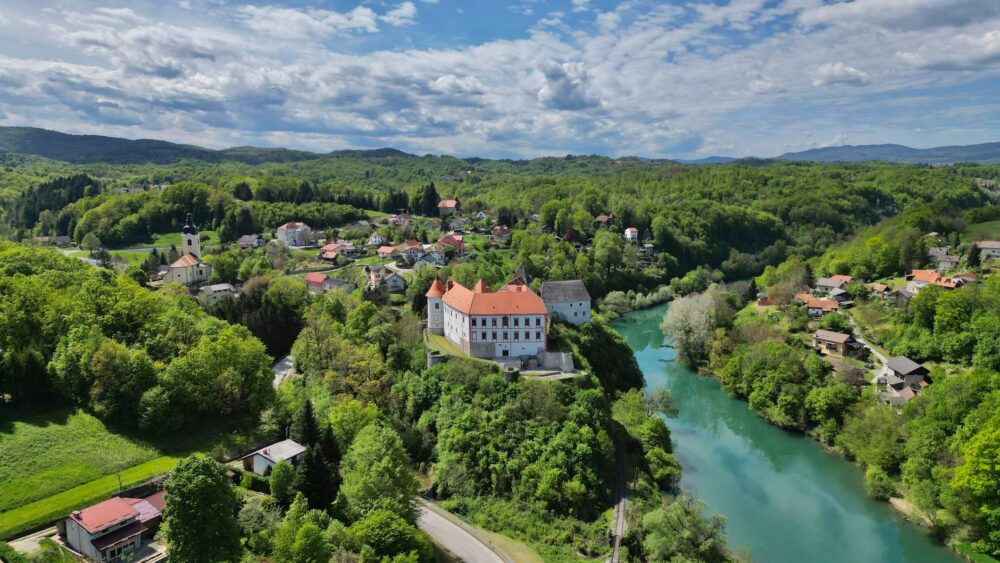
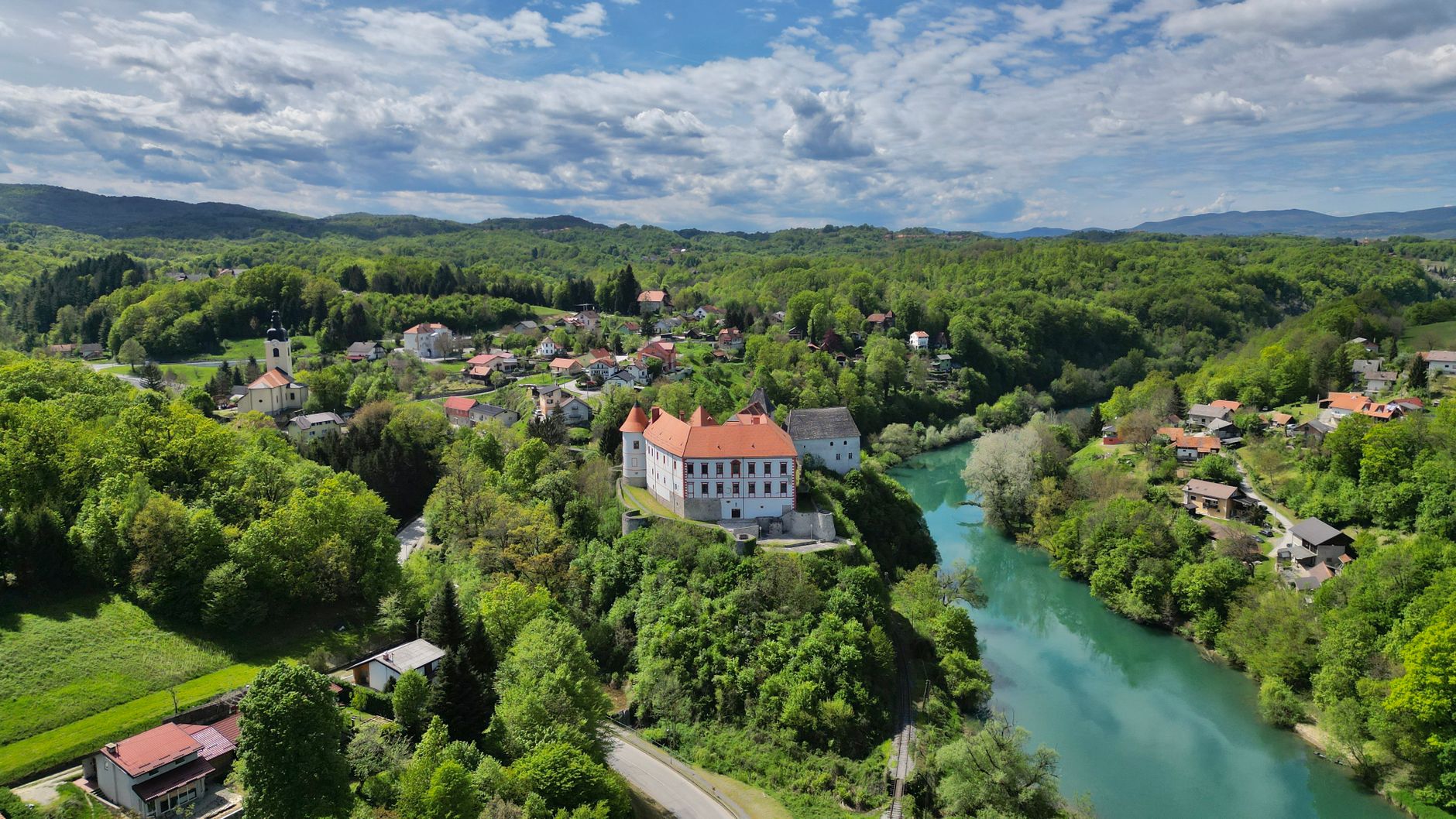
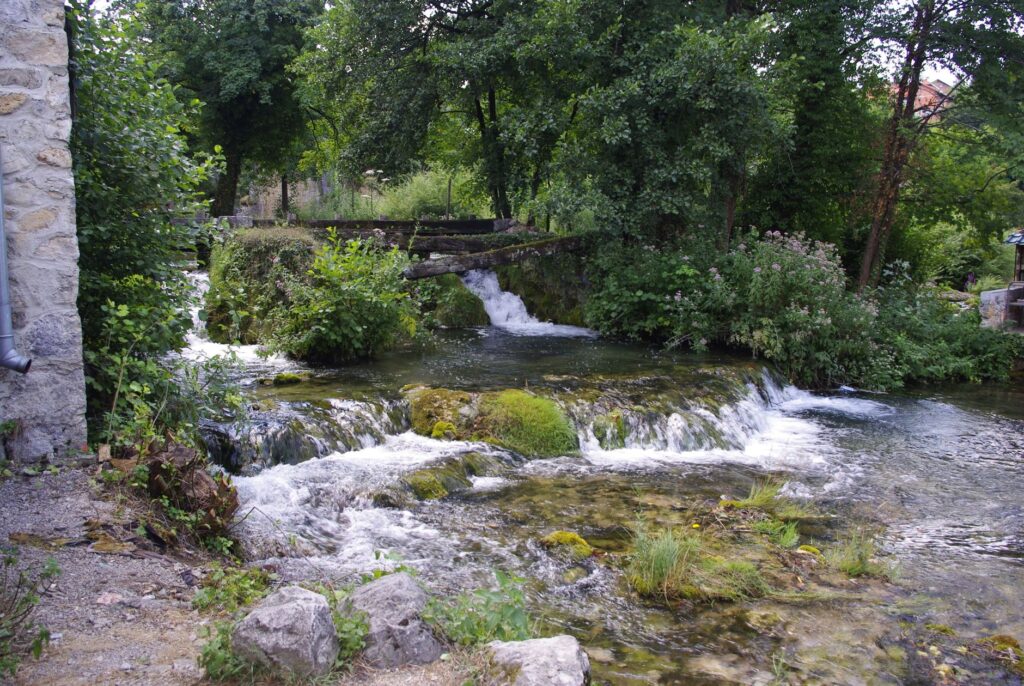
The Karlovac region is a destination in itself. A few kilometres away are the Rastoke waterfalls, a picturesque village of mills and wooden houses on the Slunjčica river, and Plitvice Lakes National Park, a World Heritage Site, about 100 kilometres away. Also worth a visit are the castles of Dubovac and Ozalj, and the hiking routes of Mount Klek.
For art lovers, the nearby town of Ozalj houses a museum with an art collection and an interesting noble history. And in Jastrebarsko, about 30 kilometres away, a wine festival attracts visitors from across the region.
Practical guide
Getting there: Karlovac is well connected by train and bus with Zagreb (about 50 km) and other Croatian cities. The railway station is about a 15-minute walk from the centre. The nearest airport is Zagreb (ZAG), about 60 km away.
When to go: Spring and autumn are ideal for mild weather and fewer crowds. Summer is warm and lively, with festivals and river activities. Winter can be cold and snowy, but it has its charm.
Where to stay: There are hotels in the centre, as well as apartments and private rooms. For a more rural experience, look for accommodation in nearby villages.
What to bring: Comfortable walking shoes, sun protection in summer, and a light jacket for evenings. If you plan to visit the rivers, bring swimwear and a towel.
Language: Croatian is the official language. English is spoken in the tourism sector, but learning a few basic words (hvala, molim) is well received.
Currency: The euro has been the official currency since 2023. Credit cards are accepted in most establishments, but carry cash for markets and small shops.
A closing by the river
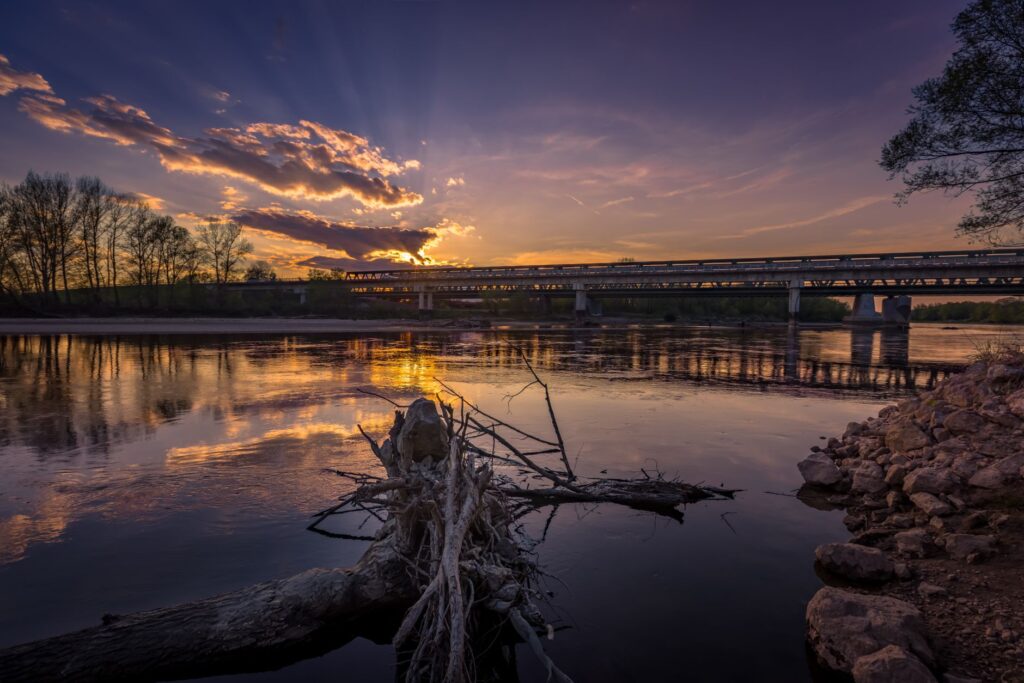
At sunset, the waters of the Korana turn golden and the shadows of the trees stretch along the promenade. Karlovac offers no fireworks or grand monuments, but the serenity of a city that has learned to live with its history without ceasing to look to the future. Travellers who pause to listen to the murmur of the water and the echo of their steps on the cobblestones will discover that, in Karlovac, the art of travel consists simply in being present.