
The name says it all: Aguascalientes, the Mexican city where water springs hot. At 1,877 metres above sea level, in the heart of the Bajío region, this state capital of some 722,000 residents has built its character on three pillars still visible on the street today: the railway, industry and a daily life that revolves around its plazas and gardens.
This is not a monumental city or a destination for large crowds. It is a place to walk without hurry, to understand how industrial heritage can coexist with a rising food and wine scene, and to discover that the best way to know it is on foot, letting yourself be guided by the shade of its trees and the rhythm of its neighbourhoods.
A city born of water and rail
The history of Aguascalientes is tied to the thermal water that gave the region its name and to the railway that, in the late 19th century, turned it into a strategic hub in central-northern Mexico. The railway workshops attracted workers from across the country and transformed a quiet town into an industrial city with its own identity.
That legacy has not been erased. It is felt in the architecture of the station, in the neighbourhoods that grew around the tracks and in a work culture that still defines the local temperament: disciplined, discreet, proud of its craft. Visitors who come only looking for monuments miss the essence: a city best understood by listening to how people talk about their work and their plazas.
Understanding this origin helps the visitor read the city correctly. Aguascalientes did not grow around a single ceremonial centre, as other Mexican capitals did, but around a junction. That explains its grid of practical streets, its low skyline and the way daily life distributes itself between the historic core and the working neighbourhoods. Approaching it as a city of labour and exchange, rather than as a museum, changes what you notice: the workshops, the warehouses, the modest façades that hide long histories.
It also explains a certain local sobriety. Here, heritage is not staged for the camera; it is woven into routines. A visitor who walks with that idea in mind will find that the most interesting conversations happen in bakeries, markets and plazas, not in grand halls.
“Aguascalientes is not visited in a rush: it is walked like someone else’s house, with respect and curiosity.”
The historic centre: plazas, gardens and shade
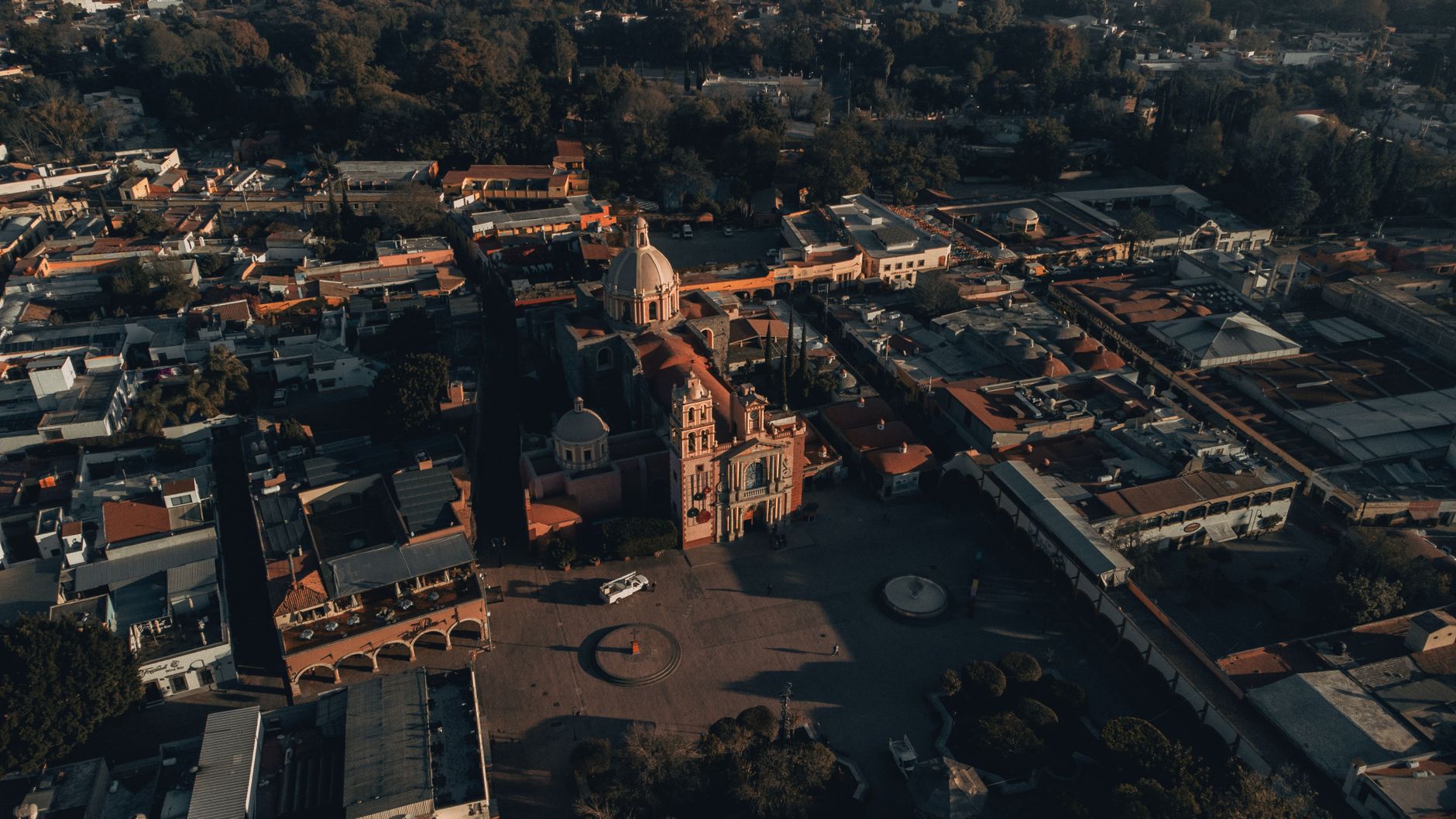
The heart of the city is a set of plazas connected by tree-lined streets. Plaza de la Patria, with its fountain and evening atmosphere, works as the city’s living room. A few steps away, Jardín de San Marcos offers a space of shade and strolling that fills with life on weekends, especially during the Feria Nacional de San Marcos, one of Mexico’s oldest fairs.
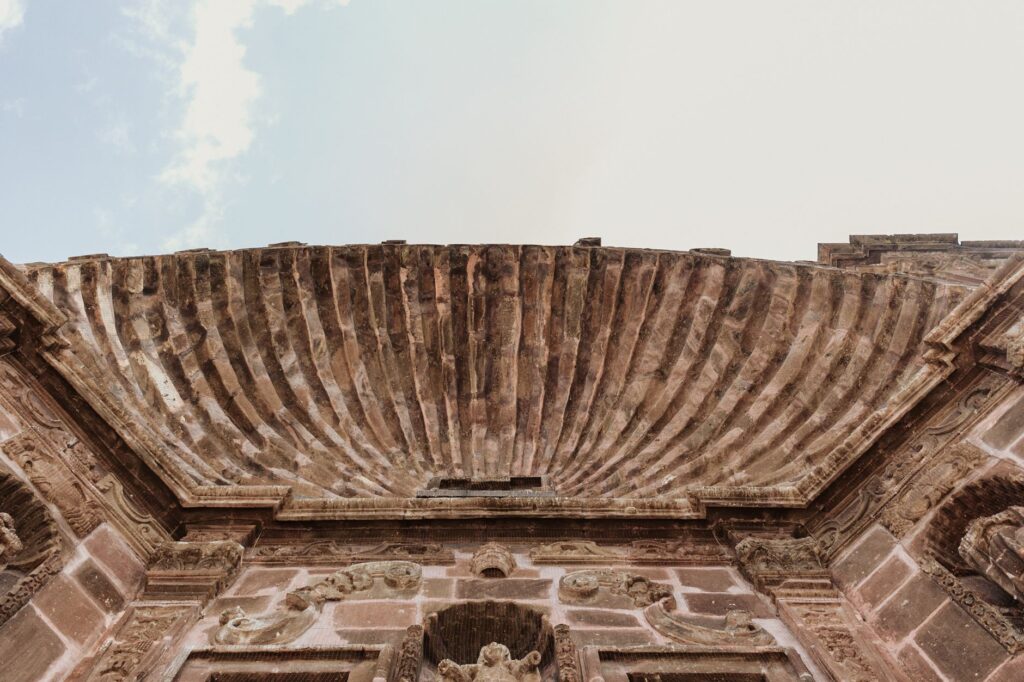
The Cathedral of the Assumption, with its baroque façade and sober interior, marks the symbolic centre. Around it, the Palacio de Gobierno and the Teatro Morelos complete an architectural route that blends neoclassical, baroque and Porfirian styles without excess. This is a centre to walk slowly, looking up: balconies, cornices, pink and green quarry stone revealing layers of history.
The pleasure of this centre is its scale. Nothing is very far, and the transition between plaza, garden and street happens almost without noticing. Benches, kiosks and fountains create natural pauses, and the shade of the trees makes midday walking comfortable. For the traveller, this means the historic centre can be explored in blocks, returning to the same plaza at different hours to see how its character changes from morning calm to evening sociability.
It is also a good area to observe local customs rather than consume attractions. Sitting for a while, watching how families, students and workers share the same space, reveals more about the city than any checklist of monuments.
Neighbourhoods with a craft: beyond the main square
The La Estación neighbourhood preserves railway memory in its wide streets and workers’ houses. There is no single museum that explains it all, but there is an atmosphere that speaks of shifts, whistles and communities that grew around the tracks. Walking here is understanding that Aguascalientes was, above all, a city of workshops.

The Guadalupe neighbourhood, with its sanctuary and traditional barrio feel, offers another scale: that of daily life, small markets and fondas where you eat well without pretension. And the Barrio de la Salud, with its church and plaza, completes a map of local identities that do not appear on postcards but explain the city.
Each of these neighbourhoods has its own centre of gravity, usually a church, a market or a small square, and each rewards a slow visit. The point is not to collect them but to compare them: how the city changes from one to the next, how the architecture, the pace and even the food shift. This is where the visitor begins to understand that Aguascalientes is not a single place but a sum of communities, each with its own memory of work and celebration.
Walking these streets also requires a basic courtesy. These are lived-in spaces, not open-air exhibits. Greeting, asking before photographing and buying something small in a local shop are simple ways of respecting the neighbourhood while still enjoying it.
Thermal springs and the culture of hot water
Thermal water is not just a name: it is a tradition. Around the city there are spas and springs that make use of hot waters for rest. These are not large luxury complexes, but popular spaces where families and visitors share pools and steam.
For the traveller, the experience is simple and authentic: arrive, change, get in the water and let the heat do its work. It is a way of understanding why this region was named as it was and how water remains a daily resource, not just a tourist attraction.
It is worth approaching the thermal tradition as part of local culture rather than as a spa luxury. In many cases, these are places tied to family routines and weekend habits, which means the atmosphere is relaxed and unpretentious. Visitors should check opening conditions and bring what they need, since facilities vary and not all work the same way. The essential advice is to go without expectations of resort comfort and to enjoy the simple ritual of hot water, shade and quiet.
This relationship with water also connects to a broader idea: in Aguascalientes, natural resources are part of everyday life, not scenery. That perspective helps the visitor see the city as a working place with its own rhythms, rather than as a backdrop.
Vineyards and cuisine: the Bajío you drink and eat
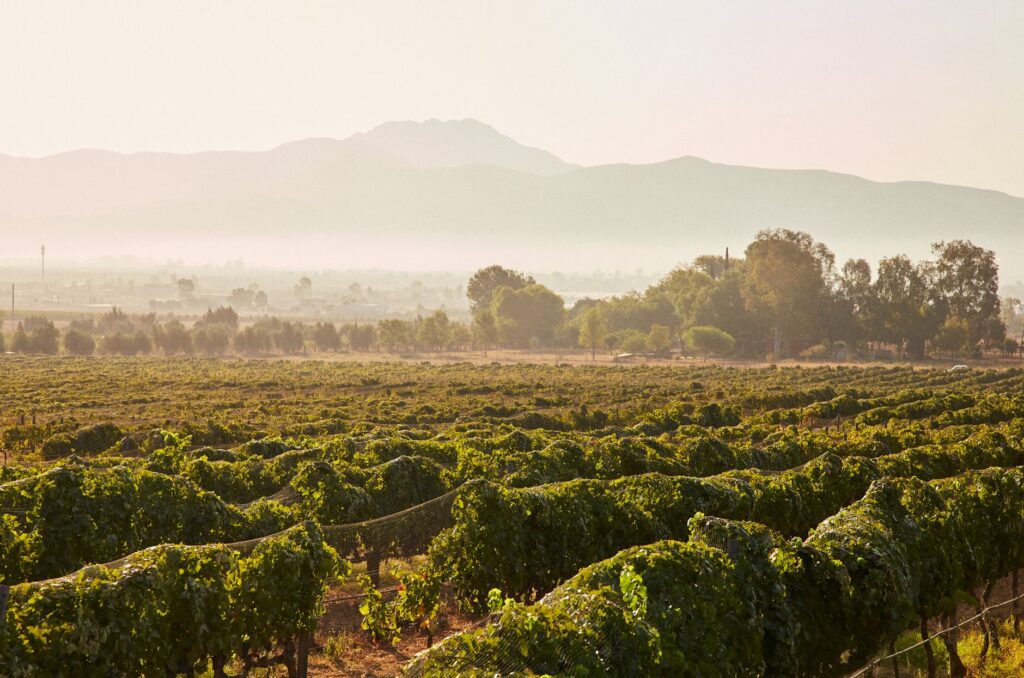
Aguascalientes is part of a growing wine region within Mexico’s Bajío. Around the city there are vineyards and producers offering visits and tastings, always by prior reservation and without promises of large international productions. The scene is young, artisanal and honest.
At the table, local cuisine combines the traditional with the contemporary. Barbacoa tacos, enchiladas and sweets such as pan de huevo or preserved guavas are part of the repertoire. Do not look for fine dining: look for fondas, markets and bakeries where flavour matters more than presentation.
For the visitor, the wine scene is best enjoyed with flexibility. Because it is young and small-scale, schedules and availability can change, so confirming in advance is part of the experience. The same applies to food: the most memorable meals are often found in modest places with a short menu, where the focus is on doing a few things well. Markets are a good starting point for understanding local ingredients, and bakeries reveal a sweet tradition that runs through daily life.
Eating and drinking here is less about spectacle and more about context. Pairing a simple meal with a local wine, or a market breakfast with a walk through the centre, is a way of connecting the city’s productive side with its social one.
“The identity of Aguascalientes is not in a single monument, but in the sum of its crafts: the rail, the wine, the water and the table.”
Industrial heritage and living culture
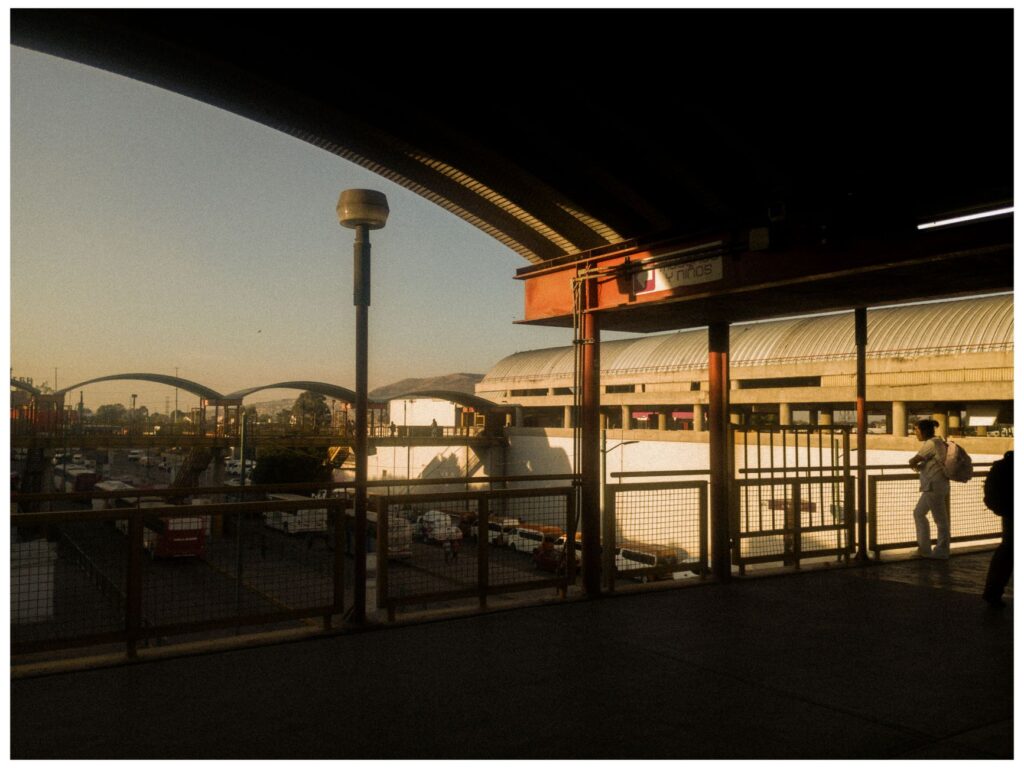
The old railway complex is one of the clearest testimonies to local history. Although not everything is open to the public, the area preserves buildings and structures that recall the industrial scale the city once had. For visitors interested in heritage, it is a reminder that history is not always displayed in glass cases: sometimes you walk among warehouses and platforms.
The cultural offer includes museums, cultural centres and an agenda that intensifies during the fair. But the most living heritage is in the streets: in the markets, in the plazas, in the way people occupy public space at dusk.
This distinction between displayed heritage and lived heritage is useful for planning a visit. Museums and cultural centres provide context and are worth checking for current exhibitions and opening hours, but they are only part of the picture. The rest is observed: how a market fills and empties, how a plaza changes after sunset, how a neighbourhood keeps its identity through small businesses and shared rituals.
For the responsible visitor, this means prioritising observation over consumption. Asking questions, reading local signage and supporting small enterprises are modest actions that connect tourism with the everyday life of the city.
Getting around and when to go
The historic centre is walkable and safe in tourist areas. To reach spas, vineyards or outlying neighbourhoods, it is best to use a taxi, ride-hailing app or rental car. The climate is mild most of the year, with a rainy season in summer.
The Feria Nacional de San Marcos, traditionally held between April and May, is the busiest time. If you seek tranquillity, avoid those dates. If you seek atmosphere, it is the best time to see the city at its festive peak, though with higher prices and more people.

Beyond the fair, the city’s calendar follows a steady rhythm of local festivities and market days that are less crowded and equally interesting. Planning around those quieter moments allows a more relaxed visit and a better chance to talk with residents. Weather-wise, the mild climate makes walking pleasant for much of the year, but summer rain can interrupt plans, so a flexible itinerary is always advisable.
Transport decisions also shape the experience. Staying near the centre reduces the need for vehicles and keeps the visit on foot, which is how the city is best understood. For outlying areas, arranging transport in advance avoids uncertainty and respects local schedules.
Practical guide
- Best time: October to March, mild weather and less rain. Avoid the fair if you prefer quiet.
- Recommended duration: two or three days for the centre and neighbourhoods; add a day for spas or vineyards.
- Transport: the centre is walkable. For the rest, taxi or rental car. The airport offers domestic connections.
- Budget: mid-range city. Fondas and markets are affordable; vineyards and spas require reservations and usually have variable rates.
- Local respect: do not enter private property or photograph people without permission. Railway heritage and neighbourhoods are lived-in spaces.
- What to bring: comfortable shoes, sunscreen, hat and light clothing. For thermal baths, swimsuit and towel.
- Language: Spanish is the everyday language; a few courteous phrases go a long way in markets and small businesses.
- Planning: confirm opening hours and reservations for vineyards, spas and museums, as schedules can vary.
A city to return to
Aguascalientes does not compete with Mexico’s great tourist capitals, and that is precisely its value. It is a city that lets itself be known without noise, that offers heritage without crowds and that invites you to understand the Bajío from within: its work, its water, its table and its people.
At the end of the day, when the plazas fill with light and families occupy the benches, it becomes clear that this is not a destination to photograph and forget. It is a place to walk, to ask and to return. Because cities that boil water, like this one, keep their warmth for those who dare to stay a little longer.