
Keflavík is not just the first image of Iceland for millions of travelers. It is a town of around 15,930 people, according to GeoNames data, living between the roar of engines and the silence of lava fields. Located on the Reykjanes peninsula, about 50 kilometers southwest of Reykjavík, its name appears on airline tickets, but its everyday reality is written in Icelandic, with wind as the main character and the sea as a neighbor. Here, the traveler who lingers longer than planned discovers that Keflavík is not a waiting room but a place with memory, trades and landscapes that demand respect.
The town is part of the municipality of Reykjanesbær, created in 2000 through the merger of Keflavík, Njarðvík and Hafnir. That multiple identity is felt in daily life: neighborhoods facing the harbor, streets climbing toward the church, and a community accustomed to weather that changes within minutes. Here, heritage is not displayed in glass cases; it is walked upon: lava is the ground, wind is the climate, and the sea is the pantry.
A town born of basalt and salt air
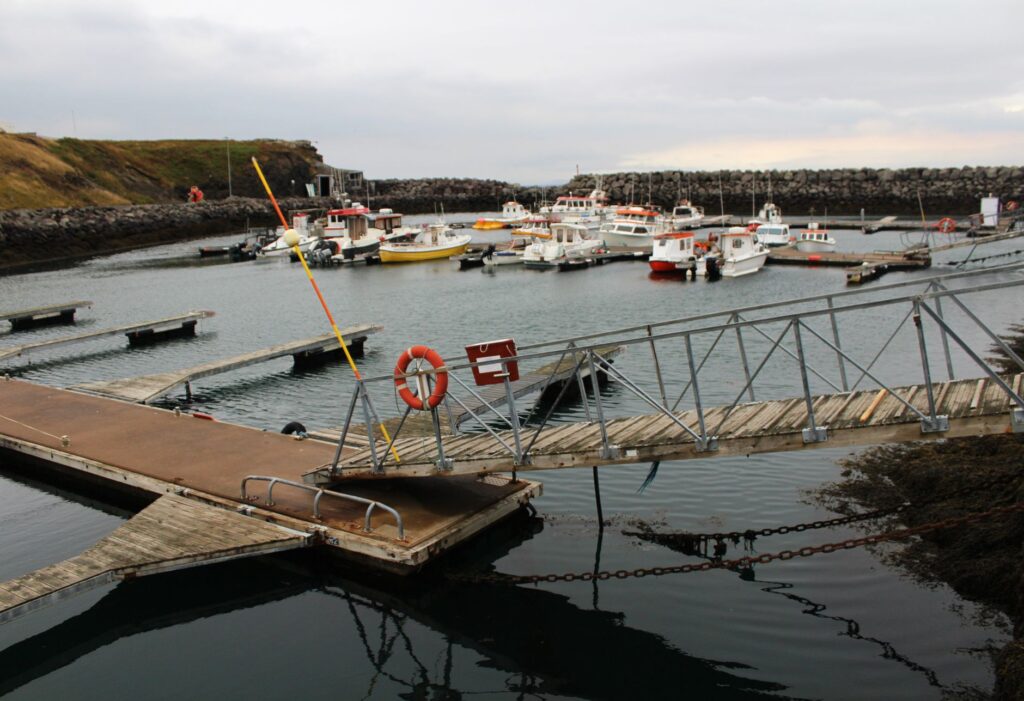
The settlement of Keflavík grew tied to fishing and cod processing. For centuries, its inhabitants depended on what the North Atlantic offered each season. The wooden and corrugated-iron houses, painted in bright colors to withstand the elements, still stand in the old quarter and tell that story without the need for signs. The harbor, now quieter than in the past, retains the layout of the docks where fish were unloaded and nets repaired.
World War II transformed the place. British and later American occupation left an air base that eventually became today’s Keflavík International Airport. That infrastructure explains why the town is now the country’s gateway, but also why its identity blends the local with the global. Residents live with the constant transit of travelers, and many have learned to see it as an opportunity rather than a threat.

In Keflavík, the landscape is not a backdrop: it is the infrastructure on which daily life is built.
The airport as neighbor: living with transit
The airport is not on the outskirts; it is integrated into the municipality. For residents, the sound of planes is part of the day. Some work at the terminal, others in hotels and car-rental companies, and many have seen how tourism has transformed the local economy in recent decades. The town has learned to manage that flow: there are bus routes connecting the terminal with Reykjavík, and the town center offers services designed for both travelers and locals.
But Keflavík is not exhausted by its airport function. A few minutes from the terminal, visitors can find a museum dedicated to the history of aviation in Iceland, a cultural center with a steady program, and an outdoor geothermal pool that operates year-round. That coexistence between the global and the local defines the town’s character: no one pretends tourism does not exist, but neither is it allowed to erase what came before.
The Reykjanes peninsula: a landscape that explains Iceland
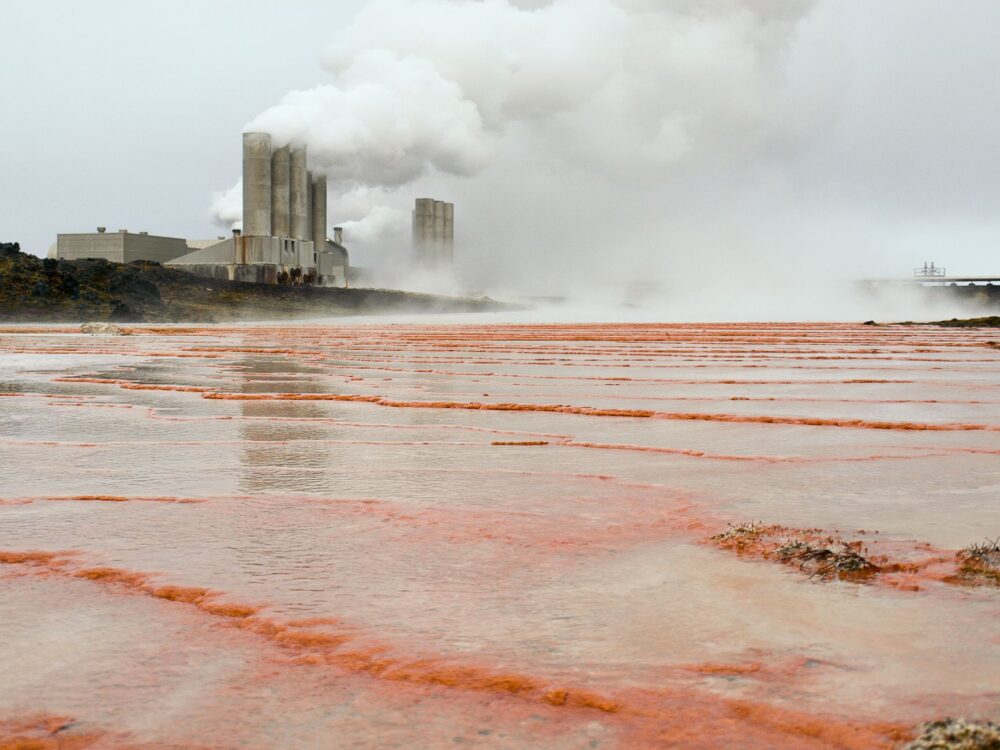
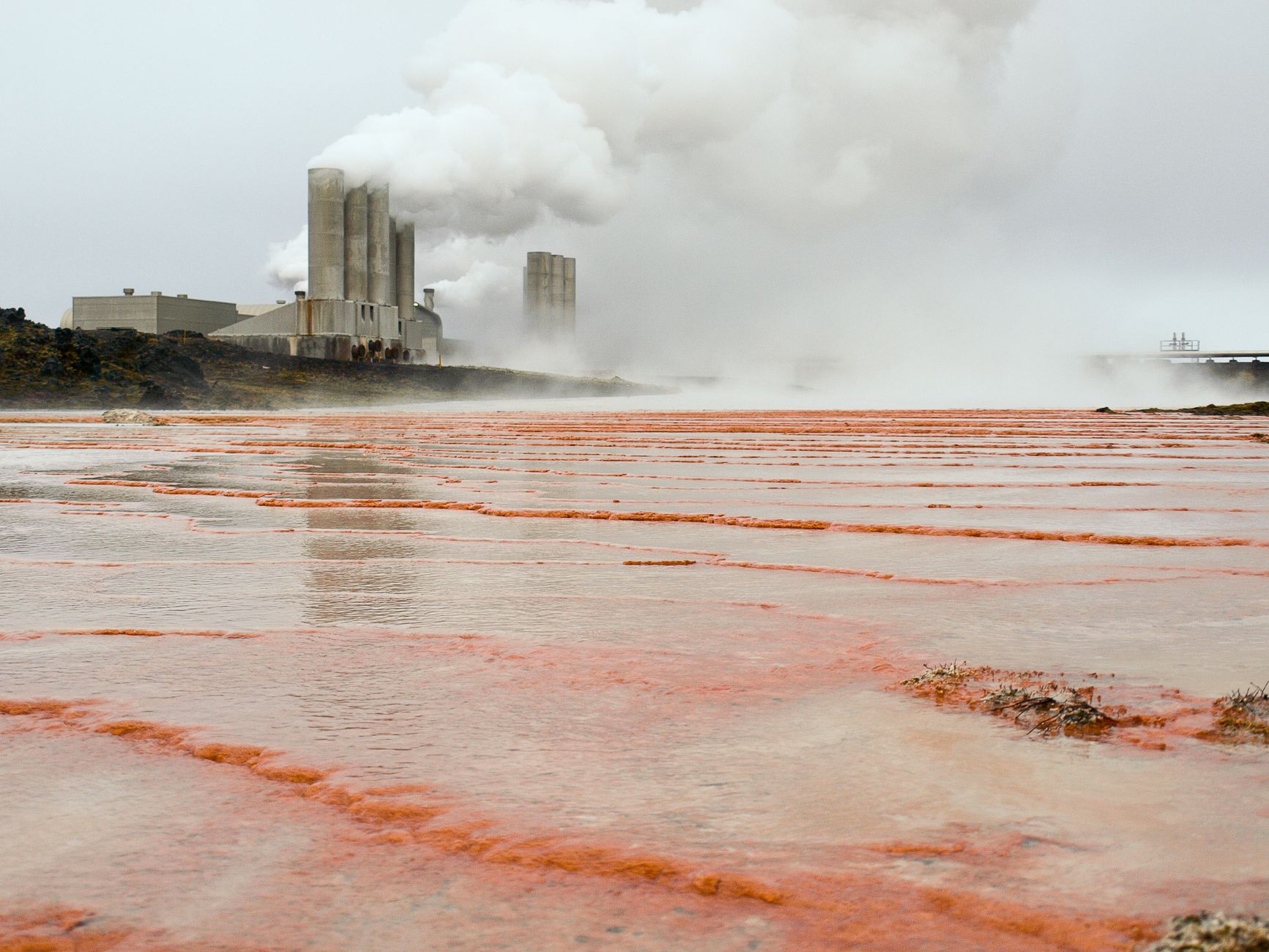
Reykjanes is a volcanic peninsula, young in geological terms, where the earth cracks open and steam rises from the ground. Here lies the Mid-Atlantic Ridge, the boundary between the North American and Eurasian tectonic plates, which crosses the island from southwest to northeast. Walking some of its trails is walking on that invisible border. The landscape is austere: lava fields covered in moss, milky-blue water lagoons and wind-beaten cliffs.
The peninsula is also home to Lake Kleifarvatn, Iceland’s deepest lake, and the geothermal areas of Seltún and Gunnuhver, where water boils and sulfur stains the ground yellow and ochre. These places are accessible from Keflavík by car, but they require caution: boardwalks are marked and authorities insist on not stepping off them. The landscape is beautiful, but also fragile and potentially dangerous.
Everyday heritage: churches, houses and fishing memory
In central Keflavík, Keflavíkurkirkja, with its modern shape and luminous interior, is a landmark visible from much of the town. Nearby, the Reykjanesbær Local Heritage Museum preserves objects and photographs documenting the lives of fishermen, early industries and urban evolution. It is not a grandiose museum but an honest collection that helps explain how people lived before airplanes changed the town’s fate.
The houses of the old quarter, with their sloped roofs and intense colors, resist the onslaught of the weather. Many have been restored and now serve as homes, cafés or small shops. Walking those streets on a summer evening, when daylight lasts until midnight, is one of the most authentic experiences Keflavík offers. In winter, darkness and window lights create a cozy, almost intimate atmosphere.
Keflavík’s identity is not based on exceptional monuments but on the sum of everyday gestures: repairing a net, painting a facade, waiting for the wind to die down.
Life by the water: fishing, harbor and food
Keflavík harbor remains a place of work. Although the fleet is not as numerous as in other eras, boats still go out to fish and fishermen still repair their gear on the docks. Local cuisine reflects that relationship with the sea: fresh fish, often simply prepared, appears on menus in the town center. Cod, herring and salmon are common, as are lamb dishes, a legacy of Iceland’s farming tradition.
For visitors who want to understand local life, a visit to the market or one of the town’s bakeries can be more revealing than any tourist attraction. There you hear everyday Icelandic, see real prices and confirm that Keflavík is a town that functions year-round, not only in high season. The Reykjanesbær cultural center, with its library and exhibition rooms, is another space where the community gathers.
Responsible choices: how to visit without causing harm
Iceland receives more visitors each year than its population can absorb without tension. In Keflavík, that impact is felt directly: the airport is the main entry point and the town bears part of the pressure. For this reason, local authorities and tourism companies insist on responsible tourism. That means, among other things, not stepping off marked trails, not leaving trash in the landscape, respecting geothermal areas and not approaching cliffs when the wind is strong.

It also means supporting the local economy: staying in establishments managed by residents, shopping in town-center businesses and hiring services that give back to the community. Visitors who spend a few hours in Keflavík before heading to Reykjavík or the interior discover that the town has enough substance to justify a stop. It is not just an airport with beds: it is a place with history, landscape and its own way of understanding life in the North Atlantic.
What to see and do in Keflavík and around
The range of activities in Keflavík and the Reykjanes peninsula is varied and accessible. Here are some suggestions that do not require inventing data or promising unrealistic experiences:
- Reykjanesbær Local Heritage Museum: a useful introduction to the area’s fishing and urban history.
- Keflavíkurkirkja: the main church, visible from several points in town, with contemporary architecture that contrasts with traditional houses.
- Keflavík geothermal pool: a leisure space much frequented by residents, especially in winter.
- Seltún geothermal area: about 20 minutes by car, with boardwalks over boiling mud and sulfur.
- Lake Kleifarvatn: a landscape of dark water and volcanic mountains, ideal for a short hike.
- Reykjanes cliffs: lighthouses, seabirds and Atlantic views, always with caution due to wind.
Practical guide
To plan a visit to Keflavík without setbacks, keep a few practical matters in mind. The currency is the Icelandic króna (ISK), and although cards are accepted almost everywhere, carrying some cash for small businesses is useful. The official language is Icelandic, but English is spoken fluently in the tourism sector. The weather is changeable: it can rain, snow or clear up within hours, so waterproof clothing and layers are essential in any season.
Keflavík Airport is connected to Reykjavík by buses running on frequent schedules, and car-rental services are available at the terminal. To move around the Reykjanes peninsula, a car is the most flexible option, although some bus routes cover the main points. It is advisable to check weather conditions and road status before setting out, especially in winter. Excursions to the geothermal area or the cliffs should be done with proper footwear and by following local guidance.

As for accommodation, Keflavík offers hotels, guesthouses and apartments, with prices varying by season. Booking in advance is advisable in summer. For meals, town-center restaurants serve fresh fish, lamb and Nordic-influenced dishes, and there are more informal options at gas stations and cafés. Tipping is not mandatory, as it is usually included in the service. Electricity runs at 230 volts with type F plugs, the same as in much of Europe.
Finally, a recommendation that is not invented data but an observation repeated by those who know the area: do not underestimate the wind. On Reykjanes it blows hard and can change the wind chill drastically. Opening a car door without caution or approaching a cliff edge can be dangerous. The beauty of the landscape invites contemplation, but it also demands respect.
A closing between light and lava
At the end of the day, when the sun sets over the Atlantic and the lava seems to absorb the last light, Keflavík reveals its true nature. It is not a spectacular town in the monumental sense, but a place where life is organized around the essentials: work, weather, community and landscape. The traveler who stops here, even for a few hours, discovers that Iceland does not begin in Reykjavík but on this peninsula of wind and basalt. And that the best way to know it is to walk slowly, listen and leave no trace beyond one’s own footsteps.