


Bac Giang is a province in northeastern Vietnam, about 50 kilometers from Hanoi, with a landscape of hills, rivers, and rice fields that stretches between the Red River Delta and the foothills of the northern mountains. Its capital, Bac Giang City, is an administrative and commercial hub where daily life revolves around bustling markets, ancient temples, and a cuisine that blends influences from the delta and the mountains. Far from the most trodden tourist circuits, this province offers an experience of living heritage: here traditions are not behind glass but in the hands of those who cultivate, cook, and celebrate.
For travelers seeking to understand Vietnam beyond the icons, Bac Giang proposes a different rhythm. There are no large crowds or staged performances for tourists. Instead, there is a network of craft villages, centuries-old temples, and markets where exchange is still a social practice. The key is to approach with curiosity and respect, to understand that heritage is also the daily life of its inhabitants, and that the best way to know it is through attentive observation and conscious consumption.
A territory between delta and mountain
The geography of Bac Giang is marked by transition. To the south, the land flattens into rice paddies that change color with the seasons. To the north, hills rise and give way to tea plantations, forests, and ethnic minority communities. This diversity is reflected in local culture: in the markets you hear different languages, see products of the land, and taste dishes that vary from one district to another.

The Thuong River, a tributary of the Red River, crosses the province and has been a communication and trade route for centuries. Along its banks, villages still preserve traditional houses, communal wells, and temples dedicated to protective spirits. Walking these riverbanks is a way to understand how water has shaped not only the landscape but also the way people live.
Markets as everyday heritage
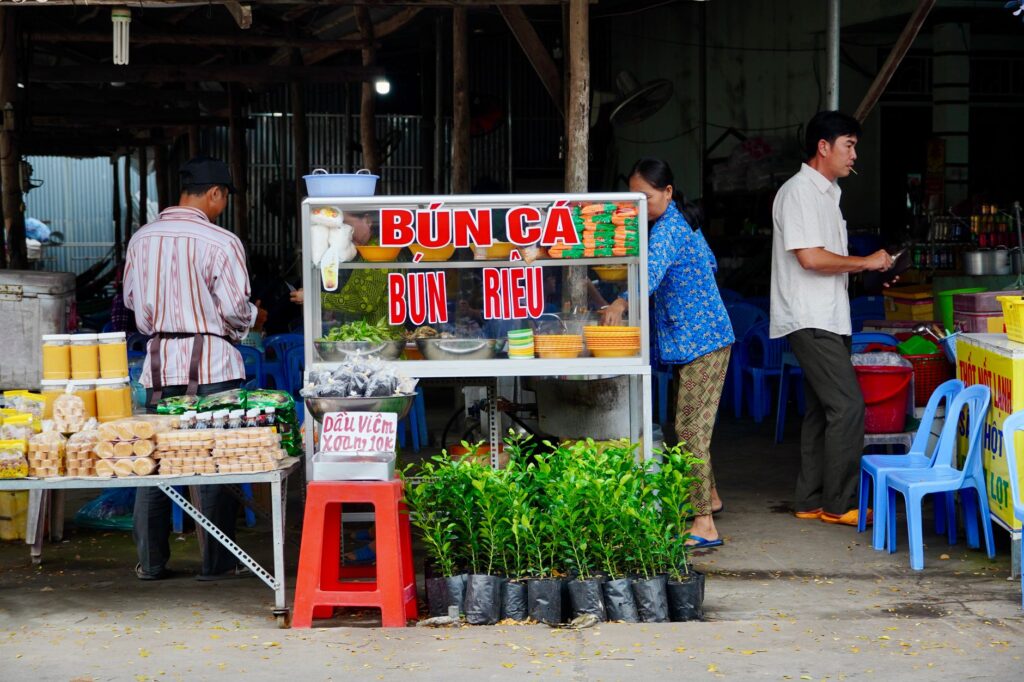
The Bac Giang market in the provincial capital is a good starting point. It is not a market for tourists but a space where producers from the surrounding areas sell vegetables, fruit, fresh fish, and meat. Women arrive at dawn with loaded baskets and bargain with surprising energy. Here you can try banh cuon, a rice roll filled with meat and mushrooms, or bun rieu, a crab noodle soup with tomato and tofu.
Village markets, held on specific days according to the lunar calendar, are even more interesting. They trade agricultural products, tools, and textiles. Some, like the Van Son market in Son Dong District, bring together ethnic communities such as the Cao Lan and San Chay, who come down from the mountains to sell honey, bamboo shoots, and medicinal herbs. Participating in these markets requires respect: asking before taking photos, buying something, and not bargaining aggressively are gestures locals appreciate.

The heritage of Bac Giang is not in a museum: it is in the hand that weighs a bunch of herbs, in the voice that offers a price, and in the gesture of sharing a meal.
Temples and pagodas among rice fields
The province is home to numerous temples and pagodas that combine traditional Vietnamese architecture with Chinese influences. One of the most notable is Vinh Nghiem Pagoda in Yen Dung District, a Buddhist center founded in the 13th century that was an important place for training monks. Its wooden architecture, with curved roofs and shaded courtyards, invites calm. It is not a place for crowds but for silent observation and respect for visiting rules: dress modestly, remove shoes before entering worship buildings, and do not interrupt prayers.
Another point of interest is the temple dedicated to Thanh Mau, the Holy Mother, a central figure in Vietnamese folk religion. These temples, often small and cared for by neighbors, are places of local pilgrimage. During festivals, which follow the lunar calendar, ceremonies with music, dance, and offerings are held. For visitors, the best way to participate is discreetly, following the indications of attendants and avoiding behavior that could be considered disrespectful.
Crafts and trades that endure
Bac Giang is known for its craft villages. In Viet Yen District, the village of Tho Ha maintains the tradition of ceramics and brickmaking, although in recent years it has diversified its production. Walking its narrow streets reveals old kilns and workshops where clay is worked. This is not a spectacle for visitors but a trade passed down from generation to generation.
In other villages, such as Van Ha, bamboo and rattan products are made: baskets, trays, and furniture sold in local markets. Basketry is meticulous work requiring skill and patience. Buying a piece directly from the artisan not only supports the local economy but also lets you take home an object with a story. It is advisable to ask before entering workshops and not to interrupt the work.

The table as a meeting point
The cuisine of Bac Giang reflects its geographical diversity. In the valleys, glutinous rice is grown and used to prepare xoi, a sticky rice dish that can be sweet or savory. In the hills, bamboo shoots, mushrooms, and aromatic herbs are gathered and added to soups and stews. A typical dish is ga doi, free-range chicken raised on the slopes, served with lime leaves and pepper salt.
Eating in Bac Giang is an informal experience. Food stalls in markets and small family eateries offer simple but flavorful dishes. It is common to share a table with strangers, and the gesture of offering a little of what you have is a sign of hospitality. For travelers, accepting an invitation to try something commits you to nothing, but it is a way to create a bond.
Local festivals and celebrations
Throughout the year, Bac Giang celebrates numerous festivities that combine religious rituals with community activities. One of the best known is the Yen The Festival, which commemorates the resistance led by Hoang Hoa Tham in the late 19th century. Although the event has a historical component, it also includes sports competitions, musical performances, and food stalls.
Other celebrations are linked to the agricultural cycle: the harvest festival, the new rice festival, or ceremonies honoring the spirits of water and mountains. Participating in them requires prior information about local customs and following behavioral norms. It is not a spectacle but an expression of faith and community identity.
Landscapes for walking and observing
Beyond the villages, Bac Giang offers landscapes that invite walking. The Tay Yen Tu Nature Reserve in Son Dong District protects subtropical forests and sacred mountains. The trails ascending Mount Yen Tu are used by pilgrims and hikers. The climb is demanding but rewards with views of valleys and forests. It is important to carry water, wear suitable footwear, and leave no waste.
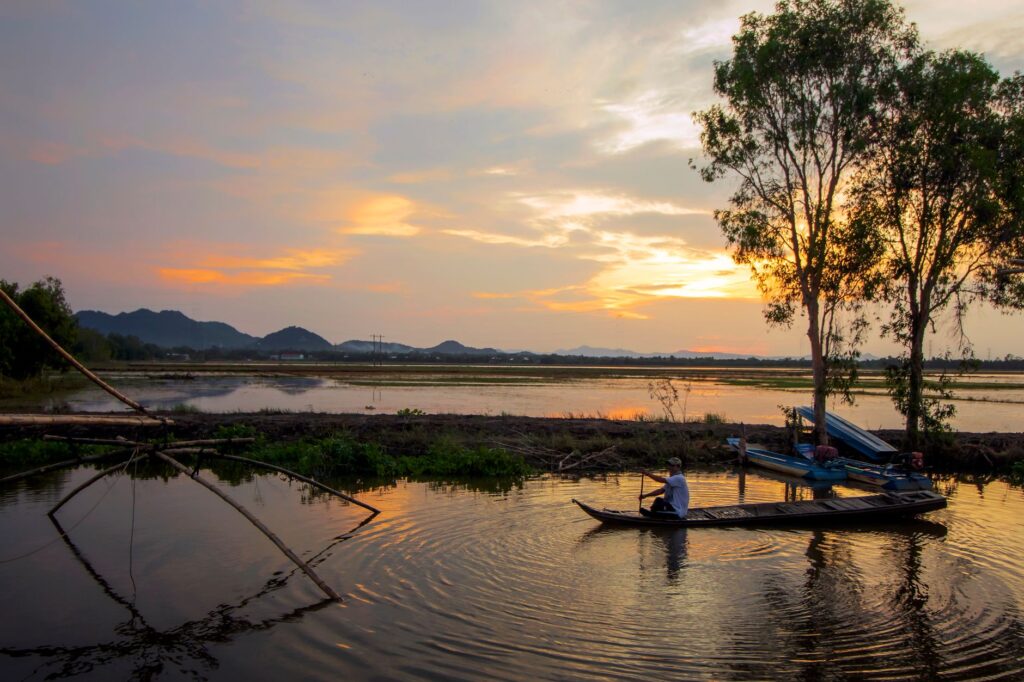
The rice fields of Hiep Hoa and Tan Yen districts change color with the season: intense greens in summer, golds in autumn. Exploring them by bicycle or on foot allows you to appreciate agricultural work and rural life. Farmers are usually friendly, but you must respect their space and not step on crops.
Practical guide
To visit Bac Giang, the easiest way is from Hanoi. Buses and trains cover the journey in about two hours. Bac Giang City has moderately priced hotels and guesthouses. The best time to travel is spring (March-May) and autumn (September-November), when the weather is milder and the landscapes more vivid.
- Transport: buses from Gia Lam Station (Hanoi) and trains from Long Bien Station. Within the province, you can rent a motorbike or hire a local taxi.
- Accommodation: hotels in Bac Giang City and guesthouses in villages. Booking ahead during festivals is advisable.
- Food: try banh cuon, bun rieu, and ga doi. Markets are the best place to eat economically and authentically.
- Cultural respect: dress modestly in temples and pagodas, ask permission before photographing people, and do not touch ritual objects without authorization.
- Sustainability: carry a reusable bottle, avoid single-use plastics, and buy local products directly from artisans.
Bac Giang is not a destination for those seeking tourist comfort but for those who want to understand Vietnam through its everyday gestures. The province offers a lesson in humility: heritage is not something you possess but something you care for and share. At the end of the journey, what remains is not a list of monuments but the memory of a market at dawn, the taste of a simple dish, and the smile of someone inviting you to try it.


