
In the heart of the Croatian Adriatic, off the coast of Dalmatia, a string of islands unfolds—a landscape shaped by human hands and wind over centuries. Kornati National Park, established in 1980, protects an archipelago of more than a hundred islands, islets, and limestone reefs spread across some 220 square kilometers. This is not a destination of golden sandy beaches or palm trees; it is a mineral, dry, luminous territory where transparent sea and white stone define every horizon. In Croatia, few places express the bond between people and the sea with such quiet clarity.
To journey through Kornati is to enter a landscape molded by agriculture and herding for centuries. Here, shepherds built dry-stone walls to mark pastures and protect the soil from wind, while sailors left their mark on coves and inlets. Today, the park stands as an example of how tourism can coexist with conservation when practiced responsibly.
An archipelago of stone and salt
The Kornati archipelago comprises around 89 islands, islets, and reefs aligned northwest to southeast, parallel to the Croatian coast. The main island, Kornat, is the largest and the only one with a significant landmass. The others are fragments of limestone, some so small they barely rise above the water. The landscape is arid, with sparse vegetation, but that very austerity gives it its distinctiveness.
The geology of the archipelago is an open book on Earth’s history. The limestone rocks formed in an ancient tropical sea millions of years ago, then were folded and fractured by tectonic movements. The result is vertical cliffs, eroded platforms, and sea caves that now shelter birds and marine life. The park’s official materials describe this geology as a record of deep time, and walking or sailing among these formations is a lesson in reading stone.
The name Kornati is often linked to the Latin word corona, a crown, because the islands appear to ring the main island of Kornat. Whatever its origin, the image fits: a chain of pale fragments set in blue, each one a chapter of the same story.

The legacy of shepherds and dry-stone walls
One of the most characteristic features of Kornati are the dry-stone walls—constructions without mortar that stretch across the islands. These walls, raised by generations of shepherds, marked pastures and protected crops from wind and livestock. Today, many lie in ruins, but the park works to preserve them as part of its cultural heritage.
Traditional life in Kornati revolved around sheep herding and fishing. Shepherds lived in small stone houses, some of which still stand. The Kornatska kuća, the Kornati house, is an example of vernacular architecture adapted to the climate: thick walls, tile roofs, and small windows for protection from sun and wind.
Today, the permanent population is minimal, but descendants of those shepherds return in summer to tend their flocks and keep traditions alive. The park promotes the conservation of these practices through sustainable development programs, and the dry-stone walls remain the most visible signature of that continuity.
«Kornati is not a place to conquer, but to observe. Its grandeur lies in the absence of artifice.»
Fields, pastures, and the rhythm of the seasons
The cultural landscape of Kornati was never limited to walls alone. Small cultivated fields, known locally as polja, and cleared plots called krčevine, were carved out of the rock wherever soil could gather. These plots were worked by hand and often protected by low stone barriers. The park’s heritage records describe how difficult it was to keep a field productive in such arid conditions.
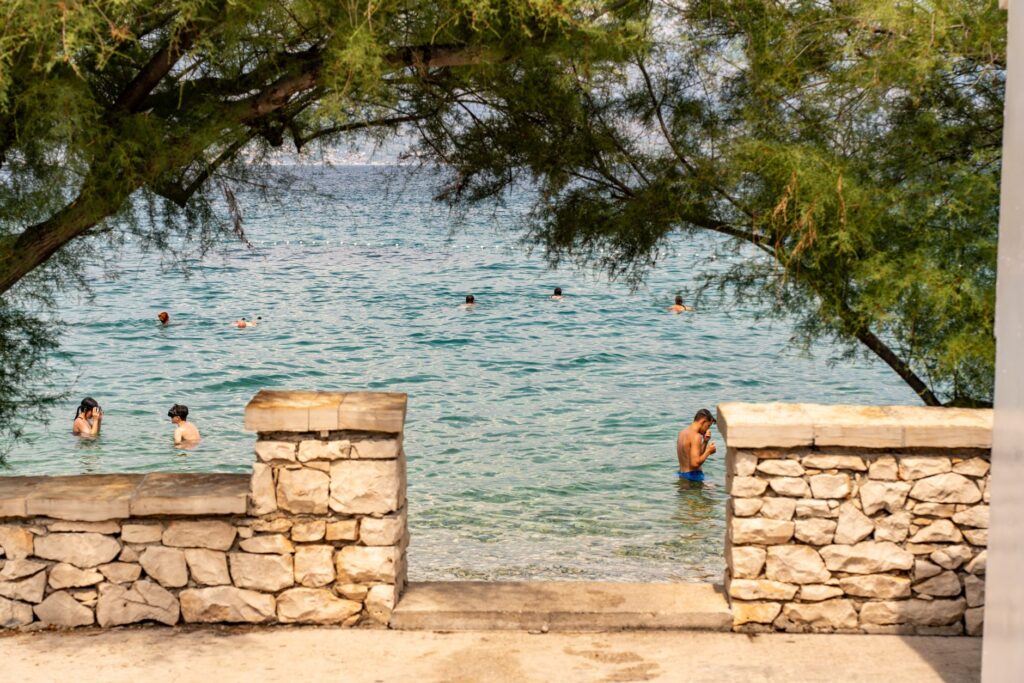
Pastures and shepherds form another layer of that heritage. Grazing shaped the vegetation, kept scrub in check, and gave the islands their open, park-like appearance. When herding declined, the landscape began to change, which is one reason the park documents and supports traditional practices. Visitors who notice the terraces and clearings are seeing the result of centuries of patient labor.
A paradise for responsible boating
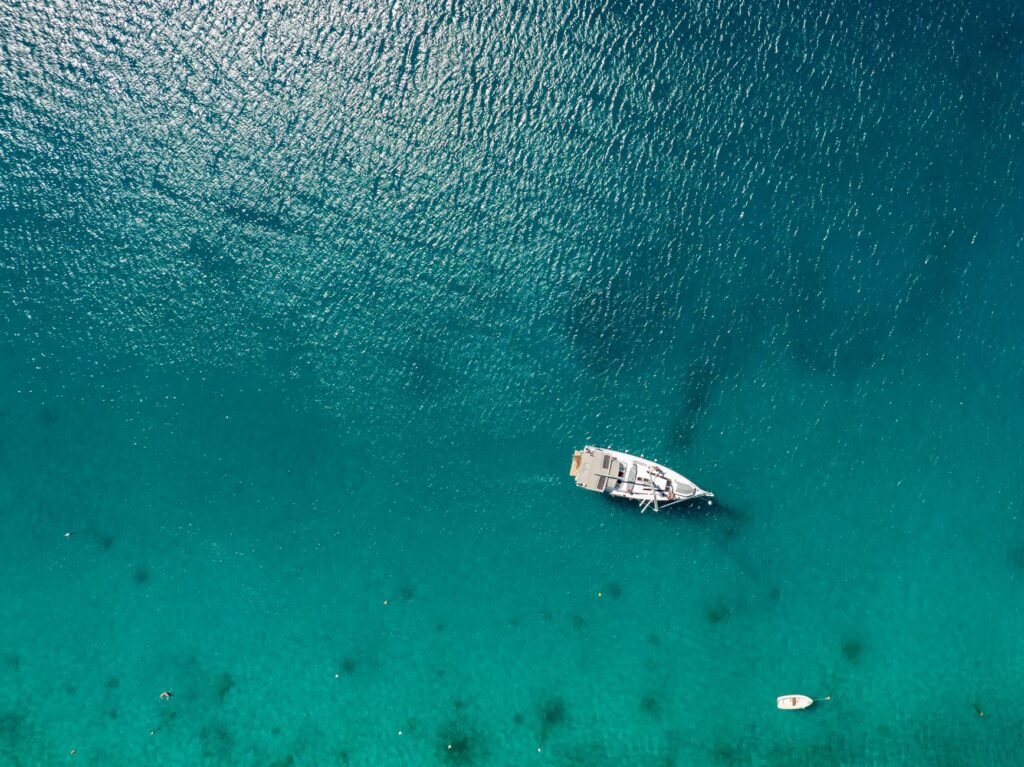
Kornati is a popular destination for sailors exploring the Adriatic by sailboat or motorboat. Its calm waters, sheltered coves, and natural anchorages make it ideal for recreational boating. However, the influx of visitors has led the park to implement measures to protect the seabed, especially the Posidonia oceanica meadows, essential to the ecosystem.
The SASPAS project (Safe Anchoring and Seagrass Protection in the Adriatic Sea) exemplifies how authorities work to regulate anchoring and prevent damage to seagrass. Visitors must use designated moorings and respect exclusion zones. The park also provides information on responsible boating practices and organizes awareness activities. The park has presented its experience with ecological moorings at nautical events, sharing lessons with other Adriatic protected areas.
This is not a matter of restriction for its own sake. A seagrass meadow can take decades to recover from a single anchor scar, so the logic of the rules is simple: protect the meadow, and the fish, the clarity of the water, and the experience of future sailors all benefit.
«The sea of Kornati is not a stage; it is a living organism that demands care. Every poorly set anchor leaves a scar.»
Biodiversity on land and sea
Despite its arid appearance, Kornati harbors surprising biodiversity. On land, vegetation adapts to drought: aromatic plants like rosemary and sage, and some endemic species. Seabirds such as the peregrine falcon and Audouin’s gull nest on the cliffs. In the sea, Posidonia meadows and rocky reefs support rich underwater life: fish, mollusks, crustaceans, and corals.
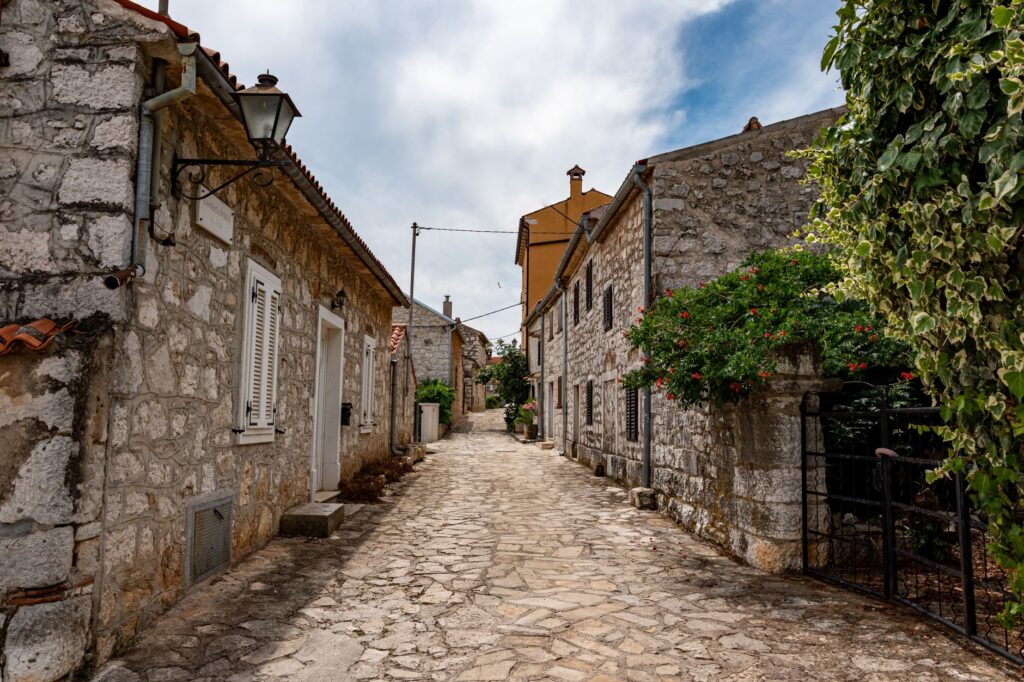
The park runs species and habitat monitoring programs and collaborates with universities and scientific organizations. Commercial fishing is regulated, and sustainable artisanal fishing is encouraged. Visitors can snorkel and dive in designated areas, always respecting conservation rules.
The park’s biology pages highlight specific species and habitats, from the marine life of the underwater slopes to the birds that patrol the cliffs. Speleology is part of the picture too: caves and pits on the islands offer shelter to wildlife and clues to the archipelago’s geological past. For the visitor, the practical takeaway is simple: observe without disturbing, and keep a respectful distance from nests and colonies.
Cultural heritage: from prehistory to today
The history of Kornati dates back to prehistoric times. Remains of Neolithic settlements have been found, and later the area was under Illyrian, Greek, and Roman influence. In the Middle Ages, the Venetians controlled the archipelago, which later passed to the Republic of Ragusa and then the Austro-Hungarian Empire.
One of the most notable monuments is the Fortress of St. Nicholas (Tvrđava Sv. Nikole), located at the entrance to the Kornati channel. Built in the 16th century by the Venetians to protect navigation, it is now a symbol of the park and offers panoramic views of the archipelago. There are also rural churches and chapels that testify to human presence over the centuries.
The park’s heritage section organizes this long story into clear periods: from Neolithic times to Byzantium, the arrival of the Croats, and the seventeenth to nineteenth centuries. That structure is useful for visitors, because it shows that Kornati was never an empty place. It was a frontier, a grazing ground, a navigation corridor, and a spiritual landscape with churches and chapels scattered among the stones.
Life on the water: maritime traditions
Kornati’s relationship with the sea is ancestral. Fishing, transport, and navigation have been central activities for local communities. The Kornatski brod, a type of traditional wooden vessel, exemplifies maritime ingenuity adapted to Adriatic conditions. Although few examples remain, the park and some associations work to preserve this heritage.
Traditional sailboat regattas and maritime festivals are occasions to celebrate local culture. Visitors can learn about traditional navigation techniques in workshops and exhibitions organized on the island of Kornat. The park’s traditional values pages also cover the Kornati boat, the fields and clearings, the pastures and shepherds, and the guardians of Kornati heritage, a reminder that conservation here is as much about culture as it is about nature.
For the traveler, these traditions offer a different way to look at the islands. A cove is not just an anchorage; it may be a place where boats were built, nets were mended, and families waited for the catch. Understanding that layer of meaning changes how the landscape feels.
Practical guide
To visit Kornati, plan ahead. Access to the park is mainly by sea, either on a private boat or organized excursions from nearby cities like Zadar, Šibenik, or Biograd na Moru. There are also ferry connections to some islands, but service is limited.
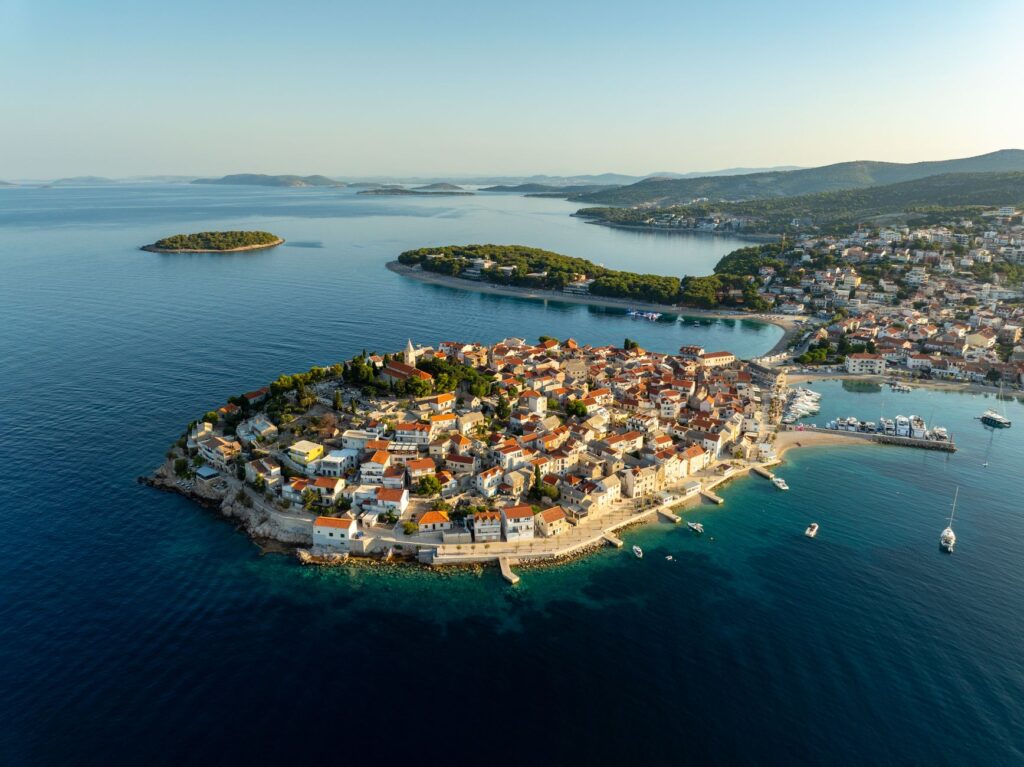
The park has several mooring zones and eco-buoys to avoid damaging the seabed. Consult the mooring map and visitor rules on the park’s official website. For overnight stays, there are accommodation options on Kornat and some nearby islands, though supply is limited and early booking is advisable.
- Access: mainly by sea; excursions and private boats are the usual options.
- Mooring: use designated buoys and respect exclusion zones.
- Best season: May to September, with July and August the busiest.
- What to bring: sun protection, water, and suitable footwear for walking on stone.
- Visitor information: check tickets, rules of conduct, and locations of buoys before departure.
The best time to visit is from May to September, when the weather is warm and the sea calm. In July and August, crowds increase, so early mornings are best for quieter coves. Bring sun protection, water, and suitable footwear for walking on stone.
Respect for the environment is essential: do not leave waste, do not collect plants or animals, and keep a prudent distance from wildlife. The park offers guided tours and educational activities for all audiences. The park also promotes sustainable tourism through its development strategy and provides recommendations on local products and services, which support the communities around the archipelago.
A closing for memory
At sunset, when golden light bathes the dry-stone walls and the sea turns copper, Kornati reveals its true essence: a place where nature and human culture have intertwined for centuries. It is not a destination to consume, but to contemplate and learn from. In Croatia, the archipelago stands as a reminder that beauty can be austere and that the most enduring monuments are sometimes made of nothing more than stone, patience, and respect. The next time you sail the Adriatic, remember these islands are not just an archipelago, but a living testament to adaptation and respect.