In the central massif of the Picos de Europa, in northern Spain, there is a point where the mountain stops being a photographic backdrop and becomes a decision. The Collada de Cabrones, a high pass between glacial valleys in the northern Iberian Peninsula, sums up that transition: it is not a place for improvisation, but for arriving with a warned body and an educated eye. Hiking here is not measured in kilometres, but in the sum of preparation, respect for high pastures, and understanding of a limestone relief that changes character with the mist.
This guide does not propose technical routes or promise summits. It proposes something more useful: understanding what it means to walk in the Picos de Europa with judgement, how to prepare a mid-mountain day, and why responsible visiting in this territory is a form of courtesy towards those who live and work in it.
A relief that sets its own pace
The Picos de Europa form a group of limestone massifs in northern Spain, spread across Asturias, Cantabria, and León. The dominant rock, limestone, dissolves with water and creates a landscape of sinkholes, chasms, karst pavements, and gorges that forces walkers to read the terrain carefully. No two valleys are alike, and orientation changes completely depending on the slope.
The Collada de Cabrones, in the central sector, acts as a hinge between two worlds: the high pastures still used in summer and the vertical walls that have made this range famous among climbers. For those on foot, the lesson is simple: elevation gain rules. A short section can take longer than expected if the ground is wet or if mist erases landmarks.
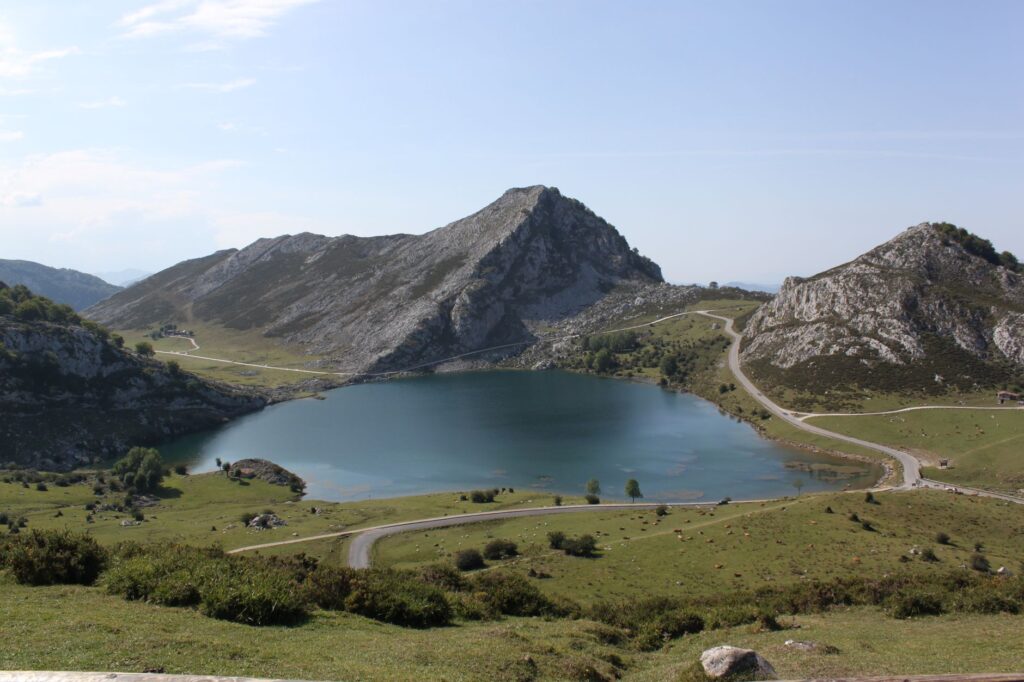
In the Picos de Europa, the mountain is not conquered: every hour is negotiated with the weather and with your own fatigue.
Before setting out: preparation starts at home
Preparing a hiking day in this environment begins days in advance. It is worth reviewing your real physical condition, not the ideal one. A mid-mountain route with accumulated elevation gain demands regular walking in the preceding weeks. This is not about training like an athlete, but about not discovering mid-climb that your legs will not respond.
The backpack should weigh as little as possible. Enough water for the day, sun protection, a waterproof layer and an insulating layer, energy food, and a basic first-aid kit. On limestone terrain, trekking poles help distribute effort on descents, where knees suffer more than they seem to.
- Footwear with grippy soles and ankle support: wet rock and loose stones are the norm.
- Map and compass or GPS with spare battery: mobile signal is not reliable in every valley.
- Layered clothing: temperature can vary notably within a few hours.
- Water and food: there are no supply points on most high routes.
Reading the landscape: pastures, mist, and limestone
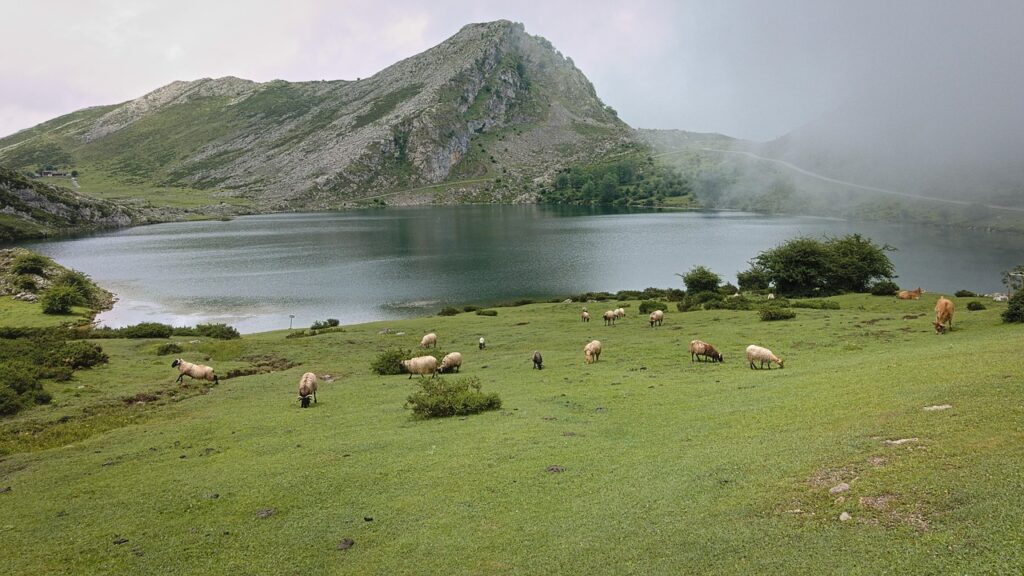
The landscape of the Picos de Europa is not just a backdrop. High pastures sustain extensive livestock farming that has shaped the territory for centuries. The cows and sheep that cross your path are not a picturesque element: they are an active part of an economic and ecological system that keeps meadows open and holds back scrub encroachment.

Walking with respect means not startling livestock, closing gates you open, and staying on marked trails where the terrain is fragile. Limestone erodes easily, and a poorly chosen shortcut can leave a visible scar for years.
The best memory a hiker can leave in the Picos de Europa is the absence of their passing.
Atlantic mist: ally and warning
The proximity of the Cantabrian Sea makes mist a regular presence. Within minutes, a clear hillside can be covered by a thick haze that reduces visibility to a few metres. For the walker, this is not a tragedy but a condition of the terrain that demands adaptation.
When mist descends, the prudent thing is to stop, orient yourself with map and compass, and assess whether to continue or turn back. The mountain will still be there tomorrow. Mist also has a kind face: it softens the landscape, silences the environment, and turns the forest into an almost unreal place. Learning to walk in it is part of the experience.
Accessibility and choosing the route
Not all routes in the Picos de Europa demand the same preparation. There are valley paths, forest tracks, and mid-mountain trails suitable for people with moderate fitness. The key is to choose according to real abilities, not vanity.
For those seeking a gentle approach, the access valleys offer shorter routes with less elevation gain. For those with experience, ridge routes and pass crossings require planning, suitable equipment, and sometimes technical knowledge. In all cases, getting information at interpretation centres and asking rangers or mountain huts is more useful than any internet forum.
Responsible visiting: more than a label
The concept of responsible visiting has become a commonplace, but in the Picos de Europa it has a concrete meaning. It means not leaving waste, not collecting plants or minerals, not disturbing wildlife, and not widening trails with shortcuts. It also means respecting hut schedules and car park rules, which exist to prevent access saturation.
Mountain tourism has grown in recent years and pressure on paths is real. Walking in low season, starting early to avoid peak hours, and choosing less crowded routes are simple ways to reduce impact. The mountain does not need more visitors, but better ones.

What to carry: a reasonable list
The equipment list for a hiking day in the Picos de Europa is not endless. The essentials fit in a 20 to 30 litre backpack. In addition to suitable footwear and clothing, it is worth including a headlamp, a whistle, a thermal blanket, and a phone with a charged battery, even if there is no coverage.
- Water: at least one and a half litres per person for a mid-mountain day.
- Food: nuts, fruit, and some slow-release energy food.
- Protection: sunscreen, sunglasses, and a cap, even in mist.
- Navigation: local map, compass, and, if used, GPS with external battery.
Practical guide
The best season for walking in the Picos de Europa runs from late spring to early autumn, although each season has its character. In summer, temperatures are milder than on the plateau, but afternoon storms are frequent. In spring, snow can persist on high passes. In autumn, the colours of the beech woods and lower crowds compensate for shorter days.
To reach the area, access roads from Asturias, Cantabria, and León are well laid out but mountainous: curves, gradients, and narrow sections. It is advisable to drive calmly and allow more time than the navigator indicates. Main access car parks fill early in high season.
Accommodation in nearby valleys includes rural houses, mountain hotels, and mountain huts. Huts are an excellent option for those who want to start the route at dawn, but advance booking is advisable. As for food, local gastronomy is based on hearty dishes: fabada, local cheeses, mountain meats, and traditional sweets. It is not light cuisine, but it is honest and restorative.

For information on trail conditions, weather, and safety recommendations, visitor centres and local tourism offices provide updated information. Mountain huts and rangers are also a reliable source. It is best not to trust outdated information on social media.
Finally, a piece of advice that does not appear in brochures: walk slowly. The Picos de Europa are not a theme park. They are a living mountain, with livestock, mist, slippery stones, and a beauty revealed only to those who take the time to look. Haste is the only unnecessary luggage.