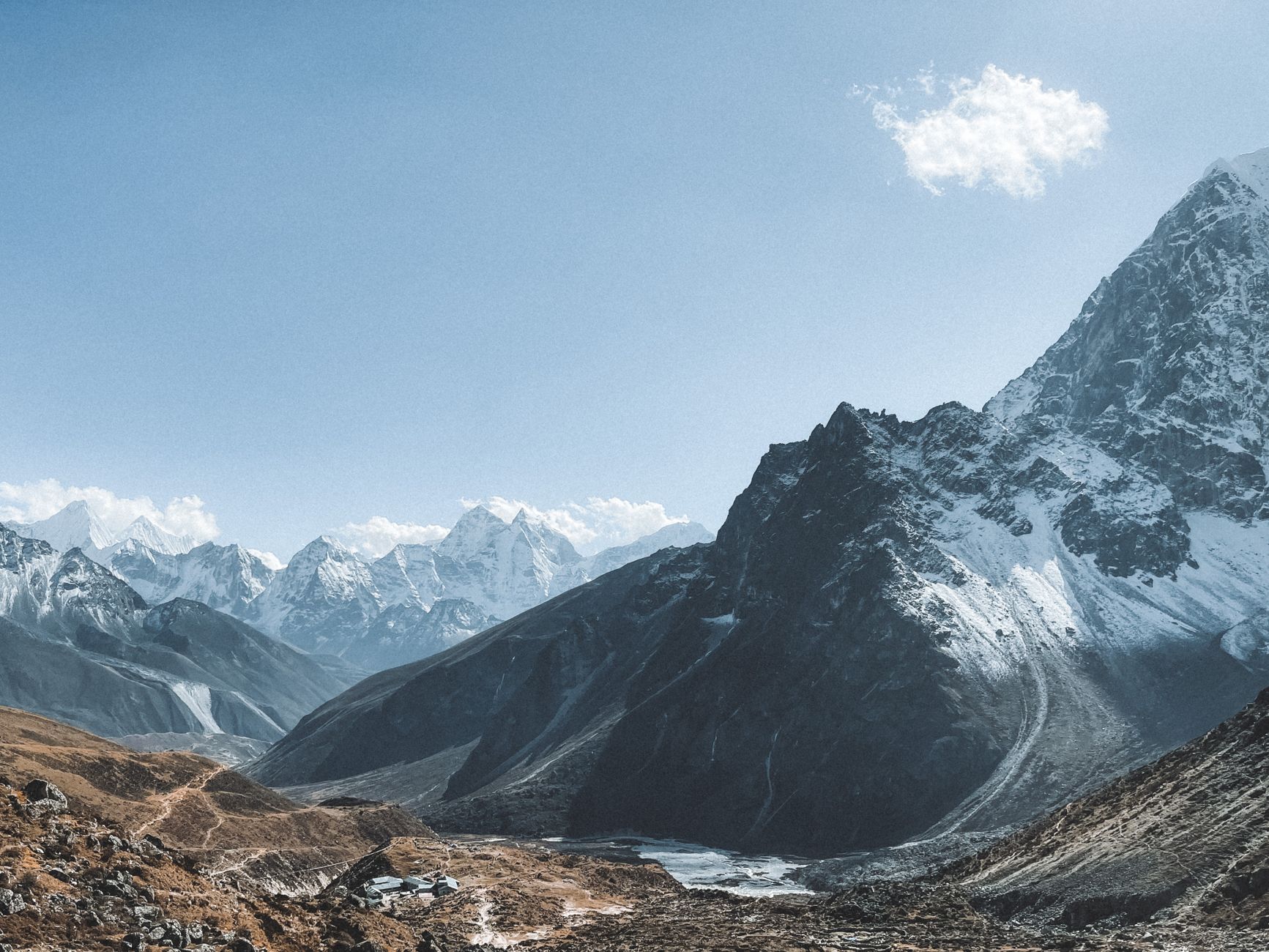

Sagarmatha National Park in Nepal is far more than the gateway to Everest. Its 124,400 hectares in the Solu-Khumbu district contain seven peaks above 7,000 metres, retreating glaciers, and a network of deep valleys where life is organised at altitudes that would be uninhabitable in Europe. In practice, it is a natural laboratory for measuring the pulse of climate change in the Himalayas.
Since its inscription as a UNESCO World Heritage Site in 1979, the park has combined strict conservation with human presence. More than 6,000 Sherpas live within its boundaries, distributed across some twenty villages, and their Tibetan Buddhist culture has been, according to park managers, a decisive factor in protecting the environment. The question running through this territory is no longer how to preserve a pristine space, but how to maintain a living ecosystem when the climate that sustains it is changing.
A vertical territory, from forest to bare rock
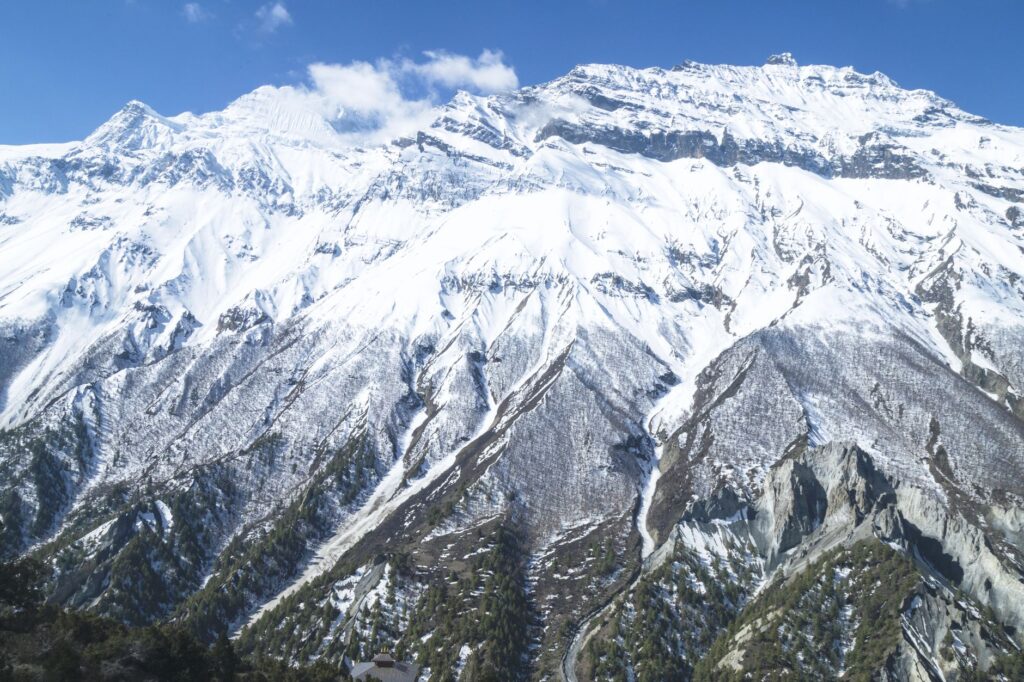
The park’s geography is organised in altitude bands that function as ecological floors. Below 4,000 metres, forests of rhododendron, birch, and pine appear, sheltering birds and small mammals. Between 4,000 and 5,000 metres, high-altitude grasslands and low shrubs dominate. Above that, the landscape turns mineral: snowfields, glacial moraines, and rock walls.
Sixty-nine percent of the park’s surface is barren land above 5,000 metres. Only 28% is grazing land, and roughly 3% retains forest cover. That proportion explains the system’s fragility: any alteration in the lower band propagates upward with consequences that are difficult to reverse.
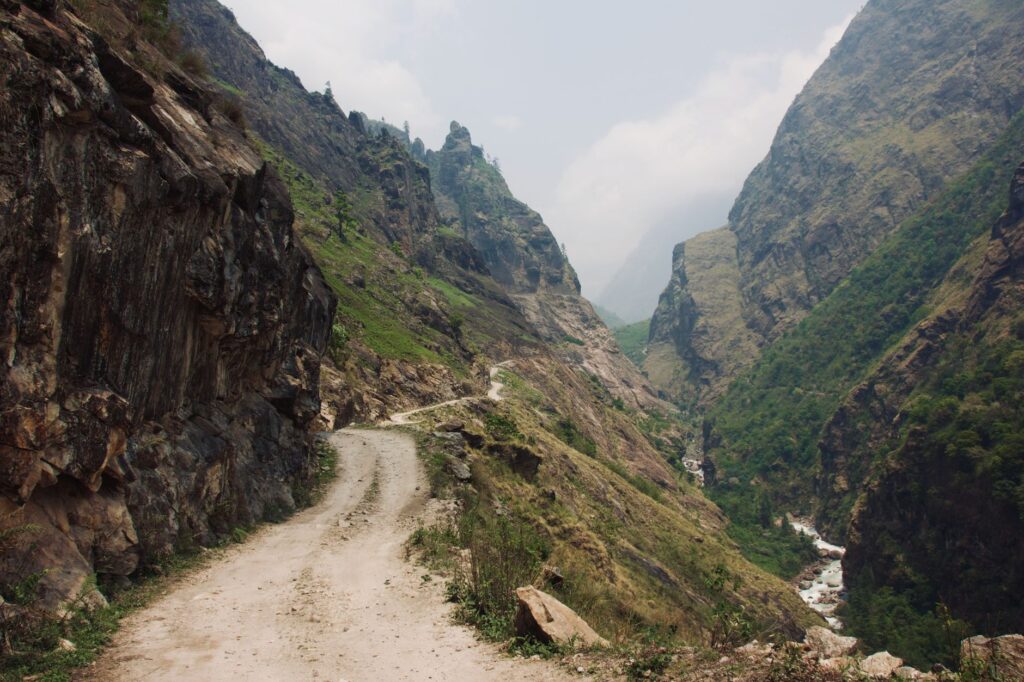
Conservation in Sagarmatha does not depend only on rangers and regulations: it depends on Sherpa communities continuing to regard the mountain as a sacred space.
Retreating glaciers and growing lakes
The park is the main source of freshwater for the upper Dudh Kosi River basin. Its glaciers feed springs, streams, and lakes that sustain both local communities and valley ecosystems. The problem is that this natural storage system is changing.
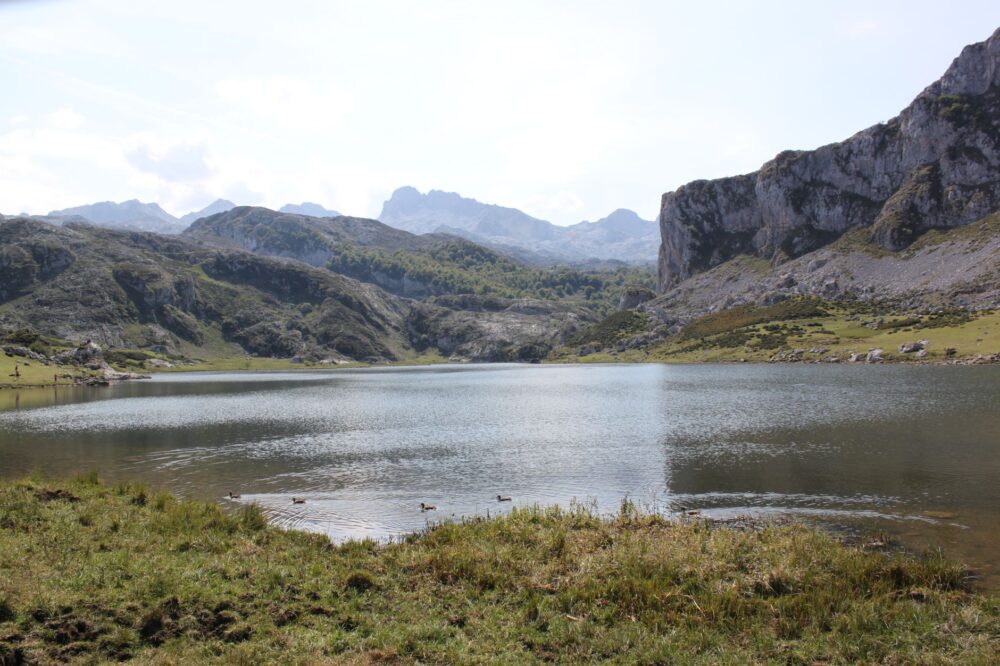
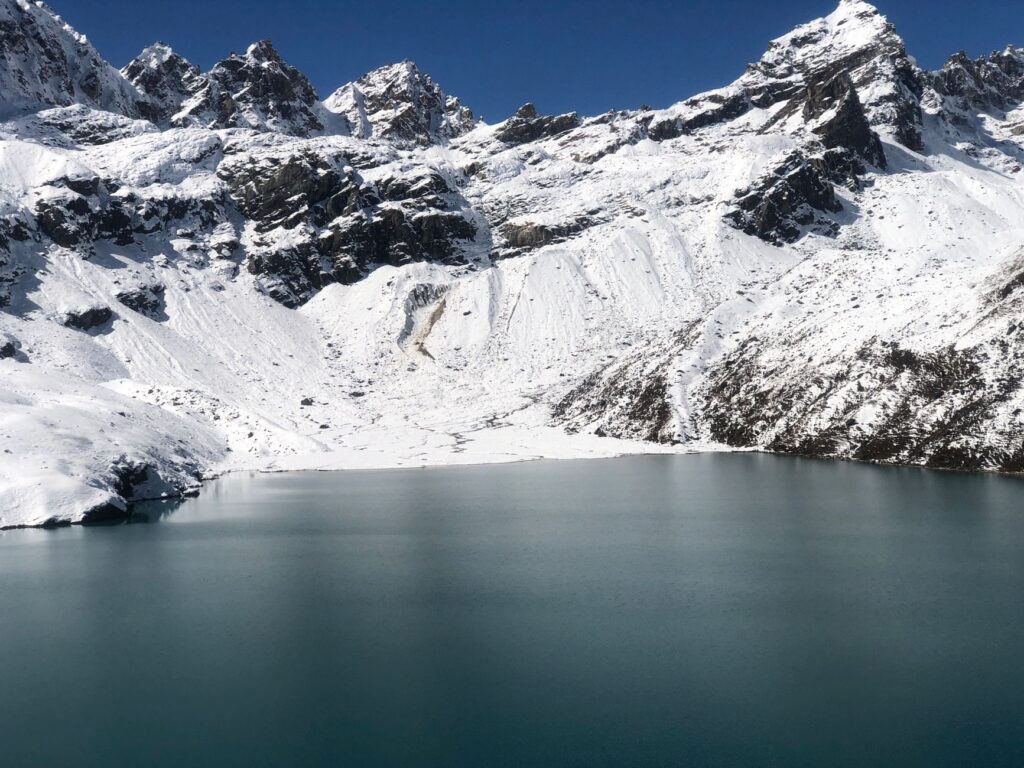
The glacial lakes of Gokyo and its surroundings were declared a Ramsar site in 2007, a recognition that underscores their ecological value and their role as indicators of glacial retreat. Rising average temperatures in the region have accelerated the melting of ice masses that took centuries to form. The result is a double phenomenon: more water available in the short term, and a progressive loss of reserves that will not be replenished.
Park managers include among their priorities the monitoring of global warming impacts on flora, fauna, and Sherpa communities. This is not an abstract concern: glacial retreat modifies water availability for pastures and crops, alters the cycles of cold-adapted species, and transforms the landscape that sustains the trekking economy.
Snow leopards, red pandas, and high-altitude wildlife
The park’s fauna includes rare and elusive species. The snow leopard inhabits the most remote and rocky areas, where it finds prey such as the bharal or Himalayan blue sheep. The red panda, also known as the lesser panda, occupies high-altitude forests and depends on the presence of bamboo and dense undergrowth.
The reappearance of the snow leopard in areas of the park where it had ceased to be recorded is interpreted as a sign that the habitat can still support both predators and prey. It is a first-order ecological indicator, because this species requires large territories and stable herbivore populations.
Birdlife is equally relevant. The park is home to mountain species adapted to altitude, some of them linked to rhododendron forests and alpine grasslands. The combination of ecological floors, from temperate forest to nival rock, explains the biological diversity of a territory that, at first glance, appears to be only stone and ice.
The Sherpas: culture, religion, and land management
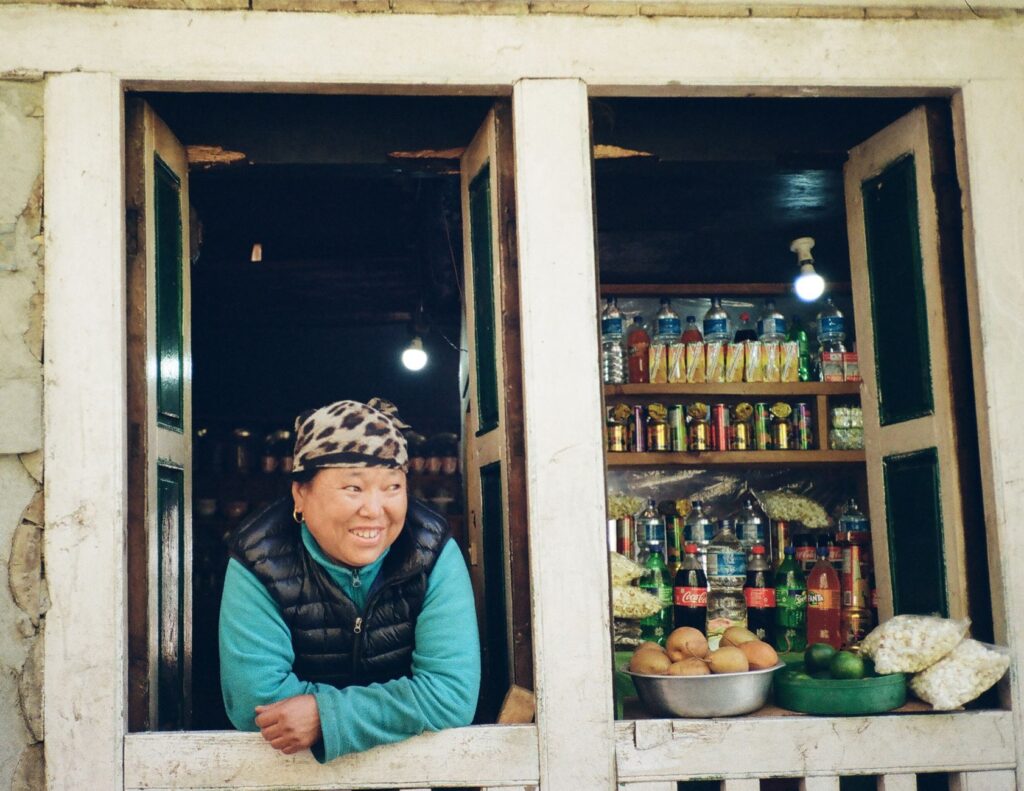
The Sherpa presence in the region dates back some four centuries. Of Tibetan Buddhist tradition, these communities have developed natural resource management practices that, according to park officials, have contributed decisively to conserving the environment. These include restrictions on hunting and animal slaughter, and reverence for all living beings.
This worldview is not a cultural ornament: it is a management system. Sacred areas, forests protected by tradition, and community rules on the use of pastures and firewood have functioned for generations as mechanisms for controlling human impact. When these practices weaken, pressure on the ecosystem increases.
The park does not protect an empty landscape, but an inhabited territory where Sherpa culture is part of the conservation system.
Tourism: economic engine and growing pressure
The number of visitors has grown notably. In 1979, the year of its inscription on the World Heritage list, the park recorded some 3,600 visitors. By 2010, it exceeded 25,000. This increase has boosted the local economy, with improvements in health, education, and infrastructure, but it has also brought problems.
The construction of unauthorised trails, lodge development, energy demand, and waste management are among the challenges acknowledged by park managers themselves. Garbage is one of the main obstacles, and its management falls partly to the Sagarmatha Pollution Control Committee, an NGO based in Namche Bazar that works with park authorities.
Demand for firewood for heating and cooking has degraded fragile mountain forests. Micro-hydro projects have partially relieved that pressure, but have not eliminated it. The balance between receiving visitors and maintaining ecological integrity remains the crux of the debate.
A conservation model with communities inside
Since 2002, the park has had a buffer zone to the south that acts as an additional protective layer. The buffer zone programme includes management committees, user committees, and local groups that participate in resource administration. In addition, the Government of Nepal allocates 50% of park revenue to local communities through the Integrated Conservation and Development Programme.
The Park Advisory Committee, made up of local leaders, village elders, lamas, and park authority representatives, is a key instrument for achieving cooperation and support. The effectiveness of this model lies in the fact that communities are not merely beneficiaries, but co-participants in decision-making.
Protection is reinforced by other territorial designations: Makalu Barun National Park, established in 1998 to the east, and the Gauri Shankar Conservation Area, created in 2010 to the west. To the north, the park borders the Qomolangma Nature Reserve in the Tibet Autonomous Region. This cross-border continuity is essential for highly mobile species such as the snow leopard.
Climate change: the factor that alters everything
Climate change is not a future threat in Sagarmatha: it is an ongoing process. Glacial retreat, altered water cycles, and changes in high-altitude vegetation affect both biodiversity and human communities. Park managers have identified monitoring these impacts as an explicit priority.
The paradox is that the same landscape that attracts visitors is the one changing fastest. The glaciers photographed today will be different in a few decades. The glacial lakes considered an attraction today may become sources of risk if their growth destabilises the moraines that contain them.
For Sherpa communities, climate change translates into uncertainty about pastures, water, and crops. For scientists, it is an opportunity to study high-mountain processes in real time. For managers, it is the need to adapt a management plan to conditions that do not remain stable.
What can be observed and what cannot
The park is not a zoo or a botanical garden. Wildlife observation requires patience, knowledge of the terrain, and above all, respect for animals. The snow leopard is extremely elusive; the red panda is difficult to spot among dense vegetation. Mountain birds and large herbivores such as the bharal are more accessible in certain areas and seasons.
A visitor’s best contribution to conservation is not a photograph, but appropriate conduct: staying on trails, leaving no waste, not feeding animals, and not purchasing products that encourage illegal resource extraction. The park is a protected area, not a theme park.
Practical guide
Access to Sagarmatha National Park is mainly by air to Lukla, from where trails lead to Namche Bazar and the high zones. There are also walking approaches from the south, longer and less frequented. The trekking season is concentrated in spring and autumn, when weather conditions are most stable.
- Entry: the park requires an access permit processed at the corresponding offices. It is mandatory for all visitors.
- Acclimatisation: altitude is the main risk factor. Ascents should be gradual, with rest days to avoid altitude sickness.
- Waste: everything taken up must be brought down. Waste management is one of the park’s acknowledged problems.
- Wildlife: keep distance, do not chase animals, and do not use sound lures. Responsible observation is the only acceptable kind.
- Accommodation: lodges and tea houses exist on the main routes. Capacity is limited in high season.
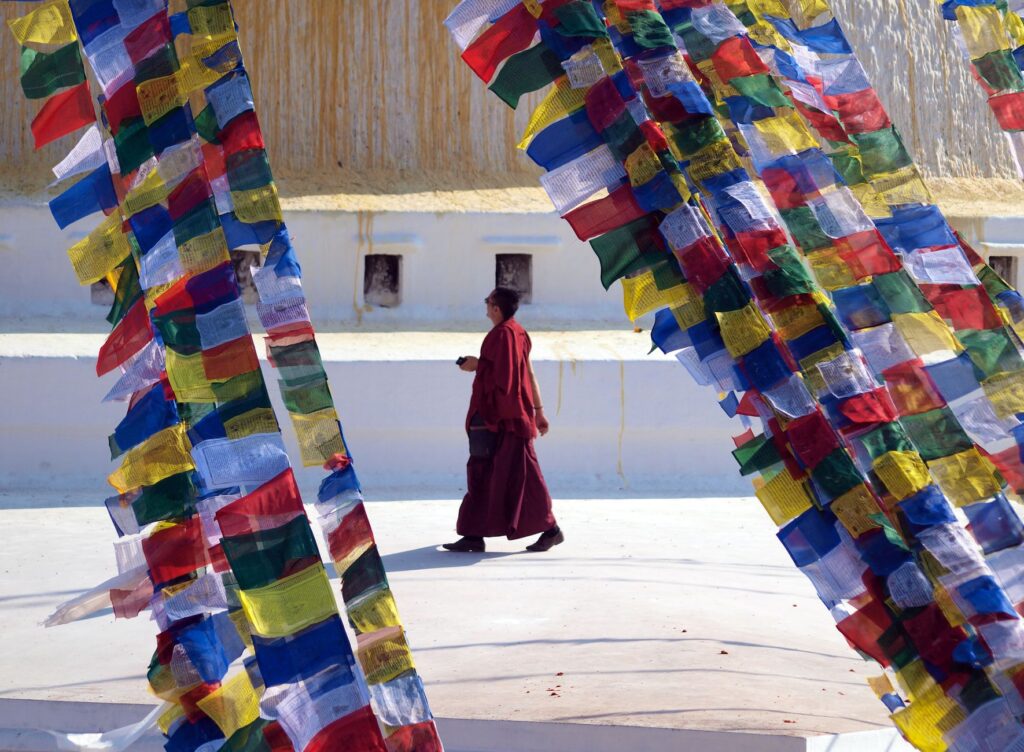
- Cultural respect: Sherpa communities are Buddhist. Religious practices, monasteries, and sacred areas should be treated with respect.
Sagarmatha National Park is a territory where mountain, culture, and science are inevitably intertwined. It is not a place to conquer, but to understand. And in a context of accelerated climate change, that understanding is more urgent than ever.