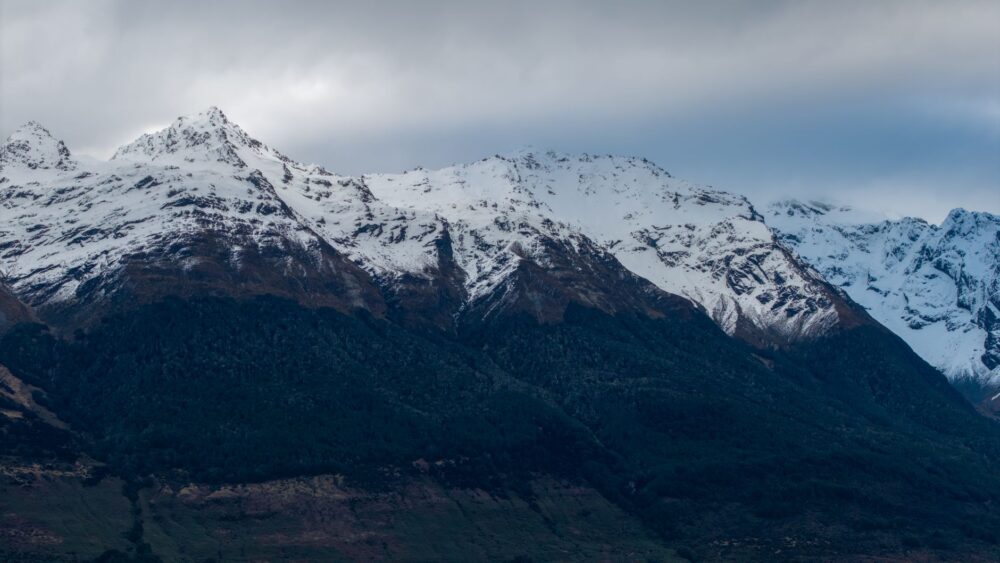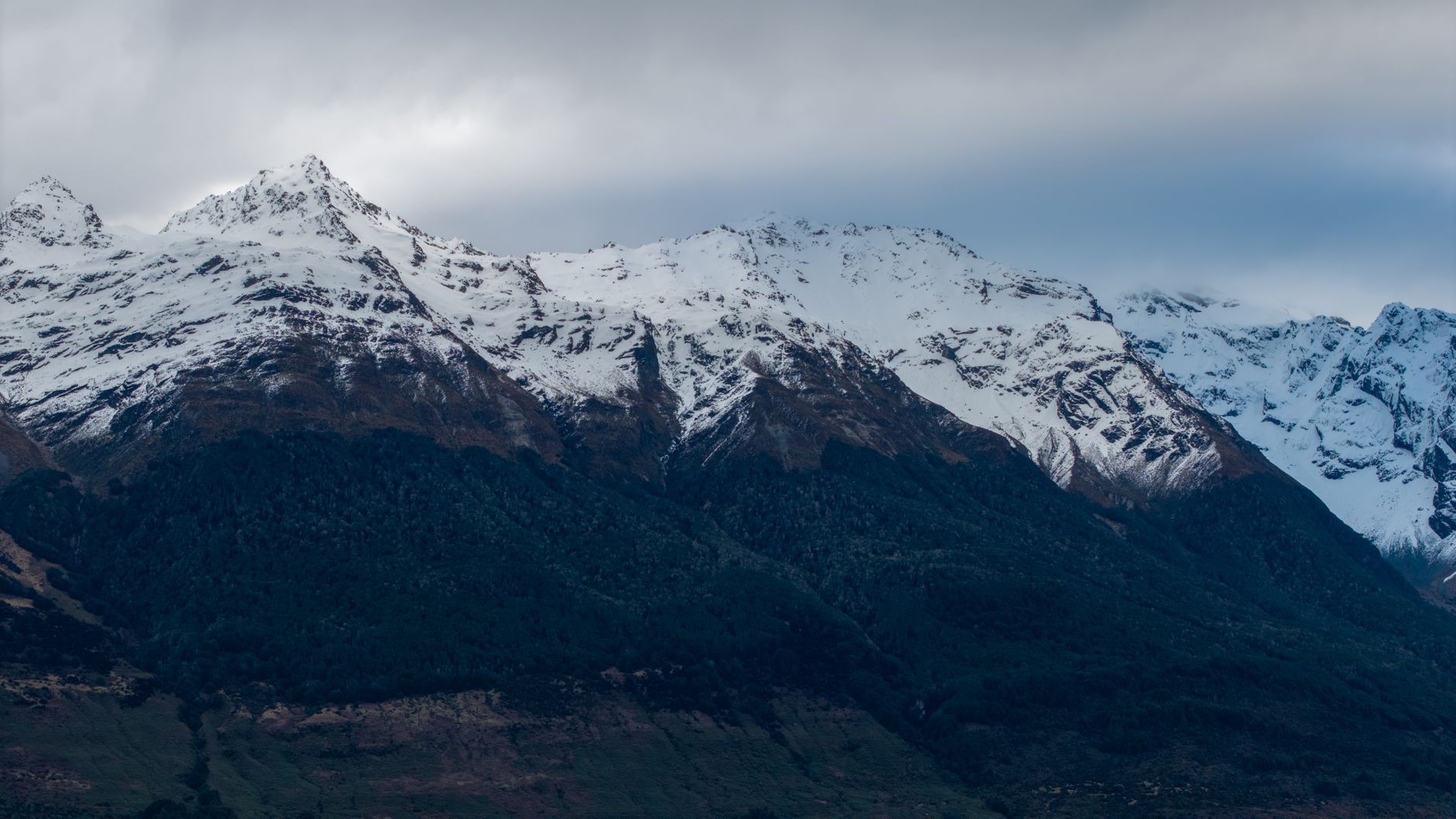

In the far southwest of New Zealand’s South Island, a territory of 2.6 million hectares keeps the living memory of Gondwana. Te Wahipounamu, inscribed on the UNESCO World Heritage List in 1990, encompasses four national parks—Fiordland, Mount Aspiring, Mount Cook, and Westland—and stretches 450 kilometres from the Tasman Sea inland. Here, fjords, glaciers, and temperate forests are not a backdrop for photography but a fragile ecological system that depends on concrete human decisions.
This report does not propose a conventional tourist route. It poses a journalistic question: how can a visitor travel through Te Wahipounamu without contributing to the degradation of its natural values? The answer is not in a brochure but in understanding the rules, limits, and conservation priorities managed by New Zealand’s Department of Conservation.
A landscape carved by ice
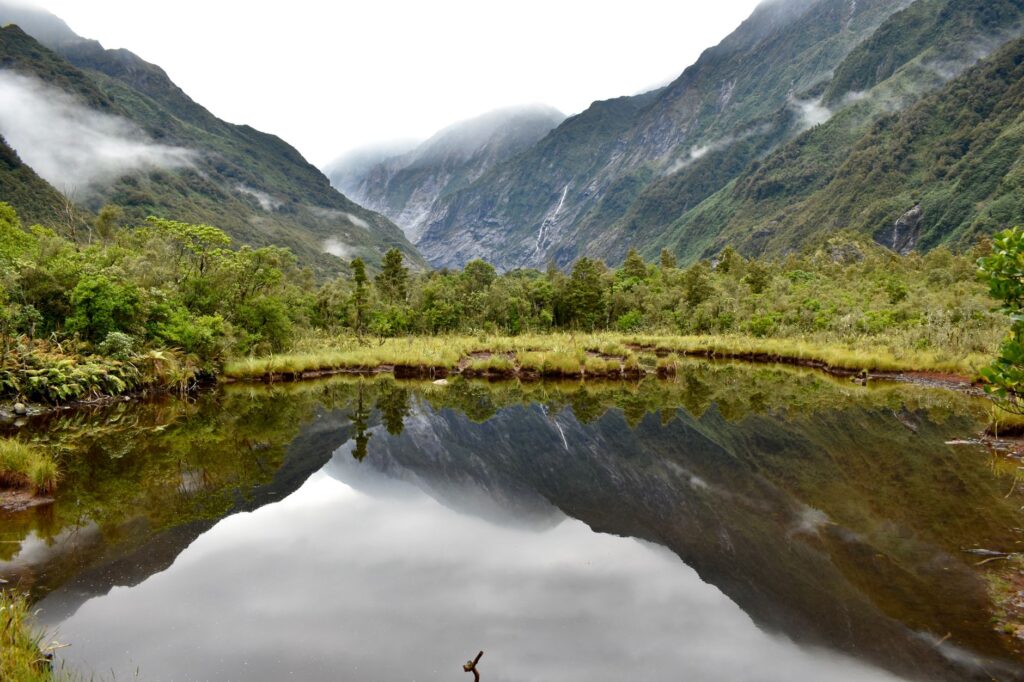
The geology of Te Wahipounamu is a treatise on the power of ice. Successive glaciations carved U-shaped valleys, created 15 fjords that indent the Fiordland coast, and left a sequence of marine terraces uplifted more than 1,000 metres at Waitutu. The Alpine Fault, which divides the region, marks the contact between the Indo-Australian and Pacific tectonic plates, one of the few places on Earth where this boundary is visible on land.
The Southern Alps, known in Māori as Kā Tiritiri o te Moana, rise to nearly 4,000 metres only 30 kilometres from the sea. That proximity between mountain and ocean creates an extreme climatic gradient: temperate rainforest on the western slope, grasslands and scrub on the eastern. The Franz Josef and Fox Glaciers descend into temperate rainforest, a phenomenon rarely seen on the planet.
The forest that holds 800 years of history
Two-thirds of Te Wahipounamu are covered by southern beech and podocarps. Some specimens are over 800 years old. This is not just any forest: it is the world’s best intact modern representation of the ancient biota of Gondwana, the supercontinent that fragmented millions of years ago. Plant lineages that disappeared elsewhere survive here.
Plant succession after glacial retreat is one of the best-documented ecological processes in the park. On recent moraines, lichens and mosses colonise bare rock; then shrubs arrive, and finally beech. That process, which can take centuries, turns each valley into a natural laboratory on how life reclaims lost ground.
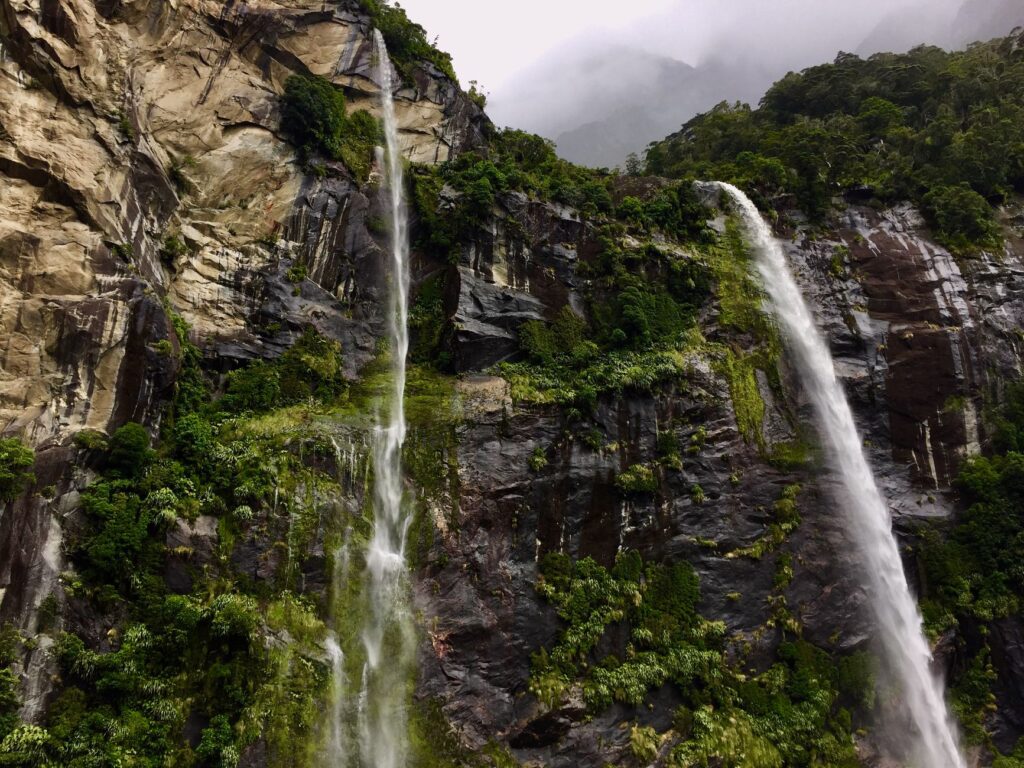
The conservation of Te Wahipounamu does not depend on grand gestures but on small repeated decisions: stay on the trail, do not feed wildlife, leave no trace.
Wildlife found nowhere else
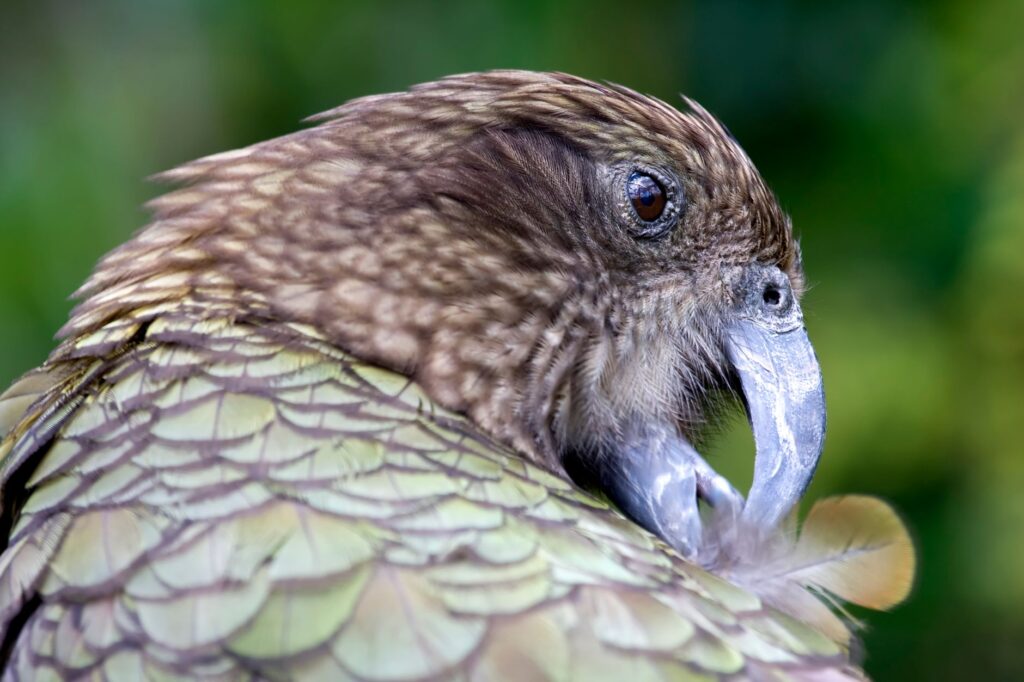
The kea, the world’s only alpine parrot, lives in the park and is known for its curiosity and intelligence. The takahē, a flightless bird once thought extinct for decades, survives in managed populations within Te Wahipounamu. The South Island brown kiwi, the rowi—the world’s rarest kiwi—the mohua or yellowhead, and the kākā also inhabit the area.
The historical absence of mammalian predators allowed birds and plants to evolve without defences against them. That is why the introduction of rats, stoats, and red deer has had a devastating impact. The Department of Conservation runs invasive species control programmes, but visitors also play a role: cleaning footwear and gear before entering the park prevents the spread of seeds and pathogens.
Fiordland: the heart of the park
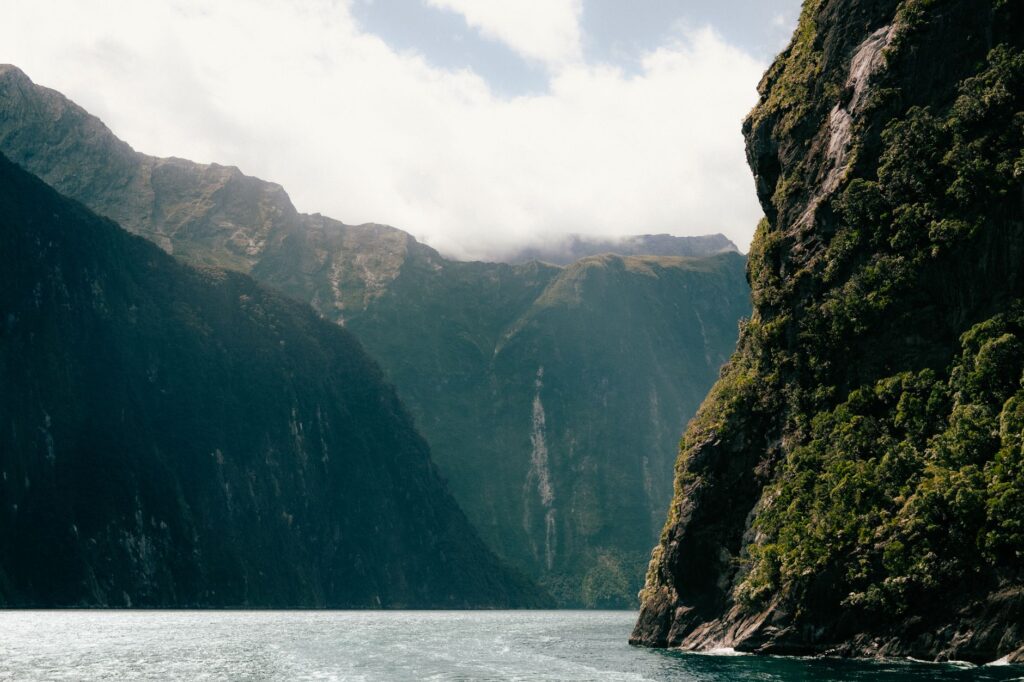
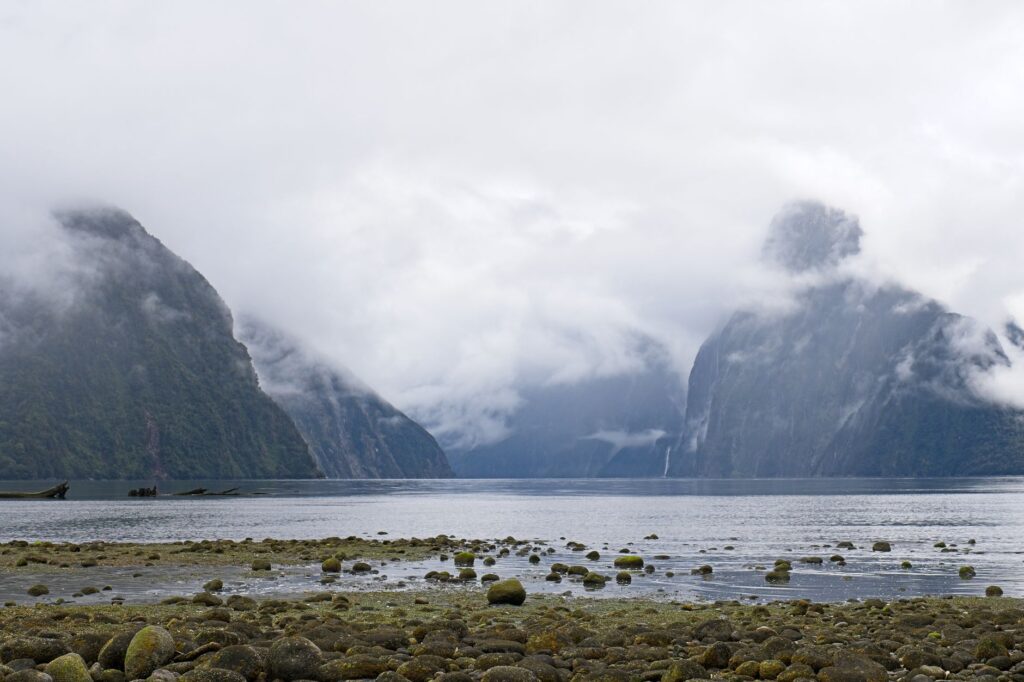
Fiordland National Park, the largest of the four, occupies the southwestern corner and contains 14 fjords. Milford Sound is the most accessible and most visited; Doubtful Sound, more remote, requires a combination of land and sea transport. The coastal road to Milford Sound passes through the Homer Tunnel, an engineering work excavated in solid rock that remains closed when there is avalanche risk.
The best way to explore Fiordland is on foot. The Milford Track, one of New Zealand’s Great Walks, requires advance booking and has limited quotas. During peak season, the Department of Conservation manages a system of huts and campsites that reduces impact on the soil. Walking it demands physical preparation and adequate gear for heavy rain, as the region receives abundant rainfall throughout the year.
Retreating glaciers
The Franz Josef and Fox Glaciers, on the western slope, are two of the most accessible in the world. They descend from the Southern Alps into temperate rainforest, a spectacle that draws thousands of visitors. However, both have retreated significantly in recent decades, and scientists link that retreat to global warming.
Access to the glaciers’ terminal face is restricted for safety and conservation reasons. Authorised guiding companies operate with quotas and strict rules: walking on the ice without a guide is not allowed, and entry to areas closed due to rockfall risk is prohibited. Respecting these rules is not a formality: it is the difference between observing a glacier and contributing to its degradation.
The Māori imprint and pounamu
Te Wahipounamu means «the place of pounamu» in Māori, the green nephrite stone found in the region’s rivers. For Ngāi Tahu, the iwi with authority over the territory, pounamu is a taonga, a cultural and spiritual treasure. Its extraction is regulated and requires authorisation.
The relationship between conservation and indigenous rights is an essential part of the park’s management. The Department of Conservation works in partnership with Ngāi Tahu through an annual planning process that allows them to participate in operational management. For visitors, this translates into respecting sacred sites, not removing stone or plants, and understanding that the landscape has a cultural dimension that predates tourism.
Responsible visitor decisions
The central question of this report has concrete answers. Before travelling, it is advisable to check weather conditions and alerts from the Department of Conservation. In New Zealand, mountain weather changes quickly and safety is an individual responsibility.
During the visit, responsible decisions include: using marked trails, carrying out all rubbish, not feeding wildlife, keeping distance from animals, and avoiding drone use in protected areas. In huts, everyone is expected to clean up after themselves and respect others’ rest.
The best souvenir a traveller can take from Te Wahipounamu is not a photograph but the certainty of having left the place the same or better than they found it.
Practical guide
Planning a visit to Te Wahipounamu requires foresight. The high season runs from October to April, when the weather is milder but visitor numbers are higher. In winter, many trails and roads may close due to snow or ice.
- Permits: the Milford Track and other Great Walks require advance booking. Quotas are limited and sell out months ahead.
- Transport: access to Milford Sound is by road from Te Anau; the journey takes about two and a half hours. For Doubtful Sound, bus and boat are combined.
- Accommodation: inside the park there are only mountain huts and campsites managed by the Department of Conservation. In Te Anau and Fox Glacier there are hotels and hostels.
- Gear: waterproof jacket, hiking boots, warm layers, sunscreen, and insect repellent. Rain is frequent even in summer.
- Safety: inform someone you trust of your itinerary, carry a map and compass, and do not rely solely on your mobile phone, as coverage is limited.
- Conservation: clean footwear and gear before entering the park, stay on trails, do not feed animals, and do not remove plants or stones.
A visit to Te Wahipounamu is not a race to collect landscapes. It is an opportunity to understand that exceptional places demand exceptional conduct. The reward is a forest that still holds the memory of Gondwana, an alpine parrot watching from a branch, and a fjord that fades into the mist without any need to be conquered.