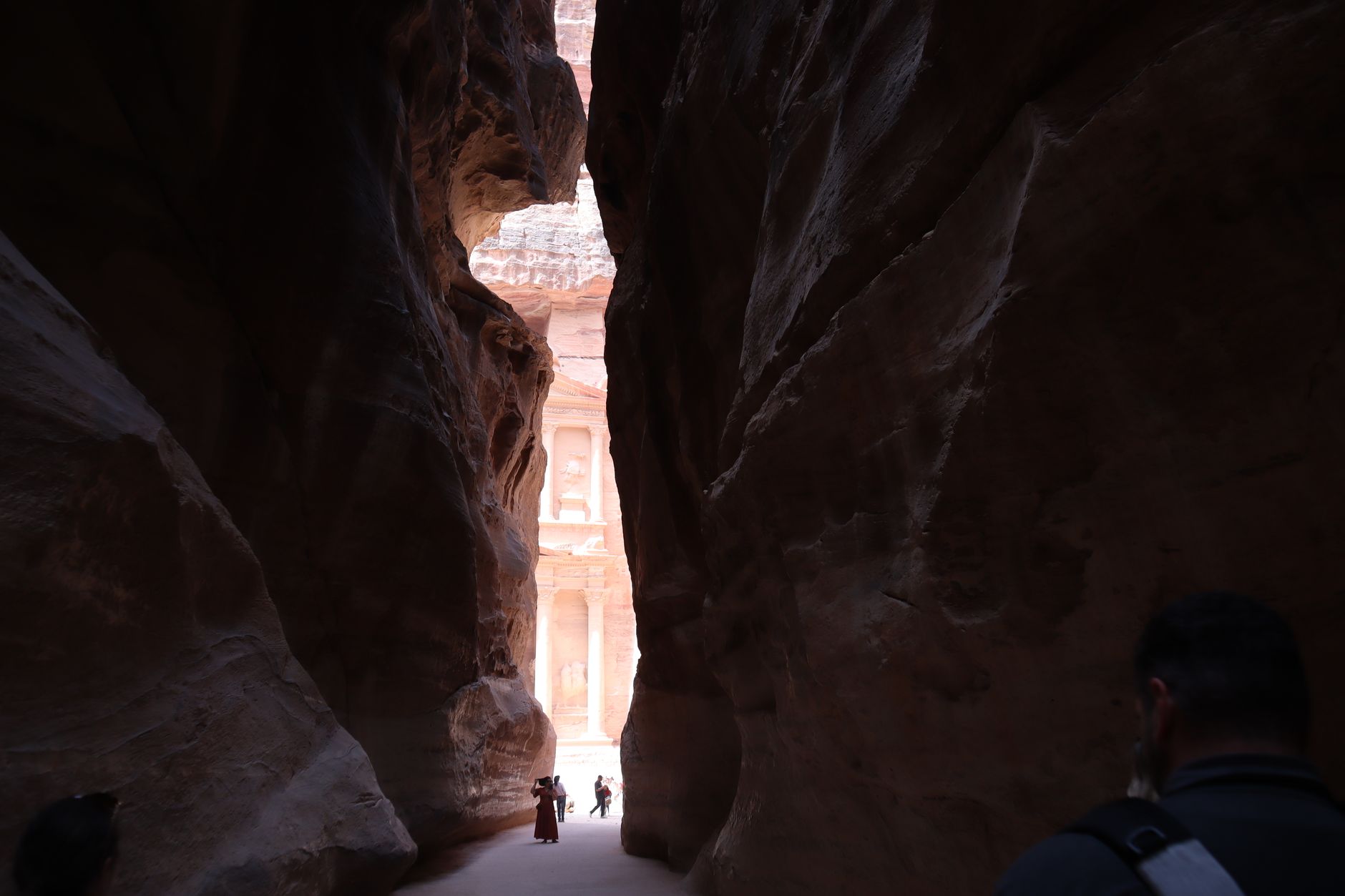

Petra is not simply visited: it is managed with patience. The Nabataean site, located in Jordan’s Ma’an Governorate between the Red Sea and the Dead Sea, is a labyrinth of facades carved into red sandstone, channels, cisterns, and tombs spread across more than 26,000 hectares. UNESCO inscribed it in 1985, and today it remains one of the largest archaeological sites on the planet. But behind the wonder lies an uncomfortable question: how do you walk through a place like this without contributing to its wear?
The answer is not a secret route or a magic hour. It lies in understanding that Petra is, above all, a fragile landscape. Sandstone erodes with wind, rain, and constant foot traffic. The Siq, the gorge that serves as the main entrance from the east, is also the point of greatest congestion. Walking through it is not a formality: it is the first act of a visit that demands attention.
A landscape that is also infrastructure
What today looks like a monumental stage was, more than two thousand years ago, an unprecedented feat of hydraulic engineering. The Nabataeans, a caravan civilization that dominated the incense, silk, and spice routes, transformed an arid territory into a habitable city through a system of channels, tunnels, and diversion dams. That system allowed them to control and conserve seasonal rains.
UNESCO describes it as an exceptional achievement: the fusion of Hellenistic facades with temples and tombs carved into rock. The result is a unique architectural ensemble, but also a vulnerable one. The same water that made the city possible is today a threat if the Nabataean drainage system is not maintained.
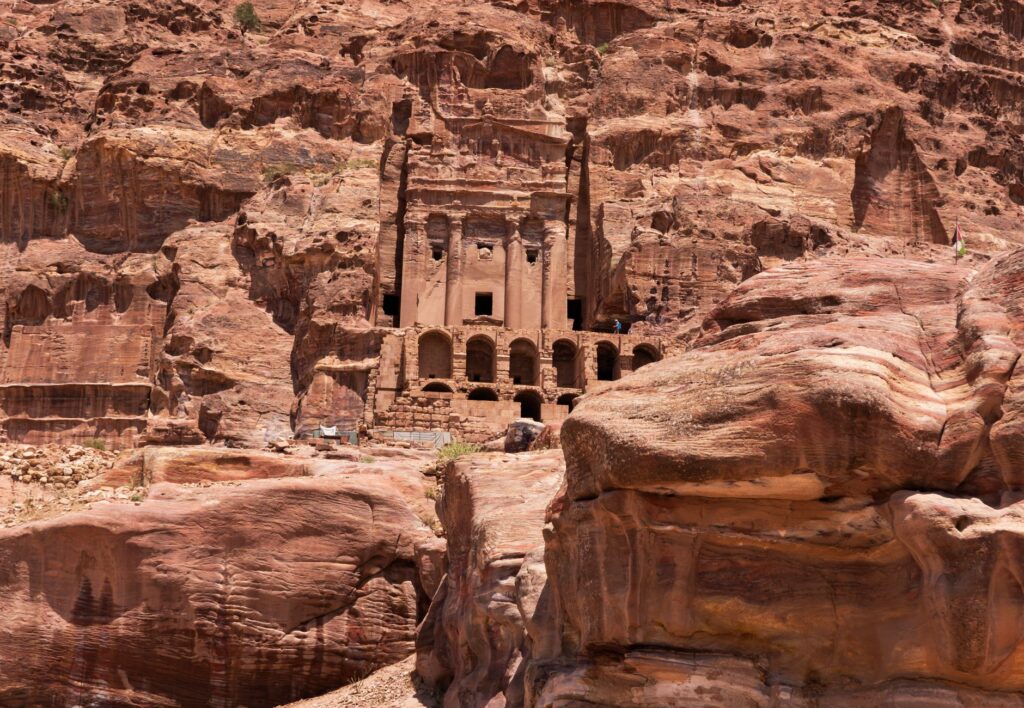
Petra is not just an archaeological site: it is a landscape built by water and threatened by it.
The Siq: the entrance that sets the pace
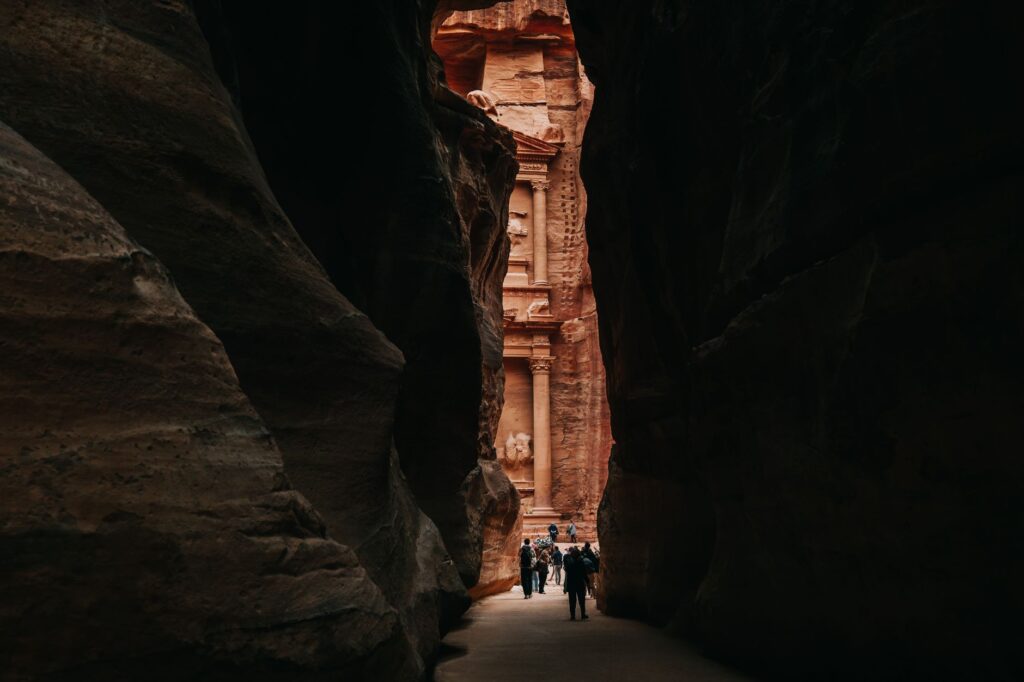
The main access to Petra is a narrow gorge with vertical walls that cuts through the rock. Walking it takes about twenty minutes at a relaxed pace, but the experience changes depending on the hour. Early in the morning, light enters at an angle and the walls take on pink and ochre tones. At midday, the sun falls vertically and heat concentrates.
UNESCO notes that the Siq is one of the points of greatest tourist pressure. There is no infallible formula to avoid it, but there is a reasonable recommendation: enter early, when the site opens, and avoid the central hours of the day. The relative silence of the morning also lets you hear the echo of footsteps, something lost when the gorge fills up.
What to look for along the way
- Remains of the Nabataean channel running along the left wall.
- Inscriptions and votive niches carved into the rock.
- The changing color of the sandstone depending on the light.
Conservation: between erosion and tourism
UNESCO’s report on Petra’s state of conservation mentions several challenges. The natural erosion of sandstone is inevitable in the long term, but it has been aggravated by wind and rain. In the past, grazing animals reduced ground cover, which increased soil erosion. The resettlement of the Bdul tribe, who lived inside the site, aimed to slow that process.
Today, the pressure comes from tourism. The infrastructure needed to receive visitors—electricity, visitor centers, restaurants—can affect the integrity of the site if not carefully planned. UNESCO recommends a sustainable development framework that protects the place while also ensuring revenue for the region.
Travelers cannot solve those problems, but they can reduce their impact: stay on marked trails, do not touch the facades, do not leave waste, and respect restricted areas.
Beyond the Treasury: the site almost no one walks
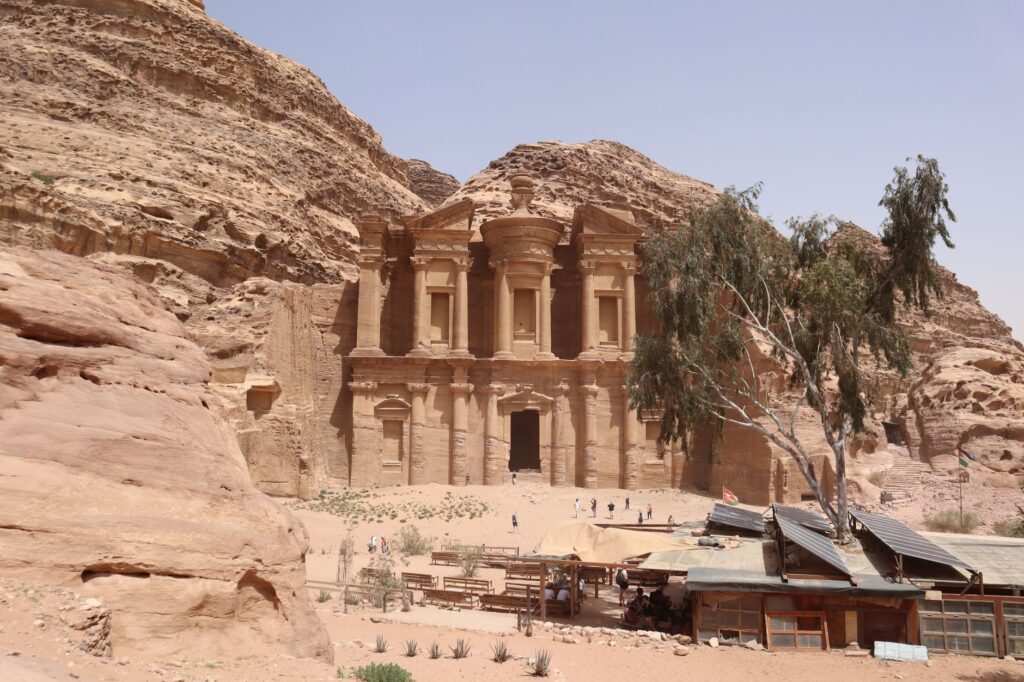
Most visitors reach the facade known as the Treasury (Al-Khazneh), take a photograph, and turn back. That is a mistake. Petra is far more extensive. The Theatre, the Colonnaded Street, the Qasr al-Bint Temple, the Royal Tombs, and the Monastery (Al-Deir) are all part of the same complex. Some require long walks and a certain level of physical preparation.
The Monastery, for example, is reached after climbing more than eight hundred steps carved into the rock. It is not a route for everyone, but those who complete it find one of the most imposing monuments on the site. The Royal Tombs, by contrast, are closer to the urban center and offer a different perspective: that of funerary Petra, the city that honored its dead with facades imitating temples.
Petra’s grandeur lies not in a single monument, but in the sum of its absences: what time erased also counts.
The landscape as protagonist
Petra cannot be understood without its surroundings. The site is surrounded by mountains pierced by passages and gorges. The color of the rock changes throughout the day: from pale pink to intense red, from ochre to violet. It is a landscape that has been described to exhaustion, yet it still surprises because it resembles no other.

UNESCO highlights that Petra is one of the richest and largest archaeological sites in the world, set in a dominant red sandstone landscape. That combination of geology and architecture is what makes it unique. But it is also what makes it fragile: any intervention in the landscape directly affects the monuments.
Light, a factor to consider
- At dawn, the eastern facades receive direct light.
- At sunset, the western ones turn orange.
- On cloudy days, contrasts are reduced and details are easier to see.
Accessibility and preparing your visit
Petra is not an easy site. The terrain is uneven, with slopes, stairs, and dirt paths. The walk from the entrance to the Treasury is relatively flat, but beyond that the options multiply and demand effort. There are alternative transport services—donkeys, camels, carriages—but their use raises ethical and conservation dilemmas.
Preparation begins before you arrive. Proper footwear, enough water, sun protection, and a clear idea of how far you want to walk. The site opens early and closes at sunset, but there is no single schedule for all months. Check official information before planning your visit.
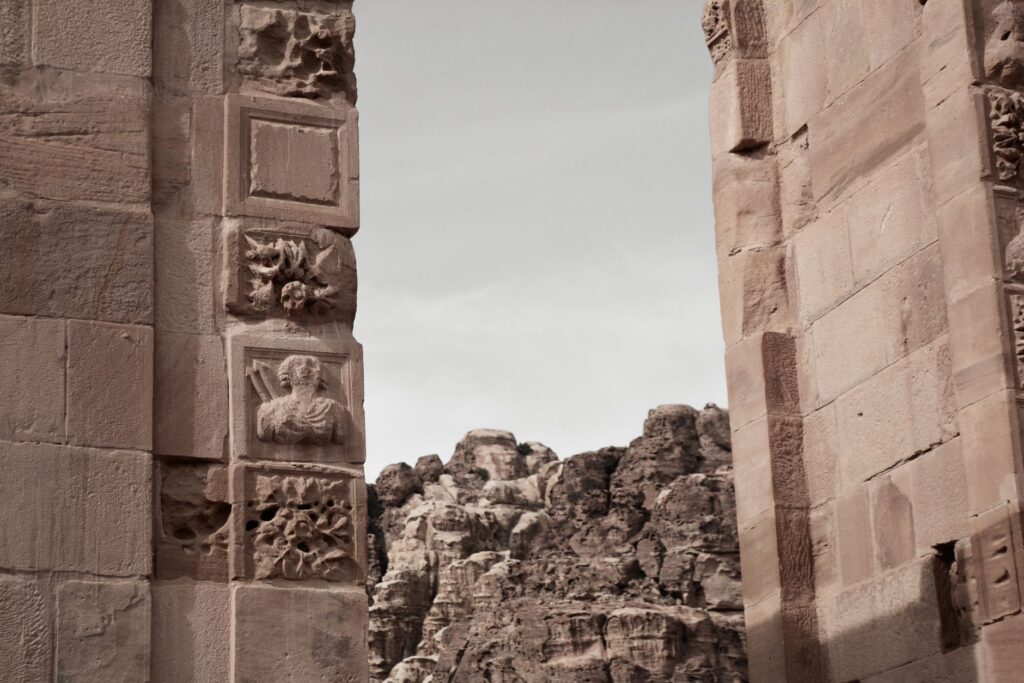
There is no ideal route for everyone. Those with reduced mobility can limit themselves to the most accessible areas, such as the Treasury and the Colonnaded Street. Those seeking a more complete experience should set aside at least a full day, and preferably two.
Practical guide
Petra is located in Ma’an Governorate, in southern Jordan. The most common access is from Amman, the capital, or from Aqaba, on the Red Sea coast. There are bus services and private transport options, but schedules and fares vary by season and operator.
Entry to the site requires a ticket, which can be purchased at the ticket office or through official platforms. The price varies depending on the length of your stay in Jordan and the type of ticket chosen. Do not rely on outdated information: verify current conditions before traveling.
- Hiking or sports shoes with good grip.
- Enough water: there are no fountains inside the site.
- Sun protection: hat, sunglasses, and sunscreen.
- Comfortable clothing respectful of the local context.
- A bag to collect your own waste.
The climate is desert. In summer, temperatures can exceed 35 degrees Celsius. In winter, nights are cold and occasional rains can cause flash floods in the Siq. UNESCO warns that the Nabataean drainage system must be maintained to avoid risks.
The visit to Petra does not end at the site. The region offers other places of interest, such as Little Petra (Barid), a caravan settlement to the north with tombs, temples, and cisterns. There is also Wadi Rum, the red sand desert, and the city of Aqaba, on the Red Sea.
The traveler as part of the solution
Petra receives hundreds of thousands of visitors each year. That flow is an essential source of income for the region, but also a threat. The conservation of the site depends on political decisions, on the management of Jordanian authorities, and on international cooperation. But it also depends, to a modest and real extent, on the behavior of those who visit.
It is not about giving up travel, but about traveling with attention. About understanding that a site like Petra is not a theme park, but a place that has survived more than two thousand years and needs to keep surviving. The red rock we admire today is the same rock carved by the Nabataeans, the same that resisted empires, earthquakes, and oblivion. Caring for it is the only way it can keep telling its story.