
Some archipelagos are remembered for their lush vegetation; others stay with you because of what they lack. Kornati belongs to the second group. In the Croatian Adriatic, off the Dalmatian coast, this cluster of islands, islets and limestone reefs offers a stripped-back, almost mineral landscape where dry stone, sparse pasture and transparent water create an austere beauty that demands time and attention.
This is not a destination for quick consumption. Kornati National Park, established to protect this singular environment, sets clear rules and rewards those who arrive prepared: knowing what is allowed, how to move between islands and what to expect from a territory where the human footprint has always been discreet. This report proposes a slow, realistic and respectful approach to one of the Mediterranean’s most sober island landscapes.
A national park made of fragments
Kornati is not one island but a constellation. The Croatian national park protects a group of islands, islets and rock formations stretching across the central Adriatic, with the island of Kornat as its main component. Most islands have no permanent population, and their appearance reflects centuries of grazing, wind and water scarcity.
That fragmented condition defines the experience. There is no urban centre organising the visit, no road network linking points of interest. Everything is articulated from the sea. Understanding the park’s geography is the first step towards planning a coherent route and avoiding frustration.
In Kornati, scale is not measured in kilometres but in the distance between one cove and the next, and in the time spent simply looking.
Dry stone, sparse pasture and a sea that calls the shots
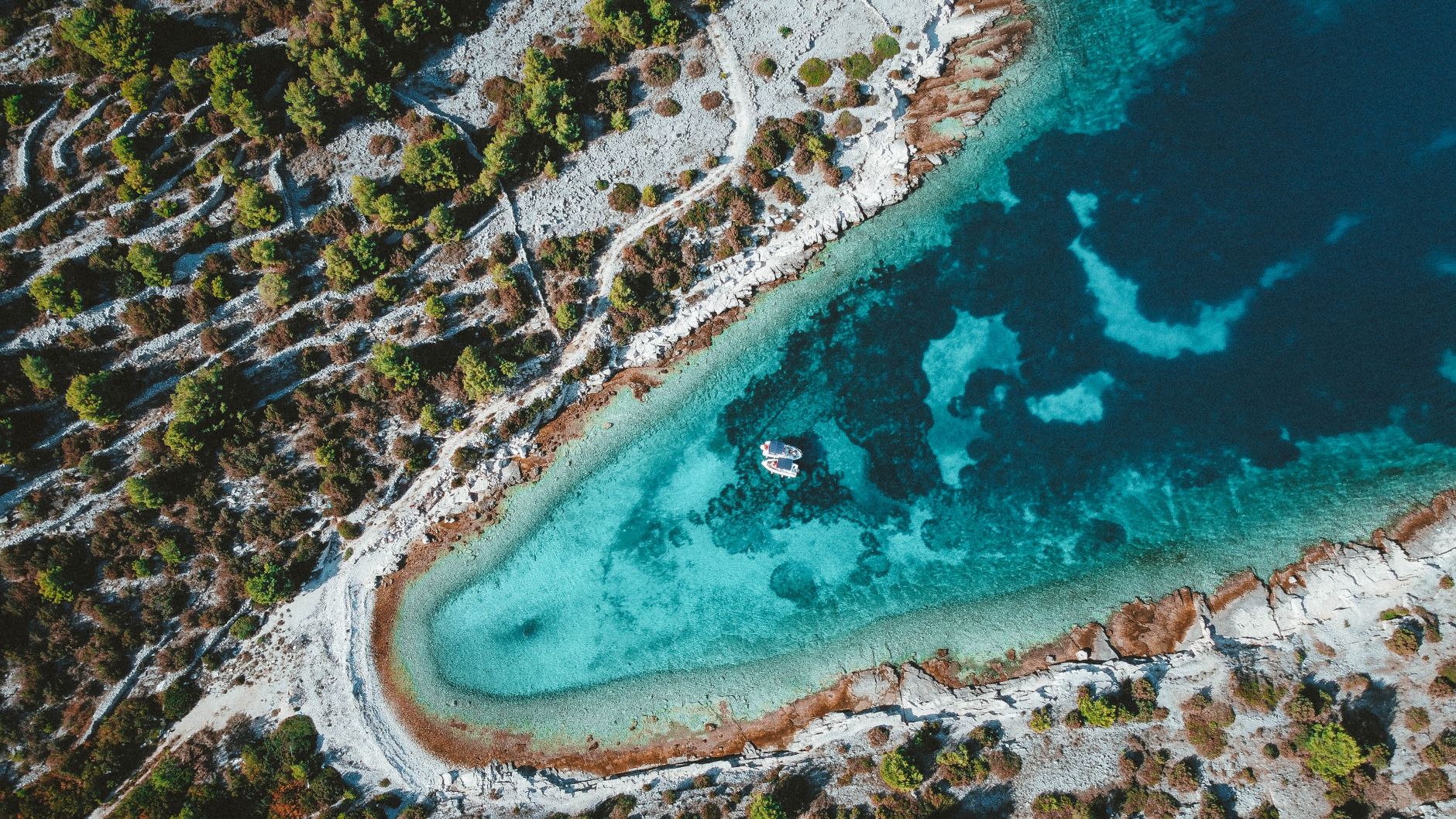
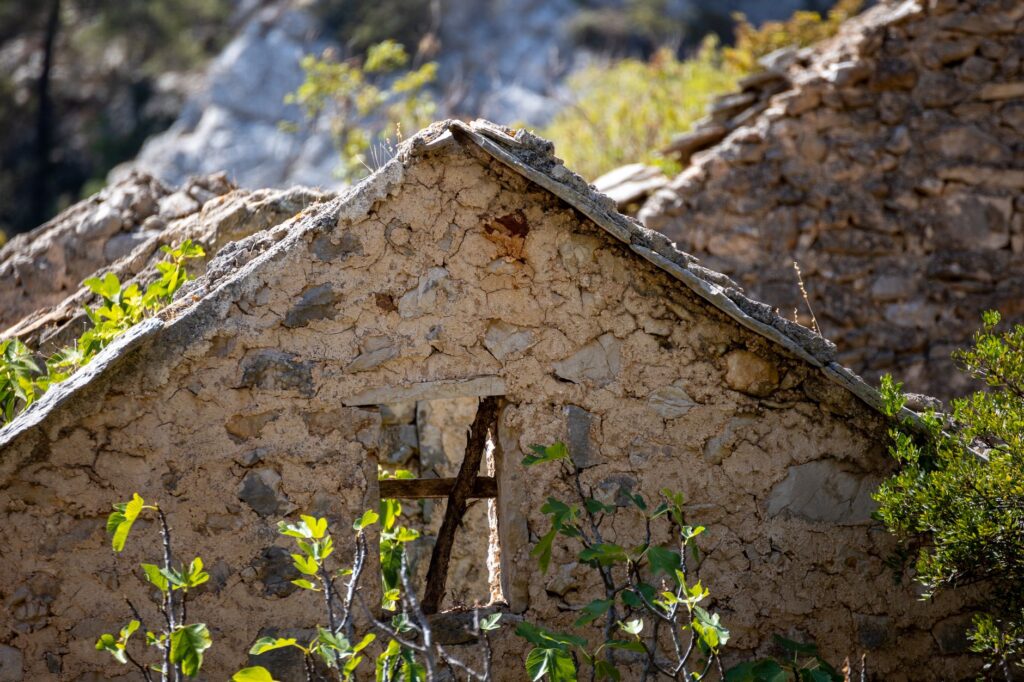
The Kornati landscape is the result of an old conversation between limestone and wind. Dry-stone walls, built over generations to mark pastures and protect crops from livestock, draw geometric lines across terrain that seems suspended between sky and water.
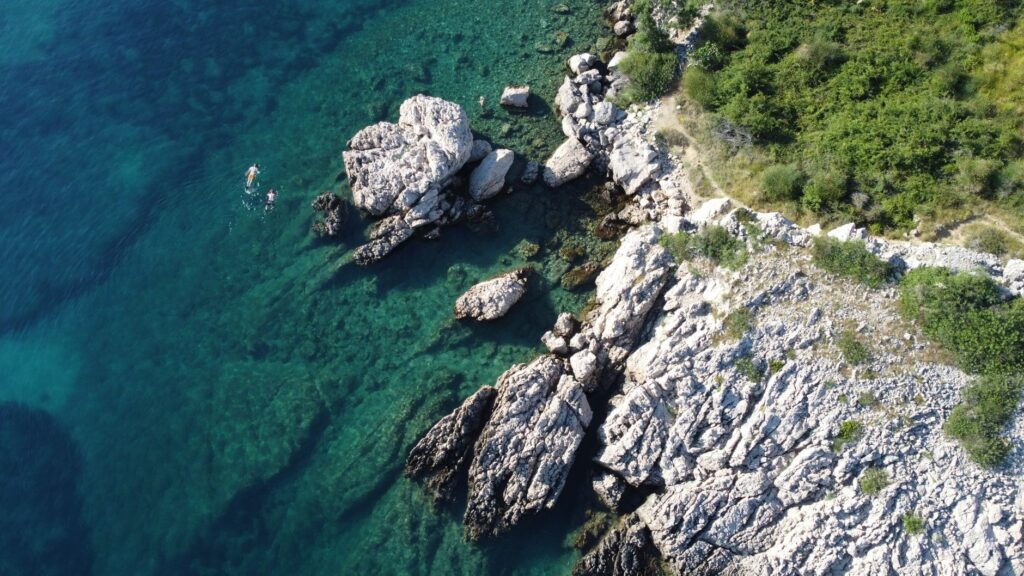
Vegetation is scarce and resilient, adapted to salt and drought. In spring, some islands are briefly covered in wild flowers; in summer, the sun turns the ground into a pale surface that reflects the light. The sea, by contrast, maintains a clarity that surprises even those familiar with the Adriatic.
The absence of natural shade is a factor that shapes any itinerary. Anyone planning a day on land must accept that protection from the sun depends on their own preparation, not on the landscape.
The island of Kornat and traces of a demanding life
Kornat is the largest island in the archipelago and concentrates many of the elements that define the park. It preserves remains of rural buildings, dry-stone walls and old cultivated fields that testify to a harsh, seasonal human presence.
The so-called kornatska kuća, a simple stone building with a tiled roof, sums up that tradition. This is not monumental architecture but practical solutions for a hostile environment, where water was scarce and shelter a basic necessity.
Exploring these remains requires attention and respect. They are fragile elements, exposed to wind and occasional visits, and form part of the cultural heritage the park seeks to preserve.
What you can do and what is best avoided
Visiting Kornati revolves around activities compatible with conserving the environment. Sailing, diving and snorkelling are among the most common, always within the rules set by the institution managing the park.
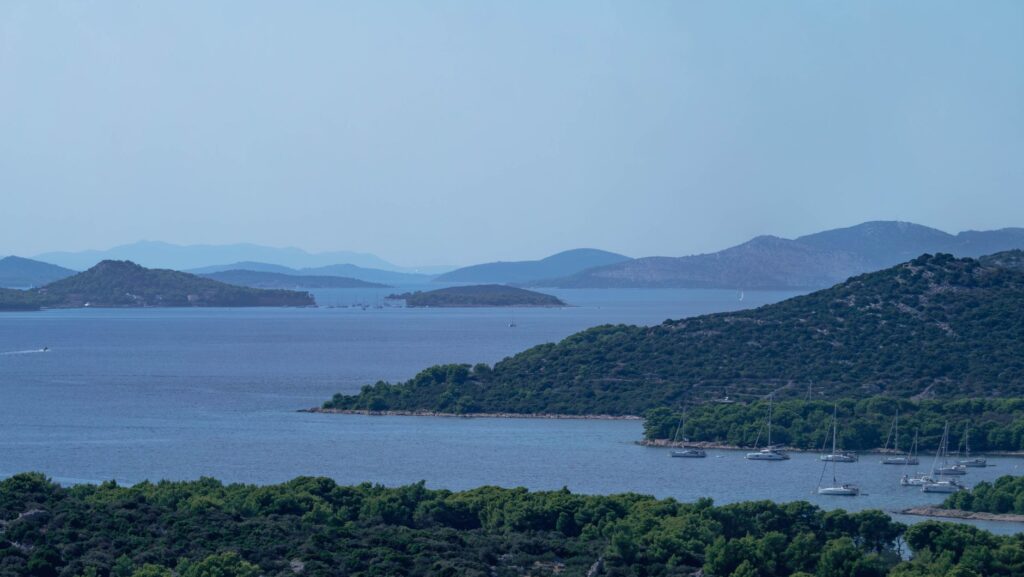
There are regulated anchoring zones and marked mooring points. Respecting these indications is not a bureaucratic formality but the way to protect the seabed, particularly the posidonia meadows, which are sensitive to indiscriminate anchoring.
Hiking is possible on some islands, but paths are rudimentary and navigation requires attention. Improvising routes or entering terrain without knowing the day’s conditions is not advisable.
Preparation: the least photogenic part of the trip
Kornati is not a destination to be sorted out at the last minute. Logistics demand prior decisions: how to reach the park, where to embark, how much time to dedicate to each area and what type of boat or service to use.
Most visitors arrive from Dalmatian coastal towns, either on organised excursions or private vessels. Crossings can be long and the sea variable, so planning should include time margins.
It is also advisable to check entry fees and specific rules before departure. The park’s official information is the most reliable source for current conditions.
Accessibility and the reality of the terrain
Discussing accessibility in Kornati means acknowledging the limitations of the environment. This is not a destination adapted to all types of mobility: landings can be uncomfortable, paths uneven and facilities minimal.
Those travelling with elderly people, small children or reduced mobility should realistically assess which activities are viable. In many cases, the most satisfying experience is contemplating the landscape from the water without attempting long walks on land.
This honesty about terrain conditions is more useful than any promise of comfort. Kornati rewards adaptation, not imposition.
The sea as protagonist
If the land is austere, the sea surrounding the islands is generous in nuance. The water’s clarity allows observation of rocky seabeds, underwater meadows and schools of fish at shallow depths.
Diving and snorkelling attract visitors interested in the Adriatic’s marine biology. The park’s protection aims to maintain that balance, limiting impacts and regulating activities according to the fragility of each zone.
Sailing between the islands at sunset, when light becomes oblique and the stone changes tone, is one of those experiences that explain why this archipelago is visited slowly rather than in haste.
A beauty that does not seek to please
Kornati does not offer the conventional paradise of palm trees and endless beaches. Its appeal lies in sobriety, in the sense of being in a place where nature imposes its rules without adornment.
That quality has been recognised by travellers and scholars, who have described the archipelago as a landscape of contrasts between the aridity of the land and the richness of the sea. Comparisons with other Mediterranean destinations are inevitable, but Kornati retains its own identity.
Some places are visited to confirm what one expects to find. Kornati belongs to those visited to discover what one had not imagined.
Practical guide
When to go. High season coincides with the summer months, when the weather is more stable but crowds are larger. Spring and early autumn offer milder conditions and fewer visitors, though the sea can be less predictable.
How to get there. Access is usually by sea from Dalmatian coastal towns. Organised excursions and private boat options exist. Check schedules, departure points and crossing times in advance.
What to bring. Sun protection, enough water, footwear suitable for uneven terrain and clothing that adapts to temperature changes at sea. Natural shade is scarce.
Rules. The park has specific regulations on navigation, anchoring and water activities. Respecting them is mandatory and directly contributes to conserving the environment.

Official information. The institution managing Kornati National Park publishes data on tickets, rules and recommendations. Consulting it before travelling prevents misunderstandings and improves the experience.
Realistic expectations. This is not a destination with abundant services or urban comforts. The reward lies in the landscape, the quiet and the sense of being in a place that retains its character.
A closing note on stone and water
At the end of the day, when boats return and the wind drops, Kornati recovers its silence. The islands stand outlined against a sky that changes colour, and the sea reflects a light that seems to stop time.
That moment, simple and difficult to describe without falling into cliché, sums up the essence of the archipelago: a place where beauty does not impose itself but is discovered slowly, with the willingness of someone who accepts that some landscapes demand more attention than immediate admiration.