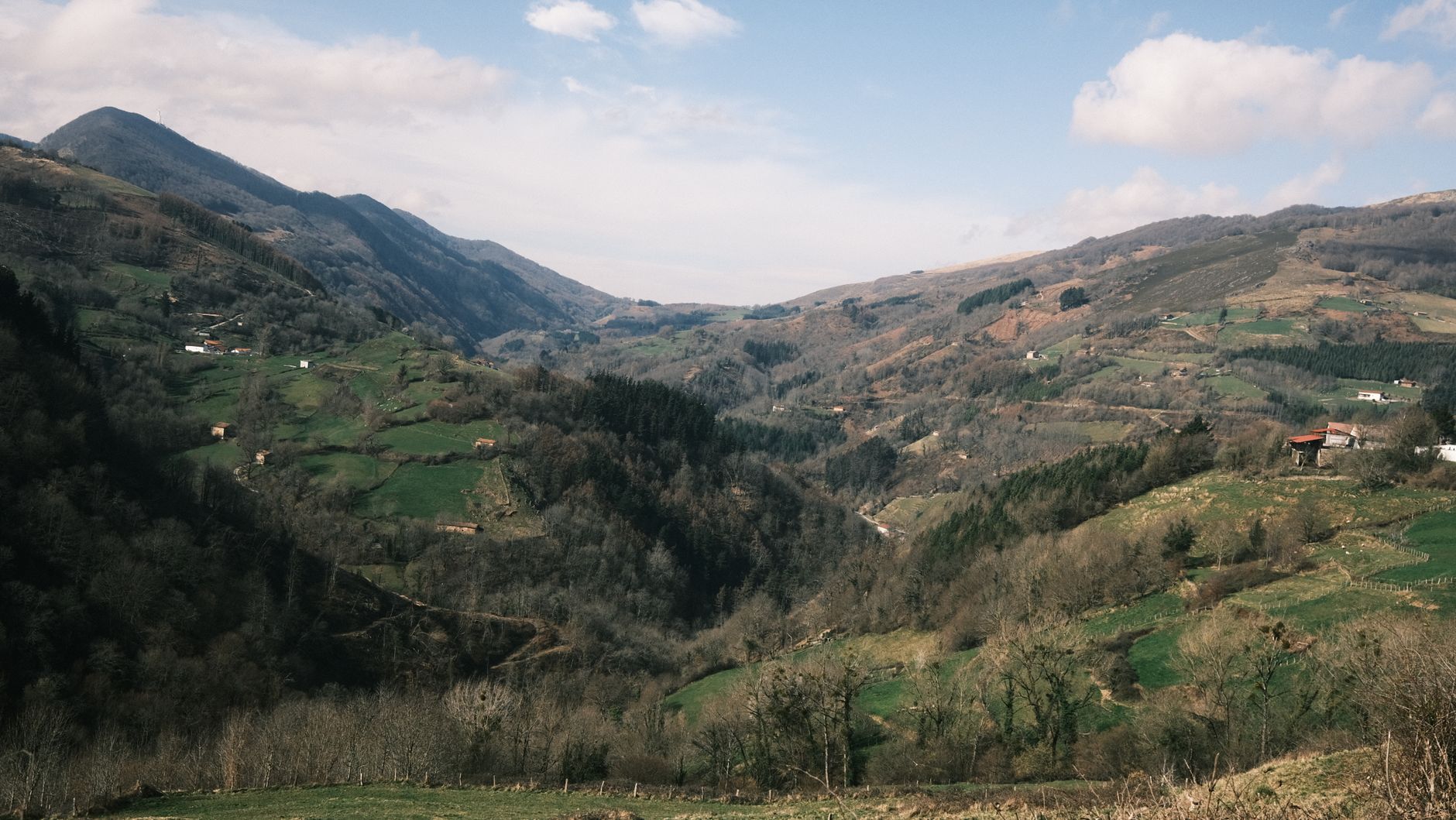

In the far northeast of Navarre, Spain, the Irati Forest unfolds as one of Europe’s largest and best-preserved beech-fir woodlands. It is not a theme park or just any forest: it is a living territory, managed with conservation criteria, where visitors must adapt to the rules of the place. The first rule is to accept that, in high season, access to certain sectors requires paying a maintenance fee. The second is to understand that the best way to explore it is on foot, calmly, with logistics resolved in advance.
This report offers a practical and respectful approach to the Irati Forest, from the Navarrese valleys of Aezkoa and Salazar to the French borders of Cize and Soule. It is not a single route but a map of possibilities for those who want to walk, observe and understand why this woodland has become a benchmark for nature tourism in northern Spain.
A forest with rules: fees, access points and seasons
The Irati Forest is not visited the same way in spring as in the height of autumn, nor in winter, when snow covers the tracks and some access roads remain closed. The management of the area includes concrete measures that travelers should know before leaving home. In high season, access through the Casas de Irati Reception Centre, in the Salazar valley, and the Arrazola information point, in the Aezkoa valley, involves paying a maintenance fee. By contrast, access via the Irati-Abodi Mountain Centre, in Salazar, and the Orbaizeta Arms Factory, in Aezkoa, is exempt from that payment.

This distinction is not an administrative whim: it responds to the need to regulate vehicle flow and finance infrastructure maintenance in a fragile environment. The recommendation is to check the condition of access roads, especially in winter, when snow can force closures. Up-to-date information is available at the reception centres and through the specific hiking app for the Irati Forest.
The first lesson of Irati is that the forest does not adapt to the visitor: it is the visitor who must adapt to its rhythms and rules.
Salazar Valley: southern gateway and interpretation centre
Ochagavía, at the head of the Salazar valley, is the most common starting point for those arriving from Pamplona. At 764 metres above sea level, this village of cobbled streets preserves a notable architectural heritage: 18th- and 19th-century manor houses, a Plateresque cross over the Zatoya river and the bridge over the Anduña river. In the town centre, next to the Tourist Office, the Ochagavía Nature Interpretation Centre offers a rigorous introduction to the geology, fauna and vegetation of the forest, as well as an ethnographic exhibition of traditional tools from the valley.
From Ochagavía, the NA-2012 road leads in about 40 minutes and 23 kilometres to the Casas de Irati Reception Centre. This facility has an information point, ranger service, parking, picnic area, bar-restaurant and bicycle rental with a repair workshop. From there, trails set off such as the Cascada del Cubo and the Urbeltza river path, the Zabaleta Forest, the Old Path to Koixta and the Irabia Reservoir Loop. The variety of distances and gradients allows you to choose between family walks and mid-mountain routes.

The Muskilda sanctuary and historic paths
From the upper part of Ochagavía, a cobbled path climbs to the 12th-century Sanctuary of Nuestra Señora de Muskilda, with oak-board roofs that deserve close attention. This path is part of the network of historic routes once travelled by shepherds, charcoal burners and hunters. Walking it today is also a way of reading the valley’s history through its landscape.
Aezkoa Valley: granaries, steles and industrial memory
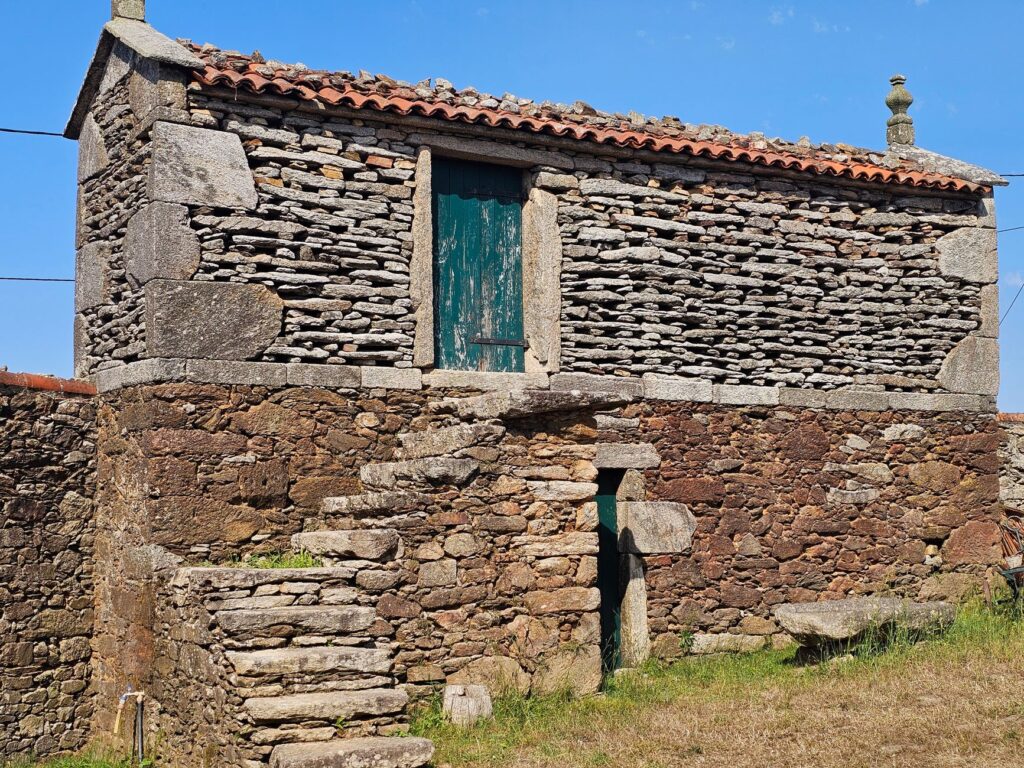
On the other side of the massif, the Aezkoa valley groups nine municipalities —Garaioa, Aribe, Garralda, Aria, Hiriberri/Villanueva de Aezkoa, Orbara, Orbaizeta, Abaurregaina/Abaurrea Alta and Abaurrepea/Abaurrea Baja— where rural vernacular architecture is expressed in red-tiled houses, stone bridges and granaries. The valley preserves fifteen of Navarre’s twenty-two granaries, declared a Site of Cultural Interest. These auxiliary structures, similar in shape and materials to the house they belong to, were used to store grain safe from damp and rodents.
In Abaurregaina/Abaurrea Alta, the highest village in Navarre, the old cemetery has been turned into a museum: the Garden and Labyrinth of Steles. More than thirty medieval steles were recovered there in a landscaped space that evokes, through a labyrinth, the cycle of life and its tortuous path towards death. It is a little-visited stop that adds a cultural and historical dimension to the journey.
The Orbaizeta Arms Factory
Deep in the Irati Forest, the remains of the Orbaizeta Arms Factory are the most important example of industrial architecture in the area. Founded in the 17th century to supply munitions and weaponry to the Crown, its location was chosen for its timber wealth, the presence of iron mines and watercourses. Declared a Site of Cultural Interest, its ruins form an enigmatic landscape that can be visited from the nearby Orbaizeta Kultur Ola Palace, where interpretive activities are offered.

Trails for all levels: from family walks to high mountain
The Irati Forest trail network is organised according to access points. From Casas de Irati, options include the Cascada del Cubo, the Zabaleta Forest, the Old Path to Koixta and the Irabia Reservoir Loop. From the Irati-Abodi Mountain Centre, in the Salazar valley, four trails set off —Cerrillar, Cruz de Osaba, Zamukadoia and Koixta— which in winter can be walked with skis or snowshoes. This centre offers information on mountain-bike routes, bicycle, ski and snowshoe rental, as well as a café-bar-restaurant and parking.
From the Arrazola information point, in Aezkoa, the Anbulolatz and Azalegi-Ermita de San Esteban trails begin. Next to the Irabia Reservoir dam there are two small car parks from which the Paraísos-Erlan, Camino de Plaza Beunza and Irabia Reservoir Loop trails can be accessed. And from the Orbaizeta Arms Factory, the Arlekia-Lauzaran trail sets off, while from the Azpegi Refuge routes such as the Ursario Forest, the ascent to Mount Mendilatz and the Azpegi megalithic station route begin.
In Irati, signposting is not decorative: it is the guarantee that visitors can move autonomously without damaging the environment.
Mountain biking and snow sports
The Irati BTT Space brings together sixteen trails for all levels and more than 400 cyclable kilometres connecting the Salazar and Aezkoa valleys, on the Navarrese side, with Zuberoa and Cize, on the French side. The reception centres —Irati-Abodi Mountain Centre and Casas de Irati in Salazar, Arrazola in Aezkoa and Chalets d’Iraty on the French side— allow minor repairs, bicycle rental and on-site information. In winter, the Irati-Abodi Mountain Centre opens three easy cross-country skiing trails totalling 22 kilometres, plus a 16-kilometre trail for more experienced skiers, and offers snowshoe rental for those who prefer walking on snowy landscapes without mastering skiing.
Food and accommodation in the valleys
The local cuisine relies on seasonal produce and livestock tradition. Shepherd’s migas, autumn mushrooms, veal and suckling lamb, trout a la navarra —fried with ham— and game stews such as venison, wild boar or pigeon are some of the usual dishes. To finish, homemade milk-based desserts, among which sheep’s cheese and pacharán stand out. Accommodation options include rural hotels and guesthouses, apartments, country houses, hostels and campsites distributed across the Aezkoa and Salazar valleys.
Practical guide
- When to go: spring and autumn offer mild temperatures and changing landscapes; winter requires checking road conditions and may close access points.
- Access and fees: in high season, a maintenance fee is charged for the Casas de Irati (Salazar) and Arrazola (Aezkoa) access points. The Irati-Abodi and Orbaizeta Arms Factory access points have no fee.
- Information: the Ochagavía Nature Interpretation Centre and the Irati Forest hiking app provide up-to-date data on routes and path conditions.
- Gear: mountain footwear, water, sun protection and warm clothing even in summer; in winter, snowshoes or skis depending on the chosen route.
- Respect: do not leave the marked trails, do not leave waste and keep your distance from wildlife, especially during breeding season.
A natural heritage cared for by everyone
The Irati Forest is a beech-fir woodland with beeches, oaks, firs, birches, willows, ferns and mosses that provide a home for deer, roe deer, wild boar and birds such as the white-backed woodpecker, the black woodpecker and the bearded vulture. Its conservation is supported by three protected areas: the Mendilatz and Tristuibartea nature reserves and the Lizardoia integral reserve. Forestry exploitation, documented since the 15th century, has coexisted with a respect that has kept the forest in fine form. That is, perhaps, the most valuable lesson visitors can take away: a forest is not conserved by rules alone, but by the sum of many everyday gestures.