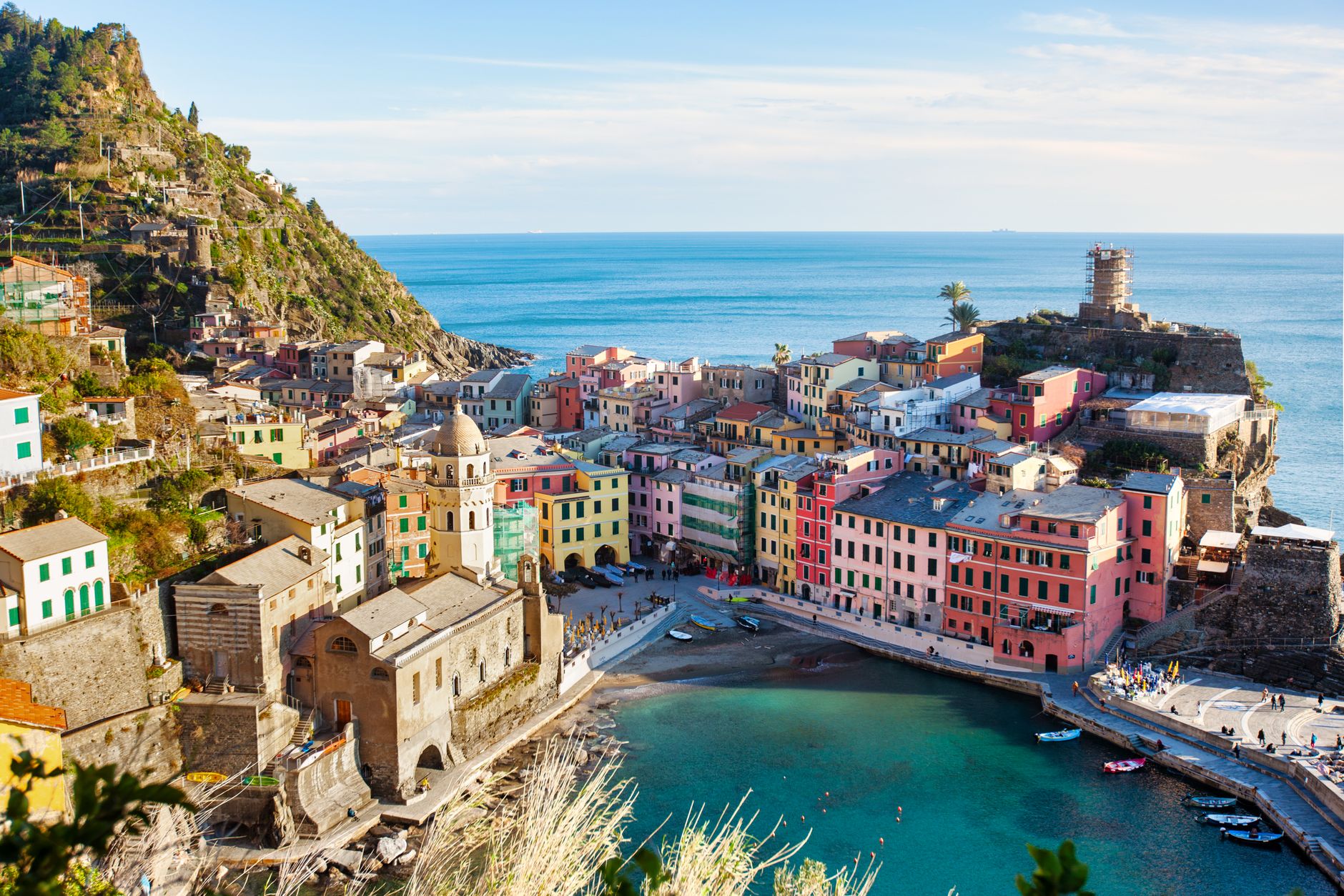

On Liguria’s eastern coast, between Levanto and La Spezia, lies a landscape that seems suspended between the sea and the mountains. The Cinque Terre—Monterosso, Vernazza, Corniglia, Manarola, and Riomaggiore—along with Portovenere and the islands of Palmaria, Tino, and Tinetto, form a territory where more than a thousand years of human intervention have shaped entire slopes with dry-stone walls. This is not a natural landscape but a cultural landscape that relies on constant maintenance and a community that inhabits it.
Inscribed as a UNESCO World Heritage Site in 1997, this territory now faces a paradox: it is admired by millions of visitors, yet its survival depends on agricultural activities that are barely profitable. The question running through these villages is not how to attract more tourism, but how to keep the landscape standing as those who care for it grow older and young people move away.
A landscape built by hand over centuries
The terraces of the Cinque Terre are not decorative features; they are agricultural infrastructure. According to UNESCO documentation, the dry-stone walls were mostly built in the 12th century, when Saracen raids from the sea came to an end. Farmers transformed steep slopes into cultivable surfaces for vineyards and olive groves, using sandstone blocks bonded with pebbles removed from the ground. Some terraces stretch as far as two kilometers in length and climb from a few meters above sea level to 400 meters in altitude.

That system sustained subsistence farming and a highly scenic landscape for centuries. But it also created a dependency: without maintenance, walls collapse, paths erode, and the risk of landslides increases. UNESCO warned that at the time of inscription, an estimated 130 meters of wall per hectare of vineyard and between 30 and 300 meters per hectare of olive grove were in urgent need of reconstruction.
The Cinque Terre landscape is not a passive backdrop: it is the result of a pact between communities and territory that must be renewed with each generation.
Five villages, five responses to the same challenge
Each of the five villages has developed its own relationship with the terrain. Monterosso al Mare, the westernmost, stretches along two short valleys and faces one of the few beaches in the area. Vernazza is organized around the Vernazzola stream, protected by a rocky spur. Corniglia is the only one that does not sit directly on the sea but rises on a high promontory. Manarola unfolds partly on a rocky spur and partly along the Grappa stream. Riomaggiore, the easternmost, lines its houses along the narrow valley of the Rio Maggiore, now covered and used as the main street.
This morphological diversity is reflected in daily life. In Corniglia, for example, access from the train station involves climbing a long staircase or waiting for a bus; in Riomaggiore, the historic center is explored on foot through steep alleys. Daily movements are marked by topography, which shapes both the visitor experience and the logistics of residents.
The role of parks and territorial protection
The conservation of this landscape does not depend solely on the goodwill of landowners. In 1999, the area became the Cinque Terre National Park, and in 1997 the Marine Protected Area was established. The Portovenere Regional Park manages the islands of Palmaria, Tino, and Tinetto, as well as a significant part of the mainland. These protection frameworks impose restrictions on construction and tourism activities, but they also offer tools to channel funds toward maintaining terraces and trails.

The management plan updated in 2016 established a protocol signed by all relevant stakeholders: municipalities, provinces, the region, and heritage offices. It includes a coordination committee, a permanent technical group, and a specific office for the UNESCO site. Governance is complex, but it reflects the need to coordinate different administrative levels in a small and fragile territory.
Farming, wine, and generational renewal
Wine is one of the economic keys to the landscape. Terraced vineyards produce grapes such as Bosco, Albarola, and Vermentino, which give rise to denominations like Sciacchetrà, a prized sweet wine. However, production is limited and costly: working on steep slopes with dry-stone walls requires much manual labor and does not allow mechanization. UNESCO notes that although some tens of hectares have been recovered for vineyards and olive groves, the system remains vulnerable and needs support so that farmers can add value to their produce.
Generational renewal is one of the critical points. Many landowners are older, and there are not always young people willing to take on hard, low-paid work. Some cooperatives and wineries have bet on quality and direct sales, but the balance between profitability and conservation remains precarious. Tourism, paradoxically, can be an ally if it is oriented toward experiences that value local products and the landscape, rather than quick visits.
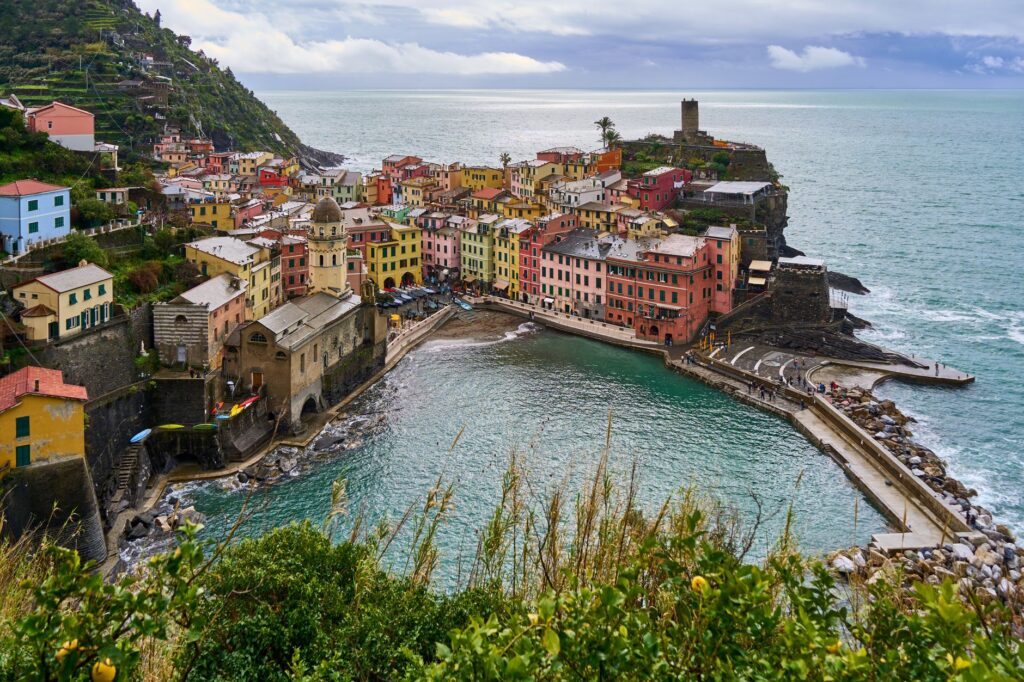
The authenticity of the site, according to UNESCO, depends on sustaining traditional farming systems and integrated settlements. Without farmers, the landscape loses its purpose.
Trails, accessibility, and trip preparation
Hiking is one of the most direct ways to experience the Cinque Terre, but also one of the most demanding in terms of preparation. The trail network connects the five villages and offers spectacular views, but many sections are narrow, rocky, and have significant elevation changes. The Blue Trail, which follows the coast, has suffered closures due to landslides at various times, and its opening depends on terrain conditions. One should not assume that all routes are always available.
For visitors, it is essential to wear proper footwear, carry enough water, and use sun protection. The villages are connected by train, allowing travelers to combine rail travel with hikes of varying difficulty. The regional train is a practical option for moving between towns, especially when trails are closed or fatigue sets in. In high season, it is wise to plan ahead and avoid the central hours of the day for the most exposed routes.
Tourism and community: a coexistence to be adjusted
The number of annual visitors far exceeds the resident population. This pressure has visible effects: tourist rentals displacing residents, crowded streets in summer, and a local economy increasingly dependent on hospitality and accommodation. UNESCO has warned that tourism can be a driver to finance landscape maintenance, but also a threat if not managed with sustainability criteria.

Some municipalities have adopted measures to regulate flows, such as limiting access to certain trails at peak times or promoting off-season visits. The key, according to park managers, is to diversify the offer and spread pressure throughout the year. For travelers, this means considering spring and autumn as ideal seasons, when the weather is milder and the villages recover a rhythm closer to everyday life.
Portovenere and the islands: the other end of the landscape
Although the Cinque Terre attract most attention, the World Heritage site also includes Portovenere and the islands of Palmaria, Tino, and Tinetto. Portovenere was an important commercial and cultural center since Roman times, and its historic center, with the church of St. Peter and the Doria Castle, retains a character distinct from the five villages. The islands, for their part, contain remains of early monastic settlements and great natural richness.
Visiting Portovenere allows one to understand the regional scale of the cultural landscape and the historical continuity of settlement on this coast. Access to the islands is regulated to protect their natural and cultural values, and some areas can only be visited under certain conditions. Checking ahead is essential to avoid disturbing these spaces.
Practical guide
To organize a visit to the Cinque Terre with sustainability and respect for the landscape in mind, several practical aspects should be considered. Official information from the parks and municipalities is the most reliable source for trail conditions and current restrictions.
- Best time: spring and autumn offer mild temperatures and fewer visitors. Summer is hot and very crowded.
- Transport: the regional train connects the five villages, and Portovenere can be reached by bus or boat from La Spezia. Boats offer a different perspective of the coast.
- Trails: check trail status at tourist information offices or park control points. Wear hiking shoes and carry water.
- Accommodation: consider staying in nearby towns such as Levanto or La Spezia to reduce pressure on the villages and expand options.
- Responsible consumption: buy local products, join winery visits, and choose restaurants that value traditional Ligurian cuisine.
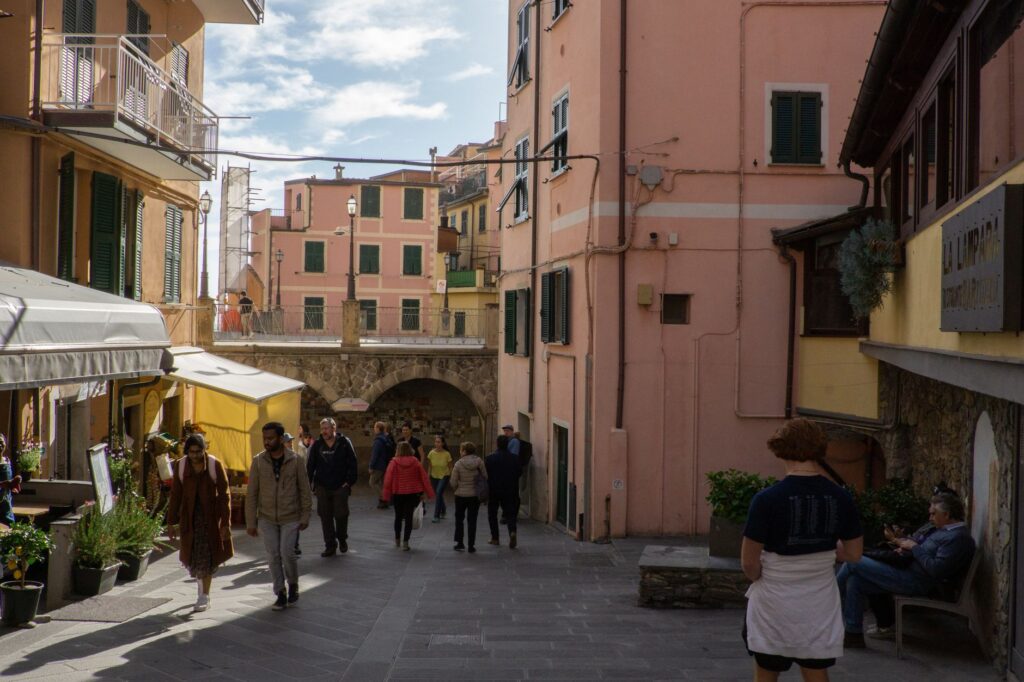
- Community respect: remember that the villages are lived-in places. Keep your voice down in residential areas and respect local rules.
The future is decided on the slopes
The Cinque Terre landscape is a testimony to human adaptation to a difficult environment. Its continuity is not guaranteed simply by being a World Heritage Site. It depends on concrete decisions: supporting farmers, regulating tourism, maintaining walls, and passing knowledge to new generations. Every restored terrace is a small victory against abandonment.
For travelers, the best contribution is to visit with curiosity and respect, to understand that behind every view there is collective work, and to choose experiences that sustain local life. That way, the landscape will not just be an image to remember, but a living territory that continues to write its story.