
Introduction: a mountain that demands patience
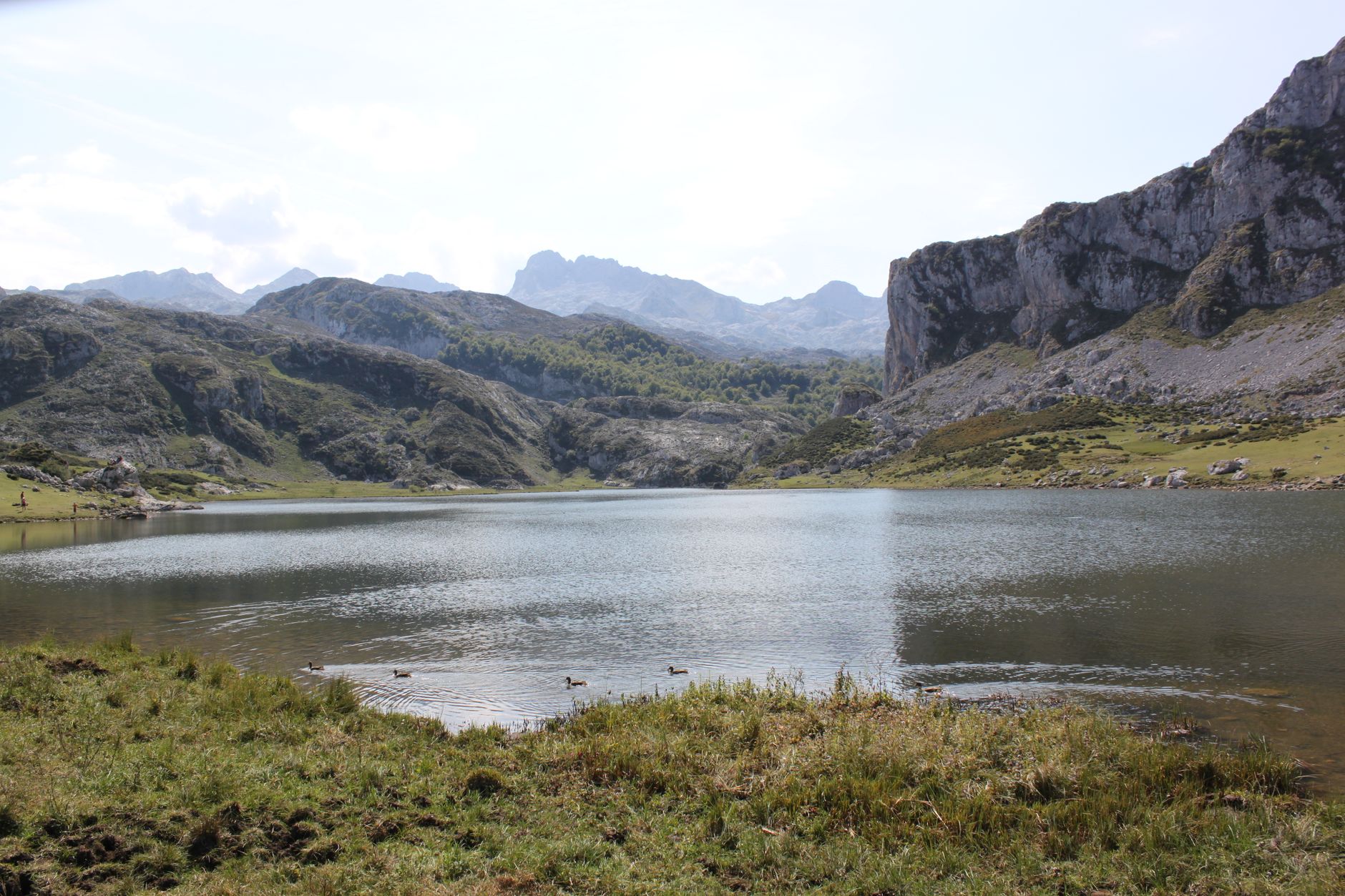
On the shaded slopes of Spain’s Cantabrian Mountains, oak and beech forests alternate with hay meadows and stone villages. Here lives the brown bear, a species that was on the brink of disappearance for decades and now roams valleys where human and wild life share space. Spotting one is not a guaranteed spectacle: it is a possibility that demands preparation, respect, and patience.
This report offers a rigorous approach to the Cantabrian bear’s habitat, the keys to its coexistence with rural communities, and the planning of a visit that must never become a chase. There are no invented figures or fabricated testimonies: only the verified context of a territory that has learned to live with an elusive giant.
A territory of mid-mountain and mature forests
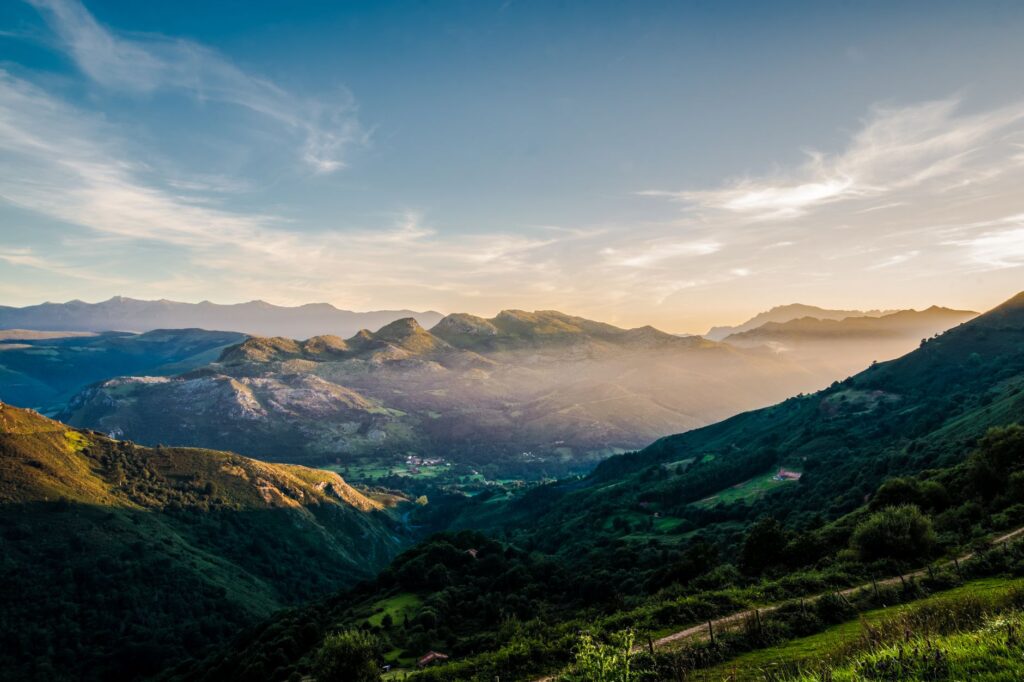
The Cantabrian Mountains stretch for more than 400 kilometres across northern Spain, from the Picos de Europa to the mountains of Galicia. It is not a range of extreme peaks, but a mosaic of deep valleys, steep slopes, and mature forests that offer refuge and food. The brown bear finds its ideal habitat here: continuous woodland, blueberry and raspberry thickets, and low human density in the high areas.
The beech and oak forests on the shaded slopes are complemented by hay meadows in the valley floors. That mix is key: the bear needs forest to rest and hide, but also meadows and scrub to feed in spring and summer. In autumn, forest fruits and acorns become essential sustenance before hibernation.
The mountain climate reinforces this rhythm. Winters are long and wet, with snow persisting on the highest ridges, while summers are mild and short. This seasonality dictates the bear’s movements: as the snow retreats, the animal follows the greening of the slopes; as autumn advances, it concentrates on the fruit-rich woods before retreating to its winter den. Understanding this calendar is the first step towards understanding why sightings are never predictable.
The recovery of the brown bear: a collective achievement
Just three decades ago, the Cantabrian brown bear was on the verge of extinction. Poaching, habitat fragmentation, and the loss of connectivity between subpopulations had reduced its presence to isolated nuclei. Legal protection, conservation programmes, and a change in attitude in rural areas have allowed a slow but steady recovery.
Today, the western subpopulation, which spans Asturias, León, and neighbouring areas of Galicia, is the largest and most stable. The eastern one, in the Picos de Europa and the Palencia mountains, remains more fragile. Biological corridors between the two are essential to guarantee genetic diversity and long-term viability.
The recovery of the bear is not just a biological success: it is a profound change in how rural communities understand their relationship with the land.
That change did not happen overnight. It required decades of awareness-raising, the work of rangers and researchers, and a gradual shift in the way the mountain economy values its natural heritage. The bear went from being seen as a competitor to being recognised as an indicator of a healthy ecosystem, although tensions have not disappeared entirely.
What the Cantabrian bear eats and how it lives
The brown bear is omnivorous. Its diet varies by season and resource availability. In spring it consumes tender shoots, grasses, and carrion; in summer, forest fruits such as blueberries, raspberries, and wild cherries; in autumn, acorns, chestnuts, and beechnuts. Occasionally it may prey on small livestock, which creates tensions with the farming sector.
It is a solitary animal, except for females with cubs. Its sense of smell is extraordinary and its hearing sharp; its sight, however, is limited. It avoids human contact and usually detects people long before being seen. That is why sightings are rare and always the result of chance or patient, discreet observation.
Its daily activity also depends on human pressure. In quiet areas, it may be active during daylight hours; where disturbance is greater, it tends to become more nocturnal. Females with cubs are especially cautious and seek the most inaccessible corners of the forest. This behaviour explains why the best encounters tend to happen at dawn or dusk, in silence, and at a distance.
Where to look for bears without disturbing them
The best places to try to observe bears in the wild are the high valleys of Asturias, such as Somiedo, and the mountains of León, such as Babia and Luna. There is also a presence in the Palencia mountains and the Liébana region of Cantabria. However, it should be remembered that these are protected natural areas with specific regulations.
In Somiedo, the bear finds a well-preserved habitat and a stable population. Enabled viewpoints and signposted routes allow visitors to approach the territory without invading it. In Babia and Luna, oak and beech forests spread across slopes that still maintain traditional extensive livestock farming, creating a landscape of great ecological value.
The presence of the species does not mean it can be seen at will. These are vast territories, and the animal moves according to food and tranquillity. The most honest approach is to accept that observation is a possibility, never a certainty, and to value the landscape, the tracks, and the signs of its presence as much as the animal itself.
Coexistence: the challenge of sharing the land
The presence of bears in inhabited areas generates real conflicts. Attacks on beehives and small livestock are the main source of tension. Authorities have implemented compensation measures and protection systems, such as electric fences and guardian mastiffs. These tools aim to reduce damage and maintain tolerance towards the species.
Environmental education and the participation of local communities are key to making coexistence possible. Well-managed ecotourism projects can generate income and add value to the territory, but they must avoid overcrowding and harassment of the animals.
The bear is not a tourist attraction: it is a silent neighbour that demands respect and distance. The best observation is the one that does not interfere.
Coexistence also depends on the everyday decisions of those who visit. Choosing local accommodation, hiring accredited guides, and respecting the instructions of the rangers are ways of contributing to a model in which the mountain community finds reasons to protect the species rather than resent it.
How to prepare a responsible visit
Before venturing into the Cantabrian Mountains, it is advisable to learn about the rules of each protected area. In Somiedo, for example, registration is mandatory on some routes and it is recommended not to leave the signposted trails. The best time to try to spot bears is spring and autumn, when the animals are more active and vegetation offers less cover.
Basic equipment includes binoculars, warm clothing, and mountain footwear. It is essential to carry water and food, as services are scarce in the high areas. Observation should be done from a prudent distance, preferably with a telescope and without making noise. One should never chase an animal or approach cubs.
It is also wise to plan alternative routes. If the weather turns or the area is busy, there are always paths, viewpoints, and villages where the mountain can be enjoyed without pressure on the wildlife. Flexibility is part of a responsible attitude.
Beyond the bear: a complete ecosystem
The Cantabrian Mountains are not only bear territory. Its forests are home to wolves, capercaillies, chamois, and a wide variety of birds of prey. The rivers, still clean, sustain populations of trout and otter. The biodiversity of these mountains is a treasure that deserves to be known and protected as a whole.
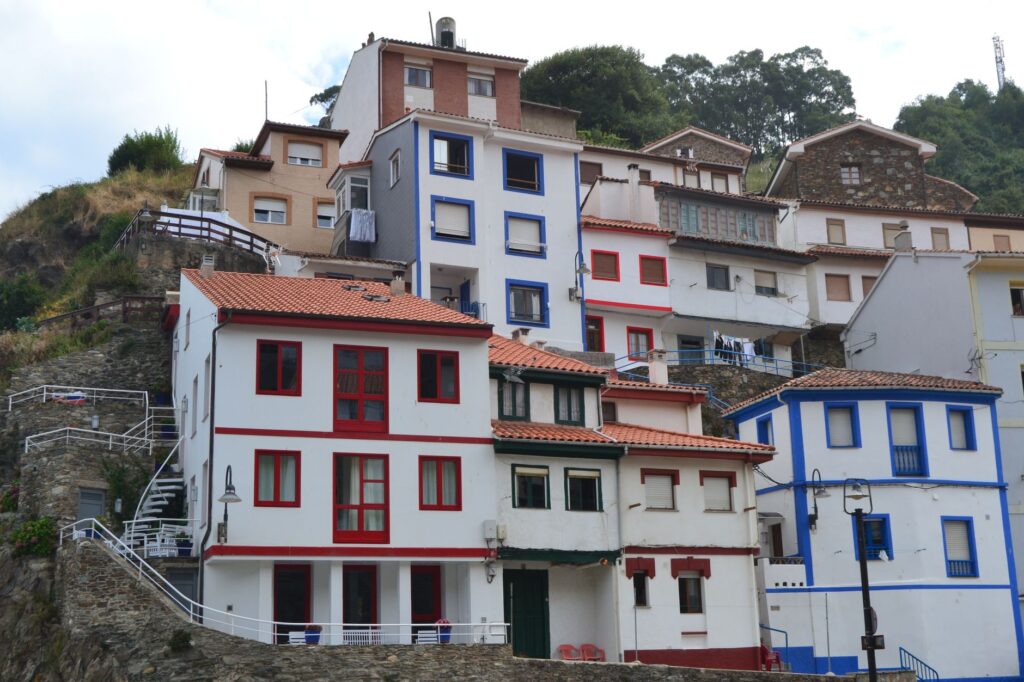
The villages of the area preserve traditional stone and slate architecture, with granaries and shepherd’s huts. Local gastronomy, based on local produce, offers hearty dishes such as Asturian stew or fabada. All of this shapes a travel experience that goes beyond wildlife.
Walking these landscapes also means reading a cultural history: transhumance routes, communal meadows, and a rural life that has shaped the mosaic of forests and pastures on which the bear depends. Protecting the species also means protecting that way of life.
Practical guide
- Getting there: The Cantabrian Mountains are accessible by road from Oviedo, León, and Santander. The nearest airports are Asturias (Oviedo) and León.
- Best season: Spring (April-June) and autumn (September-November) for wildlife observation. Summer is busier and bears tend to stay in high, forested areas.
- Protected areas: Somiedo Natural Park, Babia and Luna Natural Park, Picos de Europa National Park. Check their official websites for regulations and routes.
- Equipment: Binoculars or telescope, warm clothing, mountain footwear, water, and food. Don’t forget a wildlife field guide.
- Rules: Do not leave the trails, do not make noise, do not leave litter, do not approach animals. Respect the indications of rangers and information panels.
- Accommodation: Rural houses and hotels in villages such as Pola de Somiedo, San Emiliano, or Posada de Valdeón. Book in advance in high season.
A closing reflection
Observing a brown bear in the wild is a privilege few enjoy. It is not a guaranteed attraction, but a chance encounter that depends on patience, respect, and luck. The Cantabrian Mountains offer a mid-mountain landscape where nature and rural culture intertwine. Caring for that balance is the best way to ensure future generations can also enjoy it.
At the end of the day, when light retreats through the valleys and silence settles in the forests, the certainty remains of having been in a living territory. The bear is still there, invisible to most, reminding us that the mountain does not belong to us.