
In the city of Talavera, in Mexico’s Puebla state, clay is not just raw material: it is a language spoken with the hands. Here, in the workshops scattered across the historic center, glazed ceramics have become a living archive of techniques that arrived with Spanish potters in the 16th century and, over time, acquired a character of their own. In 2019, UNESCO recognized the artisanal processes of talavera from Puebla and Tlaxcala, Mexico, and from Talavera de la Reina and El Puente del Arzobispo, Spain, as Intangible Cultural Heritage of Humanity. But beyond the recognition, what persists is a chain of gestures: kneading, throwing, glazing, painting, firing.
The relationship between landscape and daily life materializes in every piece. The colors of Puebla’s talavera —deep blues, greens, yellows, ochres— are not arbitrary: they evoke the sky, the volcanic soil, and the flowers that grow in the courtyards. In the workshops, time is measured in firings and generations. This report explores how ceramists in Talavera, Puebla, keep alive a craft that is at once art, identity, and economy.
A craft inherited in the workshop
The transmission of knowledge in Talavera, Puebla, happens mainly within families and artisanal workshops. There is no formal school that teaches the entire process; one learns by watching, helping, making mistakes. Master ceramists, many with decades of experience, guide apprentices through each stage: preparing the clay, shaping, decorating, and managing the kiln.
According to UNESCO, some ceramists carry out the whole process, while others specialize in specific tasks. This division of labor does not diminish the result: every workshop has its own identity, reflected in the details of shapes, motifs, and enamels. Oral transmission is the main vehicle: instructions are given in low voices, with clay-stained hands, while the wheel spins.
“Every workshop has its own identity, and that shows in the detail of the pieces,” notes UNESCO’s documentation on this heritage.
Learning never ends. Even masters experiment with new mixtures, new pigments, new firing methods. Innovation, however, does not break with tradition: it extends it.
The landscape as a color palette
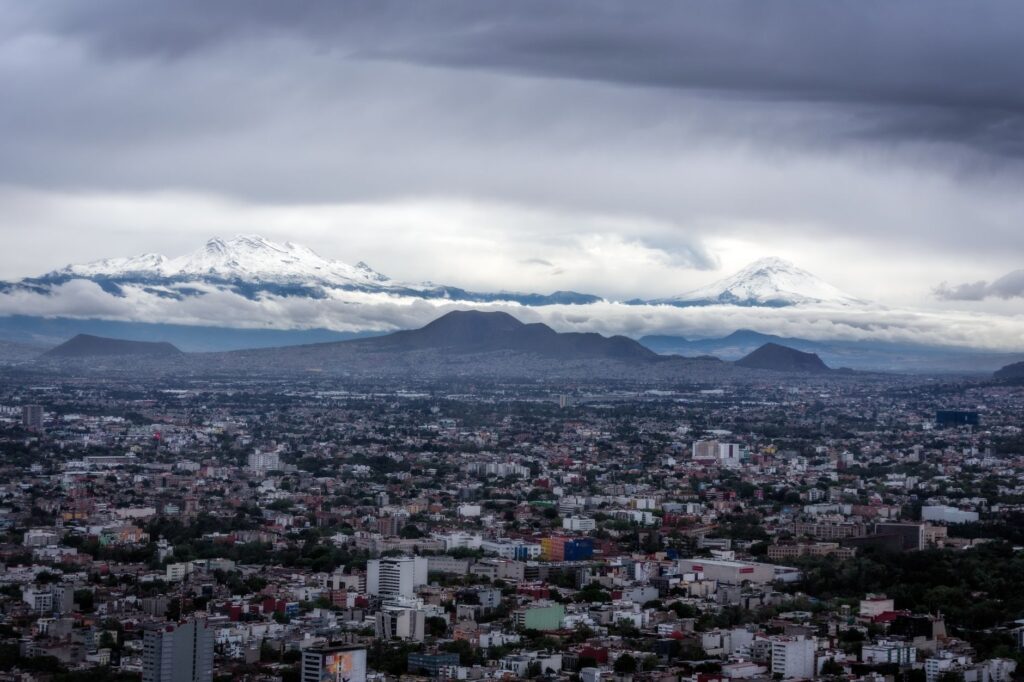
The geography of Puebla —with its volcanoes, valleys, and intense light— filters into the ceramics. Artisans observe their surroundings and translate them into motifs: cempasúchil flowers, birds, deer, geometries reminiscent of local textiles. The cobalt blue characteristic of talavera evokes the sky of Mexico’s central plateau on clear mornings.
This is not mere decoration. The relationship between landscape and daily life is functional: pieces are used at the table, in the kitchen, in architecture. Tiles cover facades, dinnerware accompanies family meals, vases adorn altars. Ceramics are therefore both domestic objects and identity symbols.
That dual condition —use and symbol— explains why talavera has survived technological changes. The introduction of electric wheels, for example, has not eliminated hand modeling; it has simply added a tool. The artisanal process, with its slow rhythms, remains the heart of the craft.
The steps of the process: from clay to enamel
The process of making talavera is long and meticulous. It begins with extracting clay, which is left to rest and kneaded to remove impurities. Then comes shaping, which can be done on a wheel or with molds. Next, the piece is left to dry and subjected to a first firing, known as bisque firing.
After bisque firing, enamel —a mixture of tin, lead, and other minerals— is applied and the piece is decorated with pigments. Decoration is perhaps the most visible phase: fine brushes trace precise lines, fill areas, create shadows. Finally, the piece is fired a second time in the kiln, where colors fuse and set.
- Clay preparation: cleaning, kneading, and resting.
- Shaping: wheel or mold, depending on the piece.
- First firing: bisque firing at controlled temperature.
- Glazing: application of the vitreous layer.
- Decoration: hand-painting with mineral pigments.
- Second firing: fusion of enamel and color setting.
Each stage demands patience and precision. An error in kiln temperature can ruin weeks of work. That is why managing the kiln is one of the most valued skills and is transmitted with special care.
Women and men: the generational relay
Although the craft has traditionally been associated with men, more and more women occupy key positions in workshops. UNESCO highlights that the transmission of knowledge includes new generations, and in Talavera, Puebla, it is common to see daughters and sons learning alongside their parents. Gender equality is one of the Sustainable Development Goals linked to this practice.

The generational relay is not without difficulties. Competition from industrial products, youth migration, and material costs are constant challenges. However, demand for authentic pieces, both national and international, has allowed many workshops to survive and even thrive.
“The production of ceramics remains a key identity symbol in both countries,” underlines the UNESCO file.
That identity is reinforced at fairs, exhibitions, and markets. Talavera is not just a souvenir for tourists: it is a badge of belonging for the people of Puebla.
Architecture and daily life: ceramics in the city
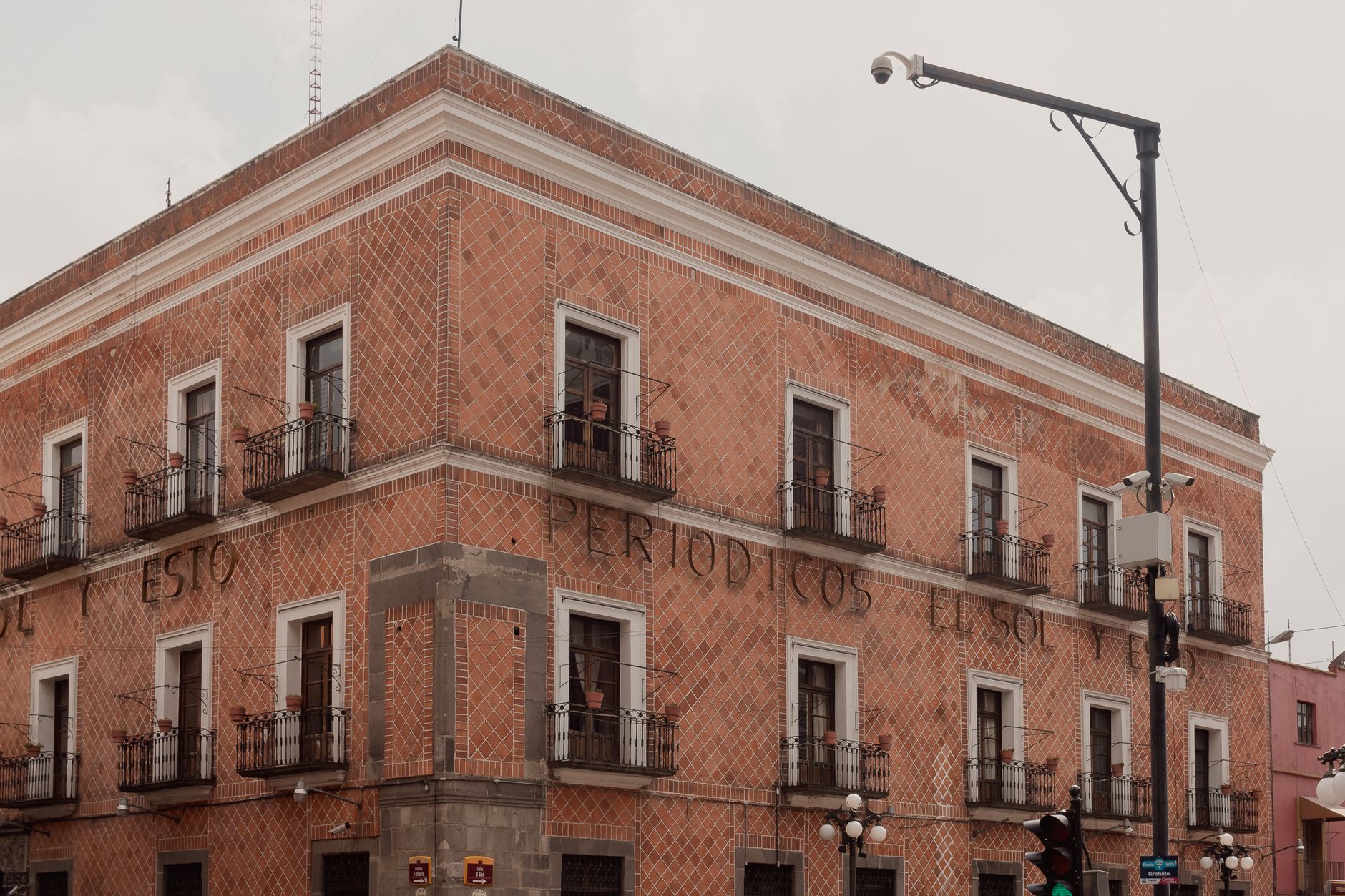
In Puebla’s historic center, talavera is integrated into architecture. Entire facades are covered in tiles, and church domes shine with colored enamels. Walking through its streets is touring an open-air museum where ceramics dialogue with baroque and neoclassical styles.
But talavera’s presence is not limited to monumental buildings. In kitchens, talavera dinnerware is used daily. In courtyards, pots and fountains adorn spaces. It is an aesthetic of the everyday that does not seek the display case, but life itself.
This integration of art and life is what makes Talavera, Puebla, unique. It is not a luxury object reserved for a few, but a shared heritage renewed with each generation.
The future of the craft: challenges and opportunities
UNESCO’s 2019 recognition brought visibility, but also responsibility. Ceramists must maintain traditional processes while adapting to a global market. Sustainability is a central issue: clay extraction, energy consumption in kilns, and waste management demand attention.

Some workshops are exploring new forms of marketing, such as online sales and collaborations with contemporary designers. Others bet on experiential tourism, offering workshops and guided visits. The key, experts agree, is not to lose the essence: the handmade piece, made with time and care.
The future depends on new generations finding in the craft a source of pride and livelihood. And that, in Talavera, Puebla, is being achieved.
Practical guide
If you plan to visit Talavera, Puebla, and want to experience the world of ceramics up close, here are some useful tips. The city is about 120 kilometers from Mexico City, and can be reached by bus or car. The historic center is a UNESCO World Heritage Site, and numerous workshops and shops are concentrated there.
- Best time to visit: from October to March, when the climate is milder and craft fairs take place.
- What to bring: comfortable shoes, sunscreen, and a reusable bag for purchases.
- Where to buy: look for the authenticity seal that distinguishes Puebla talavera from imitations.
- Workshop visits: many open to the public by appointment; ask at the local tourism office.
- Cultural respect: remember you are in a workspace; observe without interrupting and value the time invested in each piece.
The best way to appreciate talavera is to understand its process. If you have the opportunity, take an introductory workshop: feeling clay in your hands completely changes your perception of a finished piece.
A closing with hands in clay
At the end of the day, in a workshop in Talavera, Puebla, the wheel stops and silence returns. Freshly molded pieces wait their turn in the kiln. A master ceramist cleans his tools with a damp cloth. He knows that what he makes is not just an object: it is a link in a chain that began five centuries ago and, if all goes well, will continue. Talavera ceramics are not a memory of the past, but a living presence renewed every morning, when hands touch clay again.