In northern Spain, where Asturias, Cantabria, and Castile and León meet, the Picos de Europa rise as three limestone massifs that surge abruptly from narrow valleys. This is not a mountain theme park. It is a living territory where grazing, mist, and stone shape the rhythm of the day. Anyone seeking an authentic hiking experience finds something less spectacular than demanding: trails that require preparation, respect for local ways, and a careful reading of the weather. Spain is not only coast and city; this corner of the north shows that the country can also be understood by walking slowly through its inhabited mountains.
This report offers a general approach to hiking in the Picos de Europa, without invented technical routes or summit promises. The goal is to understand the landscape, plan sensibly, and walk responsibly in a protected and inhabited area. It is not about conquering peaks, but about integrating prudently into an environment that works by its own rules.
A landscape shaped by ice and livestock
The Picos de Europa are a limestone massif carved by glaciers and by centuries of transhumance. The high pastures are not a backdrop: they are the base of a farming economy that still sets the calendar of the villages. Cattle and sheep move up in summer and down in autumn, and the paths hikers use today were routes for shepherds for generations.
That coexistence explains why the landscape looks both cared for and harsh. Vertical walls sit beside green meadows, and stone cabins dot slopes that seem impossible. Walking here means walking through a territory that is not empty. The human footprint is not a recent addition: it is part of the geography itself.
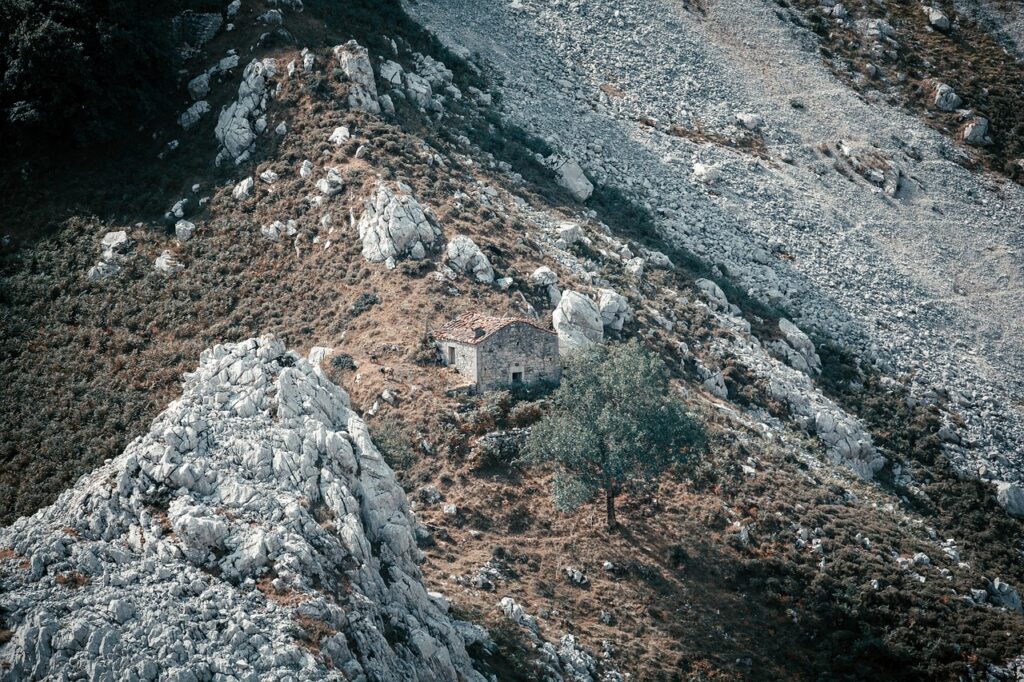
Understanding that relationship helps interpret what you see. A dry-stone wall, a cobbled path, or a sheepfold are not picturesque elements but working infrastructures that have resisted for centuries. The hiker who understands this walks with a different gaze, more attentive and less anxious to arrive.
What to expect from terrain and weather
The average altitude of the best-known routes is between 1,000 and 1,800 meters, though some passes and viewpoints exceed 2,000. The proximity of the Cantabrian Sea brings rapid changes: a clear morning, midday fog, and afternoon rain are common scenarios. Limestone also becomes slippery when wet.
You do not need to be an alpinist to enjoy many areas, but you do need footwear with good grip, waterproof layers, and enough water. In summer, afternoon storms are frequent; in spring and autumn, fog can cut visibility within minutes.
The relief is not uniform either. There are wide, accessible valleys, and there are narrow gorges where the path clings to the wall. That variety allows you to adapt the difficulty to each person, as long as you honestly choose your own level and do not improvise on the ground.
In the Picos de Europa, the wisest plan is not the most ambitious one, but the one that respects the weather and the terrain.
Villages that still live from the mountain
Places such as Sotres, Arenas de Cabrales, Posada de Valdeón, or Camaleño are not just starting points. They are communities where farming, cheese-making, and rural tourism coexist with difficulty. Visitors who buy in a local shop, eat in a village establishment, or stay in a small guesthouse help that life continue.
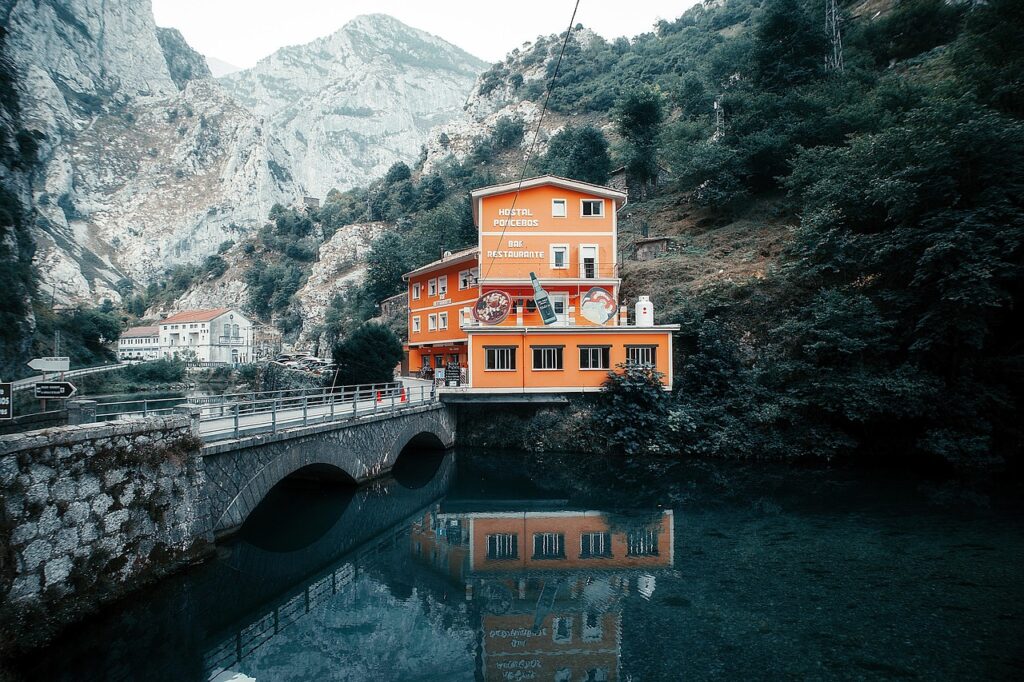
It is also worth remembering that many trails cross private land or grazing areas. Closing gates, not disturbing livestock, and leaving no waste are minimal gestures, but decisive ones. The difference between a visitor and a good visitor is usually found in small, constant details.
Basic preparation before setting out
Preparation in the Picos de Europa is not about accumulating gear, but about making sound decisions. Check the specific mountain weather forecast, tell someone your planned itinerary, and carry a map or a device with enough battery. Mobile signal is patchy in many valleys.
Choose routes that match the group’s experience and do not improvise shortcuts. Marked trails are usually well signposted, but fog can hide the marks. When in doubt, retracing your steps is safer than continuing.
Departure time matters. Starting early widens the safety margin, allows you to move forward with light, and leaves time to react to a change in weather. Planning to return in daylight is a simple rule that prevents many problems.

What to carry in your backpack
- Mountain footwear with good grip, already broken in.
- Rain jacket and an insulating layer, even in summer.
- Enough water and energy food.
- Map, compass, or GPS device with battery.
- Sun protection and a hat for exposed areas.
- Basic first-aid kit and a whistle.
Technical climbing gear is not necessary for standard hiking routes, but clothing suitable for getting wet and changing temperatures is essential. The backpack should weigh just enough: carrying too much is tiring and does not pay off if it is not used.
Responsible hiking in a protected area
The Picos de Europa have been a national park since 1995, with earlier protection figures. That means rules: do not leave the trails in sensitive areas, do not collect plants or rocks, do not feed livestock, and do not light fires except in authorized places. Wildlife such as the chamois or the golden eagle requires distance.
Responsible hiking also means choosing less crowded seasons. The central summer months concentrate visitors on the best-known access points; starting early or choosing secondary valleys improves the experience and reduces pressure on the environment.
Waste, moreover, cannot always be left just anywhere. It is best to carry it with you to a suitable place. A forgotten piece of litter at altitude takes a long time to disappear and affects a fragile ecosystem.
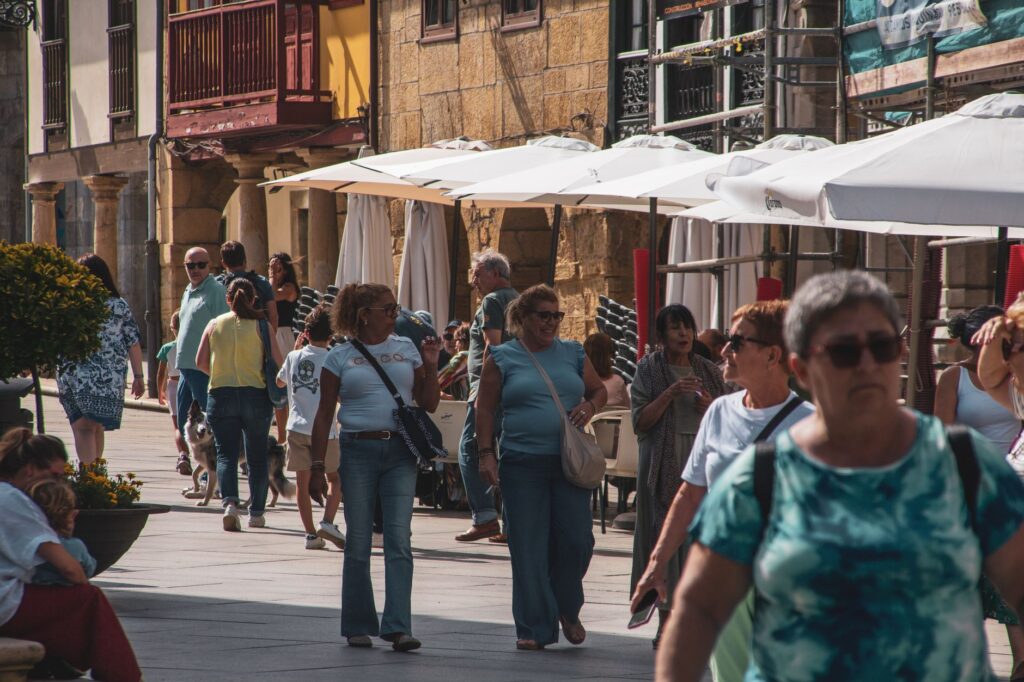
The best photograph of the Picos de Europa is not taken from the edge of the trail, but from respect for what happens within it.
Mountain food and everyday life
The local cuisine reflects the landscape: cheeses such as Cabrales or Gamonéu, hearty stews, pasture-raised meat, and cider in Asturias. Eating in the villages is not a tourist add-on, but a way to understand how the mountain translates into dishes. Local markets and livestock fairs show an economy that still depends on the land.
For hikers, food is also logistics: check opening hours of bars and shops, which can be limited outside the season. A snack bought in the village before heading up solves more than one long day.
When to go and how to get around
Late spring and early autumn usually offer milder temperatures and fewer crowds, though with more risk of rain and fog. Summer is the most stable season, but also the busiest. Winter demands experience and specific gear, and many high routes are beyond conventional hiking.
Access to the Picos is by road from cities such as Oviedo, Santander, or León. Local buses and services are limited, so shared cars or staying in the valleys themselves make mobility easier. Do not rely on rigid schedules without verifying them.
Sleeping in the area, rather than traveling each day from the city, reduces fatigue and allows you to make the most of the early hours of light, which are usually the quietest and often the clearest.

Practical guide
Before traveling, check official information from the national park and tourism offices in Asturias, Cantabria, and Castile and León. Book accommodation in advance during high season and confirm service availability in the villages. Carry cash, as not all establishments accept cards.
- Check the mountain weather forecast on the same day.
- Choose routes that match your fitness and experience.
- Tell someone your itinerary and expected return time.
- Respect park rules and private property.
- Leave no waste and reduce noise in wildlife areas.
- Buy and eat in the villages to support the local economy.
The mountain is not a stage; it is a place where people live. Walking with that idea changes the experience entirely. Spain, in this corner of the north, offers a simple lesson: the landscape is enjoyed best when it is cared for.
A final look before descending
At the end of the day, when the fog lifts and the sun brushes the limestone walls, the Picos de Europa show their calmest face. There is no summit to conquer, only a landscape shared with those who inhabit it. Descending slowly, with your backpack properly closed and your eyes open, is the best way to close a day of hiking in this corner of northern Spain.