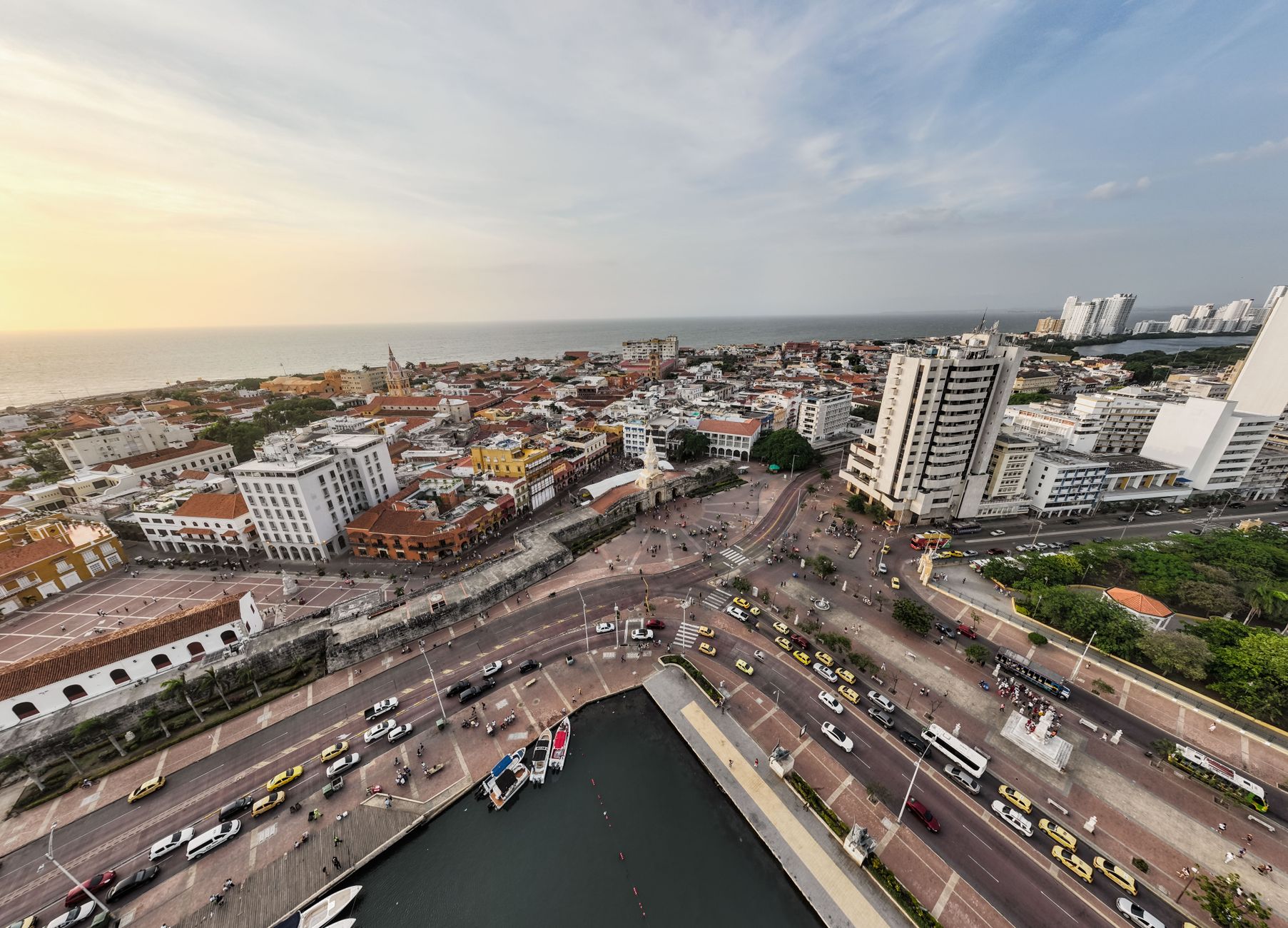

Cartagena de Indias, on Colombia’s Caribbean coast, is a city best explored on foot and through memory. Its historic centre, declared a UNESCO World Heritage site in 1984, is not a static backdrop: it is a living urban fabric where stones, balconies, and plazas tell a story of defence, trade, and daily life. Walking its streets means accepting that each step echoes a past that is not always obvious but is always present—in the worn cobblestones, the damp smell of cisterns, and the shadow cast by the walls in the late afternoon.
This report offers a reading of Cartagena through urban memory, without pretending to have visited or inventing testimonies. It draws on documentary sources and the city’s own structure to provide keys for interpretation and practical advice for those who wish to explore it with an attentive, respectful, and prepared eye.
A city built to resist
Cartagena’s history is marked by its role as a strategic port. Located on a sheltered bay of the Caribbean Sea, it was for centuries a key link in trade routes between Europe and the Americas. That importance attracted attacks from pirates and rival powers, leading the Spanish Crown to invest in one of South America’s most extensive fortification systems. The walls, bastions, and castles we walk today are not just monuments: they are the imprint of an obsession with security that shaped the lives of its inhabitants.
The defensive system includes the wall surrounding the historic centre, the Castillo San Felipe de Barajas, and a series of forts controlling maritime access. Each stone was laid with a purpose, and that purpose can still be read in the layout of the streets and the height of the battlements.
“Cartagena cannot be understood without its walls, but neither without the life that beats within them: markets, courtyards, churches, and houses that have aged without losing their function.”
Three neighbourhoods, three memories
The historic centre is divided into three neighbourhoods that UNESCO describes with precision: San Pedro, San Diego, and Getsemaní. Each has its own character, shaped by those who lived there.
San Pedro: power and faith
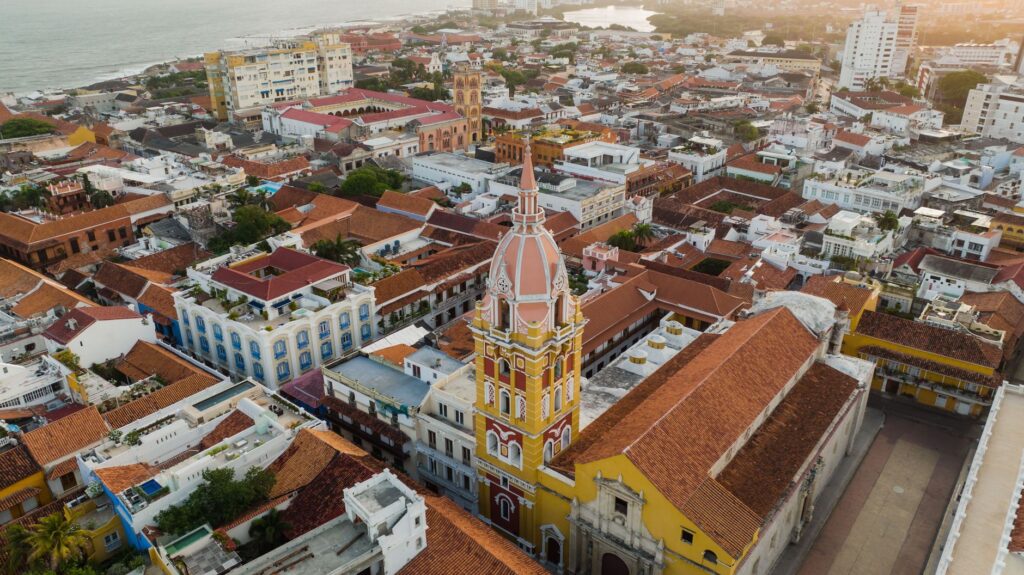
San Pedro is home to the cathedral, the Convent of San Pedro Claver, and the Palace of the Inquisition. Here lived the wealthiest families, and religious and civil institutions were concentrated. Walking its streets means encountering stately facades, wooden balconies, and interior courtyards hiding gardens. Memory here is one of power, but also of faith and charity, embodied by San Pedro Claver, defender of the enslaved.
San Diego: commerce and craft
San Diego was the neighbourhood of merchants and artisans. Its narrower streets retain the layout that facilitated work and exchange. Today it is a space of workshops, small shops, and boutique hotels that have rehabilitated old houses. Memory here is one of craft, of hammer and loom, and also of adaptation: a neighbourhood that has transformed without losing its human scale.

Getsemaní: popular memory
Getsemaní, the popular quarter, was for a long time home to artisans, freed people, and working families. Separated from the walled centre by the old Media Luna gate, it retains a more relaxed spirit, with small plazas, simple churches, and walls that now serve as canvases for murals. Memory here is one of daily resistance, of those who sustained the city through their work.
The cobblestone as archive
One of Cartagena’s most eloquent elements is its pavement. The stone cobblestones, in some cases brought as ballast on ships, have been worn down over centuries. Each irregularity tells a story: the passage of carts, the weight of horses, the coming and going of generations. Walking these streets requires attention; a stumble is also a way of connecting with the past.
The sidewalks, often narrow and raised, force pedestrians to share space with vehicles and others. That discomfort is part of the experience: the city does not offer itself easily; it is conquered step by step.
Balconies that speak
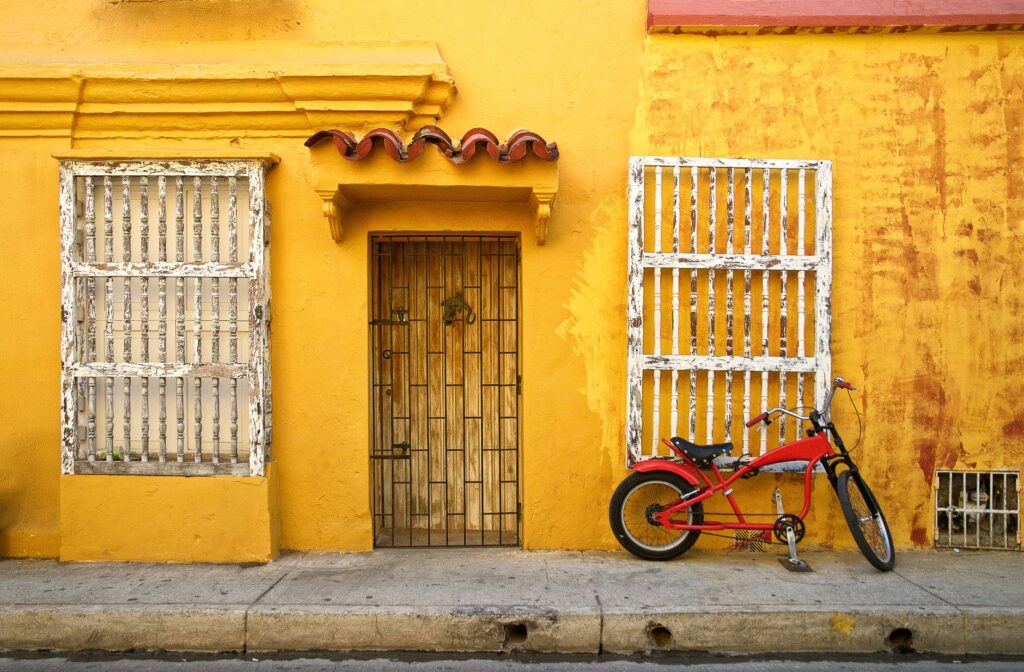
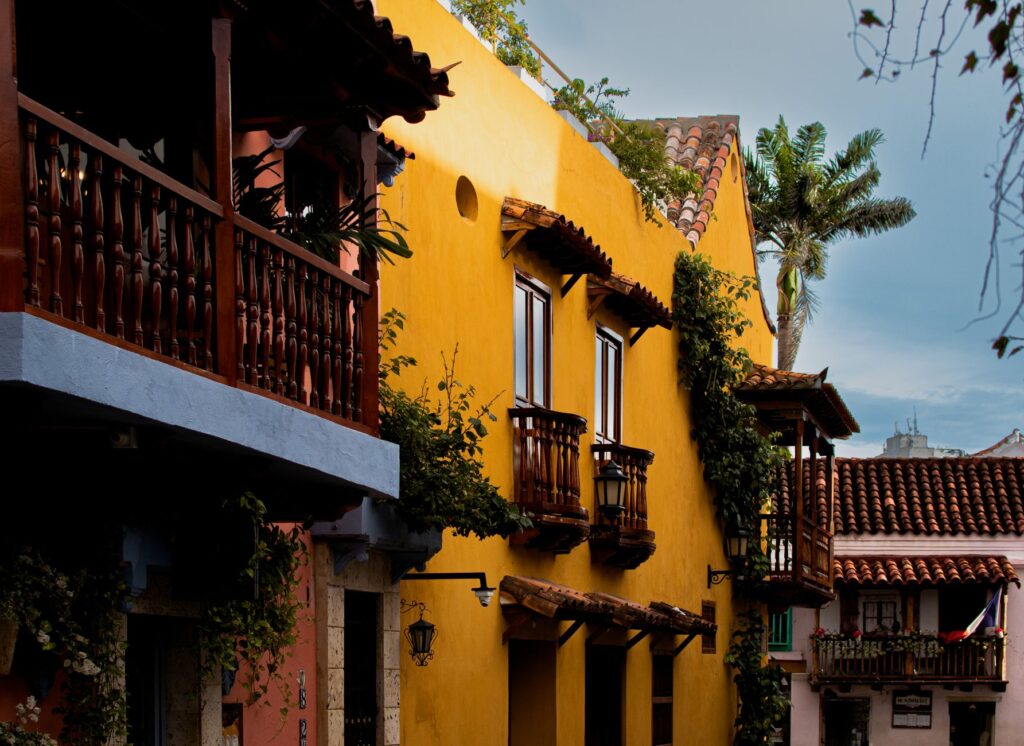
Cartagena’s balconies are another archive of memory. Made of carved wood, often painted in vivid colours, they jut out from facades and create a play of shadows and light. Clothes are dried on them, plants are grown, and conversations happen at dusk. They are transitional spaces between public and private, and their design responds to the climate: they allow ventilation and protect from the sun without fully closing off the house.
Many of these balconies have been restored, but they retain traditional techniques. Observing them carefully reveals the skill of carpenters and the patience of those who maintain them.
Water, shade, and heat
The Caribbean climate sets the pace. The humid heat forces slow walking, seeking the shade of walls or plaza trees. Fountains and cisterns, some of colonial origin, remind us that water was always a precious commodity. The city has learned to live with the heat, and that coexistence has left its mark on architecture: interior courtyards, latticework, high ceilings.
For travellers, adapting to that rhythm is essential. The central hours of the day invite rest; dawn and dusk are the best times to explore.
“Cartagena’s memory is not only in its monuments but in the way its inhabitants have learned to inhabit heat, water, and stone.”
Accessibility and trip preparation
Cartagena can present difficulties for people with reduced mobility. Cobbled streets, narrow sidewalks, and gentle but constant slopes require appropriate footwear and, in some cases, additional assistance. It is advisable to plan the route in advance, identify rest points, and consider hiring specialized local guides.
Accommodation is plentiful, from boutique hotels in colonial houses to hostels in Getsemaní. Many establishments have made adaptations, but it is wise to verify accessibility conditions before booking.
Practical guide
To make the most of a visit to Cartagena de Indias, keep some practical aspects in mind. The best time to travel coincides with the dry season, from December to April, although heat and humidity are present year-round. Light clothing, sunscreen, a hat, and water are recommended.
- Transport: the historic centre is walkable. For longer distances, taxis and ride-hailing apps are available. Public transport includes Transcaribe routes, though visitors should research their use beforehand.
- Accommodation: options exist for all budgets, but booking early in high season is advised.
- Safety: as in any city, basic precautions and avoiding poorly lit areas at night are important.
- Currency: the Colombian peso. Cash is useful for small purchases and tips.
- Language: Spanish is the official language. English is spoken in tourist areas, but learning a few Spanish phrases facilitates interaction.
The city offers a wide range of cultural experiences: museums, churches, plazas, and festivals. It is worth checking local events, such as the International Film Festival or Independence festivities, which can enrich a visit.
A closing for memory
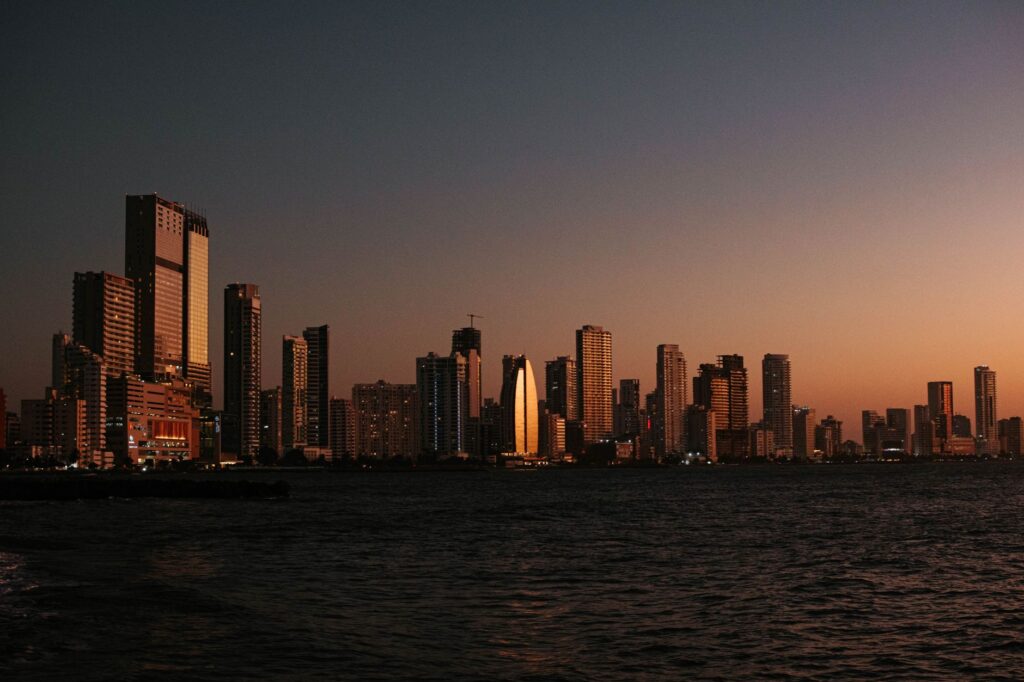
At the end of the day, when the sun sets behind the sea and lights come on in the balconies, Cartagena shows another face: that of a city which, despite the passage of time and the pressures of tourism, remains a place where memory is lived in the present. The walls that once defended the city now protect a space for encounter, and the cobblestones that bore the weight of history still creak under the feet of those who dare to walk them with attention.